Relics on the altar at Mass

  • Thread starter Thread starter NickVA
  • Start date Start date
Status
Not open for further replies.
N

NickVA

Guest
Before the reforms of the Second Vatican Council it was common for relics of the saints to be on the altar during Mass.

Isn’t the practice of having relics on the altar during Mass superficial, because the church teaches that all of the Saints are already present in spirit during the Holy Sacrifice?

What are your thoughts on this tradition?
 
Before the reforms of the Second Vatican Council it was common for relics of the saints to be on the altar during Mass.

Isn’t the practice of having relics on the altar during Mass superficial, because the church teaches that all of the Saints are already present in spirit during the Holy Sacrifice?

What are your thoughts on this tradition?
From the old Catholic Encyclopedia:

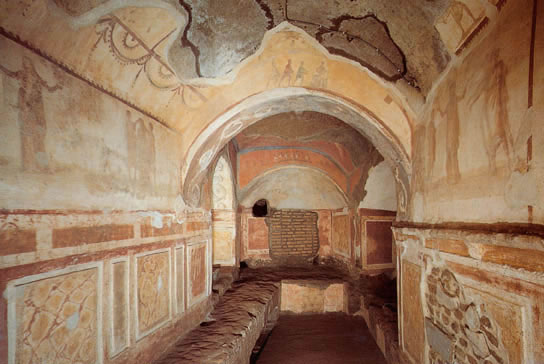
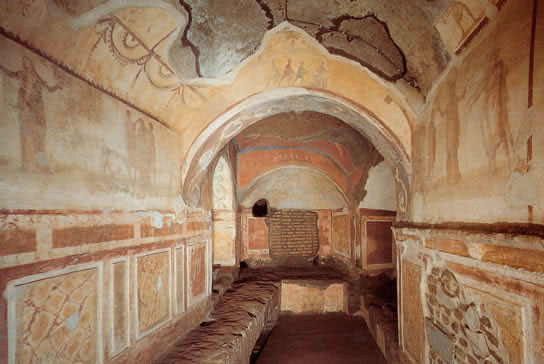
The earliest stone altars were the tombs of the martyrs interred in the Roman Catacombs. The practice of celebrating Mass on the tombs of martyrs can be traced with a large degree of probability to the first quarter of the second century. The Fractio Panis fresco of the Capella Greca, which belongs to this period is located in the apse directly above a small cavity which Wilpert supposes (Fractio Panis, 18) to have contained the relics of a martyr, and it is highly probable that the stone covering this tomb served as an altar. But the celebration of the Eucharist on the tombs of martyrs in the Catacombs was, even in the first age, the exception rather than the rule. (See ARCOSOLIUM) The regular Sunday services were held in the private houses which were the churches of the period. Nevertheless. the idea of the stone altar, the use of which afterwards became universal in the West, is evidently derived from the custom of celebrating the anniversaries and other feasts in honour of those who died for the Faith. Probably, the custom itself was suggested by the message in the Apocalypse (vi, 9) “I saw under the altar the souls of them that were slain for the word of God.” With the age of peace, and especially under the pontificate of Pope Damasus (366-384), basilicas and chapels were erected in Rome and elsewhere in honour of the most famous martyrs, and the altars, when at all possible, were located directly above their tombs. The “Liber Pontificalis” attributes to Pope Felix I (269-274) a decree to the effect that Mass should be celebrated on the tombs of the martyrs (constituit supra memorias martyrum missas celebrare, “Lib. Pont.”, ed. Duchesne, I, 158). However this may be, it is clear from the testimony of this authority that the custom alluded to was regarded at the beginning of the sixth century as very ancient (op. cit., loc. cit., note 2). For the fourth century we have abundant testimony, literary and monumental. The altars of the basilicas of St. Peter and St. Paul, erected by Constantine, were directly above the Apostles’ tombs. Speaking of St. Hippolytus, the poet Prudentius refers to the altar above his tomb as follows:

Talibus Hippolyei corpus mandatur opertis
Propter ubi apposita est ara dicata Deo.

Finally, the translation of the bodies of the martyrs Sts. Gervasius and Protasius by St. Ambrose to the Ambrosian basilica in Milan is an evidence that the practice of offering the Holy Sacrifice on the tombs of martyrs was long established. The great veneration in which the martyrs were held from the fourth century had considerable influence in effecting two changes of importance with regard to altars. The stone slab enclosing the martyr’s grave suggested the stone altar, and the presence of the martyr’s relics beneath the altar was responsible for the tomblike under-structure known as the confessio.​


Capella Greca in the catacombs of Priscilla (Larger images here and here)

http://www.christusrex.org/www1/citta/B-Sepulcrum.jpg
The confessio beneath the high altar, St. Peter’s

Personally I think it’s a very beautiful tradition, which has sadly become less common today. (In the Byzantine Churches, the antimension continues to have a martyr’s relic sewn onto it.) Sure, the saints are already present in spirit, but isn’t it nicer to have something physical as well?

 
A saint’s relic is already present inside every permanent altar, even if not place on top. This applies for ordinary and extraordinary form altars!
 
I do know that there is a relic inside the altar. I am talking about the practice of adorning the altar with reliquaries.
 
I do know that there is a relic inside the altar. I am talking about the practice of adorning the altar with reliquaries.
Okay. My former comment still stands: Sure, the saints are already present in spirit, but isn’t it nicer to have something physical as well? I know that some folks may not like the whole prospect of the altar being cluttered with reliquaries, but still, I think it’s a powerful visual symbol. 😉
 
I agree. I am not opposed to the practice. I’m just raising questions about the reasons and traditions behind it.
 
I agree. I am not opposed to the practice. I’m just raising questions about the reasons and traditions behind it.
And calling it “superficial,” which I am going to assume was simply a poor choice of words. :mad:
 
It is not necessary, but that doesn’t make it superficial.

It could be. If done because it looks nice, and it looks even nice to have the extra incensation at Mass, then it’s superficial. But if done with devotion it is extremely valuable.

People have been cured with relics ever since the woman was healed after touching the hem of Our Lord’s garment and the sick were healed by the cloth of St. Peter (described in Acts of the Apostles).

Relics are the best!
 
A saint’s relic is already present inside every permanent altar, even if not place on top. This applies for ordinary and extraordinary form altars!
Unfortunately, most of the OF altars in my diocese do not have relics in them. A new altar was installed in one parish and the conservative priest found relics to place inside and he told me that people down at the diocesan office thought it was strange for him to do that.
  • PAX
 
The last parish I was registered in did not have a Relic in the Altar. I started a drive to try and get one, but the priest told me to stop because that would mean cutting into the nice wood Altar that our artist had design (he is a Lutherern), so I changed parishes. Now they have a Altar stone(with relics) imbedded in the wood Altar. The FSSP parish that I like to attend has an Altar stone and Relics in Reliquaries on the Altar.

So do I like relics? You bet! 👍
 
Before the reforms of the Second Vatican Council it was common for relics of the saints to be on the altar during Mass.

Isn’t the practice of having relics on the altar during Mass superficial, because the church teaches that all of the Saints are already present in spirit during the Holy Sacrifice?

What are your thoughts on this tradition?
Jesus is always present in Spirit, so therefore we don’t need to have Mass…

These ideas came at the same time as clerics encouraging Catholics not to pray to Saints, read about them, imitate them, etc. It is a P.C. excuse to eliminate the percieved hocus pocus of Catholicism. Said clerics would probably not call the Mass a Holy Sacrifice either.
 
Jesus is always present in Spirit, so therefore we don’t need to have Mass…

These ideas came at the same time as clerics encouraging Catholics not to pray to Saints, read about them, imitate them, etc. It is a P.C. excuse to eliminate the percieved hocus pocus of Catholicism. Said clerics would probably not call the Mass a Holy Sacrifice either.
I was kind of getting to that reasoning if I had any thinking at all. :eek:Where would we stop. We don’t have relics on the Altar as it happens.
 
Unfortunately, most of the OF altars in my diocese do not have relics in them. A new altar was installed in one parish and the conservative priest found relics to place inside and he told me that people down at the diocesan office thought it was strange for him to do that.
  • PAX
Can. 1237 §1. Fixed altars must be dedicated, and movable altars must be dedicated or blessed, according to the rites prescribed in the liturgical books.

§2. The ancient tradition of placing relics of martyrs or other saints under a fixed altar is to be preserved, according to the norms given in the liturgical books.

Just sayin’…
 
Unfortunately, most of the OF altars in my diocese do not have relics in them. A new altar was installed in one parish and the conservative priest found relics to place inside and he told me that people down at the diocesan office thought it was strange for him to do that.
  • PAX
Is that right? I didn’t know that.
Connecticut must just be a wonderful place for conservative Catholics, then. While a liberal state overall, our bishops have been consistent in supporting the Gospel message for as long I’ve been alive at least, and the last two priests I’ve known are vocally pro-life.

I was amazed to learn that even my parish, which had a simple wooden altar, had a relic placed within it. Our past priest has since added a layer of natural stone to the surface to make it a more proper altar.

And of course, Happy Easter!
 
Can. 1237 §1. Fixed altars must be dedicated, and movable altars must be dedicated or blessed, according to the rites prescribed in the liturgical books.

§2. The ancient tradition of placing relics of martyrs or other saints under a fixed altar is to be preserved, according to the norms given in the liturgical books.

Just sayin’…
You are responding to a statement of fact (“most OF altars don’t have relics”) with a quote from the law (“the tradition should be preserved”) … as if real life followed from laws?

I think EcceAgnusDei would just say, “sure, that’s the law, but it’s often ignored.”
 
Get a small chest. Place relic in chest. Place chest under altar. End of problem!
 
You are responding to a statement of fact (“most OF altars don’t have relics”) with a quote from the law (“the tradition should be preserved”) … as if real life followed from laws?

I think EcceAgnusDei would just say, “sure, that’s the law, but it’s often ignored.”
No, I’m saying that, per the law, fixed altars shall have relics placed in them (according to the ancient traditions). So if there isn’t a relic placed in a fixed altar, that pastor is messing up. And, since it’s in canon law, the parishioners have recourse (if they at all care about it…which is increasing doubtful when one looks at the combination of heterodoxy and ignorance that runs rampant these days)
 
At the small SSPX chapel I used to attend, there were two sets of relics present on the ‘steps’ of the altar where the candlesticks are placed. They were held in what looked like small monstrances. As an altar server I used to turn the mini-monstrances around before Mass so that the relics were visible.

I can’t say I’ve been to any other Roman Catholic churches with relics displayed this way.
 
Status
Not open for further replies.
Back
Top