M
Matthew_Holford
Guest
You’re welcome.OOPS! Pope Paul VI, of course. Thank you.


You’re welcome.OOPS! Pope Paul VI, of course. Thank you.
Canon 758 §3
§1. Married men, after completion of the formation prescribed by law, can be admitted to the order of deacon.
Historical note: with respect to §2 above, this is not the provision originally submitted by then +Metropolitan Judson for approval.§2. Concerning the admission of married men to the order of the presbyterate, the special norms issued by the Apostolic See are to be observed, unless dispensations are granted by the same See in individual cases.
The original Ruthenian Byzantine Catholic Metropolia of Pittsburgh law to take effect on September 1st, 1998 was:Statute 44Actually, the Byzantine Catholic [Ruthenian] Church in America is indeed required to seek permission from Rome (via the Congregation for the Eastern Churches) to ordain married men.
from the Norms of Particular Law of the Byzantine Metropolitan Church sui iuris of Pittsburgh, U.S.A.
Historical note: with respect to §2 above, this is not the provision originally submitted by then +Metropolitan Judson for approval.
 2. This same Council of Hierarchs  ascertains that the imposition of clerical celibacy introduced by the  decree Cum data fuerit and reaffirmed by the decree Qua sollerti are  currently in effect for the Ruthenians in the United States.

  3. The Council of Hierarchs declares that these special restrictive  norms imposed by the Apostolic See are no longer in force and, thus, in  the Metropolia of Pittsburgh, marriage is not an impediment to  presbyteral orders.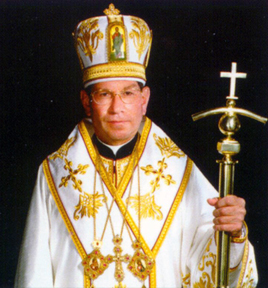
Wasn’t the competence delegated (more recently) to the local episcopal conferences? IIRC, the Congregation for Eastern Churches just give a rubber stamp(?).Actually, the Byzantine Catholic [Ruthenian] Church in America is indeed required to seek permission from Rome (via the Congregation for the Eastern Churches) to ordain married men.
from the Norms of Particular Law of the Byzantine Metropolitan Church sui iuris of Pittsburgh, U.S.A.
Historical note: with respect to §2 above, this is not the provision originally submitted by then +Metropolitan Judson for approval.
How recently are we talking?Wasn’t the competence delegated (more recently) to the local episcopal conferences? IIRC, the Congregation for Eastern Churches just give a rubber stamp(?).
Blessings,
Marduk
“On 20 February 2008, the regular meeting of the Congregation for the Doctrine of the Faith reaffirmed the validity of the norm of a binding obligation of celibacy for priests of Eastern Catholic Churches who exercise the ministry outside the canonical territory. The pope, however, has given the Congregation for the Eastern Churches the authority to give a dispensation from this norm, with the approval of the Episcopal Conference in question.”How recently are we talking?

That’s very interesting, Mardukm.“On 20 February 2008, the regular meeting of the Congregation for the Doctrine of the Faith reaffirmed the validity of the norm of a binding obligation of celibacy for priests of Eastern Catholic Churches who exercise the ministry outside the canonical territory. The pope, however, has given the Congregation for the Eastern Churches the authority to give a dispensation from this norm, with the approval of the Episcopal Conference in question.”
orthocath.wordpress.com/2011/03/02/italian-catholic-episcopal-conference-vetoes-married-priests/
Prior to this, a local Latin Synod (which evolved into the Episcopal Conference) would express its concerns, and the bishop of Rome would give voice to it in a decree (which is how Ea semper and Cum data fuerit came about). The recent ruling gives the decision more explicitly to the local Episcopal Conference. I agree with brother RyanBlack’s complaint that the “scandal” rationale is overrated and way past its usefulness (at least in certain Western territories). But, however different a local Episcopal Conference is from a Synod, the Episcopal Conference nevertheless represents the collegial authority of the local hierarchy in that territory and should be respected.
What the “knowledgeable folk” say is generally true. Episcopal conferences do not have a say in the internal affairs of the ECC’s and OCC’s. But priestly celibacy is perceived to be so ingrained in the identity of Catholicism in the Latin territories that it may be something of an exercise of oikonomia to give way to the majority opinion on the matter in territories where the Latin Churches predominate. For a priest to walk around in public with his wife and child will obviously be more easily noticeable to Latin Catholics than the unique sacramental and liturgical practices of Eastern and Oriental Catholics on holy ground. Education is the only way to combat this lopsidedness in traditional perspectives.That’s very interesting, Mardukm.
Truth be told, until a few months I was under the impression that Latin hierarchs had a say in the affairs of ECs in the US. Then one time I happened to casually allude to this in a conversation with some knowledgeable folk, and was told that they Latin hierarchs do not have any say in the affairs of ECs in the US. I was also warned not to promote “conspiracy theories”.
Now after reading your last post I just don’t know what to think. I wonder if it’s possible that I was right in the first place.
Education and the growth of the Anglican Ordinariates within the Latin Church - which will probably be more likely to increase awareness of married Catholic priests than the fairly obscure Eastern Churches.What the “knowledgeable folk” say is generally true. Episcopal conferences do not have a say in the internal affairs of the ECC’s and OCC’s. But priestly celibacy is perceived to be so ingrained in the identity of Catholicism in the Latin territories that it may be something of an exercise of oikonomia to give way to the majority opinion on the matter in territories where the Latin Churches predominate. For a priest to walk around in public with his wife and child will obviously be more easily noticeable to Latin Catholics than the unique sacramental and liturgical practices of Eastern and Oriental Catholics on holy ground. Education is the only way to combat this lopsidedness in traditional perspectives.
Blessings,
Marduk
CDF promotes and safeguards faith and morals.… Does anyone else find it strange that the CDF was the one who handed down the decision (according to the article)?
What does the matter of priestly celibacy have to do with doctrinal faith?
Blessings,
Marduk
CDF promotes and safeguards faith and morals.
Pastor Bonus Art. 56 — The Congregation for the Oriental Churches considers those matters, whether concerning persons or things, affecting the Catholic Oriental Churches.
Art. 58 — § 1. The competence of this Congregation extends to all matters which are proper to the Oriental Churches and which are to be referred to the Apostolic See, whether concerning the structure and organization of the Churches, the exercise of the office of teaching, sanctifying and governing, or the status, rights, and obligations of persons. It also handles everything that has to be done concerning quinquennial reports and the ad limina visits in accordance with arts. 31-32.
§ 2. This however does not infringe on the proper and exclusive competence of the Congregations for the Doctrine of the Faith and for the Causes of Saints, of the Apostolic Penitentiary, the Supreme Tribunal of the Apostolic Signatura or the Tribunal of the Roman Rota, as well as of the Congregation for Divine Worship and the Discipline of the Sacraments for what pertains to dispensation from a marriage ratum et non consummatum.*****
In matters which also affect the faithful of the Latin Church, the Congregation will proceed, if the matter is sufficiently important, in consultation with the dicastery that has competence in the same matter for the faithful of the Latin Church.
Art. 48 — The proper duty of the Congregation for the Doctrine of the Faith is to promote and safeguard the doctrine on faith and morals in the whole Catholic world; so it has competence in things that touch this matter in any way.
Art. 71 — The Congregation for the Causes of Saints deals with everything which, according to the established way, leads to the canonization of the servants of God.
Art. 117 — The competence of the Apostolic Penitentiary regards the internal forum and indulgences.
Art. 121 — The Apostolic Signatura functions as the supreme tribunal and also ensures that justice in the Church is correctly administered.
Art. 126
§ 1. The Roman Rota is a court of higher instance at the Apostolic See, usually at the appellate stage, with the purpose of safeguarding rights within the Church; it fosters unity of jurisprudence and, by virtue of its own decisions, provides assistance to lower tribunals.
§ 2. An Office has been set up at this Tribunal to examine the fact of non-consummation in a marriage and the existence of a just cause for granting a dispensation. It therefore receives all the acts, together with the votum of the Bishop and the remarks of the Defender of the Bond, weighs them according to its own special procedure and, if the case warrants it, submits a petition to the Supreme Pontiff requesting the dispensation.
§ 3. This Office is also competent to examine cases concerning the nullity of sacred ordination, in accordance with both universal and proper law, congrua congruis referendo”.
*On the day of the entry into force of these regulations, any processes of dispensation from ratified and non-consummated marriage and cases concerning the nullity of sacred ordination still pending at the Congregation for Divine Worship and the Discipline of the Sacraments will be transferred to the new Office at the Tribunal of the Roman Rota and will be decided by the latter. These congregations and tribunals have competence over all eastern Catholic faithful:
Congregations
Tribunals
- The Congregation for the Oriental Churches
- The Congregation for the Doctrine of the Faith
- The Congregation for the Causes of Saints
vatican.va/holy_father/john_paul_ii/apost_constitutions/documents/hf_jp-ii_apc_19880628_pastor-bonus-index_en.html
- The Apostolic Penitentiary
- The Supreme Tribunal of the Apostolic Signatura
- The Tribunal of the Rota Romana
vatican.va/holy_father/benedict_xvi/motu_proprio/documents/hf_ben-xvi_motu-proprio_20110830_quaerit-semper_en.html
I could well be wrong, but I have a feeling (and that’s all it is) the Holy Office’s (I much prefer the old name) involvement hinges on that tired argument about “scandal” which is constantly and forever bandied about.Thanks for your (name removed by moderator)ut, brother Vico. But it doesn’t really answer the question of what the issue of priestly celibacy has to do with Faith and morals. Priestly celibacy is a disciplinary matter, is it not?
That’s a reasonable theory.I could well be wrong, but I have a feeling (and that’s all it is) the Holy Office’s (I much prefer the old name) involvement hinges on that tired argument about “scandal” which is constantly and forever bandied about.
But that was almost a century ago.There’s also the fact that the so-called Oriental Congregation was originally part of the Holy Office, so it’s involvement could also in part be a hold-over.
I don’t think its that mandatory celibacy is itself a doctrine, but rather that the CDF wishes to avoid 1) scandal (as Malphono pointed out) and 2) diminishing the spiritual VALUE of celibacy (which is a doctrinal matter). Keep in mind that many within the secular West, even within the ranks of the Catholic Church, have lost sight of the value of celibacy and see a married priesthood as the “solution” for the sex abuse scandal and other ills. This is not the position of the Catholic Church and a direct attack on the Church’s doctrine that celibacy is a gift from God and a higher state than marriage.That’s a reasonable theory.
I just recalled someone once commenting that priestly celibacy has the status of “doctrine” in the eyes of many Latin Catholics. That the CDF would promulgate the decision I think supports that idea, which is very, very, very bad IMO.
But that was almost a century ago.
Blessings,
Marduk
twf;9935023The CDF examines married applicants for the priesthood coming from Anglicanism (where doctrine could be an issue). [/QUOTE said:AAAAAH! That would explain it. It’s not that priestly celibacy is a doctrinal matter - it’s just that it is the CDF that assesses the applicants to the priesthood from non-Catholic communities or Churches who happen to be married.
Thanks, brother Tyler.
Blessings,
Marduk
That’s fine for converts from Anglicanism, etc, but not so fine for our own ECs/OCs. Fortunately, the Holy Office does not involve itself in the internal workings of the ECs/OCs in the matter, (at least not within the Patriarchal Territories), so I don’t think that can be part of the reason.AAAAAH! That would explain it. It’s not that priestly celibacy is a doctrinal matter - it’s just that it is the CDF that assesses the applicants to the priesthood from non-Catholic communities or Churches who happen to be married.
Whoever said that Rome was timely?But that was almost a century ago.
