
Sex and Studying the Fine Arts

  • Thread starter Thread starter InJesusItrust
  • Start date Start date
Status
Not open for further replies.
I

InJesusItrust

Guest
So I am studying writing. One of the examples given to illuminate creative writing techniques is a piece that brings about lustful feelings. There was no explicit details, and no graphic details, yet the piece evokes such a feeling in the reader with powerful imagery, rhythm and word choice. Is it a sin to study how the author did this even if you do not plan on writing such fiction? It is feels like pornography without the porn, and I want to understand this technique to evoke passionate feelings in my own works.

Is an artist or film maker studying sex scenes or nudity sinning too?
 
Well, there is plenty of religious art that depicts passionate situations, not least the Passion of Our Lord himself.

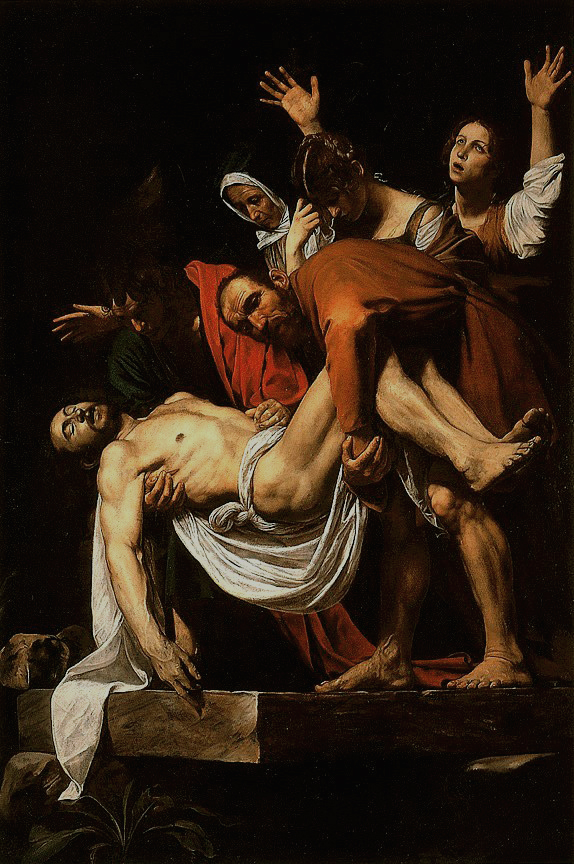
You don’t need to include sex to evoke such feelings: for me, the painting of The Deposition, by Carravagio provokes deep and meaningful emotions.

One needs to remember the purpose for which the written word or the visual art is put to and what it is intended for.

If you intend to provoke lust then that is a dangerous area since you could potentially be placing someone into a near occasion of sin.

If you intend to provoke a passion - say, with the example I gave, of the Deposition - which draws the observer/reader into the narrative and connects them to it in what feels like a real way, then by all means go ahead. That would be the mark of a true artist.

But avoid putting your audience into a position where they could be tempted to sin as a result of the passions aroused in them by your work.
 
Obviously I will not produce lust, but I mean studying the technique so I know how to produce intense feelings of sorrow, joy, charity and things like that. Studying the way the writer invokes intense feelings of lust, learning from it, and writing something magnificent and good. Is it a sin to study the form of such works?
 
Obviously I will not produce lust, but I mean studying the technique so I know how to produce intense feelings of sorrow, joy, charity and things like that. Studying the way the writer invokes intense feelings of lust, learning from it, and writing something magnificent and good. Is it a sin to study the form of such works?
Well, if you study how an author elicits lust, then all you’ll learn is how to induce lust. If, on the other hand, you study how an author or artist elicits awe, then you will learn how to induce awe.

I don’t think you could learn how to induce awe through how someone else elicits lust.
 
Well, if you study how an author elicits lust, then all you’ll learn is how to induce lust. If, on the other hand, you study how an author or artist elicits awe, then you will learn how to induce awe.

I don’t think you could learn how to induce awe through how someone else elicits lust.
^

Well put.
 
Well, if you study how an author elicits lust, then all you’ll learn is how to induce lust. If, on the other hand, you study how an author or artist elicits awe, then you will learn how to induce awe.

I don’t think you could learn how to induce awe through how someone else elicits lust.
Let us say that you are wrong and that you could learn how to induce awe by studying his technique. Is it a sin or not?

I have read violence in literature that teaches how to create a vivid reality that draws the reader into a story. For example, war stories by Tim O’Brien. This does not mean that I will only learn shocking violence simply because that is the effect the author used the technique to describe.
 
If you’re really just interested in studying the technique, you’ll study it and then apply it to something totally different. If you’re really interested in it for prurient interest, you won’t take an academic attitude toward it.

That said, there’s nothing that says you have to study only what the teacher presents, or all of what the teacher presents. If the teacher, or the textbook, has chosen an example which is designed to go against your Christian convictions, sigh and ignore it, or complain about it. Don’t acquiesce in what the dominant culture is presenting, or your brain will be taught to go along with all their stupidity and evil.

And you don’t have to go to class on days when they’re going to be discussing nothing but time-wasting evil cr*p, especially since most of your classmates will be busy being sophomoric or embarrassed.

If you are interested in actually studying what the Fathers and the medievals said about this sort of thing, read the various essays about Christians studying pagan poetry (particularly love poetry, which in Latin and Greek often strayed toward the pornish). It was generally understood that studying rhetoric and poetry was good for learning to understand the Bible and preach moving sermons, but had to be undertaken with prudence so as not to absorb false ideas or prurient imagery and attitudes. Christians didn’t destroy pagan love poetry and did keep copying it, as part of their duty toward civilization; but young people generally were directed to study poetry that didn’t spend all its time describing sex.

Young people weren’t supposed to spend all their Bible study time on Song of Songs, either. (And Jewish people felt the same way about Songs, so it’s not some crazy prudish Christian thing.)

Of course, a lot of this “prepared readings about sex” stuff was actually invented by profs who wanted to get their jollies, or better yet, discuss the readings in their offices with susceptible young people whom they could then seduce. So yeah, either your prof is a predator, or very gullible and susceptible to academic peer pressure. Pick one.
 
I do have an academic attitude to fiction. And I do not think that I will succumb to any of the current culture in the arts. I have strong convictions and want to bring Christianity back to the center of art.
 
Well, that’s good. Now stop thinking about the lust-inducement reading. You’re done with it.

And I stand by my late addition to my post above – profs with sense avoid having readings about sex in their classes, because it encourages the cessation of thought, and it encourages students to hit on profs.

Profs who are predators think this is an advantage. Profs who are gullible probably had a predator prof in school, or have read some kind of pathetic predator-prof justification and actually believed it.
 
Interesting that so many of us know whether what others do is a sin or not, but aren’t cognizant of our own sin.
 
Let us say that you are wrong and that you could learn how to induce awe by studying his technique. Is it a sin or not?

I have read violence in literature that teaches how to create a vivid reality that draws the reader into a story. For example, war stories by Tim O’Brien. This does not mean that I will only learn shocking violence simply because that is the effect the author used the technique to describe.
Assuming that it were possible (I still hold that it is not, but I’ll lead the final verdict up to your conscience :p) Then I would not say that it is not a sin. You are studying a technique in order to apply it. So long as you do not purposefully derive immoral pleasures from it, then I would say you’re in the clear.
As for you example, violence is a means to an end, in this instance the end it to demonstrate the horrors of war (I think, I’ve never read Tim O’Brien, so I can’t say for sure). It is one option of many. Learning how to artfully use violence to bring multiple emotions is different from studying how an author elicits lust. One is a means, the other is the end.

Now, if the author was seeking to illustrate a bond between husband and wife, and used (non-explicit) sex in order to achieve this, or perhaps wants to illustrate a bad relationship in which sex is used as a form of control, then studying the methods by which they did this would be fine. This is very different from studying sexually-explicit content who’s only purpose or capacity is to elicit lustful responses.

To illustrate the distinction - Stephen King uses instance of sex in his stories to demonstrate a bond between characters (I’m specifically referencing the Shining). The scenes are not explicit, and do not bring about lustful thoughts. On the other side, take something like 50 Shades of Grey, or a romance novel, in which the sex scenes are explicit and clearly tuned to elicit a lustful response. You would agree that one is moral and the other is not; the same distinction should be used when choosing which authors to study.

Another, clearer depiction of the difference - Pornographic images vs Artistic nudes. Artistic nudes celebrate the human form, pornographic images degrade the sex act.
Interesting that so many of us know whether what others do is a sin or not, but aren’t cognizant of our own sin.
And what exactly in these posts indicates that we are not aware of our own sinfulness?
 
So I am studying writing. One of the examples given to illuminate creative writing techniques is a piece that brings about lustful feelings. There was no explicit details, and no graphic details, yet the piece evokes such a feeling in the reader with powerful imagery, rhythm and word choice. Is it a sin to study how the author did this even if you do not plan on writing such fiction? It is feels like pornography without the porn, and I want to understand this technique to evoke passionate feelings in my own works.

Is an artist or film maker studying sex scenes or nudity sinning too?
I would say first it is very sinful to try to evoke lustful thoughts and desires in your reader. It is also sinful to read literature that tries to do this or authors who are known to do this. Even some Catholic authors cannot be trusted in these things.

Secondly, is the " art " so absolutely necessary that this must be done or pursued? I’m sure it isn’t, so why do it? We really have to be careful that we aren’t taken in by the world’s standards. It is God we have to please.

There are some excellent authors, Catholic and non-Catholic, who seem to achieve an excellent and interest story or novel or poem without resorting to these devices. One thinks of G.K. Chesterton, C.S. Lewis, Robert Hugh Benson, Louis de Wohl, Owen Francis Dudley, Monica Quill, etc. 👍
 
I speak only for myself, but, knowing myself as I do, I could not dwell on any piece of writing, work of art, or film that evokes lustful feelings such as you describe, because they could so easily become, for me, near occasions of sin. That is me…that is the cross I bear.

If I were studying writing, I would have to concentrate on the myriad of other works in other genres which evoke passionate feelings not of a sexual or lustful nature. Just not worth it to me.

========================
So I am studying writing. One of the examples given to illuminate creative writing techniques is a piece that brings about lustful feelings. There was no explicit details, and no graphic details, yet the piece evokes such a feeling in the reader with powerful imagery, rhythm and word choice. Is it a sin to study how the author did this even if you do not plan on writing such fiction? It is feels like pornography without the porn, and I want to understand this technique to evoke passionate feelings in my own works.

Is an artist or film maker studying sex scenes or nudity sinning too?
 
I would say first it is very sinful to try to evoke lustful thoughts and desires in your reader. It is also sinful to read literature that tries to do this or authors who are known to do this. Even some Catholic authors cannot be trusted in these things.

Secondly, is the " art " so absolutely necessary that this must be done or pursued? I’m sure it isn’t, so why do it? We really have to be careful that we aren’t taken in by the world’s standards. It is God we have to please.

There are some excellent authors, Catholic and non-Catholic, who seem to achieve an excellent and interest story or novel or poem without resorting to these devices. One thinks of G.K. Chesterton, C.S. Lewis, Robert Hugh Benson, Louis de Wohl, Owen Francis Dudley, Monica Quill, etc. 👍
I am taking up writing at my own interest, not out of need for a job, so I do not have to conform to survive, so this is why I am not as scared of losing my soul. I want to learn how to be vivid. I want the reader to feel the hunger and thirst, the craving for attention, the destitution, the fact that people call them moochers and pass them off for madmen and avoid looking into their eyes. I want readers to experience the joy, the pleasure, the taste of water dripping on parched, dry tongue, the tears welling up in their eyes, the gratefulness, the thankfulness, the trembling, the sobs, and the peace at seeing fatherly eyes looking down upon them, like Christ’s eyes, the light of the Father in the face of man.

I see this lustful story as being able to bring that image alive, if only I can master its techniques of vividness.
 
Well, there is plenty of religious art that depicts passionate situations, not least the Passion of Our Lord himself.

You don’t need to include sex to evoke such feelings: for me, the painting of The Deposition, by Carravagio provokes deep and meaningful emotions.
 
From the Catechism:
2351 Lust is disordered desire for or inordinate enjoyment of sexual pleasure. Sexual pleasure is morally disordered when sought for itself, isolated from its procreative and unitive purposes.
2354 Pornography consists in removing real or simulated sexual acts from the intimacy of the partners, in order to display them deliberately to third parties. It offends against chastity because it perverts the conjugal act, the intimate giving of spouses to each other. It does grave injury to the dignity of its participants (actors, vendors, the public), since each one becomes an object of base pleasure and illicit profit for others. It immerses all who are involved in the illusion of a fantasy world. It is a grave offense. Civil authorities should prevent the production and distribution of pornographic materials.
Call it art or whatever, but if it fits in the above, it is sinful on grave matter, and can easily turn into mortal sin.
Is an artist or film maker studying sex scenes or nudity sinning too?
Yes, of course. Sex belongs in wedlock between the spouses, and outside of this sacred boundary it is gravely sinful for all parties: those involved, those who display it, those who watch it for whatever reason, those who promote it.

Nudity is not sinful per se, since our body is not evil but very good - however, most often will nudity evoke lust in our hearts, that we should especially guard our eyes (especially if this nudity is found in art and cinema or writings, where it is usually incorporated for the single specific purpose of evoking lust and nothing else).
 
it encourages students to hit on profs.

Profs who are predators think this is an advantage.
Huh? :confused:

Students who are attracted to profs will hit on them whether they’re studying lustful literature or thermodynamics. 😉

Profs who want to hit on students don’t need lustful literature. They need only a grade book. 😦
 
So I am studying writing. One of the examples given to illuminate creative writing techniques is a piece that brings about lustful feelings. There was no explicit details, and no graphic details, yet the piece evokes such a feeling in the reader with powerful imagery, rhythm and word choice. Is it a sin to study how the author did this even if you do not plan on writing such fiction? It is feels like pornography without the porn, and I want to understand this technique to evoke passionate feelings in my own works.

Is an artist or film maker studying sex scenes or nudity sinning too?
Are you in a college course? Have you been taught plot, pacing, and character development, or is it just a bunch of exercises that don’t seem to be connected? Kind of free form? A control of the passions is always necessary. Understanding how a writer creates passion does not need to involve porn. Passion should involve a noble purpose, such as courage and bravery in the face of evil, just as the villain is passionate about doing evil and will do things that are bold and even daring since he too, wants to bring what is inside his mind into action.

As an artist, studying drawings of the nude human form presented solely for artistic instruction is necessary, however, filmmakers are under an obligation to avoid sexualizing the human body and affecting their viewers by including obvious sex scenes and nudity. I know they understand this but too many refuse to see it as sinful. Artists should not use porn for reference.

What is your eventual goal? Do you want to be a writer with Catholic principles and values?

Peace,
Ed
 
Right now the book that I am reading is discussing word choice, details and rhythm–how to draw a reader into a page. The other chapters cover other aspects, but assume mastery of previous topics. Just glancing at other chapters, I already see one example that shows the conflicted emotions of a daughter of a doctor who procures abortions, a love of him and a hatred for what he does, so before you all think that it is all liberal nonsense it is not. I think that the meaning of the short story under discussion is about the emotional angst of a male teenager.

Anyway I prayed to Jesus and asked Him to keep me from lust, and as I studied the story in question I was kept from such feelings as I analyzed it carefully. So thanks anyway I guess.

I did not get a clear answer though, just people telling me that there is nothing to learn about technique from stories that have topics we do not approve of… I saw the principles of the chapter applied, and I kind of disagree.

My eventual goals is to write books that draw the reader in but are not saturated with progressive, postmodern nonsense. I am going to stay true to my principles and make people understand the importance of religion, Catholicism in particular. Not in college, but I felt attracted to creative writing from a young age. Gave up on it in high school because my stories sucked, and now I am reading textbooks on writing–actually understanding the craft behind writing on a conscious level. Not going for genre fiction, though I have a story in mind that can be considered genre fiction.
 
Maybe you’re not hearing what you want to hear, but the same tools needed to craft a good story can be used to craft one that is infused with Christian principles or one that is immoral. As Catholic writers, we need to make that distinction. I’m not going to be a better writer because I have read books that glorify being being a pimp or hooker, or that make all that’s wrong with society no big deal.

Writing is a craft and I think it can be taught, but your work will affect people to varying degrees. Your books, should you become even slightly popular, will be associated with you. Your books will be regarded as a reflection of yourself to some degree.

Peace.
Ed
 
Status
Not open for further replies.
Back
Top