One historian of the Shroud mused, “Their refusal to believe the evidence is itself not a scientific attitude.” The real problem, claim Shroud supporters, is not that an ancient cloth that covered a crucified victim still exists after two thousand years. Said one researcher: “Do you think that if the ancient burial sheet of a sandal maker had been discovered with a scroll that read, ‘here lies Benjamin the Sandal Maker,’ that the scientific world fall all over itself to prove that it could not be Benjamin the Sandal Maker?”
“No. They only compromise their scientific witness because the peculiarities of the wounds of this victim reveal him to be no sandal maker, but the Son of God. If they could, they would get rid of all the physical evidence of Christianity – that Jesus lived, died and was buried. And then Christians would have nothing to believe in. Then, after two thousand years, Christians would finally die out.”
In every age, Christians have preserved relics of the persecution of the saints. What to others are mere rags, wooden boards, rusty chains – all are treasures. These serve as a testimony for each new generation of Christians – physical records of unshakable faith left behind to strengthen the age to come.
Relics were never meant to validate history, but to serve faith. Yet, it is for this harrowing moment in the history of Christian persecution that the relics of Christ’s passion confront an unbelieving age.
Despite the derision of skeptical scientists and the fast-buck authors who would cash in on a supposed debunking of the Shroud, history, science, medicine and art present a providential reality that is difficult to dismiss for those who must answer the question: “Who do you say that I am?”
The evidence mounts
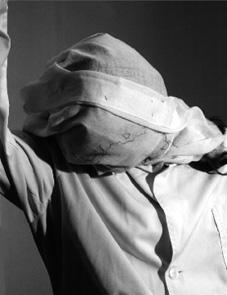
A few miles beyond the ancient city of Oviedo in northern Spain, there lies a high valley hidden between the jagged peaks of the Asturian mountains. The last cart road up the mountain gives way to a rocky path tramped in modern times only by goats and shepherds. At the summit of Mon Sacro there stands today a rare octagonal church built by the Knights Templar after northern Spain had been liberated from the Moslems. The warrior monks built their secret church over the cave that once held the Sudarium of Christ, described in the Gospel of John as “the cloth which had been around Jesus’ head.” (John 20: 6-7)
Four hundred years before the triumphant Templars commemorated the hallowed ground, Alphonso the Chaste, king of Asturias, huddled there with the remnants of his army. Below him to the south on the Castillian plain he watched the advancing enemy. Spain lay under Moorish domination; the terrified Christians had all fled or been subjugated. Only Alphonso’s weary band remained to fight for Christian Spain. The king, a devout man, understood that he guarded more than the last scrap of Christian Spain – he guarded the Sudarium Domini, the linen that had covered the face of his crucified Savior.
wnd.com/news/article.asp?ARTICLE_ID=37956