
Something I've Noticed

  • Thread starter Thread starter iohanne
  • Start date Start date
Status
Not open for further replies.
I

iohanne

Guest
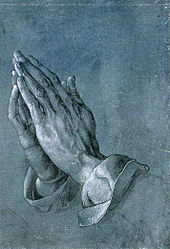
I’ve noticed many traditionalists tend to be more of a stickler at maintaining proper form and keeping their hands remaining like this throughout the whole liturgy:
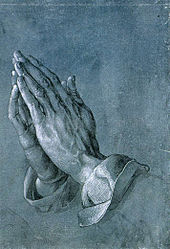


From where did this originate? And why is there more of an emphasis on this form rather than the orans posture of prayer? And what about these hand postures?

http://thumbs.dreamstime.com/thumblarge_223/1199380932568RJ3.jpg

Is it basically just a lazier version of the first? Or do they have two separate origins?
 
I went to Catholic grade school in the NO mass and was taught the top way. I’ve continued to do it throughout life, just because the nuns insisted thats how we stayed during mass.
 
It seems more reverent to me. You can do position #2 anywhere, but if you do position #1, you are only praying.
 
I went to Catholic grade school in the NO mass and was taught the top way. I’ve continued to do it throughout life, just because the nuns insisted thats how we stayed during mass.
Me too!!!:rolleyes:
 
I wasn’t raised Catholic and have never prayed with my hands in the top position shown.

I have seen Far East people greet each other with their hands in that position, though.
Which is interesting. I wonder why they do that.

As for praying that way NOW, if other people around me put their hands like that,
I sometimes do also, out of respect. I like to pray with upraised arms
(and no, I wasn’t raised any sort of charismatic=== I know that many of them do that, too).

Jaypeeto4
 
I’ve been told that the hands-folded position originated in the times of mass martyrdom, when the victims voiced their last prayers with bound hands.

If that is true, then either #1or #2 is equally valid. (Or even hands behind the body, for that matter).

ICXC NIKA
 
I’ve noticed many traditionalists tend to be more of a stickler at maintaining proper form and keeping their hands remaining like this throughout the whole liturgy:

http://upload.wikimedia.org/wikipedia/commons/thumb/c/c2/Albrecht_Dürer_Betende_Hände.jpg/170px-Albrecht_Dürer_Betende_Hände.jpg

From where did this originate? And why is there more of an emphasis on this form rather than the orans posture of prayer? And what about these hand postures?

http://thumbs.dreamstime.com/thumblarge_223/1199380932568RJ3.jpg

Is it basically just a lazier version of the first? Or do they have two separate origins?
LOL, the second is not a lazier version of the first. It’s a matter of cultures. If you were educated by mendicants, you would have been taught to use the second posture. In the mendicant tradition, you do not hold your hands palm to palm. I call them praying arrows.

You fold your arms inside your sleeve or under your scapular. Most people don’t wear that kind of garment. So they were taught to either fold their arms or fold their hands.

Mendicants got it from St. Bernard who taught that the hands should always be out of sight. Bernard got it from Benedict who said that hand were to bee seen only during work and prayer, but should not call attention to themselves.

The mendicants generally sit or stand for many parts of the mass. Folding the arms is very natural. People who grew up with them, learned to fold their arms or their hands and handed it down. There is no big deal to this. If you walk into our chapel, you will see hands or arms folded. You will never see the hands in praying arrows. The people who come to pray with us, just follow along. Part of it is also because the folded hands or arms allows you a place to rest your head when you wish to bow forward.

Things usually have a cultural background to them. They’re not always good or bad.

Fraternally,

Br. JR, OSF 🙂
 
LOL, the second is not a lazier version of the first. It’s a matter of cultures. If you were educated by mendicants, you would have been taught to use the second posture. In the mendicant tradition, you do not hold your hands palm to palm. I call them praying arrows.

You fold your arms inside your sleeve or under your scapular. Most people don’t wear that kind of garment. So they were taught to either fold their arms or fold their hands.

Mendicants got it from St. Bernard who taught that the hands should always be out of sight. Bernard got it from Benedict who said that hand were to bee seen only during work and prayer, but should not call attention to themselves.

The mendicants generally sit or stand for many parts of the mass. Folding the arms is very natural. People who grew up with them, learned to fold their arms or their hands and handed it down. There is no big deal to this. If you walk into our chapel, you will see hands or arms folded. You will never see the hands in praying arrows. The people who come to pray with us, just follow along. Part of it is also because the folded hands or arms allows you a place to rest your head when you wish to bow forward.

Things usually have a cultural background to them. They’re not always good or bad.

Fraternally,

Br. JR, OSF 🙂
There you religious go again… scandalizing the Roman Catholic laity with all your irreverant innovations. 😃

Thank you Brother. Just thank you for being you and for being a part of my life in some small way.

-Tim-
 
There you religious go again… scandalizing the Roman Catholic laity with all your irreverant innovations. 😃

Thank you Brother. Just thank you for being you and for being a part of my life in some small way.

-Tim-
:rotfl: :rotfl: :rotfl:

These radical 1500 year old innovations have got to stop. 😃

Fraternally,

Br. JR, OSF 🙂
 
Yeah, although I kind of disagree with both of you on most things about how diocesan liturgies should remain separate in style from monastic liturgies, I’m kind of with you on this one. Posture #1 is incredibly awkward for me to do and maintain throughout liturgy and considering my own ethnic background the orans and posture #2 is much more widespread.

Now if I can find out the historical origins of #1…
 
Yeah, although I kind of disagree with both of you on most things about how diocesan liturgies should remain separate in style from monastic liturgies, I’m kind of with you on this one.
There are going to be carry overs for two reasons.
  1. Until very recently, most priests belonged to religious communities and they celebrated the mass according to the orders of their superiors, not according to the Roman Missal. This was allowed to the major religious orders. People had a lot of contact with mendicants and monks.
  2. The major religious orders of men still dominate the liturgical scene at the Vatican. They are the ones to whom the Vatican looks for questions on liturgy, because they have maintained the liturgy and have reformed it many times throughout the history of the Church. The Benedictines, more than any other religious order, has made contributions to liturgy. Their voice is always going to weigh in very heavily, even if they are a minority. Liturgy is their vocation. Franciscans played an influential role in what we know today as the Tridentine Form. They developed it. Trent and St. Pius V added the finishing touches to it and made it the standard for the Latin Church.
However, because St. Pius was a Dominican, he tried as best he could to preserve the Franciscan and Dominican traditions. He preserved the Dominican Rite and he preserved the Franciscans very simple and austere form of the liturgy, without many of the elements that Trent added. He was trying to help the Church and be a Dominican Friar at the same time. The mandate from St. Dominic protected the Dominican Rite and it also demanded that Dominicans venerate and support the Franciscans.

As much as some would like to separate the diocese from the major orders of men, it’s not possible, because the major orders themselves will not go away. They have a place in the Church and one of those places is in the development of liturgy, among other things. The Holy Father looks to them and so do bishops.
Posture #1 is incredibly awkward for me to do and maintain throughout liturgy and considering my own ethnic background the orans and posture #2 is much more widespread.
Now if I can find out the historical origins of #1…
I’m going to take a guess at this and if you find out, let me know if I got it right. In my many years on this earth, don’t ask, I’ve noticed that this hand gesture is used as a sign of reverence and respect in Eastern cultures.

Maybe, since Christianity originated in the Middle East, this may be a cultural carry over.

Again . . . I’m throwing in my guess and I’d really like to know if I’m right on this one. I’m curious too. I asked the brothers and none of them knows where it came from.

Is there a prize if I get it right? 😃

Fraternally,

Br. JR, OSF 🙂
 
There are going to be carry overs for two reasons.
  1. Until very recently, most priests belonged to religious communities and they celebrated the mass according to the orders of their superiors, not according to the Roman Missal. This was allowed to the major religious orders. People had a lot of contact with mendicants and monks.
  2. The major religious orders of men still dominate the liturgical scene at the Vatican. They are the ones to whom the Vatican looks for questions on liturgy, because they have maintained the liturgy and have reformed it many times throughout the history of the Church. The Benedictines, more than any other religious order, has made contributions to liturgy. Their voice is always going to weigh in very heavily, even if they are a minority. Liturgy is their vocation. Franciscans played an influential role in what we know today as the Tridentine Form. They developed it. Trent and St. Pius V added the finishing touches to it and made it the standard for the Latin Church.
However, because St. Pius was a Dominican, he tried as best he could to preserve the Franciscan and Dominican traditions. He preserved the Dominican Rite and he preserved the Franciscans very simple and austere form of the liturgy, without many of the elements that Trent added. He was trying to help the Church and be a Dominican Friar at the same time. The mandate from St. Dominic protected the Dominican Rite and it also demanded that Dominicans venerate and support the Franciscans.

As much as some would like to separate the diocese from the major orders of men, it’s not possible, because the major orders themselves will not go away. They have a place in the Church and one of those places is in the development of liturgy, among other things. The Holy Father looks to them and so do bishops.
Yeah, I kind of knew most of that that. 😛 I suppose I should’ve tempered my wording a bit but what I really meant was that there are certain traditional elements in diocesan liturgies which are just as significant, symbolically powerful and appropriate as elements in monastic liturgies. There’s always going to be crossover and I love that but enforcing versus populum ubiquitously just because it was a common feature in Franciscan liturgies doesn’t fly for me. Neither would replacing Gregorian chant with the more monotonous monastic styles fly. It’s these kinds of elements that I feel should be left alone in their various domains.

The laity aren’t living like monastics so there are things that they can and should legitimately enjoy - like good music at liturgies, beautiful churches, less of an emphasis on brotherhood (horizontal emphasis) and more of an emphasis on the people of God coming together to attend the Heavenly Sacrifice (vertical emphasis), etc. Anyways, we’re getting off topic. 🙂
I’m going to take a guess at this and if you find out, let me know if I got it right. In my many years on this earth, don’t ask, I’ve noticed that this hand gesture is used as a sign of reverence and respect in Eastern cultures.

Maybe, since Christianity originated in the Middle East, this may be a cultural carry over.
Hmmm, yeah that’s what I thought too. But I don’t actually know if it’s a common Middle Eastern thing. It could be Islamic influence that may have led to the decline of this posture if it were at all common in the Middle East at one point - seeing as as far as I know, the orans is more common in Islam. Hopefully someone else will have more information.
 
Is this the one that you call the lazy position? 😃
or this? 😃

or this? 😃
No, I didn’t call it the lazy position. I was asking if it was. Just so people don’t get the wrong impression: posture #2 is the way I naturally pray (along with the orans position, of course). Posture #1 is awkward and stiff for me to maintain and even for me to watch other people doing it. I was just asking how it evolved and what the origins were. Was it originally just a “lazier” version of #1 or was it it’s own thing? Our friend JReducation has informed me that #2 has monastic origins.
 
No, I didn’t call it the lazy position. I was asking if it was. Just so people don’t get the wrong impression: posture #2 is the way I naturally pray (along with the orans position, of course). Posture #1 is awkward and stiff for me to maintain and even for me to watch other people doing it. I was just asking how it evolved and what the origins were. Was it originally just a “lazier” version of #1 or was it it’s own thing? Our friend JReducation has informed me that #2 has monastic origins.
I was just kidding. I understand that it is an easier position for you and I thought that seeing JPII holding the same position might make you feel much more comfortable in using it.
 
I don’t put my hands in #2 for the whole Mass, just going up to and back from Communion. I can’t really explain why, except it just seems more reverent…
 
I am #1 from the beginning to the end. It is just more comfortable for me, if I cross my fingers I tend to clench them and then they hurt.
 
Status
Not open for further replies.
Back
Top