C
ConstantineTG
Guest
Yup, the East definitely the Latins came there first.I think we can safely claim Eastern Canada/US for the Latin Church. Alaska and other parts of the Western half could be up for debate.

Yup, the East definitely the Latins came there first.I think we can safely claim Eastern Canada/US for the Latin Church. Alaska and other parts of the Western half could be up for debate.
That analysis discounts the fact that the Slovak and Hungarian Churches are of common patrimony (although you do tie them together later in your post).The Ruthenian house isn’t all that tidy at the moment - 1 Archeparchy, its 3 suffragan eparchies, one autonomous eparchy, one exarchate.
More evidence of “not in good order”…That analysis discounts the fact that the Slovak and Hungarian Churches are of common patrimony (although you do tie them together later in your post).
I have seen this thrown at Ruthenians by Ukrainian Catholics before.I don’t know what their own thoughts on this matter is, but they can always amalgamate into the UGCC, especially when the Patriarchate is formally recognized.
Ruthenians are Catholics, like the UGCC. The Russian Orthodox is not Catholic. So definitely “no”I have seen this thrown at Ruthenians by Ukrainian Catholics before.
I have to wonder how those same Ukrainian Catholics feel when Russian Orthodox say the same thing to them.

… from your post to God’s (and the Ruthenian hierarchs’) ears!More evidence of “not in good order”…
Minor, but still. If they were to hold a sobor requesting reunification with the Ruthenians in Europe, I could see Rome creating a Metropolia and appointing a Major Archbishop… but I doubt Rome would force the issue, and so unless it’s requested by the various eparchies, it’s unlikely.
I honestly think, should the European Ruthenians, the Slovaks, and the Hungarians reunite, they’d most likely be a separate metropolitan Church Sui Iuris, with shared ascription with the US metropolia, rather than becoming a Major archiepiscopal see.
How would that work? It has been asserted in another thread that bishops “own” their liturgy. While I clearly see advantages in sharing common translations and rubrics all referencing a single recension, their are nuances to each tradition (incluing form of chant) that deserve preservation.Ruthenians are Catholics, like the UGCC. The Russian Orthodox is not Catholic. So definitely “no”
On another matter, we’d gladly take the Russian Catholics in as well
Music variation can easily be adapted and preserved across Churches.How would that work? It has been asserted in another thread that bishops “own” their liturgy. While I clearly see advantages in sharing common translations and rubrics all referencing a single recension, their are nuances to each tradition (incluing form of chant) that deserve preservation.
I’d have to say that comparison is apples-and-oranges. :tsktsk:I have seen this thrown at Ruthenians by Ukrainian Catholics before.
**
I have to wonder how those same Ukrainian Catholics feel when Russian Orthodox say the same thing to them.**
If you had said that a few years ago, I would have said Yeah that’s a likely destination. But now that the Slovaks already have a metropolia …More evidence of “not in good order”…
Minor, but still. If they were to hold a sobor requesting reunification with the Ruthenians in Europe, I could see Rome creating a Metropolia and appointing a Major Archbishop… but I doubt Rome would force the issue, and so unless it’s requested by the various eparchies, it’s unlikely.
I honestly think, should the European Ruthenians, the Slovaks, and the Hungarians reunite, they’d most likely be a separate metropolitan Church Sui Iuris, with shared ascription with the US metropolia, rather than becoming a Major archiepiscopal see.
That really does NOT happen well. Just look at how the Roman Church world-wide has adopted the (often more catchy) Lutheran Hymns in preference to the traditional Roman ones. And how the regional hymns have fallen by the wayside.Music variation can easily be adapted and preserved across Churches.
They are divided, even recently, along national lines.When I started this thread I didn’t realize that the “population” of the European eparchy was so large. I assumed that the majority of the 600 000 or so faithful were in the American metropolia simply because it is divided into four distinct eparchies (one with the honor of being a metropolitan see), but it looks like the single eparchy in Europe has more faithful than the entire American metropolia… which makes the issue of a “divided house” even more potent.
The strange part of the status quo is that the Metropolitan of Prešov is the senior Ruthenian bishop in Eastern Europe, “outranking” the Eparch of Mukachevo, the “mother church”. The Ruthenian Church has been systematically divided into national churches in the ancestral lands. Where have we seen that before?If you had said that a few years ago, I would have said Yeah that’s a likely destination. But now that the Slovaks already have a metropolia …
Did you notice that split happened in 1818 where Prešov was formed from part of Mukacheve? At that time the entire area was the Austrian Empire (1804–1867).The strange part of the status quo is that the Metropolitan of Prešov is the senior Ruthenian bishop in Eastern Europe, “outranking” the Eparch of Mukachevo, the “mother church”. The Ruthenian Church has been systematically divided into national churches in the ancestral lands. Where have we seen that before?
The split into a separate Eparchy was one thing. It was elevated to a Metropolitan Archeparchy in 2008, after losing the territory in the Czech Republic in 1997.Did you notice that split happened in 1818 where Prešov was formed from part of Mukacheve? At that time the entire area was the Austrian Empire (1804–1867).
This shows how there are different meanings of church: universal, tradition, sui iuris, eparchy, and parish. When you say Ruthenian, it covers more than one sui iuris church, but not the entire tradition. This is typically where conflict has occurred in the past, and led to independent jurisdicitions, such as in 1924 when the Greek Catholics were split based upon history from the Polish or Hungarian unions, and nationality, given their own eparchs.The split into a separate Eparchy was one thing. It was elevated to a Metropolitan Archeparchy in 2008, after losing the territory in the Czech Republic in 1997.
The Ruthenian Churches in Eastern Europe are thus all organized along national boundaries at present, with their own direct ties to Rome.
We can be grateful that the relations between the bishops there appears to be, by all accounts, extremely cordial, warm and brotherly, which perhaps yields a greater bond than any formal hierarchical arrangement ever could foster.
and all of that was of our own doing, as that’s what the people asked for …This shows how there are different meanings of church: universal, tradition, sui iuris, eparchy, and parish. When you say Ruthenian, it covers more than one sui iuris church, but not the entire tradition. This is typically where conflict has occurred in the past, and led to independent jurisdicitions, such as in 1924 when the Greek Catholics were split based upon history from the Polish or Hungarian unions, and nationality, given their own eparchs.
1924
Bishop Basil Takach Apostolic Exarch of United States of America of the Ruthenians
Bishop Constantine Bohacevskyj Apostolic Exarch of United States of America of the Ukrainians
Bishop Antal Papp Apostolic Exarch of Miskolc of the Hungarians
If there was a Greek Catholic church just for Rusyns, it would be complex because the Rusyns were originally contained within the Austrio-Hungarian empire, which is now several countries, including Rusyn’s in Poland, Czech Republic, Slovakia, Ukraine, Romania, and Serbia (Vojvodina, Novi Sad area):and all of that was of our own doing, as that’s what the people asked for …
But I agree with your point - this does speak to multiple meanings of “Church” and “tradition”.
That said, if we look to our UGCC cousins, they’ve managed to stay together.
P.S. Thanks for the German language refresher course! Interestingly enough, as you likely know, some of the best and most accurate histories of the Ruthenians and Rusyn traditions (church and folk) have been written by Germans, in German.
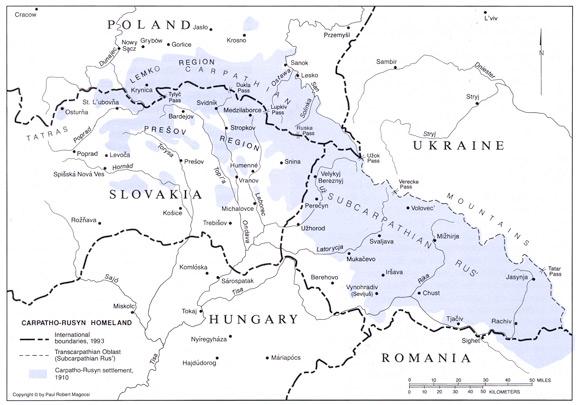
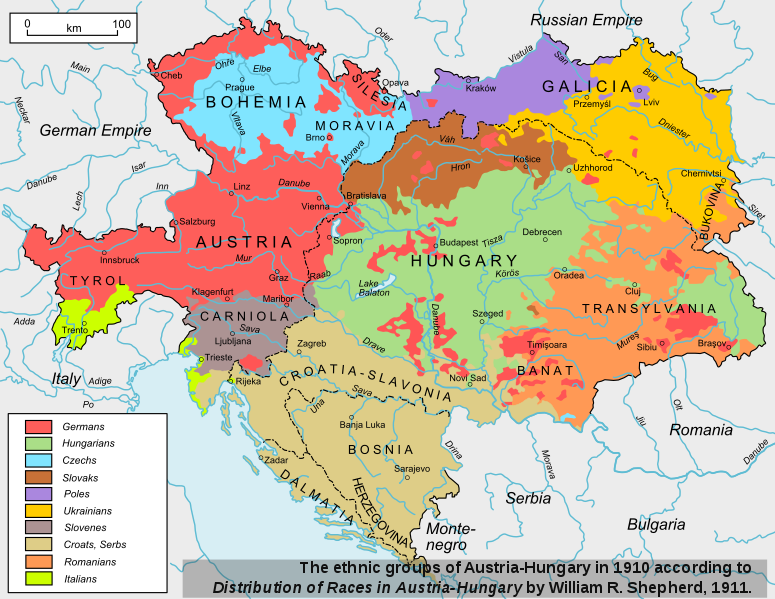
Interesting. I knew that there was a time when Transylvania was part of Hungary rather than Romania; I didn’t realize how large of an area Transylvania is.From the map above, the blue-grey areas fall mostly in the lowest portion of Galicia, and some of Transylvania, on the 1910 map. There are the Rusyn areas.
http://upload.wikimedia.org/wikiped...hnic.svg/775px-Austria_Hungary_ethnic.svg.png