Navarre Bible Commentary
Second Reading: From: Colossians 1:24—2:3
St. Paul’s Response to His Calling
[24] Now I (Paul) rejoice in my sufferings for your sake, and in my flesh I complete what is lacking in Christ’s afflictions for the sake of His body, that is, the Church, [25] of which I became a minister according to the divine office which was given to me for you, to make the word of God fully known, [26] the mystery hidden for ages and generations but now made manifest to His saints. [27] To them God chose to make known how great among the Gentiles are the riches of the glory of this mystery, which is Christ in you, the hope of glory. [28] Him we proclaim, warning every man and teaching every man in all wisdom, that we may present every man mature in Christ.
Commentary:
- Jesus Christ our Lord perfectly accomplished the work the Father gave Him to do (cf. John 17:4); as He said Himself when He was about to die, “It is finished”, it is accomplished (John 19:30).
From the point onwards objective redemption is an accomplished fact. All men have been saved by the redemptive death of Christ. However, St. Paul says that he completes in his flesh “what is lacking in Christ’s afflictions”; what does he mean by this? The most common explanation of this statement is summarized by St. Alphonsus as follows: “Can it be that Christ’s passion alone was insufficient to save us? It left nothing more to be done, it was entirely sufficient to save all men. However, for the merits of the Passion to be applied to us, according to St. Thomas (“Summa Theologiae”, III, q. 49, a. 3), we need to cooperate (subjective redemption) by patiently bearing the trials God sends us, so as to become like our Head, Christ” (St. Alphonsus, “Thoughts on the Passion”, 10).
St. Paul is applying this truth to himself. Jesus Christ worked and strove in all kinds of ways to communicate His message of salvation, and then He accomplished the redemption by dying on the Cross. The Apostle is mindful of the Master’s teaching and so he follows in His footsteps (cf. 1 Peter 2:21), takes up his cross (cf. Matthew 10:38) and continues the task of bringing Christ’s teaching to all men.
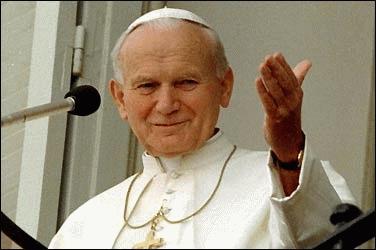
Faith in the fact that we are sharing in the sufferings of Christ, [Pope] John Paul II says, gives a person “the certainty that in the spiritual dimension of the work of Redemption HE IS SERVING, like Christ, THE SALVATION OF HIS BROTHERS AND SISTERS. Therefore he is carrying out an irreplaceable service. In the Body of Christ, which is ceaselessly born of the Cross of the Redeemer, it is precisely suffering permeated by the spirit of Christ’s sacrifice that is THE IRREPLACEABLE MEDIATOR AND AUTHOR OF THE GOOD THINGS which are indispensable for the world’s salvation. It is suffering, more than anything else, which clears the way for the grace which transforms human souls. Suffering, more than anything else, makes present in the history of humanity the force of the Redemption” (“Salvifici Doloris”, 27).
26-27. The “mystery”, now revealed, is God’s eternal plan to give salvation to men, both Jews and Gentiles, making all without distinction co-heirs of glory and members of a single body which is the Church (cf. Ephesians 3:6), through faith in Jesus Christ (cf. Romans 16:25-26).
In Christ, who has brought salvation to Gentile and Jew, the “mystery” is fully revealed. His presence in Christians of Gentile origin is in fact a very clear manifestation of the supernatural fruitfulness of the “mystery” and an additional ground for Christians’ hope. Thanks to this presence people who do not form part of Israel are enable to attain salvation. Previously subject to the power of darkness and slaves of sin (verses 13-14), they have now died to sin through Baptism (cf. Romans 6:2-3) and Christ, through grace, dwells in their hearts (on the salvific “mystery”, cf. notes on Ephesians 1:13-14 and Ephesians 1:9, and “Introduction to the Letters of St. Paul” in “The Navarre Bible: Romans and Galatians”, pages 32-33).
In His infinite love Christ lives in us through faith and grace, through prayer and the Sacraments. Also, “He is present when the Church prays and sings, for He has promised `where two or three are gathered in My Name, there am I in the midst of them’ (Matthew 18:20)” (Vatican II, “Sacrosanctum Concilium”, 7).
"Christ stays in His Church, its Sacraments, its liturgy, its preaching–in all that it does. In a special way Christ stays with us in the daily offering of the Blessed Eucharist …]. The presence of Christ in the host is the guarantee, the source and the culmination of His presence in the world.
“Christ is alive in Christians”. Our faith teaches that man, in the state of grace, is divinized–filled with God. We are men and women, not angels. We are flesh and blood, people with sentiments and passions, with sorrows and joys. And this divinization affects everything human; it is a sort of foretaste of the final resurrection" ([St] J. Escriva, “Christ Is Passing By”, 102-103).
28: “In all wisdom”: St. Paul is exhorting and teaching each and every one, communicating wisdom, the true teaching of Jesus Christ. The text clearly shows St. Paul’s conviction that he is a faithful transmitter of teachings revealed by God. Possessed of such wisdom he is confident that he can lead his disciples to Christian perfection.