
Study and Meditations on this Sunday's Scripture Readings: March 6, 2011

  • Thread starter Thread starter Fidelis
  • Start date Start date
Status
Not open for further replies.
F

Fidelis

Guest
To help us prepare for this coming Sunday, here are the readings, studies and reflections for this coming Sunday’s Scripture readings. **This Sunday is the 9th Sunday in Ordinary Time, Cycle A. **This Sundays Gospel Reading concludes a series of Sundays in which we heard from Jesus’ Sermon on the Mount. This will lead us into the liturgical season of Lent, which begins next week with Ash Wednesday.

Here are the Scripture readings from the U.S. Catholic bishops website.

My own weekly study can be found here under “Current Study.”

Here are three audio reflections on the readings by Sister Ann Shields, Dr. Scott Hahn and Fr. Robert Barron.

Here is a Catholic Bible study podcast on the Gospel Reading, about an hour long, from the Franciscan Sisters of the Sorrowful Mother.

The Navarre Bible Commentary for each reading can be viewed here.

Further study resources for the Readings: St. Charles Borromeo Bible Study can be found here, and *Catholic Matters *can be found here.

**Just a reminder: **If you are thinking about a home or parish-based Lenten Scripture study, you can plan ahead by going to our new page on the main web site that contains studies for all the Sundays of Lent, including Palm Sunday. You can find that here.

Please consider supporting those who provide these free resources. 🙂

Discussion, questions and charitable comments are always welcome. Have a blessed week!
 
1st Reading - Deuteronomy 11:18, 26-28., 32

The book of Deuteronomy is a book which, according to Hebrew tradition, was written by Moses for the laity; the book of Leviticus having been written for the Levites; the priests. The central focus of Deuteronomy is an understanding of the Law in terms of the Covenant which the Israelites have with God as His chosen people. This book not only gives the covenant in listing the blessings and curses associated with it, it also details the successes and failures of Israel’s checkered history in terms of fidelity and disregard. (On the 1st Sunday in Lent (Cycle A) we will hear of Jesus’ temptation in the desert and how He answers these temptations from the sections of Deuteronomy which tell how Israel failed the same temptations and what the correct response was.)

Here is the 1st Reading as we will hear it this Sunday:
Moses told the people,
“Take these words of mine into your heart and soul.
Bind them at your wrist as a sign,
and let them be a pendant on your forehead.
“I set before you here, this day, a blessing and a curse:
a blessing for obeying the commandments of the LORD, your God,
which I enjoin on you today;
a curse if you do not obey the commandments of the LORD, your God,
but turn aside from the way I ordain for you today,
to follow other gods, whom you have not known.”
 
From *The Navarre Bible *commentary with RSV-CE text:
A further exhortation
-----------------------------

[18] “You shall therefore lay up these words of mine in your heart and in your soul; and you shall bind them as a sign upon your hand, and they shall be as frontlets between your eyes.
A blessing and a curse
---------------------------------

[26] “Behold, I set before you this day a blessing and a curse: [27] the blessing, if you obey the commandments of the Lord your God, which I command you this day, [28] and the curse, if you do not obey the commandments of the Lord your God, but turn aside from the way which I command you this day, to go after other gods which you have not known. [32] [Y]ou shall be careful to do all the statutes and the ordinances which I set before you this day.
**11:26-32. ** The ceremony of blessing and cursing will be explained fully in chapters 27-28; and Joshua will in due course perform it (cf. Josh 8:30-35). It does not consist so much in blessing or cursing as in proclaiming a summary of God’s commandments and ordinances in terms like “Cursed be he who does not do them”, “Blessed be he who obeys them.” Mount Gerizim and Mount Ebal are situated the south-west and north-east respectively of the Samaritan city of Shechem and are separated by a narrow valley. In later times the Samaritans will come to regard Gerizim as a holy mountain, building a temple there when the Jews came back from Babylon (537 BC), to rival the temple of Jerusalem; although the temple was destroyed towards the end of the 2nd century BC, the Samaritans continued to see this mountain as a place of worship and sacrifice. The Samaritan woman mentions it in her conversation with our Lord (cf. Jn 4:20).
 
From the 1859 Haydock commentary with DRV text:
18 Lay up these my words in your hearts and minds, and hang them for a sign on your hands, and place them between your eyes.
**
Ver. 18.
* Place. Hebrew, “that they may be as frontlets between your eyes,” chap. vi. 9., and Exodus xiii. 9. (Haydock)
*
26 Behold I set forth in your sight this day a blessing and a curse:*
**
Ver. 26. **Curse. Their respective effects you shall experience, according to your behaviour. (Calmet) — God helps our free will to do good. (St. Augustine, q. 15.) (Worthington)
*27 A blessing, if you obey the commandments of the Lord your God, which I command you this day:
28 A curse, if you obey not the commandments of the Lord your God, but revolt from the way, which now I shew you, and walk after strange gods, which you know not.
32 See therefore that you fulfil the ceremonies and judgments, which I shall set this day before you.
*
Ver. 32. *Fulfil. *How inconsistent must such exhortations be, if, as Protestants assert, the commandments be impossible, and “the law exacteth impossible things.” (Luther in Gal. iii.) (Haydock)
 
Other thoughts and commentary on the 1st Reading:
**18 "Therefore, take these words of mine into your heart and soul: ** In the previous chapters, Moses has reminded the Chosen People of all that Yahweh had done for them in Egypt and during their long journey to Moab. He has warned them of the temptations they would encounter when they entered the Promised Land. They must never forget Yahweh, the true God. If they do, if they follow other gods and bow down before them—“I warn you today, you will most certainly perish.” They must, therefore, remember his admonitions.
**Bind them at your wrist as a sign, and let them be a pendant on your forehead: **These words, taken literally, are the reason some Jews today wear phylacteries. In Jesus’ time the Pharisees wore phylacteries on the head and on the arm. The head phylactery consisted of a small capsule made of parchment some ten to fifteen millimeters (about 2 inch) wide. It was constructed with four hollow spaces in which were inserted four passages from the Law: Exodus 13:1-10 (the Matzoth Torah), Exodus 13:11-16 (the Passover Torah), Deuteronomy 6:4-9 (the Shema, the profession of the belief in one God), and Deuteronomy 11:13-21 (the commandment to love God and not to serve other gods). The arm phylactery had only one space but contained the same four passages on a single scroll. The head phylactery was fastened around the head by straps so that it hung in the middle of the forehead. The arm phylactery was fastened to the upper left arm by straps so that it hung at the level of the heart. Thus, the precepts of the law which God had given them through Moses, should be as close to them as the clothes or ornaments they wear.
Christ warned his Apostles against imitating the Pharisees in their ostentatious way of carrying out this precept, as in all the other things they did to attract attention to themselves (see Mt. 23: 3).
verses 19—25 not included in this reading]
**26 "I set before you here, this day, a blessing and a curse:
27 a blessing for obeying the commandments of the LORD, your God, which I enjoin on you today;
28 a curse if you do not obey the commandments of the LORD, your God, but turn aside from the way I ordain for you today, to follow other gods, whom you have not known: **In the covenant formula, the blessings and the curses were the ultimate sanctions, to be taken extremely seriously. When the covenant was sworn, the parties, by the act of swearing, took the blessings and curses upon themselves. By emphasizing that “this day” the blessing and the curse are set before them, Moses is emphasizing that a firm and final decision is to be made.
verses 29—31 not included in this reading]
**32 be careful to observe all the statutes and decrees that I set before you today: **A final warning of the seriousness of the covenant in which they are bound to God. The Chosen People have a simple choice: If they remain loyal to Yahweh, and keep his commandments, they will be blessed by Yahweh. If they desert him, and turn to false gods, they will bring a curse on themselves, and Yahweh will desert them. Their subsequent history proved the truth of this prophecy and promise.
http://www.jewishpress.com/UploadedImages/stdImage/450McBee-082010-Phylacteries.jpg
 
Catechism of the Catholic Church paragraph referencing Deuteronomy 11: 18-32
708 This divine pedagogy appears especially in the gift of the Law.72 God gave the Law as a “pedagogue” to lead his people towards Christ.73 But the Law’s powerlessness to save man deprived of the divine “likeness,” along with the growing awareness of sin that it imparts,74 enkindles a desire for the Holy Spirit. The lamentations of the Psalms bear witness to this.
Code:
72. Cf. Ex 19-20; Deut 1-11; 29-30.
Code:
73. Gal 3:24.
Code:
74. Cf. Rom 3:20.
 
A meditation on the 1st Reading for practical application from Catholic Matters:
**APPLICATION: **The choice which Moses set before the Israelites is the very same choice set before each one of us, when we come to the use of reason. There is this difference that the temporal, earthly blessings, which a faithful service of the true God would bring on the Israelites, were the ones stressed. They had little or no knowledge as yet, of a life of eternal blessings. It would follow—they too would have that eternal life—but this was only very vaguely revealed to them in the promise of the Messiah, who would come at some later date, and make them members of the true kingdom of God.
On the other hand, we have a clear understanding of the blessings and the reward, which a faithful and loyal service of God in this life will earn for us. It is not prosperity, or power, or freedom from pain and sorrow in this life. It is the guarantee that if we accept these trials and troubles, and continue loyal to God, an eternal life of happiness awaits us after we pass through the gates of physical death.
We indeed are fortunate and blessed, that we are living after Christ’s coming on earth. He has taught us the true value of life. He has shown us that this earthly life is only a short period, but a valuable one, during which we can prepare ourselves for true and everlasting life. It should be much easier for us, therefore, with such an award awaiting us, to be loyal to God by keeping his commandments, than it was for the Israelites.
They looked for earthly blessings, peace and plenty, during their time on earth. The longer that time lasted, the greater they thought the blessings were. If their crops were poor, and their flocks and herds not increasing as they thought they should, and they saw their pagan neighbors prospering, under the benevolence and power, as they believed, of their pagan gods, they did not hesitate to leave Yahweh and pay their worship to these pagan idols.
We are shocked, surely, at such disloyalty and ingratitude to the true God, who had done so much for them. Before passing judgment on them, however, it would be far more profitable for us to look on our own past, and see how often we have been disloyal to God, when it was a question of a paltry, earthly gain or a passing, personal pleasure. We did not offer sacrifice to pagan idols, maybe, but we made idols of things far less worthy of the name, than even the idols of wood and stone carved by the pagans of Canaan.
The Christian who makes ill-gotten wealth, undeserved power, illicit sexual pleasure, to be his aim in life, has cast the true God and his commandments aside, and has set himself up as the idol he adores. He, as a Christian, knows far more about the infinite goodness of God to him. He knows he is the God who sent his divine Son on earth, to suffer and die for us, so that we could be made heirs to heaven. Furthermore, he knows what the Israelites did not know: that he is swapping eternal happiness for a few short years of very mixed, earthly happiness. There are very few Christians, let us hope, who act so foolishly, and so meanly, in their relations with God. But most of us have moments when we choose the curse instead of the blessing, as Moses put it.
All of us then, must pay heed to these words of Moses. We must keep God and his commandments ever before our eyes. We have to take part in the daily routine of life. We have to earn our livelihood, and do all we can to better ourselves and better the society in which we live. However, our decisions must always be made with God’s commandments before our eyes, the thought of what awaits us after death in our hearts.
The Christian Who follows this rule of life, will never set up an idol in opposition to the true God. He will rather follow closely in Christ’s footsteps on the path which will lead to his eternal reward.
 
2nd Reading - Romans 3:21-25, 28

St. Paul suffered much in his missionary activity among the Gentiles from Judaizers, that is, half-converted Jews, who held that Gentile converts to Christianity, were obliged to observe all the details of the Mosaic law. Paul emphatically proclaimed that the Mosaic law (with the exception of the ten commandments re-confirmed by Christ) was no longer necessary for salvation. Men are now justified, sanctified, by believing in Christ and following his precepts. The law had indeed served a purpose. It prepared one people, the Jews, for the coming of Christ, but when he came it no longer had any purpose. Christ established a New Covenant, with his blood, a covenant between God and all mankind.

Here is the 2nd Reading as we will hear it this Sunday:
Brothers and sisters,
Now the righteousness of God has been manifested apart from the law,
though testified to by the law and the prophets,
the righteousness of God through faith in Jesus Christ
for all who believe.
For there is no distinction;
all have sinned and are deprived of the glory of God.
They are justified freely by his grace
through the redemption in Christ Jesus,
whom God set forth as an expiation,
through faith, by his blood.
For we consider that a person is justified by faith
apart from works of the law.
 
Other thoughts and commentary on the 2nd Reading:
**21 But now the righteousness of God has been manifested apart from the law: **There is question here not of God’s righteousness, justice and sanctity, but of the sanctity and justice which God confers on man by remitting his previous sins. The Pharisees (the Judaizers were their agents) held that a man who kept the law in its fulness would merit justification or sanctification by his own works. That this is not so Paul now shows by saying: men are made just, made righteous, outside of, and apart from, the law, by God, if they accept Christ and are willing to follow him.
**though testified to by the law and the prophets: **Now, in the age to come which has arrived, the age of the New Covenant, the divine attribute has been revealed; an attribute which is not vindictive but is instead a bounteous and salvific uprightness. This gift has been given, not through obedience of the law, but out of God’s gracious generosity. It is the gift to which the law and the prophets (what we now call the Old Testament) pointed.
22 the righteousness of God through faith in Jesus Christ for all who believe: As we learned in our study of Romans 1:5 during the 4th Sunday of Advent (Cycle A), Saint Paul has a very express definition for the word “faith”. The first (Romans 1:5) and last (Romans 16:26) mentions of faith in the Letter to the Romans are “obedience of faith”; this sets the context within which his use of the word “faith” is to be understood. Paul conceives of faith as a process that begins with hearing and ends with a personal commitment and obedient submission. Likewise, “belief” is much more than just taking one’s word for it, “belief” is in fact that personal commitment and obedient submission. The Council of Trent has defined “faith” as it is used here as “the beginning of human salvation” and a person’s will must cooperate with that faith to prepare the ground for the grace of salvation (De iustificatione, chap. 8, can. 9). This definition is in full agreement with Saint Paul’s use of the word in this book.
“What else comes through faith in Jesus Christ except the righteousness of God which is the revelation of Christ? For it is by faith in the revelation of Jesus Christ that the gift long ago promised by God is acknowledged and received.” [The Ambrosiaster (A.D. 366-384), *Commentaries on Thirteen Pauline Epistles Romans
3,22]

“In order to stop anyone from asking: ‘How can we be saved without contributing anything at all to our salvation?’ Paul shows that in fact we do contribute a great deal toward it—we supply our faith!” [Saint John Chrysostom (A.D. 391),* Homilies on the Epistle to the Romans 7]

Continued on the next post…
 
For there is no distinction; 23 all have sinned and are deprived of the glory of God: “All have sinned” is used in the collective sense as it is in Psalm 14 and Isaiah 59:4. It’s like saying “I gave a party and the whole neighborhood came;” it doesn’t mean that each and every individual in the neighborhood was there, just that a large and representative crowd from the neighborhood was. All, both Jew and Gentile, have sinned, and no act of their own can remove the guilt of sin. God’s mercy and forgiveness are available now to all men without distinction of race or past history.
This particular verse has been used to attack the immaculate and sinless condition of Mary but, as is clear in Psalm 14, there are some who have the Lord as their refuge even though “all have sinned”. All men need to be liberated from sin and God the Father has a redemptive plan which is carried out in the atoning and bloody sacrifice of Christ on the altar of the cross; faith is a necessary condition for sharing in the redemption which has been obtained by Christ. In Mary’s case it was carried out in a preemptive manner by Christ from the moment of her conception.
**24 They are justified freely by his grace through the redemption in Christ Jesus: **That is, the death of Christ on the cross, the climax of the perfect obedience of the suffering servant (foretold in Second-Isaiah) who, because be had taken our human nature, represented all men. His death made perfect atonement to the Father for the sins of the world, therefore it is because of him that God blots out our sins, as St. Paul puts it to the Corinthians (11 Cor. 3: 18-19): “It was God who reconciled us to himself through Christ . . . In other words, God in Christ was reconciling the world to himself, not holding men’s faults against them . . . For our sake God made the sinless one (Christ) into sin (sin-sacrifice) so that in him we might become the goodness of God.”
The justification which God gives is the gratuitous gift of God – a gift which is given freely but was bought with the price of Jesus’ life. It is a gift which is freely offered and which we don’t deserve, but we must give up ourselves in order to receive it. When we receive this gift, we receive a new life; a life which is propelled by grace and requires free and active cooperation on man’s part. The fact that grace is a gratuitous gift of God does not mean that man does not have an obligation to respond to it.
25 whom God set forth as an expiation, through faith, by his blood: The expiation was the cover or mercy seat of the Ark of the Covenant, which stood in the center of the Holy of Holies in the Temple (Exodus 25:17-22). It was made of beaten gold and had a cherub at either end, each facing the other. It had two functions: one was to act as God’s throne (Psalm 80:2; 99:1); the other was to beseech God to pardon sin through a rite of sacrifice on the Day of Atonement (Leviticus 16): on that day the high priest sprinkled the mercy seat with the blood of animals which had been sacrificed in order to obtain forgiveness of sins for the high priest and the people. Jesus’ sacrifice in our behalf was prefigured in the Temple sacrifice and was announced by John the Baptist when he pointed to Jesus as the Lamb of God (John 1:29). Jesus himself referred to his sacrifice in Matthew 20:28 when he said “the Son of Man did not come to be served but to serve and to give his life as a ransom for many."
The Incarnation was planned from all eternity as God’s means of raising us up to adopted sonship, and the death of Christ on the cross was necessary because sin had entered into the world. By this death, he atoned for all sins, past present and future. However, the sinner must apply the merits of the cross to himself, as ordained by Christ, to have his sins remitted by God.
“Christ, being an ‘expiation by His blood,’ teaches each one thinking of this to become himself a propitiation, sanctifying his soul by the mortification of his members.” [Saint Gregory of Nyssa (ca. A.D. 375), *On Perfection
]
**
to prove his righteousness because of the forgiveness of sins previously committed,

28 For we consider that a person is justified by faith apart from works of the law: **No one, not even the Jew, is justified by the works of the Law (circumcision, animal sacrifice, dietary restrictions, etc.), What justifies a person is faith: not faith alone, as Martin Luther wrongly stated, but the faith which works through charity (Galatians 5:6); a faith which is not presumptuous self-confidence in one’s own merits, but a firm and ready acceptance of all that God has revealed. A faith which causes one to place their hope in the merits of Christ and to repent for one’s sins. The New Testament points to the fulfillment of the Old; in this case, the Mosaic Law receives from Christ the fullness it was lacking. The observances of the old law have no further part to play in God’s plan for men’s glorification or justification. Faith in Christ, coupled with a following of Christ in true love of God and neighbor, is the only means by which men can be saved.

“Paul says that a Gentile can be sure that he is justified by faith without doing the works of the law, e.g., Circumcision or new moons or the veneration of the Sabbath.” [The Ambrosiaster (A.D. 366-384), *Commentaries on Thirteen Pauline Epistles Romans 3,28]
 
Catechism of the Catholic Church paragraphs referencing Romans 3: 21-25; 28:
**399 **Scripture portrays the tragic consequences of this first disobedience. Adam and Eve immediately lose the grace of original holiness.280 They become afraid of the God of whom they have conceived a distorted image - that of a God jealous of his prerogatives.281
Code:
280. Cf. Rom 3:23.
Code:
281. Cf. Gen 3:5-10.
**433 **The name of the Savior God was invoked only once in the year by the high priest in atonement for the sins of Israel, after he had sprinkled the mercy seat in the Holy of Holies with the sacrificial blood. The mercy seat was the place of God’s presence.25 When St. Paul speaks of Jesus whom “God put forward as an expiation by his blood”, he means that in Christ’s humanity "God was in Christ reconciling the world to himself."26
Code:
25. Cf. Ex 25:22; Lev 16:2,15-16; Num 7:89; Sir 50:20; Heb 9:5,7.
Code:
26. Rom 3:25; 2 Cor 5:19.
**The Spirit of the promise
705 **Disfigured by sin and death, man remains “in the image of God,” in the image of the Son, but is deprived "of the glory of God,"66 of his “likeness.” The promise made to Abraham inaugurates the economy of salvation, at the culmination of which the Son himself will assume that "image"67 and restore it in the Father’s “likeness” by giving it again its Glory, the Spirit who is “the giver of life.”
Code:
66. Rom 3:23.
Code:
67. Cf. Jn 1:14; Phil 2:7.
**1460 **The penance the confessor imposes must take into account the penitent’s personal situation and must seek his spiritual good. It must correspond as far as possible with the gravity and nature of the sins committed. It can consist of prayer, an offering, works of mercy, service of neighbor, voluntary self-denial, sacrifices, and above all the patient acceptance of the cross we must bear. Such penances help configure us to Christ, who alone expiated our sins once for all. They allow us to become co-heirs with the risen Christ, "provided we suffer with him."63
Code:
    *The satisfaction that we make for our sins, however, is not so much ours as though it were not done through Jesus Christ. We who can do nothing ourselves, as if just by ourselves, can do all things with the cooperation of "him who strengthens" us. Thus man has nothing of which to boast, but all our boasting is in Christ . . . in whom we make satisfaction by bringing forth "fruits that befit repentance." These fruits have their efficacy from him, by him they are offered to the Father, and through him they are accepted by the Father.*64
Code:
63. Rom 8:17; Rom 3:25; 1 Jn 2:1-2; cf. Council of Trent (1551): DS 1690.
Code:
64. Council of Trent (1551): DS 1691; cf. Phil 4:13; 1 Cor 1:31; 2 Cor 10:17; Gal 6:14; Lk 3:8.
Continued on the next post…
 
**JUSTIFICATION
1987** The grace of the Holy Spirit has the power to justify us, that is, to cleanse us from our sins and to communicate to us “the righteousness of God through faith in Jesus Christ” and through Baptism:34
Code:
    But if we have died with Christ, we believe that we shall also live with him. For we know that Christ being raised from the dead will never die again; death no longer has dominion over him. The death he died he died to sin, once for all, but the life he lives he lives to God. So you also must consider yourselves as dead to sin and alive to God in Christ Jesus.35
Code:
34. Rom 3:22; cf. 6:3-4.
Code:
35. Rom 6:8-11.
**
1992 **Justification has been merited for us by the Passion of Christ who offered himself on the cross as a living victim, holy and pleasing to God, and whose blood has become the instrument of atonement for the sins of all men. Justification is conferred in Baptism, the sacrament of faith. It conforms us to the righteousness of God, who makes us inwardly just by the power of his mercy. Its purpose is the glory of God and of Christ, and the gift of eternal life:40
Code:
    *But now the righteousness of God has been manifested apart from law, although the law and the prophets bear witness to it, the righteousness of God through faith in Jesus Christ for all who believe. For there is no distinction: since all have sinned and fall short of the glory of God, they are justified by his grace as a gift, through the redemption which is in Christ Jesus, whom God put forward as an expiation by his blood, to be received by faith. This was to show God's righteousness, because in his divine forbearance he had passed over former sins; it was to prove at the present time that he himself is righteous and that he justifies him who has faith in Jesus.*41
Code:
40. Cf. Council of Trent (1547): DS 1529.
Code:
41. Rom 3:21-26.
2543 "But now the righteousness of God has been manifested apart from law, although the law and the prophets bear witness to it, the righteousness of God through faith in Jesus Christ for all who believe."333 Henceforth, Christ’s faithful “have crucified the flesh with its passions and desires”; they are led by the Spirit and follow the desires of the Spirit.334
Code:
333. Rom 3:21-22.
Code:
334. Gal 5:24; cf. Rom 8:14,27.
Part 4, Sec. 2, Ch. 3
**2809 **The holiness of God is the inaccessible center of his eternal mystery. What is revealed of it in creation and history, Scripture calls “glory,” the radiance of his majesty.68 In making man in his image and likeness, God “crowned him with glory and honor,” but by sinning, man fell "short of the glory of God."69 From that time on, God was to manifest his holiness by revealing and giving his name, in order to restore man to the image of his Creator.70
Code:
68. Cf. Ps 8; Isa 6:3.
Code:
69. Ps 8:5; Rom 3:23; cf. Gen 1:26.
Code:
70. Col 3:10.
 
A meditation on the 2nd Reading for practical application from Catholic Matters:
**APPLICATION: **While it is true that these verses of St. Paul which we have read were part of his refutation of the Judaizers, who wanted to impose the whole Mosaic law on Gentile converts, he has a message for all of us Christians today. This message is the infinite and merciful love of God for us. He has proved it by sending his only-begotten Son among us, to make us something much higher than mere mortals, nothing less in fact than his own adopted sons. Christ, the incarnate Son of God, shared our humanity with us so that we could share his divinity with him. He took on himself our created nature, he became one of the human family, so that we could become members, by adoption, of the divine family—the Blessed Trinity. He trod the dusty, rocky, mule-tracks of Palestine, so that we could walk through the rose-paths of heaven. He died the death of a criminal so that we could live forever the life of the just.
Of course, we know all these facts for years. We are familiar with them since our catechism days in primary school. Unfortunately, however, familiarity breeds contempt, even in spiritual things, or if not contempt, loss of interest, at least. It isn’t, perhaps, that most of us offend God seriously very often, but, how lukewarm, if not absolutely cold, our gratitude to God is, and our appreciation of all he has done and is daily doing for us! Would each of you ask yourself just now: How many times, since last Sunday, did I really thank God from my heart for the fact that I am alive, and more important: that I shall live forever in perfect happiness, if only I carry out the few rules he has laid down for me?
If your honest answer is “not once” or “very seldom,” your faith in God and in his divine Son, whom he sent to make us fit to have eternal life, is not very active, and will perhaps hardly qualify you for that eternal life. However, when dealing with the infinitely merciful God, it is never too late to amend our ways while we still have life in us. It is only when our last breath is drawn that our account is closed and we are found solvent or bankrupt. God’s mercy is infinite, but our time for seeking and getting that mercy is very finite. The one and only way of being assured of being in the state of grace, when called, is to try to be in God’s friendship every day.
 
Sorry-- got out of my usual order of posting. :o

Here is the Navarre Bible commentary on the 2nd Reading:
Righteousness, a Free Gift through Faith in Christ
--------------------------------------------------

*[21] But now the righteousness of God has been manifested apart from law, although the law and the prophets bear witness to it, [22] the righteousness of God through faith in Jesus Christ for all who believe. For there is no distinction… *
**21-22. **The doctrinal richness of this text and of the whole passage (vv. 21-26) is here condensed in a way very typical of St Paul’s style. He explains how justification operates: God the Father, the source of all good, by his redemptive decree is the “efficient cause” of our salvation; Jesus Christ, by shedding his blood on the Cross, merits this salvation for us; faith is the instrument by which the Redemption becomes effective in the individual person.
The righteousness of God is the action by which God makes people righteous, or just (cf. St Augustine, “De Spiritu Et Littera”, IX, 15). This righteousness was originally proclaimed in the books of the Old Testament–the Law and the Prophets–but it has now been made manifest in Christ and in the Gospel. Salvation does not depend on fulfillment of the Mosaic Law, for that Law is not sufficient to justify anyone: only faith in Jesus Christ can work salvation.
“If anyone says that, without divine grace through Jesus Christ, man can be justified before God by his own works, whether they were done by his natural powers or by the light of the teaching of the Law: let him be anathema” (Council of Trent, “De Iustificatione”, can. 1).
It is not the law, then, which saves, but “faith in Jesus Christ”. This expression should be interpreted in line with the unanimous and constant teaching of the Church, which is that “faith is the beginning of human salvation”, and a person’s will must cooperate with faith to prepare the ground for the grace of justification (cf. ibid., chap. 8 and can. 9).
*[23] …since all have sinned and fall short of the glory of God, *
**23-26. **The Apostle first describes the elements that go to make up themystery of faith (vv. 23-25): all men need to be liberated from sin; God the Father has a redemptive plan, which is carried out by the atoning and bloody sacrifice of Christ’s death; faith is a necessary condition for sharing in the Redemption wrought by Christ; the sacrifice of the Cross is part and parcel of the History of Salvation: before the Incarnation of the Word, God patiently put up with men’s sins; in the fullness of time he chose–through Christ’s sacrifice–to require full satisfaction for those sins so that men might be enabled to become truly righteous in God’s eyes and God’s perfections become more manifest.
“The Cross of Christ, on which the Son, consubstantial with the Father,renders full justice to God, is also a radical revelation of mercy, that is, of the love that goes against what constitutes the very root of evil in the history of man–against sin and death” (John Paul II, “Dives In Misericordia”, 8).
23. “Fall short of the glory of God”: this shows the position man is in when he is in a state of sin. Because he has not the life of grace in him, he is not properly orientated towards his supernatural end, is deprived of the right to heaven that sanctifying grace confers, and consequently does not have these divine perfections which supernatural life gives him.
Continued on the next post…
 
[24] they are justified by his grace as a gift, through the redemption which is in Christ Jesus,

**24. **All have been justified, that is, all have been made “righteous” (cf. 1 :17). This justification is the result of a gratuitous gift of God which St Paul describes in a way which reinforces his point (“grace”, “as a gift”): this identifies the source of the gift as God’s loving-kindness and it also shows the new state in which justification places a person so important is this statement–that grace is a gift which God gives without merit on our part–that the Council of Trent, when using this text from St Paul, made a point of explaining what it meant: that is, that nothing which precedes justification (whether it be faith, or morals) merits the grace by which man is justified (cf. Rom 11:16; Council of Trent, “De Iustificatione”, chap. 8).

This new kind of life, whose motor is grace, requires free and active cooperation on man’s part; by that cooperation a person in the state of grace obtains merit through his actions: “For such is God’s goodness to men that he wills that his gifts be our merits, and that he will grant us an eternal reward for what he has given us” (“Indiculus”, chap. 9). The fact that grace is a gratuitous gift of God does not mean that man does not have an obligation to respond to it: we are not justified by keeping the Law or by a decision of our free will; however, justification does not happen without our cooperation; grace strengthens our will and helps it freely to keep the Law (cf. St Augustine, “De Spiritu Et Littera”, IX, 15).

Justification by grace is attained “through the redemption which is in Jesus Christ”. The Council of Trent teaches that when a sinner is justified there is “a passing from the state in which man is born a son of the first Adam, to the state of grace and adoption as sons of God through the second Adam, Jesus Christ our Savior” (“De Iustificatione”, chap. 4). This has been made possible because our Lord saved us by giving himself up as our ransom. The Greek word translated as “redemption” refers to the ransom money paid to free a person from slavery. Christ has freed us from the slavery of sin, paying the necessary ransom (cf. Rom 6:23). By sacrificing himself for us, Christ has become our master or owner, who mediates between the Father and the whole human race: “Let us all take refuge in Christ; let us have recourse to God to free us from sin: let us put ourselves up for sale in order to be redeemed by his blood. For the Lord says, ‘You were sold for nothing, and you shall be redeemed without money’ (Is 52:3); without spending a penny of your inheritance, for I have paid on your behalf. This is what the Lord says: He paid the price, not with silver but with his blood” (St Augustine, “In Ioann. Evang.”, 41, 4).

Our very creation means that we belong totally to God the Father andtherefore also to Christ, insofar as he is God, but “as man, he is also for many reasons appropriately called ‘Lord’. First, because he is our Redeemer, who delivered us from sin, he deservedly acquired the power by which he truly is and is called our Lord” (“St Pius V Catechism”, I, 3, 11).

And so, through the Incarnation, whose climax was Christ’s redemptive sacrifice, “God gave human life the dimension that he intended man to have from his first beginning; he has granted that dimension definitively …] and he has granted it also with the bounty that enables us, in considering the original sin and the whole history of the sins of humanity, and in considering the errors of the human intellect, will and heart, to repeat with amazement the words of the sacred Liturgy: ‘O happy fault…which gained us so great a Redeemer!’”(John Paul II, “Redemptor Hominis”, 1).

Concluded on the next post…
 
*[25] whom God put forward as an expiation by his blood, to be received by faith. This was to show God’s righteousness, because in his divine forbearance he had passed over former sins; [28] For we hold that a man is justified by faith apart from works of law. *
27-31. These words are addressed to the same imaginary interlocutor as appeared at the beginning of the chapter. Although he is Lord of all nations, God showed special preference for the people of Israel. Relying on this, the Jews wrongly thought that only they could attain blessedness because only they enjoyed God’s favor. This led them to look down on other peoples. After the coming of Christ, they no longer have any basis for this pride: St John Chrysostom explains that it had simply become outdated, superseded (cf. “Hom. On Rom”, 7), for God had set up a single way of salvation for all men–the “principle of faith” which the Apostle refers to. This new way means that Jews must forget their ancient pride and become humble, for God has opened the gates of salvation to all mankind.
Consequently, no one–not even the Jew–is justified by works of the Law. What justifies a person is faith: not faith alone, as Luther wrongly argued, but the faith which works through charity (cf. Gal 5:6); faith which is not presumptuous self-confidence in one’s own merits, but a firm and ready acceptance of all that God has revealed, faith which moves one to place one’s hope in Christ’s merits and to repent of one’s sins. Therefore it will be “by faith”–not by circumcision–that the Jews will be justified, and it will be “through their faith” that the uncircumcised will attain salvation. From this it might appear as though the Law had been revoked; but that is not the case: faith ratifies the Law gives it its true meaning and raises it to perfection. For, through being a preparation for the Gospel, the Mosaic Law receives from Christ the fullness it was lacking: the precept of charity reveals the meaning which God gave the law but which lay hidden until Christ made it manifest, for “love is the fulfilling of the law” (Rom 13:10). St Paul in a way summarizes all this teaching in v. 28, which is the key statement in the passage.
 
From the 1859 Haydock Commentary with DRV text:
*21 But now without the law the justice of God is made manifest: being witnessed by the law and the prophets.
22 Even the justice of God, by faith of Jesus Christ, unto all and upon all that believe in him: for there is no distinction:
23 For all have sinned, and do need the glory of God.
24 Being justified gratis by his grace, through the redemption that is in Christ Jesus,
25 Whom God hath set forth to be a propitiation through faith in his blood, to the shewing of his justice, for the remission of past sins,*
Ver. 20. &c. To the end of this chapter, the apostle shews that the Jews cannot be truly justified, and sanctified by the *works of the written law *of Moses only; that a knowledge of sin, or of what is sinful, came by the law, but if they did not comply with the precepts of the law, this knowledge made them more guilty. Now, at the coming of Christ, the justice of God, that is, the justice by which he made others just, and justified them, cannot be had without faith in Christ, and by the grace of our Redeemer Jesus Christ, whom God hath *proposed *to all, both Gentiles and Jews, as a sacrifice of *propitiation *for the sins of all mankind, by faith in his blood; that is, by believing in him, who shed his blood and died for us on the cross. It is he alone, (ver. 26.) that is the just one, and the *justifier *of all. And as to this, there is no distinction. The Gentiles are justified and sanctified without the written law, and the Jews who have been under the law, cannot partake of the justice of God, that is, cannot be justified, sanctified, or saved, but by the faith and grace of Christ Jesus. St. Paul does not pretend that the virtue of faith alone will justify and save a man; nothing can be more opposite to the doctrine of the gospel, and of the apostles in many places, as hath been observed, and will be shewn hereafter. He tells us in this chapter (ver. 20. and 28.) that man is justified without the works of the written law: and he teaches us, that no works of the law of Moses, nor any works that a man does by the law of nature, are sufficient to justify a man, and save him of themselves, that is, unless they be joined with faith, and the grace of God. And when he seems to say, that men are justified or saved by faith, or by believing, as he says of Abraham in the next chapter, (ver. 3. and 5.) he never says (as some both ancient and later heretics have pretended) that *faith alone *is sufficient. And besides by faith, he understands the Christian faith and doctrine of Christ, as opposite to the law of Moses, to circumcision, and the ceremonies of that law, as it evidently appears by the design of the apostle, both in this epistle and in that to the Galatians. He teaches us in this epistle (chap. ii. 6.) that God will judge every man according to his works: (chap. ii. 13.) that “not the hearers of the law,” but the doers, shall be justified. See also chap. vi. He tells the Galatians (chap. v. ver. 6.) that the faith, by which they must be saved, must be a faith working by charity. He also tells the Corinthians (1 Corinthians vii. 19.) that circumcision is nothing, nor uncircumcision, but the keeping of the commandments of God. That though a man should have a faith, that so he could remove mountains, it would avail him nothing without charity. How often does he tell us that they who commit such and such sins, shall not inherit or possess the kingdom of God? Does not St. James tell us, that faith without good works is dead? See chap. ii. Of this more hereafter. (Witham)
 
A meditation on the 2nd Reading for practical application from Catholic Matters:

**APPLICATION: **While it is true that these verses of St. Paul which we have read were part of his refutation of the Judaizers, who wanted to impose the whole Mosaic law on Gentile converts, he has a message for all of us Christians today. This message is the infinite and merciful love of God for us. He has proved it by sending his only-begotten Son among us, to make us something much higher than mere mortals, nothing less in fact than his own adopted sons. Christ, the incarnate Son of God, shared our humanity with us so that we could share his divinity with him. He took on himself our created nature, he became one of the human family, so that we could become members, by adoption, of the divine family—the Blessed Trinity. He trod the dusty, rocky, mule-tracks of Palestine, so that we could walk through the rose-paths of heaven. He died the death of a criminal so that we could live forever the life of the just.

Of course, we know all these facts for years. We are familiar with them since our catechism days in primary school. Unfortunately, however, familiarity breeds contempt, even in spiritual things, or if not contempt, loss of interest, at least. It isn’t, perhaps, that most of us offend God seriously very often, but, how lukewarm, if not absolutely cold, our gratitude to God is, and our appreciation of all he has done and is daily doing for us! Would each of you ask yourself just now: How many times, since last Sunday, did I really thank God from my heart for the fact that I am alive, and more important: that I shall live forever in perfect happiness, if only I carry out the few rules he has laid down for me?

If your honest answer is “not once” or “very seldom,” your faith in God and in his divine Son, whom he sent to make us fit to have eternal life, is not very active, and will perhaps hardly qualify you for that eternal life. However, when dealing with the infinitely merciful God, it is never too late to amend our ways while we still have life in us. It is only when our last breath is drawn that our account is closed and we are found solvent or bankrupt. God’s mercy is infinite, but our time for seeking and getting that mercy is very finite. The one and only way of being assured of being in the state of grace, when called, is to try to be in God’s friendship every day.
 
Gospel Reading: Matthew 7:21:21-27
Code:
* This Sunday’s Gospel reading finds Jesus in the midst of a discourse in which he is denouncing false prophets (Matthew 7:15-29) —those who do certain types of impressive works in God’s name but at the same time live evil lives. Verses 21-23 are a condemnation of those who say but don’t do; verses 24-29 addresses those who hear but do not do. As in Matthew 26:31-46, Jesus reminds all that he will come as the judge of all (verse 22-23).

* Jesus makes it clear that it is not on our faith alone that we will be judged, but by faith working in love (Galatians 5:6; 1 Corinthians 4:20, 13:2; James 1:22, 2:24).

* Even though those that build their lives on the rock of faith and obedience to Jesus will experience turbulence and trouble, they will be saved by their perseverance. Those, on the other hand, that build their lives on the shifting sands of fads and human convenience will sow destruction (Galatians 6:7-10).
Here is the Gospel Reading as we will hear it this Sunday:
Jesus said to his disciples:
“Not everyone who says to me, ‘Lord, Lord,’
will enter the kingdom of heaven,
but only the one who does the will of my Father in heaven.
Many will say to me on that day,
‘Lord, Lord, did we not prophesy in your name?
Did we not drive out demons in your name?
Did we not do mighty deeds in your name?’
Then I will declare to them solemnly,
‘I never knew you. Depart from me, you evildoers.’
“Everyone who listens to these words of mine and acts on them
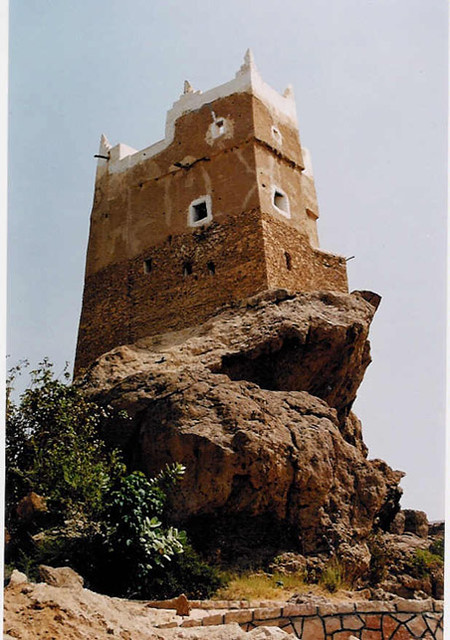
will be like a wise man who built his house on rock.
The rain fell, the floods came,
and the winds blew and buffeted the house.
But it did not collapse; it had been set solidly on rock.
And everyone who listens to these words of mine
but does not act on them
will be like a fool who built his house on sand.
The rain fell, the floods came,
and the winds blew and buffeted the house.
And it collapsed and was completely ruined.”
 
From the Navarre Bible commentary with RSV-CE text:
21-23. To be genuine, prayer must be accompanied by a persevering effort to do God’s will. Similarly, in order to do His will it is not enough to speak about the things of God: there must consistency between what one preaches–what one says–and what one does: “The Kingdom of God does not consist in talk but in power” (1 Corinthians 4:20); “Be doers of the word, and not hearers only, deceiving yourselves” (James 1:22). Christians, “holding loyally to the Gospel, enriched by its resources, and joining forces with all who love and practice justice, have shouldered a weighty task on earth and they must render an account of it to Him who will judge all men on the last day. Not every one who says, `Lord, Lord’ will enter the Kingdom of Heaven, but those who do the will of the Father, and who manfully put their hands to the work” (Vatican II, “Gaudium Et Spes”, 93).
To enter the Kingdom of Heaven, to be holy, it is not enough, then, to speak eloquently about holiness. One has to practice what one preaches, to produce fruit which accords with one’s words. Fray Luis de Leon puts it very graphically: “Notice that to be a good Christian it is not enough just to pray and fast and hear Mass; God must find you faithful, like another Job or Abraham, in times of tribulation” (“Guide for Sinners”, Book 1, Part 2, Chapter 21).
Even if a person exercises an ecclesiastical ministry that does not assure his holiness; he needs to practice the virtues he preaches. Besides, we know from experience that any Christian (clerical, religious or lay) who does not strive to act in accordance with the demands of the faith he professes, begins to weaken in his faith and eventually parts company also with the teaching of the Church. Anyone who does not live in accordance with what he says, ends up saying things which are contrary to faith.
The authority with which Jesus speaks in these verses reveals Him as sovereign Judge of the living and the dead. No Old Testament prophet ever spoke with His authority.
Doing the Will of God
---------------------

(Jesus said to His disciples,) [21] "Not every one who says to Me, Lord, Lord,' shall enter the Kingdom of Heaven, but he who does the will of My Father who is in Heaven. [22] On that day many will say to Me, Lord, Lord, did we not prophesy in Your name, and cast out demons in Your name, and do many mighty works in Your name?’
**22. **“That day”: a technical formula in biblical language meaning the day of the Judgment of the Lord or the Last Judgment.
[23] And then I will declare to them, `I never knew you; depart from Me, you evildoers.’
**23. **This passage refers to the Judgment where Jesus will be the Judge. The sacred text uses a verb which means the public proclamation of a truth. Since in this case Jesus Christ is the Judge who makes the declaration, it takes the form of a judicial sentence.
Building on Rock
----------------

[24] “Every one then who hears these words of Mine and does them will be like a wise man who built his house upon the rock; [25] and the rain fell, and the floods came, and the winds blew and beat upon that house, but it did not fall, because it had been founded on the rock. [26] And every one who hears these words of mine and does not do them will be like a foolish man who built his house upon the sand; [27] and the rain fell, and the floods came, and winds blew and beat against that house, and it fell; and great was the fall of it.”
24-27. These verses constitute the positive side of the previous passage. A person who tries to put Christ’s teaching into practice, even if he experiences personal difficulties or lives during times of upheaval in the life of the Church or is surrounded by error, will stay firm in the faith, like the wise man who builds his house on rock.
Also, if we are to stay strong in times of difficulty, we need, when things are calm and peaceful, to accept little contradictions with a good grace, to be very refined in our relationship with God and with others, and to perform the duties of our state in life in a spirit of loyalty and abnegation. By acting in this way we are laying down a good foundation, maintaining the edifice of our spiritual life and repairing any cracks which make their appearance.
 
Status
Not open for further replies.
Back
Top