
P
patrick457
Guest
Nothing majorly special. Citations in square brackets ] are scriptural allusions; those in parentheses, in red (), are in-gospel citations. (Scriptural quotation from the RSV)
And as soon as it was morning the chief priests, with the elders and scribes, and the whole council held a consultation; and they bound Jesus [cf. Psalm 27:12?; Isaiah 3:10; 53:6, 12?] and led him away and delivered him to Pilate.
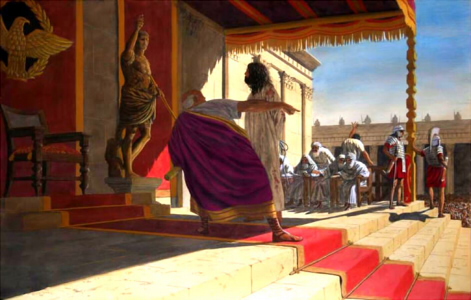
And Pilate asked him, “Are you the King of the Jews?” And he answered him, “You have said so.” And the chief priests accused him of many things. And Pilate again asked him, “Have you no answer to make? See how many charges they bring against you.” But Jesus made no further answer, so that Pilate wondered. [cf. Psalm 38 (37):12-14?; Isaiah 53:7?; 52:13-15?]
Now at the feast he used to release for them one prisoner for whom they asked. And among the rebels in prison, who had committed murder in the insurrection, there was a man called Barabbas. And the crowd came up and began to ask Pilate to do as he was wont to do for them. And he answered them, “Do you want me to release for you the King of the Jews?” For he perceived that it was out of envy that the chief priests had delivered him up. [cf. Wisdom 2:24] But the chief priests stirred up the crowd to have him release for them Barabbas instead. And Pilate again said to them, “Then what shall I do with the man whom you call the King of the Jews?” And they cried out again, “Crucify him.” And Pilate said to them, “Why, what evil has he done?” [cf. Isaiah 53:9?] But they shouted all the more, “Crucify him.” (Pilate’s three attempts to release Jesus = contrasts with Peter’s three denials of Jesus (14:66-72)?)
So Pilate, wishing to satisfy the crowd, released for them Barabbas; and having scourged Jesus, he delivered him to be crucified.

And the soldiers led him away inside the palace (that is, the praetorium); and they called together the whole battalion. And they clothed him in a purple cloak, and plaiting a crown of thorns they put it on him. And they began to salute him, “Hail, King of the Jews!” ⟨cf. the Roman triumphus, a public celebration of a victorious military commander: the recipient of the honor was drawn in procession on a four-horse chariot while wearing a purple and gold toga and a laurel wreath amid acclamations by the people.⟩ And they struck his head with a reed [cf. Micah 5:1b Hebrew?], and spat upon him [cf. Isaiah 50:6], and they knelt down in homage to him. (Mark 10:33-34) And when they had mocked him, they stripped him of the purple cloak, and put his own clothes on him. [cf. Zechariah 3:1-5?] ⟨For instances of a similar kind of mocking in other sources, cf. Philo, Flaccus VI.36-39 (Carabbas); Dio Cassius, Roman History LVIII.11.1-4 (Sejanus) to name two.⟩
And as soon as it was morning the chief priests, with the elders and scribes, and the whole council held a consultation; and they bound Jesus [cf. Psalm 27:12?; Isaiah 3:10; 53:6, 12?] and led him away and delivered him to Pilate.

And Pilate asked him, “Are you the King of the Jews?” And he answered him, “You have said so.” And the chief priests accused him of many things. And Pilate again asked him, “Have you no answer to make? See how many charges they bring against you.” But Jesus made no further answer, so that Pilate wondered. [cf. Psalm 38 (37):12-14?; Isaiah 53:7?; 52:13-15?]
Now at the feast he used to release for them one prisoner for whom they asked. And among the rebels in prison, who had committed murder in the insurrection, there was a man called Barabbas. And the crowd came up and began to ask Pilate to do as he was wont to do for them. And he answered them, “Do you want me to release for you the King of the Jews?” For he perceived that it was out of envy that the chief priests had delivered him up. [cf. Wisdom 2:24] But the chief priests stirred up the crowd to have him release for them Barabbas instead. And Pilate again said to them, “Then what shall I do with the man whom you call the King of the Jews?” And they cried out again, “Crucify him.” And Pilate said to them, “Why, what evil has he done?” [cf. Isaiah 53:9?] But they shouted all the more, “Crucify him.” (Pilate’s three attempts to release Jesus = contrasts with Peter’s three denials of Jesus (14:66-72)?)
So Pilate, wishing to satisfy the crowd, released for them Barabbas; and having scourged Jesus, he delivered him to be crucified.

And the soldiers led him away inside the palace (that is, the praetorium); and they called together the whole battalion. And they clothed him in a purple cloak, and plaiting a crown of thorns they put it on him. And they began to salute him, “Hail, King of the Jews!” ⟨cf. the Roman triumphus, a public celebration of a victorious military commander: the recipient of the honor was drawn in procession on a four-horse chariot while wearing a purple and gold toga and a laurel wreath amid acclamations by the people.⟩ And they struck his head with a reed [cf. Micah 5:1b Hebrew?], and spat upon him [cf. Isaiah 50:6], and they knelt down in homage to him. (Mark 10:33-34) And when they had mocked him, they stripped him of the purple cloak, and put his own clothes on him. [cf. Zechariah 3:1-5?] ⟨For instances of a similar kind of mocking in other sources, cf. Philo, Flaccus VI.36-39 (Carabbas); Dio Cassius, Roman History LVIII.11.1-4 (Sejanus) to name two.⟩

