
P
patrick457
Guest
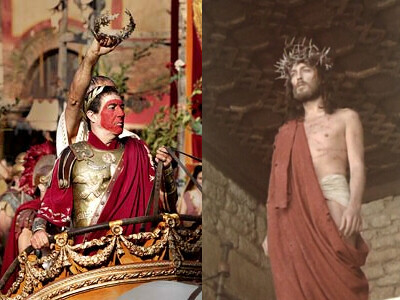
One of the ways Mark’s gospel deals with the dilemma of Jesus dying as a condemned criminal is to cast the execution itself as an act of triumph, a celebration. Jesus’ death was not a sign of shameful weakness (as people in that culture might have expected it) but of power. In this case, he has described the crucifixion using elements from a Roman triumph, ritual parades held to publicly celebrate and sanctify the military achievements of a successful army commander.
In a Roman triumph, the triumphant general (the triumphator or the vir triumphalis, “man of triumph”) wore a laurel wreath and an all-purple, gold-embroidered triumphal toga, regalia that identified him as near-divine or near-kingly. During the procession, the triumphator was showered with praise, with shouts of acclamation and acts of homage being given to him. Now read how Jesus’ mocking is described:
And the soldiers led him away within the court, which is the Praetorium; and they call together the whole band. And they clothe him with purple, and plaiting a crown of thorns, they put it on him; and they began to salute him, Hail, King of the Jews! And they smote his head with a reed, and did spit upon him, and bowing their knees worshipped him. And when they had mocked him, they took off from him the purple, and put on him his garments. And they lead him out to crucify him.
A few stuff which go into depth on this issue.
Jesus’ Triumphal March to Crucifixion: The sacred way as Roman procession (subscription / login required to read full article)
Recognizing the Triumphant Conqueror in Mark’s crucifixion scene
Translating the Triumph: Reading Mark’s Crucifixion Narrative
Triumphus Christi: On the Connection of Crucifixion and Triumph
In a Roman triumph, the triumphant general (the triumphator or the vir triumphalis, “man of triumph”) wore a laurel wreath and an all-purple, gold-embroidered triumphal toga, regalia that identified him as near-divine or near-kingly. During the procession, the triumphator was showered with praise, with shouts of acclamation and acts of homage being given to him. Now read how Jesus’ mocking is described:
And the soldiers led him away within the court, which is the Praetorium; and they call together the whole band. And they clothe him with purple, and plaiting a crown of thorns, they put it on him; and they began to salute him, Hail, King of the Jews! And they smote his head with a reed, and did spit upon him, and bowing their knees worshipped him. And when they had mocked him, they took off from him the purple, and put on him his garments. And they lead him out to crucify him.

A few stuff which go into depth on this issue.
Jesus’ Triumphal March to Crucifixion: The sacred way as Roman procession (subscription / login required to read full article)
Recognizing the Triumphant Conqueror in Mark’s crucifixion scene
Translating the Triumph: Reading Mark’s Crucifixion Narrative
Triumphus Christi: On the Connection of Crucifixion and Triumph
