P
patrick457
Guest
True to my character, here’s another useless minor stuff.
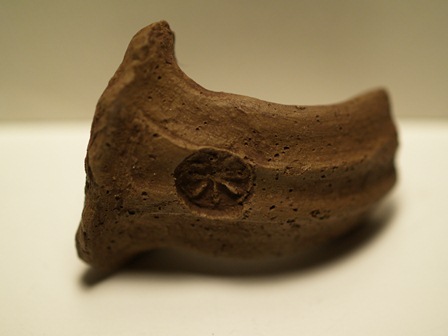
The so-called LMLK seals (after the letters lamed-mem-lamed-kaf, which could be read as le’melekh “to/for/of [the] king”) were stamped on the handles of large storage jars found mostly in and around Judahite sites like Lachish or Jerusalem. None of the original seals have been found, but about 2,000 impressions (or stamps) made by at least 21 seal types have been documented.
These impressions typically consist of the image of a four-winged scarab beetle or a two-winged solar disc, with one of four geographic toponyms (Hebron, MMST, Socoh, and Ziph) inscribed underneath. (Sometimes the toponyms could replace LMLK.) Other seals bear personal names (which could be that of royal officials). Their distribution has been concentrated primarily on the Shephelah, most notably in Lachish, as well as in Jerusalem and Ramat Rachel. Urban settlements north of Lachish and Jerusalem also account for a large number of handles, with lesser concentration in the Negev and in Philistia.
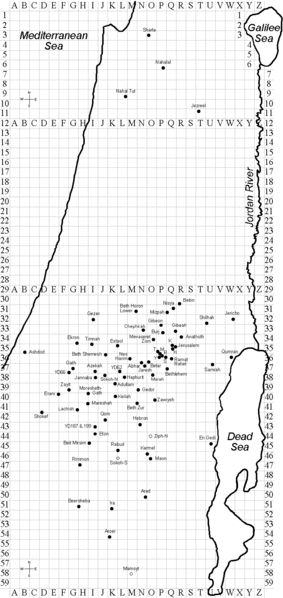
LMLK sites (as of February 2008)
(Please Note: This uploaded content is no longer available.)
Type G2T, bearing the image of a winged solar disk and the letters lmlk (le’melekh “to/for/of [the] king”)
(Please Note: This uploaded content is no longer available.)
Type H2T, showing the winged solar disk and the letters hbrn (Hebron)
(Please Note: This uploaded content is no longer available.)
Type S4L, showing a four-winged scarab and the legend lmlk (above) and šwkh (Socoh)
Jar handles stamped with personal seals and incision marks have also been found. (Other examples of personal seals here and here.) So far, the exact purpose of the seals remain unknown, although are now often associated with the reign of Hezekiah.
(Please Note: This uploaded content is no longer available.)
http://biblical-studies.ca/blog/wp-content/uploads/2006/04/Hezekiah_bulla.jpg
Two of Hezekiah’s seals, bearing the inscription: “Of Hezekiah, (son of) Ahaz, King of Judah”
The interesting thing about many of these seals is the solar imagery (the winged solar disk and the scarab), which is ultimately Egyptian in origin (although the symbols, especially the latter, were already quite well known in Mesopotamia and the Levant around that time, thanks in part to the huge influence of Egypt and peoples like the Phoenicians, who adopted Egyptian artstyles).
The so-called LMLK seals (after the letters lamed-mem-lamed-kaf, which could be read as le’melekh “to/for/of [the] king”) were stamped on the handles of large storage jars found mostly in and around Judahite sites like Lachish or Jerusalem. None of the original seals have been found, but about 2,000 impressions (or stamps) made by at least 21 seal types have been documented.
These impressions typically consist of the image of a four-winged scarab beetle or a two-winged solar disc, with one of four geographic toponyms (Hebron, MMST, Socoh, and Ziph) inscribed underneath. (Sometimes the toponyms could replace LMLK.) Other seals bear personal names (which could be that of royal officials). Their distribution has been concentrated primarily on the Shephelah, most notably in Lachish, as well as in Jerusalem and Ramat Rachel. Urban settlements north of Lachish and Jerusalem also account for a large number of handles, with lesser concentration in the Negev and in Philistia.

LMLK sites (as of February 2008)
(Please Note: This uploaded content is no longer available.)
Type G2T, bearing the image of a winged solar disk and the letters lmlk (le’melekh “to/for/of [the] king”)
(Please Note: This uploaded content is no longer available.)
Type H2T, showing the winged solar disk and the letters hbrn (Hebron)
(Please Note: This uploaded content is no longer available.)
Type S4L, showing a four-winged scarab and the legend lmlk (above) and šwkh (Socoh)
Jar handles stamped with personal seals and incision marks have also been found. (Other examples of personal seals here and here.) So far, the exact purpose of the seals remain unknown, although are now often associated with the reign of Hezekiah.
(Please Note: This uploaded content is no longer available.)
http://biblical-studies.ca/blog/wp-content/uploads/2006/04/Hezekiah_bulla.jpg
Two of Hezekiah’s seals, bearing the inscription: “Of Hezekiah, (son of) Ahaz, King of Judah”
The interesting thing about many of these seals is the solar imagery (the winged solar disk and the scarab), which is ultimately Egyptian in origin (although the symbols, especially the latter, were already quite well known in Mesopotamia and the Levant around that time, thanks in part to the huge influence of Egypt and peoples like the Phoenicians, who adopted Egyptian artstyles).