T
tafan2
Guest
It would require an analysis of the principle of double effect. I am not enough of a moral theologian to say if it applies or not. I would defer to those more knowledgeable than I.


Some people can’t comprehend hypotheticals. They just can’t. It’s just the way their minds work. Some people think it is silly to deal with issues that haven’t happened. I can’t speak for people like that. Everyone is different. I don’t know how they’d ever get through, for instance, law school, medical school, or first responder training, but everyone has different gifts, I suppose. It is also possible that hypothetical scenarios push people’s minds into places that they’d rather not go, and that is disagreeable to them. I have heard people say “such-and-such is just stupid”, when what they’re really saying is “I don’t want to have to entertain the possibility of such-and-such because it would threaten me in some way”. Two different things.After rereading your post I realize I misunderstood it at first. As others have said, this is a completely hypothetical situation. You need to come up with an example of your scenario that gives it substance. Otherwise it is a meaningless question.
In my example, the crazed, mentally defective killer is “innocent” — he knows enough to lock and load, but not enough to realize that he is killing people, or rather, that killing people is wrong and he shouldn’t do it. There could be an extreme form of mentally retarded autistic savant that would be capable of something like this. Do we say “the boy’s not right, leave him alone, if he’s killing everyone in sight, and if killing him is the only way to stop him, that’s too bad, we can’t kill him, those people are just going to have to die until he runs out of ammo”?I do not believe it is permissible to take an innocent life to protect others. Almost positive about this.
Fascinating. Thank you.It is never permissible to intentionally kill an innocent person. But if they are accidentally killed in the process of preventing some other evil it might be justifiable. It is the principle of double effect.
It’s quite a straightforward question. And isn’t mine, by the way. The number of scenarios are legion (see any of those that have already been suggested). But you have said that you cannot answer it without someone giving you a hand by giving you an example. That’s not my job.Since you think it is a valid and meaningful question it is your job to explain it. It isn’t my job to give your question meaning and depth, in other words think for you.
Freddy:
Some people can’t comprehend hypotheticals. They just can’t. It’s just the way their minds work. Some people think it is silly to deal with issues that haven’t happened. I can’t speak for people like that. Everyone is different. I don’t know how they’d ever get through, for instance, law school, medical school, or first responder training, but everyone has different gifts, I suppose. It is also possible that hypothetical scenarios push people’s minds into places that they’d rather not go, and that is disagreeable to them. I have heard people say “such-and-such is just stupid”, when what they’re really saying is “I don’t want to have to entertain the possibility of such-and-such because it would threaten me in some way”. Two different things.After rereading your post I realize I misunderstood it at first. As others have said, this is a completely hypothetical situation. You need to come up with an example of your scenario that gives it substance. Otherwise it is a meaningless question.
That sharp crack everyone just heard was Homeschooldad hitting a nail squarely on the head.
It has been asked here at CAF too. Here is a recent attempt:I asked this question several times of several platforms.
Glad it did someone some good. Actually, what brought this to mind was when a friend of mine once said “Bill and Hillary Clinton are just stupid”. What she was really saying was “I don’t like Bill and Hillary Clinton”. I reminded her “you may not like the Clintons, but whatever else you might be able to say about them, one thing they’re not is ‘stupid’ — they’re highly, highly intelligent people”. She was not one to do a lot of critical thinking in life. She replied “yes, but they’re just stupid”. No use trying to reason with her further.I have heard people say “such-and-such is just stupid”, when what they’re really saying is “I don’t want to have to entertain the possibility of such-and-such because it would threaten me in some way”. Two different things.

I was reasoning that he is “innocent” because he only has enough brain to fire and reload a gun, and can’t appreciate that what he thinks of as a fun game or a prank is actually killing people who will stay dead and not get back up. It is somewhat similar to a case in Ohio years back when a brain-damaged young man set a fireworks store ablaze, killing several people. When they asked him why he did it, he said “I did it for a ha-ha”.That said, your example doesn’t fit the question. The perpetrator isn’t innocent; he is murdering people whether he is fully cognizant or not. He is an aggressor by definition.
If he is not cognizant of what he is doing then what he’s doing is unlawful killing. Not murder. It was explained that he was mentally incapable of knowing that what he was doing was wrong. If that was unclear to you, include that fact into the scenario.No one has any problem with hypothetical questions. The problem is with poorly formed hypothetical questions.
That said, your example doesn’t fit the question. The perpetrator isn’t innocent; he is murdering people whether he is fully cognizant or not. He is an aggressor by definition.
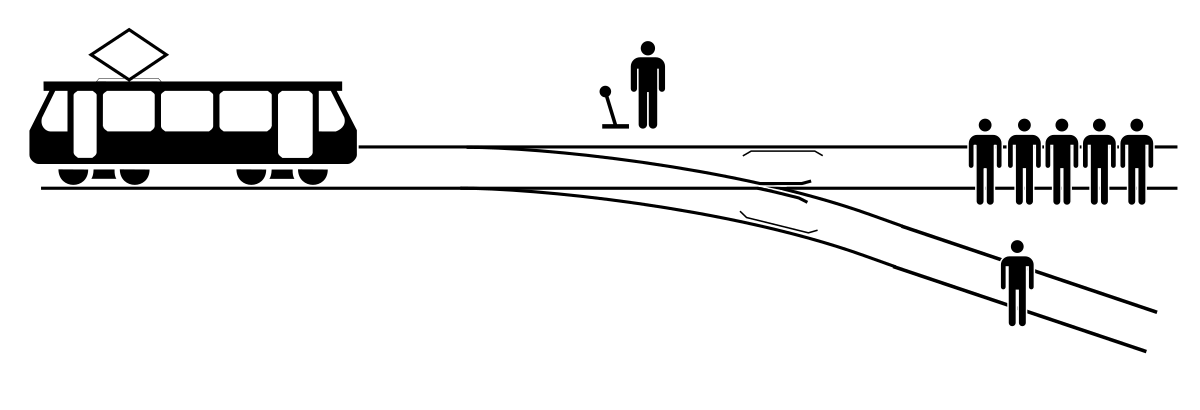
First let’s put the problem in perspective.The church teaches that everyone is entitled to self-defense (and defense of others) against an unjust aggressor. However, there is no official teaching - to the best of my knowledge - in a slightly different scenario. It goes: “someone puts others into lethal danger, unknowingly and unintentionally”. Obviously this person is NOT an “aggressor” in any sense of the word. But he presents a lethal danger to others.
If there is NO other way to neutralize the danger, is it allowed to use lethal force to prevent it? In other words: “kill this person”?
This is the question: “what does the church teach about this scenario”? I asked this question several times of several platforms. Never received an answer.