
The Trinity's "W and X are the same Y but different Z's"

  • Thread starter Thread starter Subcontrary
  • Start date Start date
Status
Not open for further replies.
S

Subcontrary

Guest
The idea is, “The Father and the Son are the same God but different persons.”

The proposition “W and X are the same Y but different Z’s” is proving a slight puzzle for me to fill in with any other terms, and I was wondering if anyone would be interested in giving examples of it other than via the Trinity, if possible.

What does it mean generally for an individual to be a single Y, but different Z’s? I can’t think of another example that isn’t either sort of malformed, extremely non-analogous, or both. Is the Trinity in the end the only example of this phenomenon?

Here are two nonsensical examples thought up by Dale Tuggy in his paper, “The unfinished business of Trinitarian theorizing,” in which among other things he asks the question I’m asking here. They’re good illustrations of how little a filled-in proposition for “W and X are the same Y but different Z’s” can potentially mean:

“Rover and Spot are the same mammal but different dogs.”
“John and Peter are the same apostle but different men.”

Here is one I thought of, which is invalid due to a shift from first to second imposition, but at least it has a different error than Tuggy’s examples:

“Bruce Wayne and Batman are the same man but different aliases.”

So my question is, is there a way to fill in the sentence “W and X are the same Y but different Z’s” analogously to the Trinity, and without any imposition errors or anything? Maybe there are some really obvious ones that have escaped my notice because I’ve been racking my brain too hard.
 
The idea is, “The Father and the Son are the same God but different persons.”

The proposition “W and X are the same Y but different Z’s” is proving a slight puzzle for me to fill in with any other terms, and I was wondering if anyone would be interested in giving examples of it other than via the Trinity, if possible.

What does it mean generally for an individual to be a single Y, but different Z’s? I can’t think of another example that isn’t either sort of malformed, extremely non-analogous, or both. Is the Trinity in the end the only example of this phenomenon?

Here are two nonsensical examples thought up by Dale Tuggy in his paper, “The unfinished business of Trinitarian theorizing,” in which among other things he asks the question I’m asking here. They’re good illustrations of how little a filled-in proposition for “W and X are the same Y but different Z’s” can potentially mean:

“Rover and Spot are the same mammal but different dogs.”
“John and Peter are the same apostle but different men.”

Here is one I thought of, which is invalid due to a shift from first to second imposition, but at least it has a different error than Tuggy’s examples:

“Bruce Wayne and Batman are the same man but different aliases.”

So my question is, is there a way to fill in the sentence “W and X are the same Y but different Z’s” analogously to the Trinity, and without any imposition errors or anything? Maybe there are some really obvious ones that have escaped my notice because I’ve been racking my brain too hard.
Umm this is a bad example but I will give it a shot. Let us say that a person a three personalities. They are all know of each other and are their own person. However eh are the same person because they all have the same body
 
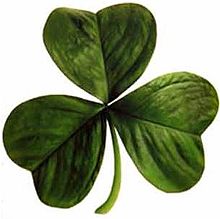
Of course that is a bad example and the Trinity is much more complicated than that. St. Patrick explained the trinity using a three leaf clover. There are three leaves each being their own leaf but they are connected to form one body. I think that is a better example
 
The proposition “W and X are the same Y but different Z’s” is proving a slight puzzle for me to fill in with any other terms, and I was wondering if anyone would be interested in giving examples of it other than via the Trinity, if possible.
I’ve not heard any of this before but would this do:

w = “quickly”
x = “fast”

Y is idea
Z is word

w and x are same Y but different Z
 
a very simple way to look at this is in the graphic bellow

(Please Note: This uploaded content is no longer available.)

St. Augustine gives us a beautiful analogy of how the trinity works let me expalin it it is actually simpler then you may think.

In love there are thre aspects to any act of love.
  1. there is the lover
  2. the one being loved
  3. the love flowing between the persons.
for example the love of a mother caring for her son who tripped and scraped his knee. She shows great love by telling him its ok, she may kiss it saying I’ll make it all better. But in this act the Mother is the lover the son is the one being loved. There is a third aspect though distinct from both the Mother and the Son. That is the love in itself. Without the love in itself all you have is the interaction of the son and the mother.

now first all three aspects of this are a part of love if you remove one of them love no longer takes place.

if you remove the lover there is no one loving

if you remove the beloved there is no thing for the lover to love

if you remove the act of love itself there is nothing transferred between the lover and the beloved.

The trinity is the same way

the Father is the love
The son is the beloved
and the spirit is the love that flows between father and son.

All are love but it still has three distinct and irremovable parts.

hopefully that helps.


Shamrock. One Trefoil leaf.
You might notice that each leaflet, or Person, is in the shape of a Heart.
 
I’ve not heard any of this before but would this do:

w = “quickly”
x = “fast”

Y is idea
Z is word

w and x are same Y but different Z
Let’s see: ‘’‘quickly’ and ‘fast’ are the same idea but different words." That’s still an imposition error, I think: when you talk about “quickly” and “fast” being the same idea, you mean “quickly” and “fast” refer to the same idea, that is, in the first imposition. Obviously ideas can’t be seven or four letters long: only words can. When you say “quickly” and “fast” are different words, you are using “quickly” and “fast” in the zero imposition, where the words alone devoid of meaning are referred to.

It’s like saying Bruce Wayne and Batman are the same man, but different words. Men cannot be words, words can only refer to them. Ideas can’t be words either, words can only refer to them.

As far as I know there is no such imposition shift implied by the sentence “The Father and the Son are the same God but different persons.”
There are three leaves each being their own leaf but they are connected to form one body. I think that is a better example
Let’s try that: “The left leaf and the right leaf are the same clover but different leaves.” I would say the issue here is that the two leaves aren’t the same clover-- not the clover whole and entire, but parts of the same clover. Consider the heresy that the Father and the Son are parts of the same God, but are different persons.

catholictiger

Those are really sweet thoughts, but I think you could be a little more concrete. Do you mind putting it into the WXYZ form? What four terms would you replace “the Father,” “the Son,” “God,” and “persons” with?
 
Isn’t the Shamrock thing essentially Sabellianism and thus, non-trinitarian?

I don’t believe that there has ever been a decent explanation of the trinity concept.
 
The idea is, “The Father and the Son are the same God but different persons.”

The proposition “W and X are the same Y but different Z’s” is proving a slight puzzle for me to fill in with any other terms, and I was wondering if anyone would be interested in giving examples of it other than via the Trinity, if possible.

What does it mean generally for an individual to be a single Y, but different Z’s? I can’t think of another example that isn’t either sort of malformed, extremely non-analogous, or both. Is the Trinity in the end the only example of this phenomenon?

Here are two nonsensical examples thought up by Dale Tuggy in his paper, “The unfinished business of Trinitarian theorizing,” in which among other things he asks the question I’m asking here. They’re good illustrations of how little a filled-in proposition for “W and X are the same Y but different Z’s” can potentially mean:

“Rover and Spot are the same mammal but different dogs.”
“John and Peter are the same apostle but different men.”

Here is one I thought of, which is invalid due to a shift from first to second imposition, but at least it has a different error than Tuggy’s examples:

“Bruce Wayne and Batman are the same man but different aliases.”

So my question is, is there a way to fill in the sentence “W and X are the same Y but different Z’s” analogously to the Trinity, and without any imposition errors or anything? Maybe there are some really obvious ones that have escaped my notice because I’ve been racking my brain too hard.
Body and Soul are the same person but different natures?
 
It’s like saying Bruce Wayne and Batman are the same man, but different words. Men cannot be words, words can only refer to them. Ideas can’t be words either, words can only refer to them.
Ok, I think I’m catching on. Try this one:

w = Positive integers (+1, +2, +3, …)
x = Negative integers (-1, -2, -3, …)

Y = Absolute Magnitude (negatives dissapear)
Z = Directed Magnitude (negatives don’t dissapear)
 
Isn’t the Shamrock thing essentially Sabellianism and thus, non-trinitarian?

I don’t believe that there has ever been a decent explanation of the trinity concept.
No it is not, St. Patrick won’t have taught it if it was heresy and he won’t be recognized as a saint if it was heresy
 
How about the case of Conjoined Twins?

One body (in a matter of speaking with some organs shared) but two persons?

en.wikipedia.org/wiki/Conjoined_twin
That’s an interesting answer, something like, “William and Xavier are the same body, but different persons.” If I foresee a problem, it’s that William is not the body whole and entire, and Xavier is not the body whole and entire, the way the Father is God whole and entire, and the Son is God whole and entire.
Body and Soul are the same person but different natures?
That’s promising, but I would point out my hesitation about whether it is analogous. Body and soul are one person together, but as far as I know, if they’re apart, the body is not the person whole and entire, the way the Father is God whole and entire even apart from the Son.
Ok, I think I’m catching on. Try this one:

w = Positive integers (+1, +2, +3, …)
x = Negative integers (-1, -2, -3, …)

Y = Absolute Magnitude (negatives dissapear)
Z = Directed Magnitude (negatives don’t dissapear)
“2 and -2 have the same absolute magnitude but different directed magnitudes.”
I like the sound of that, if I recall the notation is |2| and |-2|, right? One comment I’d make, and that I’ve been making a lot is that I’m not sure about the analogy. Is -2 alone the absolute magnitude whole and entire? It seems more like 2 and -2 possess different directed magnitudes but the same absolute magnitudes, rather than being different directed magnitudes but the same absolute magnitude. It’s not hard for two things to have the same X but have different Y’s. Stephen Harper and I have different citizenships, but the same gender. But filling in “Stephen Harper and I are the same X but are different Y’s” is a little different. Is that a relevant distinction I’m making? After all the Father and Son don’t possess the same God in the way that 2 and -2 possess the same absolute magnitude.

I like your example though and I’d like to read more from you about it, or another one.
No it is not, St. Patrick won’t have taught it if it was heresy and he won’t be recognized as a saint if it was heresy
I might have to agree with VeritasLuxMea: unless St. Patrick was arguing that each of the three leaves is the clover whole and entire, I think it might not be a totally apt analogy.
 
“Stephen Harper and I are the same X but are different Y’s” is a little different.
I’m confused about whether we are being formulaic with the verb “to be” or whether we are talking about the notion of “being”?

For example, would:

Stephen Harper and I are the same height (X) but are different shoe sizes (Y’s)

work?
 
I’m confused about whether we are being formulaic with the verb “to be” or whether we are talking about the notion of “being”?

For example, would:

Stephen Harper and I are the same height (X) but are different shoe sizes (Y’s)

work?
I think that example has the same problem: Stephen Harper isn’t literally height, not the way the Father is literally God. A man can’t literally be a height or a shoe size, he can only possess a height and a shoe size. And the Father doesn’t possess God, he is God. Saying Stephen Harper and I are the same height is just a colloquial way of saying the two of us possess the same height.

Is that what you were asking?
 
But surely if we are going to be strict about this it is a logical impossibility. If we are strict with our definition of “being” then “is/are” becomes “is identical to” and any such *relation * would possess the transitive property making it impossible to have w = Y and x = Y without having w = x.

So to what extent must w “be” Y?
 
You have a good point, and to be fair you’ve offered a number of four-term groups that fit into the sentence “W and X are the same Y but different Z’s.” It’s very possible that nothing is really perfectly analogous to the sentence “The Father and the Son are the same God but different persons,” but I’d very much like to vet that possibility.

I was thinking about it and if in fact there is a logically possible way to produce an analogue to the sentence, the terms would probably have to remain a being between "is"s. For example in the original post, one of Dale Tuggy’s examples are John (W), Peter (X), men, (Y), and apostles, (Z), all of whom ostensibly are beings. Height isn’t a being, and absolute magnitude isn’t a being, so that’s why I think that isn’t analogous. Of course, Tuggy’s examples are analogous, I think, but they’re also totally insane.

The extent to which W must be Y is whatever extent the Father is God. It’s not necessarily clear that we can actually say to what extent that is, so even if we found an analogue, we might not recognize it. In post 5 Catholictiger put up a scutum fidei. What do those is’s and is not’s mean?

As for the transitive property (two things that are identical to the same thing are identical to each other?), I guess I would ask you if “whole and entire” means “is identical to.” Is the Father identical to God? Is “The Father = God” an accurate representation of their relation? The Catechism says that the three persons don’t share God, but each is God whole and entire. So the Father is God whole and entire, and the Son is God whole and entire, but the Father is not the Son whole and entire. That seems like it violates the transitive property, at least by my current understanding of “whole and entire.” The Father = God, the Son = God, but the Father does not = the Son.

I think if the Trinity avoids the problem with the transitive property then in theory something else might be able to as well.
 
The idea is, “The Father and the Son are the same God but different persons.”

The proposition “W and X are the same Y but different Z’s” is proving a slight puzzle for me to fill in with any other terms, and I was wondering if anyone would be interested in giving examples of it other than via the Trinity, if possible.

What does it mean generally for an individual to be a single Y, but different Z’s? I can’t think of another example that isn’t either sort of malformed, extremely non-analogous, or both. Is the Trinity in the end the only example of this phenomenon?

Here are two nonsensical examples thought up by Dale Tuggy in his paper, “The unfinished business of Trinitarian theorizing,” in which among other things he asks the question I’m asking here. They’re good illustrations of how little a filled-in proposition for “W and X are the same Y but different Z’s” can potentially mean:

“Rover and Spot are the same mammal but different dogs.”
“John and Peter are the same apostle but different men.”

Here is one I thought of, which is invalid due to a shift from first to second imposition, but at least it has a different error than Tuggy’s examples:

“Bruce Wayne and Batman are the same man but different aliases.”

So my question is, is there a way to fill in the sentence “W and X are the same Y but different Z’s” analogously to the Trinity, and without any imposition errors or anything? Maybe there are some really obvious ones that have escaped my notice because I’ve been racking my brain too hard.
There is no perfect analogy of the Trinity in nature. If there was, it wouldn’t be a “mystery.”

I’ve likened it before to drawing a line with a paintbrush from left to right. The Father is the source, the leftmost point where you start the drawing; the Son is the end, the rightmost point where you end it; the Holy Spirit is the top-bottom dimensionality which you inadvertently included in the painting of the line; and so on. But even this doesn’t get it because the three persons are not sides or aspects of the Trinity but are little one in the same being.

Basically any where in nature where we say there are three Xs in one Y sort of shows how something like the Trinity might be possible, without actually illustrating it perfectly. The US government is one government in three branches, for instance.
 
Status
Not open for further replies.
Back
Top