Thought about slavery

  • Thread starter Thread starter wiggbuggie
  • Start date Start date
Status
Not open for further replies.
biblical slavery has been an issue with many Christians and non Christian alike. Recently a thought came to my head. In the gospel of Matthew Jesus talks about divorce that moses allowed it because the hardness of the peoples hearts, and that divorce was never in Gods original design. Same goes about eating certain foods again Jesus refutes the idea and says things that come from within makes you unclean. Can we say the same about slavery? That it was never Gods idea or design to have slaves but cause people wanted to have slaves during those times? This also reminds me of the OT how the nation of isreal demanded that they wanted to have a king to be like the other nations but God opposed this cause they would be paying taxes and be under authority. Seems like certain parts of the law was written to appeal to the people and their hearts.
The goal of slavery for men in the OT was their eventual freedom. the goal of slavery for women in the OT was to become a wife in the family that took her in. It was a form of social mobility.
The overall goal of the Bible is to create a people living in a society based on freedom and cooperation. Everything, including the way that slavery was designed under the old law, was geared to move people toward this goal.

In terms of the word itself, there are different connotations to the word in ancient times than what exist now. Like wage labor or any other economic relationship, there was not the emotional negativity that came mainly about through enslaving whole races of people.
 
Luke 4:18 has a mention of “freeing prisoners” but that is certainly not a call to end slavery.
It says “to set at liberty those who are oppressed.” By any use of the term, slaves can be said to not have liberty and to be oppressed.

And you are ignoring something very important. No, Paul and other New Testament writers are not calling for the abolition of slavery, but they are radically redrawing the identities of the Christian household. Masters relate to their slaves not as owners but as family, brothers in Christ.
Ephesians 6 doesn’t tell the slave owners to release their slaves. It does tell slaves to fear and respect their masters and do as they are told. This sure seems like a call to maintain the practice. The fact that Paul here equates serving a master with service God seems to be a healthy endorsement of it, despite an aside in 1 Timothy 1:10.
I never said Ephesians told Christians to release their slaves; what I said was “Christianity taught equality between masters and slaves.” This is what Ephesians 6:5-9 actually says:

5 Bondservants, obey your earthly masters with fear and trembling, with a sincere heart, as you would Christ, 6 not by the way of eye-service, as people-pleasers, but as bondservants of Christ, doing the will of God from the heart, 7 rendering service with a good will as to the Lord and not to man, 8 knowing that whatever good anyone does, this he will receive back from the Lord, whether he is a bondservant or is free. 9 Masters, do the same to them, and stop your threatening, knowing that he who is both their Master and yours is in heaven, and that there is no partiality with him.

Paul commands masters to serve their slaves just as he has told slaves to serve their masters, essentially, treat each other fairly and sincerely and be good to each other for the sake of their love for Christ. In the context of ancient slavery, this is radical; it is also in line with Jesus’s views on leadership, “whoever would be great among you must be your servant” (Matthew 20:26).

1 Timothy 1:10 cannot be merely dismissed as an “aside.” It unequivocally declares the slave trade to be sinful. When you think of this, it makes sense. Slave traders are after all taking and then selling what does not belong to them–the lives of other people.
1 Corinthians 7:21 is more a call to not concern oneself with being a slave and in fact says one "should remain in the situation they were in when God called them.
Come on now. Paul writes, “Were you a bondservant when called? Do not be concerned about it. (But if you can gain your freedom, avail yourself of the opportunity.).” Yes, Paul says do not worry over life situations you cannot change, but if you can change your situation he tells them to go ahead and do it. This is not an endorsement of slavery.

Context is everything here. Paul believed (as many modern Christians also believe) that the return of Christ was imminent. He does not want Christians to be anxious about their situations in life because, as he says, this entire world is going to end soon anyway and a new one take its place. This is all explained in 1 Corinthians 7:29-31:

29 This is what I mean, brothers: **the appointed time has grown very short. **From now on, let those who have wives live as though they had none, 30 and those who mourn as though they were not mourning, and those who rejoice as though they were not rejoicing, and those who buy as though they had no goods, 31 and those who deal with the world as though they had no dealings with it. For the present form of this world is passing away.
That combined with Galatians 3:28 where it equates worship God with serving a master certainly gives a push to the worthiness of slavery. That passage in Galatians, while it does claim that all men are equal with respect in their need to worship Jesus, it ignores that God was the one who called for and spelled out how one man can do grave harm to another and call it good in his eyes.
The fact that God allows something does not mean he calls it good. He allowed polygamy as a concession to human weakness, but Christ taught us a better way. Galatians 3:28 teaches us that the master and the slave are one in Christ. They are brothers in Christ. The Christian master should therefore treat his slave as part of his family, as a brother.
Paul doesn’t call for the ending of slavery and God (any of the three persons) certainly does not call for it. It simply doesn’t add up to say that because God calls us to love one another that overtakes God telling a man how to sell his daughter into sex slavery or how perfectly fine it is to beat a slave because he’s his property.
Paul calls the slave trade sin. He teaches masters to love and serve their slaves, and he instructs both masters and slaves to see each other as brothers and sisters united in Christ.

And, as I said above, this theological perspective does eventually lead to the demise of slavery in the West, because as hard as Christians tried to justify slavery using Old Testament texts, the New Testament context of Christian masters and Christian slaves being brothers undermines the entire social structure on which a slave society is built.

 
Luke 4:18 has a mention of “freeing prisoners” but that is certainly not a call to end slavery.

Ephesians 6 doesn’t tell the slave owners to release their slaves. It does tell slaves to fear and respect their masters and do as they are told. This sure seems like a call to maintain the practice. The fact that Paul here equates serving a master with service God seems to be a healthy endorsement of it, despite an aside in 1 Timothy 1:10.

1 Corinthians 7:21 is more a call to not concern oneself with being a slave and in fact says one "should remain in the situation they were in when God called them. That combined with Galatians 3:28 where it equates worship God with serving a master certainly gives a push to the worthiness of slavery. That passage in Galatians, while it does claim that all men are equal with respect in their need to worship Jesus, it ignores that God was the one who called for and spelled out how one man can do grave harm to another and call it good in his eyes.

Paul doesn’t call for the ending of slavery and God (any of the three persons) certainly does not call for it. It simply doesn’t add up to say that because God calls us to love one another that overtakes God telling a man how to sell his daughter into sex slavery or how perfectly fine it is to beat a slave because he’s his property.
God calls you to repentance and to abide in Him–should I and other Christians physically compel you to surrender to God’s Will?

Not so, correct? That is what you are demanding that we do when you compel God to control the things that hurt humanity–it would be wonderful if God would make sure that everything bad does not happen to anyone while man continues to have free will to chose to do the evil/wrongs in the world. However, that’s totally divorced from reality.

God Commands that we Be Holy. Yet, He allows us to choose to be holy or to choose to do as we please–you and I are an excellent example of our free will: you choose not to believe while I choose to believe.

Someone somewhere in the world will choose to murder or create chaos while someone else will choose to serve humanity by bringing forth righteousness onto the world… God cannot control one person while allowing free will on another; that’s what man does–even when the liberties that are taken are destructive (as the escalation of gun production and sales in spite of the murdering rampages that go on in the world daily).

Yet, I suspect that you yourself would not desire for God to take away your freedom to choose to be an atheist even when that control would cause you to always choose to do good in the world.

Maran atha!

Angel
 
And since God prescribed slavery for his people (telling them which people they can and can’t purchase) and how can treat (or more accurately mistreat) their slaves they are on the same level. God has no problem with one owning, beating, blackmailing, or manslaughtering their slaves. A person picks up some sticks on the wrong day or doesn’t get their kid circumcised (see Moses) in time and the threat of death is upon him. Those are some frightening priorities.
I think you are confusing issues here: to prescribe something means to order something (as in honor the Sabbath and as in how to treat people); nowhere in Scriptures would you find a text that tells us that slavery is correct.
And since my ways don’t allow for slavery, I’m quite thankful for that.
That is wonderful–if only the rest of humanity would feel the same way as you do, slavery (all of the sorts that are being perpetrated today) would be done and over with; sadly, too much power and money is gained through such oppressive and terroristic endeavors–and I fear that most of the people engaged in such acts are devoid of humanity and Faith in the True God.
Is God the Father not the same god as God the Son? Does this in any way negate the actions of God the Father in killing a man for a few sticks?
…again, you are confusing issues; a prescription does not demonstrate that an event has taken place (though we do have some examples of summary executions that are directly related to God)–I cannot recall a single passage where it is stated that a person was put to death because he/she decided to do chores on the Sabbath; I welcome your quote.

When Moses went up on the mountain to check out the burning bush he was warned by God to remove his sandals because the ground where he was treading was sacred–Moses complied! That is the same Command about the Sabbath–God is not seeking to reduce population (as humanity continues to do through abortion, contraception and euthanasia) but that, heeding a strong deterrent, His servants abide by His Will on matters of Worship.

Maran atha!

Angel
 
“War is peace, freedom is slavery, ignorance is strength” – George Orwell, 1984

It’s amazing to think that a book which describes in great detail how one is to obtain slaves and make new slaves is a blueprint for ending slavery. That’s like saying Jack Daniels is the cure to alcoholism.
Wow… you truly reason yourself out… the Bible does tells you to not get drunk–so you surmise that that means that you could use all sorts of drugs other than alcohol?

The Word of God tells His people to treat others better than the rest of the world does–so of course that must mean that God is telling His people to purchase slaves at discount!

Maran atha!

Angel
 
Please explain this in the context of Leviticus 20:23, which eliminates the excuse that God had to take into account the prevailiting attitudes towards slavery at the time. Remember as I noted when God supposedly spoke to his people in Exodus – the same speech in which God first spoke the 10 Commandments – he told his people how to get, keep, and treat slaves although they themselves had no slaves and hadn’t had any for at least 430 years.
Leviticus 20:23
23 You must not live according to the customs of the nations I am going to drive out before you. Because they did all these things, I abhorred them.

You’ve simply proven my point. God did not want the Israelites to live according to the customs of the other nations. His laws for the treatment of slaves were more humane than was customary at the time.
Leviticus 25:44 allows for the purchasing of slaves, which is only slightly more respectable then having someone else kidnap a person and then buying that person from the kidnapper.
Correct. And again, my point is made. Slavery existed in this era and long after. Some people even sold themselves into slavery as a means of paying off debts. However, God required the Israelites to treat their slaves better, and little by little, slavery has died out as a direct result of Christian influence. That’s incremental improvement.
That’s not wholly accurate. It was male Hebrew slaves who were to be released after six years. On top of that the male slave would have to not submit to blackmail, specifically if he left then he left alone without any wife or children gained during that time. He could submit to blackmail by never leaving and stating he loved his family (as well as getting pierced in the ear by an awl). That is all laid out in explicit detail by God.
It is. And it is not blackmail. The slave had a choice. Slaves in the southern states of America did not have this option - families were broken up at the whim of the owner. Again, Israel’s laws were more humane than those of more “modern” nations which allowed slavery.
Also are we not to consider God a “moral monster” for allowing people to be slaves for life? Is God not just the father of the Hebrews but of all men?
First, God is interested in your ENTIRE life…not just the tiny fraction you spend on this earth. Second, if the slaves were treated fairly, then being having food, clothing and shelter, etc. might be preferable to being hungry, naked and homeless.
Ariel Castro
provided the same things to his captive and we don’t praise him for that.

Nope. Because today, we have moved beyond that based on the trajectory that God initiated when He laid down the laws for humane treatment of slaves.
That’s not wholly accurate either. If the slave didn’t die the same day that he was beaten then there was no punishment. If I had a dollar for every time someone defending biblical slavery brought up Exodus 21:20 while also ignoring Exodus 21:21 I’d be typing this up from a laptop in Maui.
Two things that don’t often get mentioned about those two verses: One, it demonstrates that non-fatal beating of slaves was normal and came with no punishment from God whatsoever. This is one of two places in the Bible that God calls slaves property. Two, also in Exodus God says the punishment for killing another man is death while there is no such call for death if one kills a slave that day (as opposed to letting him die slowly in agony). It shows how slaves were not equal in the eyes of God wanted them treated.
I’m aware of v. 21. Life was tough back then. And while this may offend your modern sensibilities, you still can’t ignore the overall positive effect of God’s rules regarding slavery.

BOTTOM LINE: If you had been a slave anytime prior to the common era, you would have dreamed of being a slave in an Israeli household as opposed to a Hittite household. The rest of your argument is just ethnocentrism.
Apart from loosing an eye or tooth or same-day death, all other thrashings are perfectly fine. Hmm.
Apparently, you haven’t stopped to think this through. If you were a landowner with a lot of acres to cultivate, the last thing you would want to do is
  1. to beat one of your slaves to the point of injury so that he could not work the fields,
  2. to blind one eye making it difficult for him or her to see clearly when sewing or plowing, or
  3. to knock out a tooth risking infection and death.
A slave owner would treat his slaves like a valuable means of production that MADE MONEY FOR THE OWNER. It’s bad business to injure the goose the lays the gold eggs.
If I told you of a town that allowed for rape six days a week, you wouldn’t consider the elders of that town very moral, correct?
Or you could be raped by your Hittite owner seven days a week.

Hey, I get that you don’t WANT to understand this because giving God any benefit of the doubt goes against the atheist grain. But that does hinder your ability to think about God more clearly.
 
It says “to set at liberty those who are oppressed.” By any use of the
term, slaves can be said to not have liberty and to be oppressed.

And you are ignoring something very important. No, Paul and other New Testament writers are not calling for the abolition of slavery, but they are radically redrawing the identities of the Christian household. Masters relate to their slaves not as owners but as family, brothers in Christ.
Slaves are both prisoners and are oppressed. I’m just surprised that you would admit that a societal structure that God was said to advocate to his people with oppression. Again they were in the desert and hadn’t owned slaves for 430 years, so Yahweh was the one who told them to restart owning slaves. And as we know the fact that other nations were owning slaves was NOT a factor because God himself told his people to not do what those nations did. All told it means God felt slavery was good. I’m glad we agree that slavery is oppressive.

If God calls slaves property and Paul says to treat them like people, who wins in a battle between Paul and God?
I never said Ephesians told Christians to release their slaves; what I
said was “Christianity taught equality between masters and slaves.” This is
what Ephesians 6:5-9 actually says:
5 Bondservants, obey your earthly masters with fear and trembling, with a
sincere heart, as you would Christ, 6 not by the way of eye-service, as
people-pleasers, but as bondservants of Christ, doing the will of God from the heart, 7 rendering service with a good will as to the Lord and not to man, 8 knowing that whatever good anyone does, this he will receive back from the Lord, whether he is a bondservant or is free. 9 Masters, do the same to them, and stop your threatening, knowing that he who is both their Master and yours is in heaven, and that there is no partiality with him.
Paul commands masters to serve their slaves just as he has told slaves to serve their masters, essentially, treat each other fairly and sincerely and be good to each other for the sake of their love for Christ. In the context of ancient slavery, this is radical; it is also in line with Jesus’s views on leadership, “whoever would be great among you must be your servant” (Matthew 20:26).
1 Timothy 1:10 cannot be merely dismissed as an “aside.” It unequivocally
declares the slave trade to be sinful. When you think of this, it makes sense. Slave traders are after all taking and then selling what does not belong to them–the lives of other people.
Ephesians 6:5 doesn’t sound like equality between masters and slaves to me. Masters are not to fear or obey their slaves like they would Christ. God himself said a slave owner can beat another so severely that he lingers on his death bed for a day before finally getting release – all without punishment. God trumps Paul.

As far as 1 Timothy 1:10, you can’t say the slave traders are taking and selling that which doesn’t belong to them. God himself said that one can purchase slaves from neighboring nations. Again, God trumps Paul.

Also Paul calls it sinful yet has no problem sending back a slave to his owner.

I’m glad people like Harriet Tubman had far more sense than Paul.
 
Come on now. Paul writes, “Were you a bondservant when called? Do not be concerned about it. (But if you can gain your freedom, avail yourself of the opportunity.).” Yes, Paul says do not worry over life situations you cannot change, but if you can change your situation he tells them to go ahead and do it. This is not an endorsement of slavery.
Context is everything here. Paul believed (as many modern Christians also believe) that the return of Christ was imminent. He does not want Christians to be anxious about their situations in life because, as he says, this entire world is going to end soon anyway and a new one take its place. This is all explained in 1 Corinthians 7:29-31:
29 This is what I mean, brothers: the appointed time has grown very short. From now on, let those who have wives live as though they had none, 30 and those who mourn as though they were not mourning, and those who rejoice as though they were not rejoicing, and those who buy as though they had no goods, 31 and those who deal with the world as though they had no dealings with it. For the present form of this world is passing away.
I don’t want to veer off-topic but it’s clear Paul was quite wrong regarding Christ’s return. Still it’s not an excuse. Even if I knew someone was going to die tomorrow and I would not want them to go through any suffering today. That’s what a moral person does. The idea of not trying to escape suffering because of an alleged better future seems more like a way to placate those to endure suffering when they shouldn’t have to.
The fact that God allows something does not mean he calls it good. He
allowed polygamy as a concession to human weakness, but Christ taught us a
better way. Galatians 3:28 teaches us that the master and the slave are one in Christ. They are brothers in Christ. The Christian master should therefore
treat his slave as part of his family, as a brother.
And again you’re ignoring Leviticus 20:23 in saying that the Hebrews simply had to be slowly weened off of slavery (after THOUSANDS of years).
That some other nations practiced slavery is NOT an excuse.
That (allegedly) the Hebrews had been a slave-owning people 430 years earlier is NOT an excuse. To put that in perspective if your ancestors had offspring on average every 25 years that’s your great-great-great-great-great-great-great-great-great-great-great-great-great-great-great-grandparents.
You would think that after being slaves themselves they would have some empathy against victims of the practice.

But this is what really gets me. God is literally telling his people what is good and what is not. He can not do evil.

He is said to be infinitely powerful, infinitely wise, and infinitely loving.
Yet when we talk about God in the context of biblical slavery suddenly:
  • He doesn’t have the wisdom to formulate a social structure where there is no slavery. He can tell his people what to do if you leave a pit open and a neighbor’s ox falls in, but he can’t tell people that others aren’t properly and we should treat them as they would wish to be treated.
  • He doesn’t have the power to demonstrate to his people the benefits of treating everyone equally and fairly.
  • He doesn’t have the love to tell people that beating another is wrong. To not hold a man’s family hostage so he will continue working for you against his will. He doesn’t need to intercede divinely, just speak that which is good and not speak evil and then have his followers millennia later claim what he spoke wasn’t really evil but his earlier followers that were at fault.
All this combines to a god who is utterly impotent – yet people revel and glorify his impotence as something to be admired.
Paul calls the slave trade sin. He teaches masters to love and serve
their slaves, and he instructs both masters and slaves to see each other as
brothers and sisters united in Christ.
And, as I said above, this theological perspective does eventually lead to the demise of slavery in the West, because as hard as Christians tried to justify slavery using Old Testament texts, the New Testament context of Christian masters and Christian slaves being brothers undermines the entire social structure on which a slave society is built.
Read what I wrote again: “Paul doesn’t call for the ending of slavery and God (any of the three persons) certainly does not call for it.” You pointed out where Paul called it a sin, but you didn’t mention one whit of any person of God calling it a sin or looking to end it.

You claim that the New Testament call to treat slaves as brothers undermines justification of slavery, but Jesus himself uses an analogy talking about how slaves who do wrong and don’t know any better will be beaten (albeit less severely than those who know better). His use of the analogy doesn’t show any unfairness in the beating of slaves or the practice thereof.

God shows his people how to be cruel to slaves. God doesn’t at any point call for the end of slavery. God doesn’t change. God endorses slavery.
 
God calls you to repentance and to abide in Him–should I and other Christians physically compel you to surrender to God’s Will?

Not so, correct? That is what you are demanding that we do when you compel God to control the things that hurt humanity–it would be wonderful if God would make sure that everything bad does not happen to anyone while man continues to have free will to chose to do the evil/wrongs in the world. However, that’s totally divorced from reality.

God Commands that we Be Holy. Yet, He allows us to choose to be holy or to choose to do as we please–you and I are an excellent example of our free will: you choose not to believe while I choose to believe.

Someone somewhere in the world will choose to murder or create chaos while
someone else will choose to serve humanity by bringing forth righteousness onto the world… God cannot control one person while allowing free will on another; that’s what man does–even when the liberties that are taken are destructive (as the escalation of gun production and sales in spite of the murdering rampages that go on in the world daily).

Yet, I suspect that you yourself would not desire for God to take away your freedom to choose to be an atheist even when that control would cause you to always choose to do good in the world.
I’m not asking God to turn slave owners into pillars of salt or use his divine powers to whisk away slaves. I’m asking that when God was telling his people and Moses what was right and what was wrong in Exodus 21-24 (including things like “Do not kill”, “Honor your mother and father”) that saying owning people is bad would have been a proper thing to do. Barring that there’s certainly no excuse for setting up a complete detailed structure on slave owning and slave (mis)treatment for a people who didn’t own slave and hadn’t for quite some time. Not telling his people to do evil like he did would have been nice.
 
I think you are confusing issues here: to prescribe something means to order something (as in honor the Sabbath and as in how to treat people); nowhere in Scriptures would you find a text that tells us that slavery is
correct.
He didn’t tell each and every individual Hebrew to get a slave, but he surely told his people collectively to do so. No one speaks at length about the rules and regulations of an activity without having the people one talks to expected to engage in said activity.
That is wonderful–if only the rest of humanity would feel the same way as you do, slavery (all of the sorts that are being perpetrated today) would be done and over with; sadly, too much power and money is gained through such oppressive and terroristic endeavors–and I fear that most of the people engaged in such acts are devoid of humanity and Faith in the True God.
How would faith in the “True God” help end slavery if said god gave very detailed and very disturbing instructions on how to propagate it?
…again, you are confusing issues; a prescription does not demonstrate that an event has taken place (though we do have some examples of summary executions that are directly related to God)–I cannot recall a single passage where it is stated that a person was put to death because he/she decided to do chores on the Sabbath; I welcome your quote.
You don’t have to look very far:
Numbers 15:32-36New King James Version (NKJV)
Penalty for Violating the Sabbath
32 Now while the children of Israel were in the wilderness, they found a man gathering sticks on the Sabbath day. 33 And those who found him gathering sticks brought him to Moses and Aaron, and to all the congregation. 34 They put him under guard, because it had not been explained what should be done to him.
35 Then the Lord said to Moses, “The man must surely be put to death; all the
congregation shall stone him with stones outside the camp.” 36 So, as the Lord commanded Moses, all the congregation brought him outside the camp and stoned him with stones, and he died.
So now that it’s clear that God called for death for the man picking up sticks on Sabbath, how would you compare the priorities of God? A man does some light chores on the wrong day, and God calls for his death. Many, many, many slaves suffered brutally from slave owners following God’s specific instructions on treatment and God is like, “Eh, I’ll get around to it in a few millennia. Now where was that guy pulling up crops on my special day?” 😉
When Moses went up on the mountain to check out the burning bush he was warned by God to remove his sandals because the ground where he was treading was sacred–Moses complied! That is the same Command about the Sabbath–God is not seeking to reduce population (as humanity continues to do through abortion, contraception and euthanasia) but that, heeding a strong deterrent, His servants abide by His Will on matters of Worship.
If Moses had not removed his sandals would God have killed him? He almost killed him for not circumcising his boy in a timely manner. This just further proves that if what the Bible says is true it speaks poorly of God’s priorities.
 
Wow… you truly reason yourself out… the Bible does tells you to not get drunk–so you surmise that that means that you could use all sorts of drugs other than alcohol?
This isn’t a matter of the Bible being silent on something and then deriding that silence. The Bible gives great detail on God’s position on slavery (he’s for it).
The Word of God tells His people to treat others better than the rest of the world does–so of course that must mean that God is telling His people to purchase slaves at discount!
I don’t know where the “discount” part came in, but he does tell his people that they can purchase slaves from neighboring nations. It doesn’t make sense to say that increasing the number of slaves is somehow going to end slavery. Believers were told in no uncertain terms that obtaining slaves and manslaughtering them will come with NO punishment, and so that’s why I quoted Orwell because stating that God was responsible for ending slavery requires the same misused logic and willingness to believe black is white and evil is good.
 
Leviticus 20:23
23 You must not live according to the customs of the nations I am going to drive out before you. Because they did all these things, I abhorred them.

You’ve simply proven my point. God did not want the Israelites to live according to the customs of the other nations. His laws for the treatment of slaves were more humane than was customary at the time.
By more humane you’re really saying not-quite-as-evil. To say don’t follow the practices/customer of neighboring nations that is NOT supposed to be follow those customs but do them slightly better. To defend the practices detailed by God as not being quite as cruel is to be full-in with moral relativism.

A perfectly good god would tell people to do good. He gave the Hebrews several practices to follow that were not practiced by some of the other nations and in some cases not practiced by any. There was no give on those practices, but for those today who try (and fail) to explain away these glaring inconsistencies slavery simply had to happen. There was no point where there was leeway in stealing or celebrating the Sabbath, but slavery somehow gets a pass.
Correct. And again, my point is made. Slavery existed in this era and long after. Some people even sold themselves into slavery as a means of paying off debts. However, God required the Israelites to treat their slaves better, and little by little, slavery has died out as a direct result of Christian influence. That’s incremental improvement.
“A direct result”?! Ha! Are you sure you don’t mean “in spite of Christian influence”? Was God’s plan to wait thousands of years after Exodus before ending legal slavery? The Bible is clear evidence that Christianity does not get to claim credit for slavery no longer being the practice layed out by God himself. Don’t get me wrong, there are a great many Christians working separately and in groups who were quite influential in bringing down slavery, but that’s because they ran counter to what God says in the Bible.
It is. And it is not blackmail. The slave had a choice. Slaves in the southern states of America did not have this option - families were broken up at the whim of the owner. Again, Israel’s laws were more humane than those of more “modern” nations which allowed slavery.
More accurately the slave has the illusion of a choice (sometimes incorrectly called Hobson’s Choice) This is textbook blackmail. If I put a knife to someone you love and tell you either give me your wall or he/she gets it, I’m offering you a choice but you’ll only choose one. No one praises a mugger for offering a choice. No one should praise a slave owner for making a choice between freedom and family. No one should praise a lawgiver who is supposed to be all good for telling his people such an illusion of choice, such a blackmail, is perfectly fine.

Don’t talk about the benefits of choice while sweeping under the rug the evil of offering such a choice as opposed to not holding one’s family hostage. It’s pure moral relativism.
First, God is interested in your ENTIRE life…not just the tiny fraction you spend on this earth. Second, if the slaves were treated fairly, then being having food, clothing and shelter, etc. might be preferable to being hungry, naked and homeless.
It’s not an either-or proposition. One can feed or house another without also being able to own their children in perpetuity, without being allowed to cripple a person without punishment, without forcing their daughters into sex slavery. God gave the blueprint, either because he didn’t care, couldn’t fathom a better way, or was impotent to call for a better way.
 
Nope. Because today, we have moved beyond that based on the trajectory that God initiated when He laid down the laws for humane treatment of slaves.
In the article you quoted it noted an improvement in Biblical slavery as opposed to other types, specifically, “The husband was obligated to provide her with food, clothing and sex. If he failed to provide these things, she was free to leave.”

I rightly pointed out that Ariel Castro provided those very same things. You’re claiming that we’ve moved beyond that based on “the laws for humane treatment of slaves”. Except that as I just noted Ariel Castro provided those three things in a manner like that which is to be praised regarding Biblical slavery.
I’m aware of v. 21. Life was tough back then. And while this may offend your modern sensibilities, you still can’t ignore the overall positive effect of God’s rules regarding slavery.
BOTTOM LINE: If you had been a slave anytime prior to the common era, you would have dreamed of being a slave in an Israeli household as opposed to a Hittite household. The rest of your argument is just ethnocentrism.
So, moral relativism again, huh? My argument is about treating others we outselves would want to be treated. And surely God saying that it was perfectly line to a horrifically beat a person that they lingered in bed for two days before dying sure helped make life “tough”.
Apparently, you haven’t stopped to think this through. If you were a landowner with a lot of acres to cultivate, the last thing you would want to do is
  1. to beat one of your slaves to the point of injury so that he could not work the fields,
  2. to blind one eye making it difficult for him or her to see clearly when sewing or plowing, or
  3. to knock out a tooth risking infection and death.
A slave owner would treat his slaves like a valuable means of production that
MADE MONEY FOR THE OWNER. It’s bad business to injure the goose the lays the
gold eggs.
Were the slave owners of the 19th century or slaves in other nations during biblical times not affected by the same monetary realities that Hebrew slave owners were? They too would prefer to get the most work out of their slaves and not have to purchase new ones. Yet, we know they were beaten and killed (along with raped, maimed, tortured, and other things).

The fact is violence can be quite the motivator. Whether it’s a slave not working 100% or to quash talk of escaping, violence can keep slaves in line. Even the death of a slave can serve as an example to others. Still God himself says they’re property, so who are we to disagree, right? I can’t rely on the invisible hand in the hopes that I won’t get beaten as much based on my productivity.
Or you could be raped by your Hittite owner seven days a week.
Hey, I get that you don’t WANT to understand this because giving God any benefit of the doubt goes against the atheist grain. But that does hinder your ability to think about God more clearly.
Again with the moral relativism. The idea that God gives slaves a day of rest doesn’t fogive the atrocities done the other six days. It shouldn’t be a choice between being brutalized six days or seven days. A perfectly wise, perfectly loving, perfectly powerful god should have easily been able to lay out a blueprint of a society without slavery. But as I noted in an earlier post there are some who rejoice in a god who is impotent in will. ability, and charity.

Can I assume since you have used moral relativism so often in your responses that you will change your status to “Protestant Convert to Moral Relativist” since Catholicism is said not to allow for it?

As far as seeing God clearly, I’m as clear as can be. I’m not trying to make excuses or play off that things don’t mean what they say. I find that nothing can make people call good that which is evil without reservation or as fast as when they defend biblical slavery.
 
I don’t want to veer off-topic but it’s clear Paul was quite wrong regarding Christ’s return. Still it’s not an excuse. Even if I knew someone was going to die tomorrow and I would not want them to go through any suffering today. That’s what a moral person does. The idea of not trying to escape suffering because of an alleged better future seems more like a way to placate those to endure suffering when they shouldn’t have to.

And again you’re ignoring Leviticus 20:23 in saying that the Hebrews simply had to be slowly weened off of slavery (after THOUSANDS of years).
That some other nations practiced slavery is NOT an excuse.
That (allegedly) the Hebrews had been a slave-owning people 430 years earlier is NOT an excuse. To put that in perspective if your ancestors had offspring on average every 25 years that’s your great-great-great-great-great-great-great-great-great-great-great-great-great-great-great-grandparents.
You would think that after being slaves themselves they would have some empathy against victims of the practice.

But this is what really gets me. God is literally telling his people what is good and what is not. He can not do evil.

He is said to be infinitely powerful, infinitely wise, and infinitely loving.
Yet when we talk about God in the context of biblical slavery suddenly:
  • He doesn’t have the wisdom to formulate a social structure where there is no slavery. He can tell his people what to do if you leave a pit open and a neighbor’s ox falls in, but he can’t tell people that others aren’t properly and we should treat them as they would wish to be treated.
  • He doesn’t have the power to demonstrate to his people the benefits of treating everyone equally and fairly.
  • He doesn’t have the love to tell people that beating another is wrong. To not hold a man’s family hostage so he will continue working for you against his will. He doesn’t need to intercede divinely, just speak that which is good and not speak evil and then have his followers millennia later claim what he spoke wasn’t really evil but his earlier followers that were at fault.
All this combines to a god who is utterly impotent – yet people revel and glorify his impotence as something to be admired.

Read what I wrote again: “Paul doesn’t call for the ending of slavery and God (any of the three persons) certainly does not call for it.” You pointed out where Paul called it a sin, but you didn’t mention one whit of any person of God calling it a sin or looking to end it.

You claim that the New Testament call to treat slaves as brothers undermines justification of slavery, but Jesus himself uses an analogy talking about how slaves who do wrong and don’t know any better will be beaten (albeit less severely than those who know better). His use of the analogy doesn’t show any unfairness in the beating of slaves or the practice thereof.

God shows his people how to be cruel to slaves. God doesn’t at any point call for the end of slavery. God doesn’t change. God endorses slavery.
Hi, Mike!
…you keep missing the point… God Calls adultery adultery and forbids it; yet, people who claim to be Believers continue to not only engage in adultery but they enable others including non-Believers to engage in it.

God also Demands that the Sacrament of Marriage to be insoluble; yet, Believers, including Catholics, continue to avail themselves of the states’ permission to divorce their spouses–sometimes over quite selfish reasons (again, not only engaging in the breaking of God’s Command but also enabling and facilitating both Believers and non-Believers to break God’s Command).

Though slavery (which has been brought about mostly by non-Christians, and specifically atheists) is horrific, is a worldwide practice which no amount of Teaching will compel the participants to give up (as we have experienced it through history–the Church preached and preached an it stopped only so slowly, in the West); God will Call to Judgment both Believers and non-Believers but He will reserve the harshest Judgment for the breaking of His Tenets (which the imposing of slavery breaks). Since God is a God to all (yes, even to you) He will Resurrect all–those who were evil in their deeds will forever be Cast Away from any Good.

As in the parable of Lazarus and the rich man, those who suffered will find Solace and Peace in God–those that inflicted evil… well we all know what will happen… for Eternity!

Maran atha!

Angel
 
I’m not asking God to turn slave owners into pillars of salt or use his divine powers to whisk away slaves. I’m asking that when God was telling his people and Moses what was right and what was wrong in Exodus 21-24 (including things like “Do not kill”, “Honor your mother and father”) that saying owning people is bad would have been a proper thing to do. Barring that there’s certainly no excuse for setting up a complete detailed structure on slave owning and slave (mis)treatment for a people who didn’t own slave and hadn’t for quite some time. Not telling his people to do evil like he did would have been nice.
Hi, Mike!
…yet, He did.

The Commandment not to kill.

This Commandment fully encompasses all the atrocities that the term entails. Do you not think that slavery is murder? Yes, there is physical constrains and abuse (specially in the sexual trade and forced labor) but a person is put to death daily–I would even venture, every second of their bondage! Thou Shall NOT KILL, is a Command that both Believers and non-Believers refuse to obey.

If you pay attention to Scriptures you find that the Commandments did not change; yet, the practice (obedience to them) changed because God’s people (then and now) continuously sought ways to circumvent God’s Command.

So you demand that the world, mostly atheist (though not unreligious since even atheism is a form of religion–a “godless” form), be compelled by Believers (some which are so conflicted that they might as well not claim the title) to do “the right thing” because it says so in Scriptures—and you assert that evil/unrighteousness would have been eradicated by God posting a “do not” compulsory list?

You fail to understand that God has already placed in our heart the need to Choose Him over unrighteousness and evil.

Yet, man chooses his own will, plagued with all the heinous and atrocious exploits that hurts and oppresses humanity and guarantees Damnation, rather than obeying God’s Will.

So basically, you demand free will while, simultaneously, blaming God for the ills of the world, am I not correct?

Maran atha!

Angel
 
He didn’t tell each and every individual Hebrew to get a slave, but he surely told his people collectively to do so. No one speaks at length about the rules and regulations of an activity without having the people one talks to expected to engage in said activity.

How would faith in the “True God” help end slavery if said god gave very detailed and very disturbing instructions on how to propagate it?

You don’t have to look very far:

So now that it’s clear that God called for death for the man picking up sticks on Sabbath, how would you compare the priorities of God? A man does some light chores on the wrong day, and God calls for his death. Many, many, many slaves suffered brutally from slave owners following God’s specific instructions on treatment and God is like, “Eh, I’ll get around to it in a few millennia. Now where was that guy pulling up crops on my special day?” 😉

If Moses had not removed his sandals would God have killed him? He almost killed him for not circumcising his boy in a timely manner. This just further proves that if what the Bible says is true it speaks poorly of God’s priorities.
Hi, Mike!

…again, you are confusing issues.

Some time ago it became mandatory that businesses provide employees with health insurance and other benefits… then there was the fire extinguisher mandate… does that mean that all employers are obliged to ascertain the health of each of their employees or to educate every person they hire on the sound use of a fire extinguisher?

Did your parents tell you which laws applied to you as a child, then as a young adult, then as an adult…? Did the government?

Yet, the laws are there.

Only when you chose to break a law (parents/society) did any of the rules apply, was this not the case?

Ditto with Scriptures. Thou shall not break the Sabbath was Written to compel Believers to uphold the Sabbath. Just because it was there it did not imply that it was used on any occasion.

When we buy plants or acquire pets we, normally, get instructions (either written on pamphlet/card/plastic tag/orally), does that mean that it is presumed that we will abuse these plants and animals as soon as we are out of the sight of the seller/provider?

No! That’s absurd! So is ascribing to God wrong doing because He demands that we (Believers) behave with a greater sense of Justice than those who do not Believe.

…and you are correct in distinguishing what God would do if we transgress His Commandment. Moses had not obeyed the Covenant demand of Circumcision so God acted to Correct his error. Now, (you may only see the half-empty glass) have you considered what actually took place? Where was Moses prior to the incident? Median (v. 19). Did you noticed what was about to take place? Moses was to embark on Yahweh God’s Mission to Free the Hebrews from Egypt’s Bondage (vs. 21-23).

Moses was entering into an elevated relationship with God–Moses would be God’s representative; his relationship with God would now enter into a religious (Worship) form and God demands that those who are in such relationship be Bonded to Him (in this case through the act of Circumcision)–interestingly, though, Moses’ wife is made aware of just what to do!

Maran atha!

Angel
 
This isn’t a matter of the Bible being silent on something and then deriding that silence. The Bible gives great detail on God’s position on slavery (he’s for it).

I don’t know where the “discount” part came in, but he does tell his people that they can purchase slaves from neighboring nations. It doesn’t make sense to say that increasing the number of slaves is somehow going to end slavery. Believers were told in no uncertain terms that obtaining slaves and manslaughtering them will come with NO punishment, and so that’s why I quoted Orwell because stating that God was responsible for ending slavery requires the same misused logic and willingness to believe black is white and evil is good.
…sorry, Mike!

It’s become quite clear that this circular argument will not end…

Maran atha!

Angel
 
By more humane you’re really saying not-quite-as-evil. To say don’t follow the practices/customer of neighboring nations that is NOT supposed to be follow those customs but do them slightly better. To defend the practices detailed by God as not being quite as cruel is to be full-in with moral relativism.

A perfectly good god would tell people to do good. He gave the Hebrews several practices to follow that were not practiced by some of the other nations and in some cases not practiced by any. There was no give on those practices, but for those today who try (and fail) to explain away these glaring inconsistencies slavery simply had to happen. There was no point where there was leeway in stealing or celebrating the Sabbath, but slavery somehow gets a pass.
Then, perhaps there is some aspect to slavery as it was practiced in Israel that you do not understand. We’re not talking about Twelve Years a Slave here - the slavery practiced by the Jews was closer to servitude than slavery.
“A direct result”?! Ha! Are you sure you don’t mean “in spite of Christian influence”? Was God’s plan to wait thousands of years after Exodus before ending legal slavery? The Bible is clear evidence that Christianity does not get to claim credit for slavery no longer being the practice layed out by God himself. Don’t get me wrong, there are a great many Christians working separately and in groups who were quite influential in bringing down slavery, but that’s because they ran counter to what God says in the Bible.
No, I’m pretty sure I meant “as a direct result”. 😉
More accurately the slave has the illusion of a choice (sometimes incorrectly called Hobson’s Choice) This is textbook blackmail. If I put a knife to someone you love and tell you either give me your wall or he/she gets it, I’m offering you a choice but you’ll only choose one. No one praises a mugger for offering a choice. No one should praise a slave owner for making a choice between freedom and family. No one should praise a lawgiver who is supposed to be all good for telling his people such an illusion of choice, such a blackmail, is perfectly fine.
Don’t talk about the benefits of choice while sweeping under the rug the evil of offering such a choice as opposed to not holding one’s family hostage. It’s pure moral relativism.
In the American South, families were routinely split up by plantation owners. Israel did not do this. It was a more humane form of slavery. You just don’t want to admit this.
It’s not an either-or proposition. One can feed or house another without also being able to own their children in perpetuity, without being allowed to cripple a person without punishment, without forcing their daughters into sex slavery. God gave the blueprint, either because he didn’t care, couldn’t fathom a better way, or was impotent to call for a better way.
Are you REALLY interested in understanding this complex subject? Or is this just an easy talking point?

If the former, it’s all covered here:

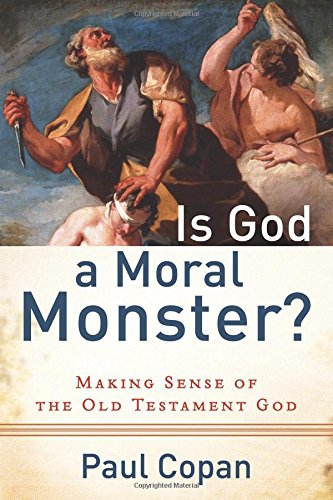
Paul Copan: Did God Sanction Slavery in the Old Testament?
youtube.com/watch?v=CyLpygp4eSE

Based on his book:

 
FWIW - I provided an overview of the incremental improvements contained in Mosaic Law in post #11 above.
 
Status
Not open for further replies.
Back
Top