TLM as sole Worship?

  • Thread starter Thread starter codefro
  • Start date Start date
Status
Not open for further replies.
We? as in you who are attached to the EF? Do you speak for all trads?
Sed contra, those who celebrate the OF will readily disagree with you.

Apparently, you did not read the subsequent answers after your truncated post taken out of context. Not “crystal clear” except in your perception. Read the two paragraphs that follow SC 36.1 – i.e., SC 36.2 and SC 36.3 found in post #82.
👍👍
 
Offering an EF Mass which seems to be your fantasy is not going to save a Catholic church that is going to merge or close. The population isn’t there, the interest isn’t there and the few that would come to an EF Mass at a distance isn’t enough to keep it open.
This is far from the truth. Let me give you a few examples:
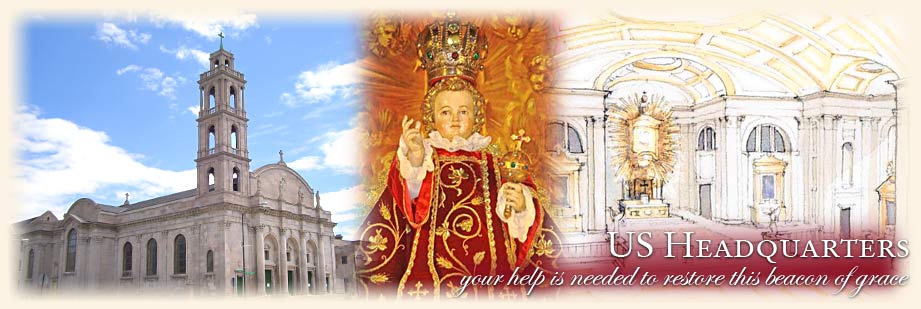
In June of 2005 St. Franics de Sales “parish” was closed by the Archdiocese of St. Louis and was consolidated with another neighborhood parish. The church building, and campus was scheduled to be torn down and sold.
In July 2005, the church building, and campus was given to the Institute of Christ the King Sovereign Priest to maintain and administer the sacraments according to the 1962 Missal. The Archbishop of St. Louis, His Grace, the Most Reverend Raymond L. Burke erected the church as an Oratory of the Institute of Christ the King Sovereign Priest . Today, St. Francis de Sales Oratory serves the whole archdiocese of St. Louis and is the center of the Extraordinary Form of the Roman Rite.
Here are a few views of the church:


Here’s another instance:
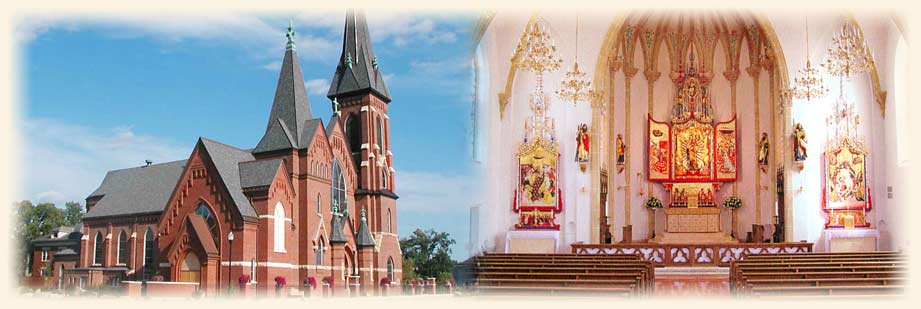
With the gradual decline of the neighborhood, the dwindling of the congregation, and vicissitudes such as a fire in 1976 that well-nigh destroyed the interior of the church, St. Gelasius was eventually shut and in peril of being demolished. However, following the success of the Institute of Christ the King in beautifully restoring St. Mary’s Church in Wausau, Wisconsin — thanks to Divine Providence manifested through the generosity of donors — Cardinal George has entrusted to the Institute the task of re-opening St. Gelasius for public worship.
This particular church I have been to many times. Despite the fact that it was freezing cold (no insulation and only a temporary heating system) I saw the numbers growing. Now that they got insulation, I’ve noticed a further increase in attendance. Again, it was yet another church that was going to be demolished.


That article mentioned St. Mary’s so, here you go:
The Institute of Christ the King Sovereign Priest and the faithful attached to the Traditional Latin Mass received the good news of Bishop Burke’s permission to move into St. Mary’s, which was unoccupied because of a recent parish merger in Wausau.
St. Mary’s Oratory is a thriving apostolate in the Institute of Christ the King, and the number of attending faithful visibly grows every Sunday. Many people have decided to move from other locations to Wausau to be able to assist at the solemn liturgy in St. Mary’s, where three priests of the Institute take great care of the liturgical and pastoral work needed by the faithful.
As at all of the places where the Institute of Christ the King is present, there are many young families with a great number of children of all ages. It is touching to see how the Extraordinary Form of the Roman Rite attracts the younger generations and how diligently our altar boys serve the Mass.


I could find more examples, but I think three should suffice right now. One church was going to be destroyed after a merger. One was closed after a fire and in danger of demolition. Another one was closed due to a merger. All three are thriving now.

You can find all of the full stories about these churches at the Institute of Christ the King’s websites. institute-christ-king.org/home/
 
Lovely photos, but they sure messed up the format on this page. Did you notice?

Nevertheless, I don’t think these exceptions can be taken as the rule, but are isolated examples. I have heard of this on EWTN on occasion when the priest has been a guest of Fr. Pacwa. May God continue to bless them.
 
There are multiple threads that claim “active participation” is interior, and set aside the council statements as if interiority was their intended meaning. Notably, these are posted by traditionalists who enjoy a silent liturgy without external participation.
Cardinal Ratzinger took the position that “active participation” is interior in his book Spirit of the Liturgy. I find it very likely that he knew the indtended meaning of the Council, since he was present there. Also he deals with the document in its original Latin rather than being confused by the misleading English translation. Nor do I think we can dismiss him as a traditionalist trying to impose his personal preferences.
 
Is that suppose to be funny?
Have you read the documents?

Etsi missa magnam contineat populi fidelis eruditionem; non tamen expedire visum est patribus, ut vulgari passim lingua celebraretur.

Although the mass contains great instruction for the faithful people, nevertheless, it has not seemed expedient to the Fathers that it should be every where celebrated in the vulgar tongue.

pan będzie on ignorowany 😃
 
It is crystal clear that their desire was: “the use of the Latin language is to be preserved in the Latin rites” (SC 36). This is made even more crystal clear by the fact that, in order to read the documents the Council Fathers actually wrote, I need to be reading in – you guessed it – Latin!
Yes, it is very clear. I do not how it is possible for anyone to read this document and to conclude that the Mass should be entirely in the vernacular, as is the common practice now. The Council Fathers obviously envisioned a Mass that is a combination of Latin and vernacular.
 
Cardinal Ratzinger took the position that “active participation” is interior in his book Spirit of the Liturgy. I find it very likely that he knew the indtended meaning of the Council, since he was present there. Also he deals with document in its original Latin rather than being confused by the misleading English translation. Nor do I not think we can dismiss him as a traditionalist trying to impose his personal preferences.
Indeed, this is exactly the type of post I was referring to. He was not the only Cardinal at the Council, which had over 5,000 bishops/Cardinals in attendance. Since he was very much attached to the EF, it is not surprising to find this opinion in his book. As many have pointed out, the writing of his opinion while a Cardinal does not become law when he becomes Pope. It was his personal preference, as was ad orientem.

The Council’s choice of the words “active participation” can be further understood when they added clarifiers that were posted by me earlier in this thread:
  1. To promote active participation, the people should be encouraged to take part by means of acclamations, responses, psalmody, antiphons, and songs, as well as by actions, gestures, and bodily attitudes. And at the proper times all should observe a reverent silence.
We see that the Council envisioned far more than simply “interior.” I doubt the latin is misconstruing the meaning by an english translation, but I’m willing to listen if that is true.

 
You can also include:

Chicago Christ the King
St John Cantius
Rockford Christ the King
Yes, I think we can all agree that this locality is blessed with a number of very beautiful churches that celebrate EF’s. In your avidity to paint a lovely picture of national participation, I hope you don’t naively believe that is the norm elsewhere? The statistics do not bear that out, but it is a wonderful example of growth that is a possibility with much prayer and perseverance. 🙂
 
Cardinal Ratzinger took the position that “active participation” is interior in his book Spirit of the Liturgy. I find it very likely that he knew the indtended meaning of the Council, since he was present there. Also he deals with the document in its original Latin rather than being confused by the misleading English translation. Nor do I think we can dismiss him as a traditionalist trying to impose his personal preferences.
Indeed it was a mistranslation. (So what else is new? 🙂 )

The words used were ““actuosa participatio”.” It translates better into Spanish “actual” roughly meaning “present.”
 
Indeed, this is exactly the type of post I was referring to. He was not the only Cardinal at the Council, which had over 5,000 bishops/Cardinals in attendance. Since he was very much attached to the EF, it is not surprising to find this opinion in his book. As many have pointed out, the writing of his opinion while a Cardinal does not become law when he becomes Pope. It was his personal preference, as was ad orientem.

The Council’s choice of the words “active participation” can be further understood when they added clarifiers that were posted by me earlier in this thread:
  1. To promote active participation, the people should be encouraged to take part by means of acclamations, responses, psalmody, antiphons, and songs, as well as by actions, gestures, and bodily attitudes. And at the proper times all should observe a reverent silence.
We see that the Council envisioned far more than simply “interior.” I doubt the latin is misconstruing the meaning by an english translation, but I’m willing to listen if that is true.
We should understand participatio actuosa as primarily interior rather than “merely” interior. Father Z did an in-depth exploration of the term, tracing its use in previous documents. He concluded:
By actuosa we mean primarily that interior receptivity which comes from the baptized person making an act of will to unite himself with the sacred action being wrought in the liturgy by the real “actor”, Jesus Christ the High Priest. This actuosa (“active” in an interior sense) is distinguished from activa (“active” in an exterior sense).
What the Church wants for us first and foremost is the interior participation, founded on our baptism, which integrates the whole human person and then comes to be expressed also in activa participatio.
This is all manifest in what happens during Mass. For example, we are actively receptive to the proclamation of the Gospel. We are not asked to read it aloud together with the priest. At the offertory there is a procession of gifts to the altar. Not everyone in Church comes to the altar. Everyone is then called upon by the priest, who as alter Christus is the Head of the Body of Christ gathered there, to unite their offerings and spiritual sacrifices to his. This they do interiorly, with an act of will, not by physically going up and grabbing hold of the chalice, etc.
wdtprs.com/blog/2006/03/the-true-meaning-of-active-participation/
 
Indeed it was a mistranslation. (So what else is new? 🙂 )

The words used were ““actuosa participatio”.” It translates better into Spanish “actual” roughly meaning “present.”
How do you dismiss the added clarifiers? This has been hashed over ad nauseum, without a single trad being willing to admit that perhaps the Council had much more in mind.

Please review the thrust of this document in my earlier post. If all was “hunky dory,” to use another poster’s expression, there would be no need to draft SC whatsoever. Yet we read that it was their primary concern to revise the liturgy above all other considerations and to encourage above all else, ACTIVE participation, especially by pastors within their parishes. If need be, I can pull other documentation to support this, but it really seems to be a fruitless effort, as it was in past months/years.

I think maybe it’s best to let you guys have your day in court, for there is no chance of a meeting of the minds here.
 
You can also include:

Chicago Christ the King

St John Cantius

Rockford Christ the King

Volo St Peter was on the brink on closing
I know about those as well, but I figured I didn’t need to mention every church I could think of at the moment.
 
In your avidity to paint a lovely picture of national participation, I hope you don’t naively believe that is the norm elsewhere?
I harbor no such illusions. One dead language can’t beat 500 casual ones. 🙂

But it will probably outlast them. 😉
 
Lovely photos, but they sure messed up the format on this page. Did you notice?

Nevertheless, I don’t think these exceptions can be taken as the rule, but are isolated examples. I have heard of this on EWTN on occasion when the priest has been a guest of Fr. Pacwa. May God continue to bless them.
Actually, I have noticed something. It seems that The Institute of Christ the King is constantly the exception, as you will, to the rule. I don’t think it’s a coincidence. I think it can come down to the thread title – at the Institutes oratories, the TLM is the sole worship. They are not sharing a parish, they don’t have just one TLM at some incredibly inconvenient hour. Because there is nothing shared, people who participate at their churches are able to have a complete parish life there in the traditional manner. When that happens, the church thrives.

Now, imagine if the above were more common. Say that the FSSP would be given actual parishes (I believe they do have a few) whenever they are invited to a diocese. I think we’d see tremendous growth. Only after this has been tried do I think we could actually see if the TLM restoring a church that was going to close is really an exception. I’m thinking it would be more the rule.
 
How do you dismiss the added clarifiers? This has been hashed over ad nauseum, without a single trad being willing to admit that perhaps the Council had much more in mind.

Please review the thrust of this document in my earlier post. If all was “hunky dory,” to use another poster’s expression, there would be no need to draft SC whatsoever. Yet we read that it was their primary concern to revise the liturgy above all other considerations and to encourage above all else, ACTIVE participation, especially by pastors within their parishes. If need be, I can pull other documentation to support this, but it really seems to be a fruitless effort, as it was in past months/years.
The list of ways to do participatio actuosa includes silence. It should be obvious that the activity in silence is interior.

I am not one of these people who think that everything was perfect before the Council. From what I have read, it was common for people to use Mass as a time for personal devotions rather than giving attention to the Mass. The Council was calling people to really be present - to listen, to pay attention, to unite their prayers with those of the priest - these things are interior participation. The songs, acclamations, etc are external means with which to express this interior participation.
 
We should understand participatio actuosa as primarily interior rather than “merely” interior. Father Z did an in-depth exploration of the term, tracing its use in previous documents. He concluded:
wdtprs.com/blog/2006/03/the-true-meaning-of-active-participation/
And Fr. Z is just a traditional priest quoted more often than the Church, who also has a personal opinion. Nevertheless, he has not the authority of papal office to whom the faithful owe submission.
I have come through the instruction period over 40 years ago when our pastors were encouraging us to come out of our cocoons and learn how to truly engage our whole being in the liturgy. It was very painstaking work for our priests during those years, but now that we have obtained the goal for the most part, it would really be difficult to go back to silent or quasi-private occupation of a pew.

As I said to PV, it’s time to let you folks have your day. My words will mean nothing to a dedicated traditionalist. 🤷
 
I am not one of these people who think that everything was perfect before the Council. From what I have read, it was common for people to use Mass as a time for personal devotions rather than giving attention to the Mass. The Council was calling people to really be present - to listen, to pay attention, to unite their prayers with those of the priest - these things are interior participation. The songs, acclamations, etc are external means with which to express this interior participation.
I believe Pius X was the first to use the expression. The Council merely reaffirmed his wishes. I agree with your analysis.
 
Have you read the documents?

Etsi missa magnam contineat populi fidelis eruditionem; non tamen expedire visum est patribus, ut vulgari passim lingua celebraretur.

Although the mass contains great instruction for the faithful people, nevertheless, it has not seemed expedient to the Fathers that it should be every where celebrated in the vulgar tongue.

pan będzie on ignorowany 😃
I don’t read Latin and I didn’t think it was funny.
 
And Fr. Z is just a traditional priest quoted more often than the Church, who also has a personal opinion. Nevertheless, he has not the authority of papal office to whom the faithful owe submission. I have come through the instruction period when our pastors were encouraging us to come out of our cocoons and learn how to truly engage our whole being in the liturgy. It was very painstaking work for our priests for many years, but now that we have obtrained the goal for the most part, it would really be difficult to go back to silent or quasi-private occupation of a pew.

As I said to PV, it’s time to let you folks have your day. My words will mean nothing to a dedicated traditionalist.
Fr. Z is a priest in good standing. He is saying the same thing that Cardinal Ratzinger said in the Spirit of the Liturgy. These are knowledgeable men, explaining to us how to understand Church teaching. It is not right to dismiss them as men setting their personal opinions against Church teaching.

I think the topic of this thread is threatening and distressing for some people. My husband prefers the OF Mass and I have seen how upset he becomes when he encounters people who say the want to get rid of that form of Mass and make the EF the sole form. Although I have some serious concerns about the OF, I think it would be harmful to the Church to do such a thing. I would like to see my concerns addressed by reforms to the OF. I think that Mass of 1965 came closer to expressing the intent of Council and would like to see the OF restored to something more like that.
 
Status
Not open for further replies.
Back
Top