Unity in the Orthodox Churches

  • Thread starter Thread starter Nita
  • Start date Start date
Status
Not open for further replies.
I am sure you mean no disrespect, but Holy Orthodoxy does not consist of “branches” any more than the Papal Catholic church is “branches”. It is one church.

The synods in Holy Orthodoxy generally conform to national or regional patterns, just like the ancient church, and similar to your national conferences of bishops, the USCCB or CBCEW for examples.
I used the expression “priest from another branch” in my opening post- not knowing any better. Just want to check and see if I understand you correctly here. Would the proper way have been “…priest from another synod…?”

In the (Papal) Catholic Church we use the term “rites” when we want to distinguish - eg. the Latin Rite, Byzantine Rite, …

Nita
 
Ok, but by and large, they all follow some form of the same Liturgy?
By and large, for the Eastern Orthodox yes. There are Western Rite Orthodox, and Gallican Rite, but the overwhelming majority used the rites of Constantinople.

The Oriental Orthodox all have their own rites: Coptic, Ethiopian, Syriac, Indian, Armenian. The Eastern Orthodox in Alexandria share a liturgy with the Copts, those in Antioch, with the Syriacs, but they are in disuse. There are attempts to revive them among the Eastern Orthodox.
 
but I have very little knowledge of the Orthodox who are not under the Pope (or even those who are under the Pope)
There is no such thing as Orthodox who are under the Pope or in communion with Rome.

There are Eastern Catholics who are in communion with Rome.
 
In the (Papal) Catholic Church we use the term “rites” when we want to distinguish - eg. the Latin Rite, Byzantine Rite, …
Actually, the Catholic Church no longer uses the term, “rites”.

They use the term, “Church”-------Latin Catholic Church, Byzantine Catholic Church, Ukrainian Catholic Church, etc…
 
By and large, for the Eastern Orthodox yes. There are Western Rite Orthodox, and Gallican Rite, but the overwhelming majority used the rites of Constantinople.

The Oriental Orthodox all have their own rites: Coptic, Ethiopian, Syriac, Indian, Armenian. The Eastern Orthodox in Alexandria share a liturgy with the Copts, those in Antioch, with the Syriacs, but they are in disuse. There are attempts to revive them among the Eastern Orthodox.
That really helps me understand . Thanks 🙂
 
Actually, the Catholic Church no longer uses the term, “rites”.

They use the term, “Church”-------Latin Catholic Church, Byzantine Catholic Church, Ukrainian Catholic Church, etc…
It depends: the Mozarabic and Ambrosian are rites, not churches.
 
Are all of the saints in one recognized by the others?
I think so. I’m not sure whether a definitive answer exists or where it would be found. It would come up only if one Church refused a saint glorified by another, but I don’t recall that happening. Anoher situatin would be uncanonical Churches. The Russian Church Abroad, when not in communion with the Patriarchate of Moscow, glorified Czar Nicholas II’s family as martyrs. The PoM later canonized them as Passion-bearers. Since the RCA has since been reunited to her Mother Church, I don’t know if they defered to her judgment on the glorification.

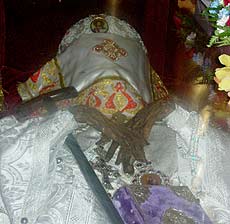
Conversely, when St.John Maximovich was glorified by the RCA, (at the time still not in full communion), he had already been venerated by Orthodox of several jurisdictions. I had the privledge of venerating his incorrupt relics in his cathedral in San Francisco this summer: it was the first time my sons saw an incorrupt saint.


When St. John Kuchurof the Neo-Martyr (Proto-martyr of the Bolshevik yoke) was being glorified by the PoM, the Patriarch had someone come here to Chicago, where he was the first priest of the Cathedral, to see about the local veneration. St. Rafail Hawaweeny, from Antioch but ordained a bishop (the first in America) by the PoM, had the Patriarch of Antioch and the Orthodox Church in America involved in his glorification.

Saint Calendaras are very local: the Sunday after All Saints (the Sunday after Pentacost, because the Saints are the Fruit of the Holy Spirit) is the “Sunday of All Saints who have shone in____” (the country in question). While a bishop of various parts of the West, St. John Maximovich revived the cults of many saint which had fallen in disuse because of the schism. Every calendar I have ever seen of any jurisdiction, however, has always had saints from the other jurisdictions.
 
I should know this, but do you guys acknowledge our saints and us yours? I know that there is a point where we have them in common, but post schism?
 
It depends: the Mozarabic and Ambrosian are rites, not churches.
Those are rites because they still answer to the hierarchy of the Latin church. The Eastern churches are churches because they are separate entities with their own administrative structures.
 
Those are rites because they still answer to the hierarchy of the Latin church. The Eastern churches are churches because they are separate entities with their own administrative structures.
Not all, e.g. the Russians.
 
Actually, the Catholic Church no longer uses the term, “rites”.

They use the term, “Church”-------Latin Catholic Church, Byzantine Catholic Church, Ukrainian Catholic Church, etc…
There is no such thing as Orthodox who are under the Pope or in communion with Rome.
There are Eastern Catholics who are in communion with Rome.
Thank you.
 
Status
Not open for further replies.
Back
Top