
P
patrick457
Guest
Just sharing something I’ve read.
A scholar named Timothy D. Barnes (author of Early Christian Hagiography and Roman History, 2010) has a rather interesting theory about how St. Peter was martyred. He argues that Peter was not so much crucified (as is commonly thought) but burned alive under Nero.
His primary evidence for this idea is John 21:18-19. Barnes points to a phrase in the statement: “another shall gird you.” We know from ancient sources (the gospels included) that one of the constant elements in a Roman crucifixion is that crucifixion victims were crucified naked. So Barnes argues, this reference to Peter being ‘girded’ (or ‘clothed’; it’s the same Greek word) is kind of weird if Peter suffered a ‘proper’ crucifixion. You would not be dressed for a crucifixion; you would be undressed.
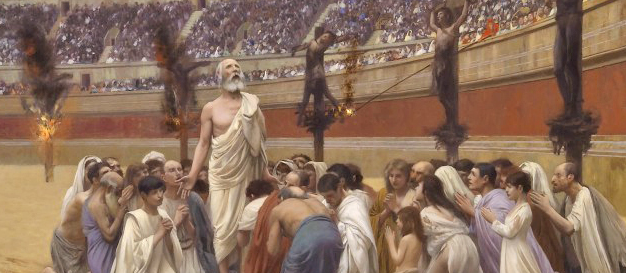
Instead, Barnes thinks that Peter was one of those Christians who were set on fire by Nero as part of his spectacles. Some of the Christians put to death by Nero were apparently made to wear inflammable tunics (Seneca once refers to “the terrible shirt smeared and interwoven with inflammable materials,” which might be this) and then set alight as torches with their arms extended as if on crosses (Barnes thinks that this was a parody of the Christian belief in Jesus crucified). While mock ‘crosses’ may have been involved, this was not technically a modified form of crucifixion properly speaking, but a modified form of death by burning.
et pereuntibus addits ludibria, ut ferarum tergis contecti laniatu canum interirent aut crucibus adfixi [aut flammandi atque] ubi defecisset dies in usum nocturni luminis urerentur.
And, as they perished, mockeries were added, so that, covered in the hides of wild beasts, they expired from mutilation by dogs, or were burned fixed to crosses for use as nocturnal illumination on the dwindling of daylight.
Barnes is of the idea that Peter, along with some other Roman Christians, were arrested by authorities in the aftermath of the AD 64 fire. They were dressed in flammable tunics, bound with arms outstretched to mock crosses, and then set on fire. Peter’s charred remains would have been thrown into the Tiber. (It’s not unlikely that Christians might have recovered some of these remains or tried to, but Barnes thinks that the bones recovered in the Vatican in the 1950s isn’t actually Peter’s, but that of some later pope.)
Was Peter in Rome?
Another theory espoused by Barnes is his defense of the traditional belief that Peter came to Rome. Some scholars nowadays question whether Peter came to Rome at all, claiming that the tradition that he did so only became attested by the late 2nd century.
Barnes in his more recent article (“Another Shall Gird Thee”: Probative Evidence for the Death of Peter defends the traditional belief by pointing to earlier Christian literature which seems to connect Peter and his death with Nero, such as the Ascension of Isaiah, Apocalypse of Peter, or more indirectly, Clement’s Epistle to the Corinthians. And since Nero’s persecution wasn’t an empire-wide one but really only limited to Rome, that to him points to Peter being in Rome and dying there.
In addition, in his book he invokes 1 Peter and its reference to “the chosen church in Babylon” and the veneration of Peter by Roman Christians as a martyr since the mid-2nd century.
(As for St. Paul, Barnes in his 2010 book thought that Paul was sentenced to death by a Roman governor in Spain, although in the 2015 article he revised his position: Paul died in Rome, which might mean that he was sent there either to be executed or to have his case reviewed by the emperor.)
A scholar named Timothy D. Barnes (author of Early Christian Hagiography and Roman History, 2010) has a rather interesting theory about how St. Peter was martyred. He argues that Peter was not so much crucified (as is commonly thought) but burned alive under Nero.
His primary evidence for this idea is John 21:18-19. Barnes points to a phrase in the statement: “another shall gird you.” We know from ancient sources (the gospels included) that one of the constant elements in a Roman crucifixion is that crucifixion victims were crucified naked. So Barnes argues, this reference to Peter being ‘girded’ (or ‘clothed’; it’s the same Greek word) is kind of weird if Peter suffered a ‘proper’ crucifixion. You would not be dressed for a crucifixion; you would be undressed.
Instead, Barnes thinks that Peter was one of those Christians who were set on fire by Nero as part of his spectacles. Some of the Christians put to death by Nero were apparently made to wear inflammable tunics (Seneca once refers to “the terrible shirt smeared and interwoven with inflammable materials,” which might be this) and then set alight as torches with their arms extended as if on crosses (Barnes thinks that this was a parody of the Christian belief in Jesus crucified). While mock ‘crosses’ may have been involved, this was not technically a modified form of crucifixion properly speaking, but a modified form of death by burning.
et pereuntibus addits ludibria, ut ferarum tergis contecti laniatu canum interirent aut crucibus adfixi [aut flammandi atque] ubi defecisset dies in usum nocturni luminis urerentur.
And, as they perished, mockeries were added, so that, covered in the hides of wild beasts, they expired from mutilation by dogs, or were burned fixed to crosses for use as nocturnal illumination on the dwindling of daylight.
Barnes is of the idea that Peter, along with some other Roman Christians, were arrested by authorities in the aftermath of the AD 64 fire. They were dressed in flammable tunics, bound with arms outstretched to mock crosses, and then set on fire. Peter’s charred remains would have been thrown into the Tiber. (It’s not unlikely that Christians might have recovered some of these remains or tried to, but Barnes thinks that the bones recovered in the Vatican in the 1950s isn’t actually Peter’s, but that of some later pope.)

Was Peter in Rome?
Another theory espoused by Barnes is his defense of the traditional belief that Peter came to Rome. Some scholars nowadays question whether Peter came to Rome at all, claiming that the tradition that he did so only became attested by the late 2nd century.
Barnes in his more recent article (“Another Shall Gird Thee”: Probative Evidence for the Death of Peter defends the traditional belief by pointing to earlier Christian literature which seems to connect Peter and his death with Nero, such as the Ascension of Isaiah, Apocalypse of Peter, or more indirectly, Clement’s Epistle to the Corinthians. And since Nero’s persecution wasn’t an empire-wide one but really only limited to Rome, that to him points to Peter being in Rome and dying there.
In addition, in his book he invokes 1 Peter and its reference to “the chosen church in Babylon” and the veneration of Peter by Roman Christians as a martyr since the mid-2nd century.
(As for St. Paul, Barnes in his 2010 book thought that Paul was sentenced to death by a Roman governor in Spain, although in the 2015 article he revised his position: Paul died in Rome, which might mean that he was sent there either to be executed or to have his case reviewed by the emperor.)

