“and it was allowed to give breath to the image of the beast so that the image of the beast should even speak, and to cause those who would not worship the image of the beast to be slain.” - Revelation 13:15
The key here is that it’s an image that can speak. They didn’t have anything like that back then, but we do now. It’s called TV, internet, or could be a hologram. Does anyone else besides me see it this way?
Not exactly an answer. But I think it’s best to look at the verse in its context.
And I saw another beast coming up from the land, and it had two horns like a lamb and it was speaking like a dragon, and all the authority of the first beast it exercises before it, and it makes the land and those dwelling in it that they will bow before the first beast whose wound to death was healed, and it does great signs - that fire also it should make to come down from the heaven to the land before men - and it leads astray those dwelling on the land because of the signs that were given it to do before the beast, saying to those dwelling upon the land to make an image to the beast that has the stroke of the sword and lived, and there was given to it to give a spirit to the image of the beast, that also the image of the beast should speak and cause that as many as shall not bow before the image of the beast should be killed.
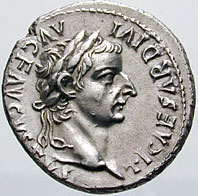
Looking at contemporary (i.e. late 1st century) imagery, the other beast that comes from the earth evokes the local priests of the imperial cult or the provincial councils responsible for enforcing emperor worship. It was in the Eastern provinces where the imperial cult was very strong, in fact even had a life of its own: centres including Pergamon (“
where Satan dwells;” the Christian community there is one of the seven churches), Lesbos and Cyprus offered cult honors to the late Augustus and the empress Livia, and members of the imperial family were linked to various gods.
The second beast receives authority (
exousia) from the first beast, just as the first beast had received it from the dragon. If the first beast is a political symbol, the second beast is a religious one: like a prophet who stands in readiness before his god, the second is in the service of the first and exercises
exousia in its behalf by promoting the worship of the first beast.
John then describes the second beast with a familiar, established trope in Judaeo-Christian apocalyptic tradition: the performance of signs and wonders to mislead. We can already see the concept applied to “
the [false] prophet” in Deuteronomy 13:1, to “
false Christs” in Mark 13:22, and to “
the lawless one” in 2 Thessalonians 2:9-10. The second beast can make fire come down out of heaven, in a parody of Elijah, and the two witnesses earlier in the book (11:5): as a false Elijah, the second beast heralds the false Messiah. Within a heavily Christianized contemporary Jewish work known as the
Ascension of Isaiah is an apocalyptic section known as the ‘Testament of Hezekiah’ (the book’s most overtly Christian portion), we read that at the command of “
Beliar the great ruler, the king of this world…the sun will rise at night and he will make the moon to appear at the sixth hour.” (4.2, 5) Another Christianized work known as the
Sibylline oracles even has the Antichrist figure being able to raise the dead:
From the great Caesars Beliar shall come
Hereafter, and shall stand on mountain height,
And stay the sea, and the great fiery sun,
And shining moon, and make the dead stand up,
And perform many miracles with men.
The beast who came out of the earth performs its signs not as a religious act, but as a public-relations spectacle “
before men.” This again drives home the point of the second beast being a false prophet, whose trademark is to perform signs for self-aggrandizement (Jeremiah 23:9-14; Ezekiel 13:1-23).
The second beast, through its ‘miracles’, are able to sway “
those dwelling on the land,” being a tool of Satan, “
the deceiver of the whole world.” (12:9) Note that the second beast misleads everyone by “
the signs that were given it to do.” This seems to be a case of the so-called ‘divine passive’ (where actions ascribed to God are described in the passive tense): mysteriously, even the second beast operates within the divine plan.




 What I am trying to say is: attempting to read Revelation in a rather simplistic and literalistic (as opposed to literal) way, divorced from its original historical (1st century AD) and literary (