Sepphoris was the capital of Galilee for at least fifty years, from 37 BC (if not earlier) until about AD 18, when Herod Antipas moved his capital to the newly built city of Tiberias on the shore of the Sea of Galilee.
Nazareth is within walking distance of Sepphoris, less than four miles.
Nazareth is unknown in the Old Testament and in all other ancient sources earlier than the New Testament. Even Josephus, who writes a lot about Galilee, never mentions it. In the New Testament, it occurs only in the Gospels and Acts, as the place where Jesus and his family lived and where he was known as a member of the synagogue. It is never mentioned in any other connection.
Herod the Great captured Sepphoris in 37 BC, in the fighting that brought him to the throne. If Sepphoris was not already the capital of Galilee, Herod made it so. He held it until his death in 4 BC. In those 33 years he undertook extensive building work there. The city suffered severe damage in 4 BC when Varus crushed a Galilean revolt: “He took the city of Sepphoris and burned it and made slaves of its inhabitants” (Josephus, War, 2.68). Herod Antipas, who inherited Galilee under his father’s will, found his capital a deserted ruin. His decision to rebuild it in 3 BC probably drew the carpenter Joseph and his family to settle in Nazareth, a nearby village. Antipas’s rebuilding project could be relied on to ensure the family’s income for many years.
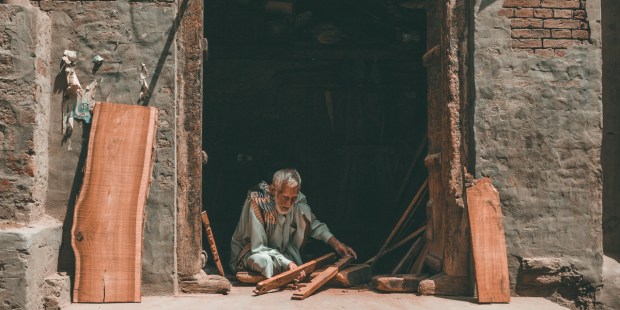
These considerations suggest that the conventional image of Joseph earning his living in his carpenter’s shop in Nazareth, making farm implements and furniture for the villagers, is probably inaccurate. He is more likely to have worked at Sepphoris, as one of a large army of construction workers—masons, carpenters, and many other skilled craftsmen—employed on long-term building projects under Herod the Great and later under Antipas, who kept Sepphoris as his capital until about AD 18, when he finished building Tiberias, his new capital, less than 20 miles away along the present-day Route 77. Many construction workers were left unemployed when Antipas ceased work at Sepphoris to concentrate on Tiberias instead. All craftsmen were invited to move to Tiberias to work there, but many who were strictly observant Jews refused the offer because the new city was being partly built over an old burial ground.
Richard A. Batey lists some of the jobs that carpenters would have done in the long-term construction work at Sepphoris ( Jesus & the Forgotten City, pp. 80-81): not only the jobs that still today are sometimes done by carpenters—erecting scaffolding and making fittings such as cabinets and doors—but also:
“One team of carpenters assembles the sturdy semicircular forms that support the arches and extended vaults basic to Roman architecture. Precisely cut stones are laid over these forms until keystones at the top are fitted snugly into place, locking the entire arch together. Then the wooden forms are removed and reused.
(Continues)