G
gator54
Guest
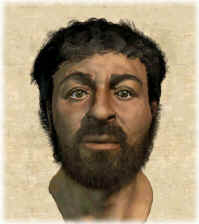
WHAT DO YOU THINK JESUS REALLY LOOKED LIKE??? 

That’s actually not so true, Bill. According to my classes which dealt in the subject of genetics, modern judaism, because of several strict societal rules, is essentially still its own race. Granted, that line is less distinguished in the states or in today’s Europe, in Israel it is very strong.Everything is pretty much speculation. Essentially though, he probably would not look out of place amongst most of the middle eastern populations. I wouldn’t say he necessarily looked like modern Jews as their population has mixed greatly with those of European Descent.
That being said, it is all speculation.
–
Bill

With respect, large numbers of Jews in Israel actually are immigrants from Europe; specifically Eastern Europe and Russia. Granted there is a fairly large Sephardic population in Israel, but approximately half of Israelis are Ashkenazi (i.e. descendants of European Jews).That’s actually not so true, Bill. According to my classes which dealt in the subject of genetics, modern judaism, because of several strict societal rules, is essentially still its own race. Granted, that line is less distinguished in the states or in today’s Europe, in Israel it is very strong.
Since at least have of modern Israeli Jews are descended from European Jews, I think it is problematic at best to assume he looked like them. No Jesus was not black, but its safe to assume that ancient semetic Jews were almost certainly darker skinned and darker haired than Jews who have mixed with Western European Populations for the last 2000 years. Particularly when you consider that other semetic peoples are a fair bit darker than Ashkenazi. Probably the best model would be the Mizrahim, but even there, it seems likely there was some level of mixing with the local populations.Jesus probably looked like a modern day ISRAELI Jew, brown hair, thought not as dark as the pictures shown above make it look. Actually opposite of what seems to be a popular catchphrase these days, Jesus was NOT black (nor was He strictly white either, He was hebrew).
What Roman officials? Outside of the Evangelists, as far as I am aware of, there are no accounts regarding Jesus by his contemporaries. The earliest non Christian reference is in Josephus and even then it is questioned whether it was actually by Josephus or a later interpolation that was added to the text.Several roman officials cite encounters with Jesus, specifically stating that he had a workers build, but a grace of body and stance that spoke of much higher class, that he looked delicate but strong, and that his hair was either listed as dark blond or light brown. They did, however, mention the fact that he had long hair, generally at least noted as down to the shoulders. They also note that while nothing on him particularly stood out as “femine,” that there was a type of radience or strange “beauty” about him.
Ok, with respect, how are we suppose to know what Jewish kings look like? Even in Roman times it had been hundreds of years since the last king of the Davidic line. Though it should be noted that the line of David was of common origin; David being a shepherd. Unless the King is from a conquoring people, odds are he looks much like the people he governs. Notions of the king looking distinct from the general population work well in Europe where most kings and nobles became such by conquoring and ruling the native populations but are less credible for a king that came from the people who ruled.While I commend the people above for their postings, the research it is based on is off of common PEASANT assumptions of the time, not off of kings. One MUST remember that Jesus was a king, decendent of a royal line, and (son of a carpenter though He may have been) to maintain his credibility Jesus would have appeared as a Jewish king would have, not as a Jewish peasant. Bad assumption on the part of the people who created the picture.
That is quite incorrect, actually, even the library of congress has a reprint of a letter from pontius pilot to caeser, describing Jesus.What Roman officials? Outside of the Evangelists, as far as I am aware of, there are no accounts regarding Jesus by his contemporaries. The earliest non Christian reference is in Josephus and even then it is questioned whether it was actually by Josephus or a later interpolation that was added to the text.
–
Bill
From Pontius Pilate to Caesar (letter supposed to be contained in the Congressional Library):A man of stature somewhat tall, and comely, with very reverent countenance, such as the beholders may both love and fear, his hair of (the colour of) the chestnut, full ripe, plain to His ears, whence downwards it is more orient and curling and wavering about His shoulders. In the midst of His head is a seam or partition in His hair, after the manner of the Nazarenes. His forehead plain and very delicate; His face without spot or wrinkle, beautified with a lovely red; His nose and mouth so formed as nothing can be reprehended; His beard thickish, in colour like His hair, not very long, but forked; His look innocent and mature; His eyes grey, clear, and quick…In proportion of body, most excellent; His hands and arms delicate to behold. In speaking, very temperate, modest, and wise. A man, for His singular beauty, surpassing the children of men"
From “The Archko Volume” (Roman court record) which was supposedly provided by the Vatican:One day I observed in the midst of a group of people a young man who was leaning against a tree, calmly addressing the multitude. I was told it was Jesus. This I could easily have suspected so great was the difference between Him and those who were listening to Him. His golden colored hair and beard gave to his appearance a celestial aspect. He appeared to be about 30 years of age. Never have I seen a sweeter or more serene countenance. What a contrast between Him and His bearers with their black beards and tawny complexions!
I have, of course, edited these quotes to the parts that only discuss Jesus’ personal appearance… reading the rest of the quotes is interesting in itself ( thenazareneway.com/likeness_of_our_saviour.htm )He said: ‘If you ever meet him [Yeshua] you will know him. While he is nothing but a man, there is something about him that distinguishes him from every other man. He is the picture of his mother, only he has not her smooth, round face. His hair is a little more golden than hers, though it is as much from sunburn as anything else. He is tall, and his shoulders are a little drooped; his visage is thin and of a swarthy complexion, though this is from exposure. His eyes are large and a soft blue, and rather dull and heavy…’ This Jew [Nazarite] is convinced that he is the Messiah of the world
Well we can argue the reasons, but it is undeniable that the appearance of Ashkanazi Jews have changed from what their ancestors would have looked like 2000 years ago (up to 30% of Jews in Germany are blond for example!). The majority of Jews in Israel are Askanazi, so modern Jews would not be a good representation of what Jews in the 1st century would have looked like.Bill, to address only two points:
- Even though there were jews in Europe, the jewish customs prevented by and large the conjoining of different faithed peoples. Yes, certainly SOME jewish lines took on traits of the local populations, and pigment naturally dies out when a person lives in a less sunny place, but by and large the overall race traits of the jewish lines as a whole were preserved.
That is quite incorrect, actually, even the library of congress has a reprint of a letter from pontius pilot to caeser, describing Jesus.
a few tidbits of what roman officials had to say about Jesus:
From Publius Lentulus to Caesar (although this source is the most dubious, since it’s highly suspect that Lentulus was a fictional character) :
From Pontius Pilate to Caesar (letter supposed to be contained in the Congressional Library):
From “The Archko Volume” (Roman court record) which was supposedly provided by the Vatican:
With respect, I don’t think any serious historian views any of the above documents as being by their purported authors. As a result, the descriptions they contain are equally suspect.I have, of course, edited these quotes to the parts that only discuss Jesus’ personal appearance… reading the rest of the quotes is interesting in itself ( thenazareneway.com/likeness_of_our_saviour.htm )
Like I said, it has become chic these days to mention that Jesus certainly didn’t look like the images artists portrayed of Him, but that flies in the face of 1) all the Divine Appearances Jesus has made since that time, 2) the supposed roman testimonies from officials who SAW Jesus and recorded it in official letters of state, and against 3) the earliest recordings of the likeness of Jesus, which include traits common to (but not entirely like) the artwork versions we’re all familiar with.
Apparently he looked differently after the resurection, because the disciples didn’t know him…WHAT DO YOU THINK JESUS REALLY LOOKED LIKE???
Good one Lillith!Apparently he looked differently after the resurection, because the disciples didn’t know him…
I think we would recognize his voice if we heard it.
3.) The ‘Pontius Pilate to Caesar’ letter seems to be quite common in white supremacist sites, or so I’ve heard due to its description of an almost-Aryan Jesus. I’ve even read a page where the author, claiming that the letter is authentic, says that the Jews (which he believes is distinct from the Israelites) rewrote history and whatnot……Like the “Report of Pilate,” these bristle with childish blunders. There is no such Greek philosopher and Roman legislator as “Meeleesen” (p. 6). The supposed references to Josephus’ “Jewish Wars”–“Senect. 15, in brut. 15, quintil. 3 and 12”–simply do not exist. That Josephus in his “Antiquities” refers to Jesus in more than fifty places is false; the supposed references given for finding these have nothing to do with Josephus or Jesus; they are “Suet. in dom. 13, Martial 9, v. 4.” The statements that Philo’s works were translated into Greek by a Jewish rabbi named Simon, that he often refers to Jesus, and that he began to write about A.D. 40 are groundless; it was at about that time that he ceased to write. That Tacitus wrote his history of Agricola in A.D. 56 is of course an error; Tacitus was born in 55, and even if he had been able to write his father-in-law’s biography at the age of one year, there was as yet nothing to write, for Agricola himself was only nineteen. Mr. Mahan is not aware that the “Agricola” was written in Latin. He says it was translated by Marcus, a Jewish rabbi; “and so were all the |51 histories written in this age. They were written in the languages of those days, and the scribes of those days were most all Rabbis.” Mr. Mahan’s statement that when Mohammed took Constantinople he had the fifty Bibles prepared for Constantine “all nicely cased and deposited in the St. Sophia Mosque” where “they look more like rolls of narrow carpet wound around a windlass than anything else” is baseless. Mr. Mahan thought that parchment was made out of vegetable pulp, reduced to a paste and dried in the sun, after which it was called papyrus! He gives no reference to manuscript numbers which might aid anyone to find and examine the books he claims to have found. The mention of Hilderium with Shammai and Hillel (p. 215) may be a reminiscence of Ilderim in “Ben-Hur”; there is no such Jewish name. As in “Ben-Hur,” the Wise Men are a Greek, a Hindu, and an Egyptian. This with the story of Balthasar’s death on the afternoon of the Crucifixion, which was absent from the original form of the “Report,” had important consequences.
