E
EphelDuath
Guest
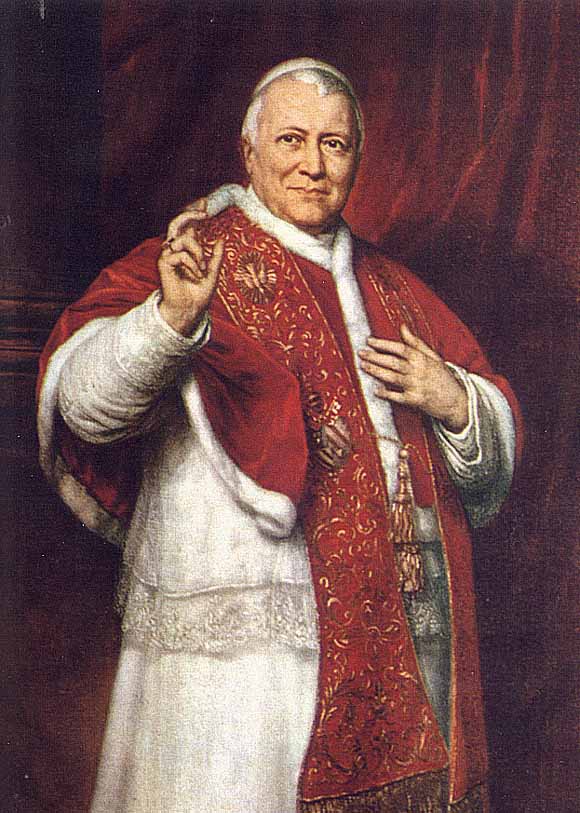
I’m assuming this is some tradition that’s since been lost (at least in the U.S.), since I’ve only seen it in Papal images from before the time of St. Pius X. What does it mean? Where did it come from?

And that’s a picture of Blessed Pius IX…or, what the Italians affectionately called him, ‘Pio Nono’ !http://upload.wikimedia.org/wikipedia/commons/9/91/Popepiusix.jpg
I’m assuming this is some tradition that’s since been lost (at least in the U.S.), since I’ve only seen it in Papal images from before the time of St. Pius X. What does it mean? Where did it come from?

It appears that the two upraised fingers, which signify the two natures of Jesus are crossed to also represent His Crucifixion.Yes, it’s a gesture of blessing.
The two upraised fingers signify the two natures of Our Lord: divine and human.
The three fingers that are ‘curved’ signify the Three Persons of the Blessed Trinity: Father, Son, and Holy Spirit.
Simply put, it’s a statement of belief in two key elements of Catholic belief, Our Lord being human and divine in His nature, and Three Persons, One God in the Trinity,
(Please Note: This uploaded content is no longer available.)East Sideeeeee.
That was actually pretty funny…East Sideeeeee.
It’s the position used for blessings by priests and bishops in the Byzantine Rite*, and in some of the other Eastern Christian Rites; it’s fallen from use in the Roman Rite.http://upload.wikimedia.org/wikipedia/commons/9/91/Popepiusix.jpg
I’m assuming this is some tradition that’s since been lost (at least in the U.S.), since I’ve only seen it in Papal images from before the time of St. Pius X. What does it mean? Where did it come from?
In the Latin church this form of hand blessing has always been reserved to the pope(still is), keep an eye on BXVI. In the Byzantine church this hand blessing is permitted to ALL priests and bishops.It’s the position used for blessings by priests and bishops in the Byzantine Rite*, and in some of the other Eastern Christian Rites; it’s fallen from use in the Roman Rite.
From the priest’s view, it forms I C & X, the letters in the greek and slavic abbreviations IC XC for Jesus Christ (Iesus Christos)
-=-=-=-=-=-
*Some groups have different hand postures, specifically Old Believers
You know, looking at the pictures I posted above, I think this (and my comment that this is the gestures of “papal benediction”) is not correct – it’s the gesture of pontifical benediction, meaning that it is permitted to any pontiff (i.e., bishop), as you can see Archbishop Dolan doing in his portrait:In the Latin church this form of hand blessing has always been reserved to the pope(still is), keep an eye on BXVI. In the Byzantine church this hand blessing is permitted to ALL priests and bishops.
No, it has not always been Papal only. I’ve seen some paintings of Roman Rite bishops using it dating to well before Trent. Including some from before the Miter! (which puts it somewhere around 9th C)In the Latin church this form of hand blessing has always been reserved to the pope(still is), keep an eye on BXVI. In the Byzantine church this hand blessing is permitted to ALL priests and bishops.
that is how my fiance explained to me why he holds his fingers in this same way when he crosses himself.Yes, it’s a gesture of blessing.
The two upraised fingers signify the two natures of Our Lord: divine and human.
The three fingers that are ‘curved’ signify the Three Persons of the Blessed Trinity: Father, Son, and Holy Spirit.
Simply put, it’s a statement of belief in two key elements of Catholic belief, Our Lord being human and divine in His nature, and Three Persons, One God in the Trinity,


It is also the way that Orthodox bless from priest up, not just bishops.It’s the position used for blessings by priests and bishops in the Byzantine Rite*, and in some of the other Eastern Christian Rites; it’s fallen from use in the Roman Rite.
From the priest’s view, it forms I C & X, the letters in the greek and slavic abbreviations IC XC for Jesus Christ (Iesus Christos)
-=-=-=-=-=-
*Some groups have different hand postures, specifically Old Believers