F
fellowChristian
Guest
oooh how I wish I could visit the Christian Catacombs of Rome!
Some basic facts and observations: Jesus was first represented by symbols like a lamb or fish. The earliest known image of Jesus is a fresco of the healing of the paralytic at Dura-Europos (c.230-40). Jesus first appears with a beard in the late 4th century (and then not consistently). The earliest depiction of the crucifixion is on a sarcophagus dated c.420 AD.
religionfacts.com/jesus/image_gallery.htm
Early Christian Catacombs, Rome
sacred-destinations.com/italy/rome-catacombs.htm
Mass was held in the Catacombs by the faithful and the coffins of the saints were used as altars for the concecration of the Eucharist! That’s why we have relics from saints in most of our altars.
Revelation 6:9
When he opened the fifth seal, I saw under the altar the souls of those who had been slain because of the word of God and the testimony they had maintained.
Some basic facts and observations: Jesus was first represented by symbols like a lamb or fish. The earliest known image of Jesus is a fresco of the healing of the paralytic at Dura-Europos (c.230-40). Jesus first appears with a beard in the late 4th century (and then not consistently). The earliest depiction of the crucifixion is on a sarcophagus dated c.420 AD.
religionfacts.com/jesus/image_gallery.htm
Early Christian Catacombs, Rome
sacred-destinations.com/italy/rome-catacombs.htm
Mass was held in the Catacombs by the faithful and the coffins of the saints were used as altars for the concecration of the Eucharist! That’s why we have relics from saints in most of our altars.
Revelation 6:9
When he opened the fifth seal, I saw under the altar the souls of those who had been slain because of the word of God and the testimony they had maintained.
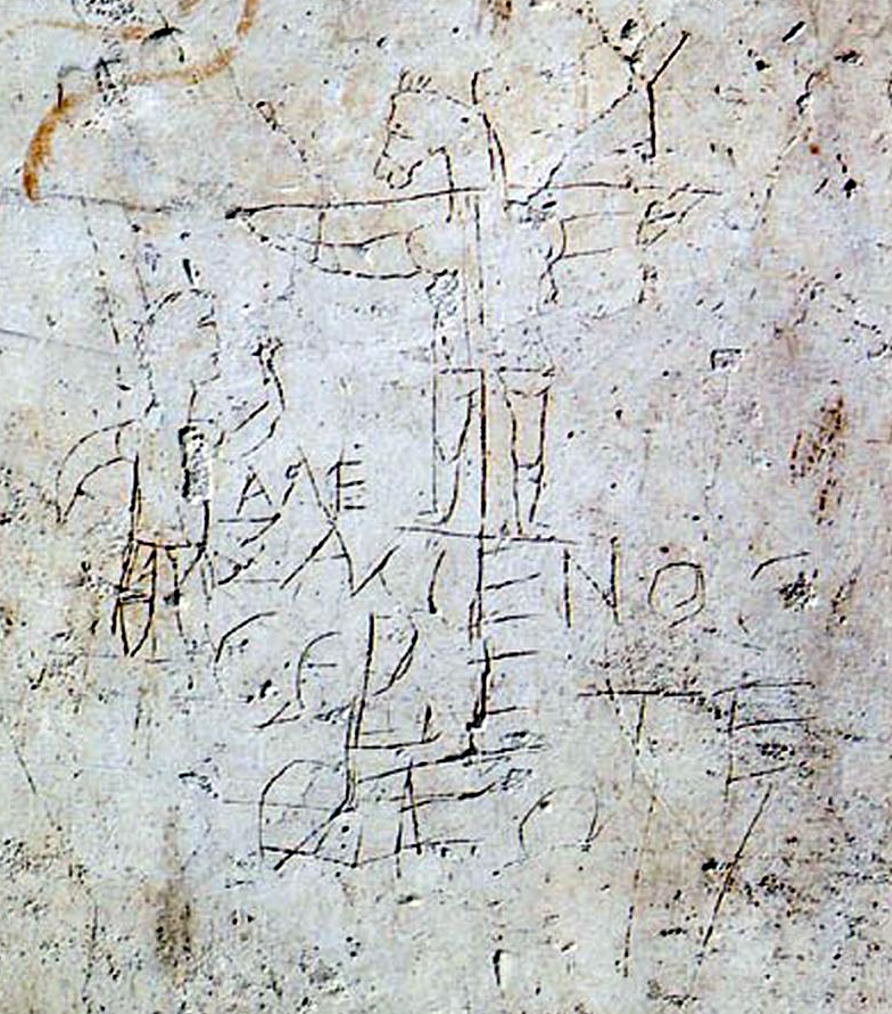
 As for depictions of the crucifixion, there are actually a handful more artworks – mostly made by anti-Christians or Gnostics – that depict the crucifixion before and after that ivory box dated from the 5th century AD (I’ll admit that I’ve posted many of these images often in these forums – I’m quite fond of them
  ):
):