Why are certain monastic orders so hard?

  • Thread starter Thread starter PazzoGrande
  • Start date Start date
Status
Not open for further replies.
I have a difficult time seeing monks as spiritual athletes. What they impose upon themselves is not from God, but a humanistic attempt at satisfying something deep within themselves. Rather than going out and being a light in a fallen world, they physically separate themselves from the world and become useless to the world. This is not what God has intended for those who follow Christ. He wants us, who are followers of Christ, to be “fishers of men”.
OK - Let’s go with the fishing analogy ('cos I could say, you only say this 'cos you know nothing about monastic life - but I won’t ;)).

Zacheera - have you ever been fishing?

There’s lots of ways to go fishing right? It’s not all “Throw the net over the otherside and hope to catch a bunch of fish”

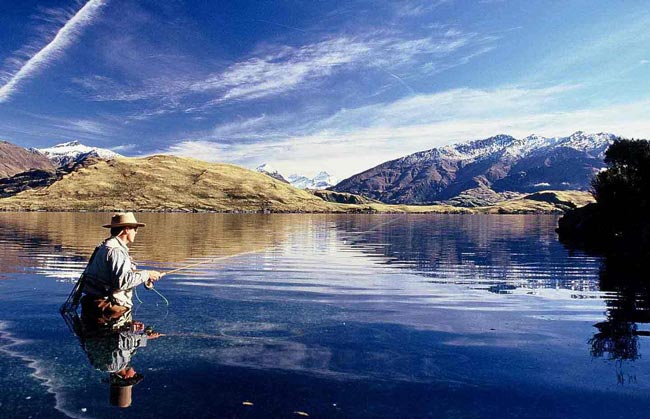
Contemplatives are like fly-fishermen.

Think about it.

 
Contemplatives have been part of the Christian Tradition from the earliest years after the ascension of Christ. Much later, in the middle ages, when Saint Dominic wanted to found an order of preachers, he first founded an order of contemplative nuns to pray for those preachers. He understood that the Order of Friars Preachers would never succeed without the support and prayers of those holy and contemplative women. Around this time we also see the Carmelite tradition develop and grow as well as the Franciscan Tradition.

Monastics also provide spiritual direction, give retreats to groups and private individuals, etc. Half of Western Civilization was brought into Christendom via the efforts of monastics. Even in America, many parishes, schools, etc. were founded by monks or contemplative women religious. The monastery I go to frequently, St, Gregory’s, founded over 40 Catholic parishes, runs a university, serves on the board of a local Catholic hospital, provides retreats and spiritual direction, etc. www.monksok.org stgregorys.edu/

By the way, this type of work is not germane to the Benedictines, as the Cistercians also work in schools, and in some cases, run them. cistercian.org/school/index.asp

The idea of an active life of work in balance with their contemplation goes all the way back to the Desert Fathers, as can be seen in the writings of St. John Cassian. Another monastic hallmark, hospitality, goes back to the beginnings as well. This can be seen just as readily today in the Eastern Catholic monastic tradition as in the West.

I might add that many monastics also do works of mercy in the world. benedictinemissionhouse.com/index.php/health-care

Our Holy Father Pope Benedict is a Benedictine Oblate, which ought to say something for the regard in which he holds the monastic tradition and its associated spirituality. A priest I am very fond of, who has been very good to my wife and myself, is fond of saying that when we are in Heaven and finally get to see God’s plan, we will come to understand the role that the prayers of the contemplative have played in shaping the world in which we live and in helping to bring about God’s kingdom. I believe he is correct.
 
OK - Let’s go with the fishing analogy ('cos I could say, you only say this 'cos you know nothing about monastic life - but I won’t ;)).

Zacheera - have you ever been fishing?

There’s lots of ways to go fishing right? It’s not all “Throw the net over the otherside and hope to catch a bunch of fish”

Contemplatives are like fly-fishermen.

Think about it.

http://www.fly-fishing-discounters.com/images/fly_fishing_trout_2.jpg
God is definitely present in the contemplation of His wonders, just as he is also here:
http://nimg.sulekha.com/others/original700/peru-free-soup-2010-8-2-17-30-0.jpg

or here:
http://franciscanfriars.com/wp-content/uploads/workwithpoor.jpg
 
monksok.org/index.php?option=com_content&view=article&id=98&Itemid=165
Benedictine monks first arrived in what is today the state of Oklahoma in October 1875. Fr. Isidore Robot, O.S.B., and Br. Dominic Lambert, O.S.B., monks of the French monastery of Notre Dame de la Pierre-qui-Vire, entered the Indian Territory at the suggestion of the Bishop of Little Rock, Arkansas. Spending their first few months in Atoka, the pioneer monks eventually settled with the Citizen Band Pottawatomi Indians. In 1876, they established Sacred Heart Abbey, near what is present-day Konawa, Oklahoma. Along with communal monastic observance, the pioneer monks also established a school for the children of Native Americans and white settlers of the region. The monastery at Sacred Heart was known for its strict observance, its generous hospitality, its model farm, and its beautiful formal gardens…

…In addition to their monastery and schools, the Benedictines of Sacred Heart Abbey established over 40 parishes and missions throughout the Oklahoma and Indian Territories, including several present-day parishes in the Archdiocese of Oklahoma City and the Diocese of Tulsa. In fact, Rome chose the first two Vicars Apostolic for Oklahoma from among this group of missionary Benedictines. In this way, one can say that the Church in Oklahoma is built upon the foundation laid by Benedictine monks…
In 1901, disaster struck when a devastating fire destroyed practically all of Sacred Heart Mission on a cold January night. The monks were dispersed until a new monastery and school could be constructed. Determined to succeed, the monks built a second monastery and school complex at Sacred Heart. Its foundations are still visible at the mission site to this day.
Although they were determined to rebuild at Sacred Heart, the monks decided to accept an invitation to establish a school in the territorial city of Shawnee, some 30 miles north of the original mission. The new school was incorporated as the Catholic University of Oklahoma, but was known as “St. Gregory’s High School and College” from its earliest years. In fact, the cornerstone bears the name of St. Gregory the Great.
Since their move to Shawnee, the Benedictines of St. Gregory’s Abbey have continued to serve the Church in Oklahoma and beyond through their witness to contemplative life and daily prayer, their mission of Catholic education at St. Gregory’s University, and pastoral duties at parishes near the monastery. There are currently 26 members of St. Gregory’s Abbey, most of whom reside at the monastery. In addition to their duties at the Abbey and University, several of the monks assist with weekend masses at parishes around Oklahoma.
Are they not fishing?
 
Are you suggesting, therefore, that prayer, particularly of monks, is essentially useless self-indulgence?
One of the biggest problems I see is the self-inflicted hardships the monks subject themselves to. To what purpose?
 
One of the biggest problems I see is the self-inflicted hardships the monks subject themselves to. To what purpose?
Do you have a problem with the self-inflicted hardships Olympic athletes subject themselves to?

I think the cases are quite similar, only the goal is different.
 
http://franciscanfriars.com/wp-content/uploads/workwithpoor.jpg

Lovely image! I used to do this sort of thing amongst street people when I was younger, although not in habit of course. A listening ear (as in the above pic) can be so important to absolutely anyone and to all of us, especially if the person knows that it is a truly caring ear and the photographer has captured that the secular person is really talking and that the brother is really listening. Powerful image! The brother is on the same level physically as the person by sitting on the ground with him - not standing above him, or behind a desk, or sitting at a table with the table inbetween - the photographer has captured an intimacy between the two. Powerful image!
Particularly powerful also, is that the brother is not dressed better than the secular person. They are two equals in close conversation.
 
The Carthusian Order is supposed to be the most austere order in the world, but I also read the same of the Cistercians. I’m sure other orders might have their fair reason to claim to be the most vigorous as well.

But, what makes life in their orders so hard? What parts of their daily living are particularly strenuous? Aside from not eating meat (as is the rule of the Carthusians, and I’m not sure if Carmelites still have that rule in the books), and aside from doing bodily penance as a rule (it seems only the Carthusians still are required to do this, but please do correct me if I’m wrong), how is life in a monastery really tough? How is it so tough that there are postulants whose bodies just can’t take the rigor of it to the point where they have to leave?

There is the prayer, but one can do that outside of a monastery too. Secular Priests are obligated to do the Hours as well.

What makes monks spiritual athletes?

I’m not doubting the assertions of course, but I’m having a hard time picturing life inside of an enclosure and understanding what makes it what it is. I’m also looking for tips on how I could adopt monastic elements into my life for my own spiritual growth too.
If you are interested in the Carthusians, you might enjoy a book entitled Halfway to Heaven. It is simplistic to underestimate the importance of what the cloistered Orders do and the rigors involved since those who make up these Orders have chosen to work outside the eye of the modern world.

Several writers have mentioned the brilliant film Into Great Silence. What I didn’t see mentioned is that it took the filmmaker 20 years to convince the Carthusians to permit him into their monastery. Part of the brilliance of the film is that it was done by one man over the course of a year living alongside the monks themselves. These men and women (there are Carthusian nuns, too!) live lives of great austerity and ascetism to draw them into ever closer relationship with God and, thereby, ever greater awareness the need for their intercessory prayer by the rest of mankind. Never underestimate the importance and value of that prayer.

The vast majority of us have a need to break away from the rules and routines of daily life from time to time to recharge our batteries and be ready to resume the struggle. A part of the rigor that you seem to overlook on the part of the Carthusians is that, with the exception of a single half-day walk and talk each week, they never break their routine. Prayer, study, physical labor, fasting, self-denial and above all, silence - these make up the daily routine of these holy men and women. It is not surprising that many who aspire to join their ranks find that they do not have the intestinal fortitude to abide such a stringent routine.

John Paul the Great visited the Carthusians at their Mother House in Grand Chartreuse one year and noted in his address to them that their order was the only one in the history of the Church that had never been reformed, because it never needed reform. Those who could not abide the strict ascetisism of their Rule were either not accepted or quickly weeded out.

There is also a perception that ascetics are dour people. Nothing could be further from the truth. Watch Into Great Silence. As the title of the book affirms, these men and women are already halfway to heaven and their joy is palpable.

Via con Dios!
Clare
 
If you are interested in the Carthusians, you might enjoy a book entitled Halfway to Heaven. It is simplistic to underestimate the importance of what the cloistered Orders do and the rigors involved since those who make up these Orders have chosen to work outside the eye of the modern world.

Several writers have mentioned the brilliant film Into Great Silence. What I didn’t see mentioned is that it took the filmmaker 20 years to convince the Carthusians to permit him into their monastery. Part of the brilliance of the film is that it was done by one man over the course of a year living alongside the monks themselves. These men and women (there are Carthusian nuns, too!) live lives of great austerity and ascetism to draw them into ever closer relationship with God and, thereby, ever greater awareness the need for their intercessory prayer by the rest of mankind. Never underestimate the importance and value of that prayer.
Ah, I didn’t know about that book. I did have An Infinity of Little Hours, which was a factual account of several monks. Some didn’t make it through to final profession. The rigours of being a Carthusian affected one monk so much that an ambulance had to come and get him while they were praying communally, and the commotion didn’t disturb the order of the prayer.

I’ve seen Into Great Silence, but I didn’t feel like it really conveyed how harsh hermetic monastic life is. It looked very peaceful but I didn’t get the rigour of it out of the movie.

Would be nice to take a retreat there actually, but unfortunately as you know they’d never allow an outsider in like that.
 
Would be nice to take a retreat there actually, but unfortunately as you know they’d never allow an outsider in like that.
Not entirely: for one, if you’re single and meet the age requirements, you may have a better chance than you might think of being allowed to make a vocational retreat. Even if you don’t think you have a Carthusian vocation, the only way to know what their life is actually like is to visit, so if there’s even a chance that the life could suit you, you could make a retreat. Think about how it was 200 years ago: people who came to the charterhouse hadn’t read dozens of books about the contemplative life or seen “Into Great Silence”. So vocational retreats are offered more liberally than one might think (although if after corresponding with you it becomes clear that you definitely don’t have a vocation, or wouldn’t be able to handle a month there, then that possibility probably is out).

Otherwise, and for everybody else–even married people–there is the Selignac charterhouse, where you can make a Carthusian retreat. It was a house of the order until 2001, when the decision was made to merge it into the other French houses and launch the two new houses (male and female) in South Korea. The site of the charterhouse has been maintained, though, so that at last laity have an option for living the Carthusian life in an authentic charterhouse for brief periods of time.

As you might expect, the rules are stricter than they are in Benedictine monasteries: there’s a maximum of 12 people allowed on retreat at any one time, the minimum stay is 8 full days (9 nights), and cell phones are strictly prohibited. There’s not even any guarantee a Carthusian priest will be present, but they have taught the lay volunteers how to live the day to day life accurately. I haven’t had a chance to go there myself, but I hope to one day.
 
Not entirely: for one, if you’re single and meet the age requirements, you may have a better chance than you might think of being allowed to make a vocational retreat. Even if you don’t think you have a Carthusian vocation, the only way to know what their life is actually like is to visit, so if there’s even a chance that the life could suit you, you could make a retreat. Think about how it was 200 years ago: people who came to the charterhouse hadn’t read dozens of books about the contemplative life or seen “Into Great Silence”. So vocational retreats are offered more liberally than one might think (although if after corresponding with you it becomes clear that you definitely don’t have a vocation, or wouldn’t be able to handle a month there, then that possibility probably is out).

Otherwise, and for everybody else–even married people–there is the Selignac charterhouse, where you can make a Carthusian retreat. It was a house of the order until 2001, when the decision was made to merge it into the other French houses and launch the two new houses (male and female) in South Korea. The site of the charterhouse has been maintained, though, so that at last laity have an option for living the Carthusian life in an authentic charterhouse for brief periods of time.

As you might expect, the rules are stricter than they are in Benedictine monasteries: there’s a maximum of 12 people allowed on retreat at any one time, the minimum stay is 8 full days (9 nights), and cell phones are strictly prohibited. There’s not even any guarantee a Carthusian priest will be present, but they have taught the lay volunteers how to live the day to day life accurately. I haven’t had a chance to go there myself, but I hope to one day.
Oh, cool, I had no idea at all. Thanks for that info, maybe I could do that one day.

Aside from living the Carthusian life, any idea what else they do? Is there someone to give spiritual exercises and direction like in other retreats, or is it just following the monastic schedule and lifestyle?

I’d learn it myself but I don’t understand French, and Google Translate can’t translate the text in the pictures. I’m guessing you knew about this because you got to read about it in French. Nothing I came across had any info about this whatsoever, since I’m pretty much limited to English texts.
 
While we’re on the topic, does anyone know what orders like these do to members who took final profession but wish to leave? If I remember right, An Infinity of Little Hours had something about there being a dungeon for those people that was used before. I’m sure they don’t do that anymore. But what do they do if a choir monk wants to leave later?

I’d imagine that if you want to quit, they’d just let you quit, just like being a regular priest, with the normal laicisation restrictions.
 
They have someone to direct the retreat, but I think it’s mostly about directing you in how to enter into to the rhythm of Carthusian silence (which doesn’t happen overnight, which is why there’s an 8 full day minimum). But by and large the idea is to live as the monks do: three services in common in the church, and the other offices, reading, and work done in your cell.

Here’s a page in html that you may be able to Google translate, with more information.
 
Ah, I didn’t know about that book. I did have An Infinity of Little Hours, which was a factual account of several monks. Some didn’t make it through to final profession. The rigours of being a Carthusian affected one monk so much that an ambulance had to come and get him while they were praying communally, and the commotion didn’t disturb the order of the prayer.

I’ve seen Into Great Silence, but I didn’t feel like it really conveyed how harsh hermetic monastic life is. It looked very peaceful but I didn’t get the rigour of it out of the movie.

Would be nice to take a retreat there actually, but unfortunately as you know they’d never allow an outsider in like that.
If you read Halfway to Heaven, you will find that there is a Charterhouse (what the Carthusian monasteries are called) in England that did allow the author, Robin Bruce Lockhart, to do retreats with them. The book also speaks of a Charterhouse in, I believe, Vermont. It was a relatively new establishment as Charthusian monasteries go. I am not aware of any others in the US, but you could Google it and see if they would permit you to go on retreat. I understand that this will be a challenge for you as you live in Hawaii, but then any thing not located on your lovely island home would be, wouldn’t it? 🙂 I just checked Amazon.com, and they have the book, if your local library doesn’t.

I also read An Infinity of Little Hours, but felt that it failed to convey the history and culture of the Carthusian Order the way Halfway to Heaven did. By focusing on individuals, the author of this book was placing emphasis on exactly what every aspirant to entry in the Order is trying to overcome, the self, in order to grow ever closer to God and His creation. This is the challenge that every committed Christian - Catholic, Orthodox, Protestant, Coptic - is called to undertake, but very few of us try to do it in such a daunting environment.

As for the film Into Great Silence not showing the rigors of Carthusian life, I would like to offer two thoughts. First, this is an Order that eschews any type of public attention. It took them 20 years to permit the filmmaker in at all. It is perhaps, then, not surprising that they didn’t bare their souls and agree to have every part of their daily routine captured on film for consumption by audiences that would, more likely than not, be unable to understand or appreciate what they were doing and why. It is amazing that the filmmaker was able to record as much as he did!

Second, and perhaps this is because I had done some reading on the Carthusians before ever seeing the film, I did feel the rigor was present, although not in any overt way, in what was captured. The scenes during the winter months especially conveyed this when the viewer realizes that the only heat available to the monks is from wood that they each chop for their own individual hermitage. A lazy monk would quickly freeze.

Throughout the week, and with the exception of their once-weekly afternoon, communal walk-and-talk, the only time the monks meet with their peers is in the midnight Office of Matins, and then their speech is confined to singing the Office. They live alone. Eat alone. Work alone. Study alone. Pray alone. And, most importantly, struggle to overcome their human weaknesses and grow closer to God alone. They live alone and in near perpetual silence. And contrary to the popular mindset, this doesn’t make them misanthropists or mentally ill. It is a reflection of their placing, as a community, their relationship with, and service to God as their top priority. Anyone familiar with the first step in spiritual formation, purgation, will recognize that the Carthusians embrace it, and all it requires, fully. Only after having overcome the self - having purged the desires and habits of the flesh to render oneself fully open to the will of God - is it possible to enter into deep communion with God, and this is their goal.

Each of us is gifted with certain graces and talents to enable us to pursue the vocation in life to which God has called us. That we are called to one vocation rather than another does not make the others any less worthy, or our own any more worthy. We will be of greater service to God and His creation if we focus on doing what is required for our own vocation to the very best of our ability, and recognizing that others are doing the same, even if we are unable to understand what they are called to do or why. We cannot be of service if we fail in charity.

Via con Dios!
Clare

 
This may be just what you are looking for in both describing what is required of those seeking to live the Carthusian life, and the goal they are trying to achieve. I underlined and italicized the section of the book description that I thought would be of greatest interest to you.

First Initiation into Carthusian Life
Book Description

Publication Date: February 4, 2010 | ISBN-10: 0852441479 | ISBN-13: 978-0852441473
This is the description from Amazon.com:
“Carthusian spirituality and wisdom have a great attraction for our age. The goal of Carthusian life is union with God in Love. A union as profound and continual as is possible in this life. It has its source in God who is the first to call us to intimacy with Him. The Carthusian’s life, the Carthusian’s love, is a response to that Love - cultivating solitude, silence, poverty, chastity, obedience, fraternal charity, spiritual reading, study, work and, above all, prayer. Prayer of adoration, praise and intercession.”

“This book is written as a guide to help the beginner during his first months in the Charterhouse. It is a practical introduction for the aspirant to the Carthusian life, providing guidelines of orientation to help during the first steps in solitude as well as essential themes of spiritual formation.”

“Following the young monk, listening in complete openness to God who speaks in the depth of his heart, the reader outside the monastery can gain an insight into this powerful spirituality and the silence of a heart in love. Other books of classic Carthusian spirituality published by Gracewing include The Call of Silent Love, Early Carthusian Writings, Interior Prayer, The Prayer of Love and Silence, They Speak by Silences, The Way of Silent Love and The Wound of Love.”

Via con Dios!
Clare
Show more
Show less
 
I have found a couple things on the internet that you might find of interest / value:

The International Fellowship of Saint Bruno, saintbruno.org/saint_bruno_index.php

The Carthusian Online Discussion Forum, saintbruno.org/Carthusian%20Online%20Discussion%20Forum.pdf

Via con Dios!
Clare
Unfortunately that Forum doesn’t look like it exists anymore. 😦
First Initiation into Carthusian Life
Book Description

Publication Date: February 4, 2010 | ISBN-10: 0852441479 | ISBN-13: 978-0852441473
."

That sounds exactly what I’m looking for! 🙂 Have you read it? Is it a good tool for Lent? I’ve been looking into what I could look into to have a good Lent, and maybe it’s fate that you and I crossed paths!

It also would have been interesting to hear what the director of Into Great Silence thought while he did it. I think the uniqueness of the Carthusian life would have been underscored if there were commentary during the film, but I guess that might have killed the movie’s tone. The director seemed to try to make the viewer feel the lifestyle rather than just observe it like a news story. Unfortunately his interviews seem to be in German. But I would have loved to hear about his observations too.

I kind of wonder how the monks even keep their ability of speech. I think you’d forget those skills. I remember, that American Taliban guy was struggling to speak English with fluency after being with the terrorists for such a long time.

How’d you get so into the Carthusians? For an English-speaker, there seems to be almost no knowledge about the Order. People in my part of the world, if they know about monks at all, would tend to gravitate toward the Benedictines and Franciscans.

I envy TuAutem’s being bilingual. I should brush up on my foreign languages.
 
Status
Not open for further replies.
Back
Top