D

You are using an out of date browser. It may not display this or other websites correctly.
You should upgrade or use an alternative browser.
You should upgrade or use an alternative browser.
- Status
- Not open for further replies.

J
JohnR77
Guest
Thanks KindredSoul for starting this thread. From my perspective it is one of the most important questions I have seen asked. It captures the essence of faith in Christ and what it truly means to be Catholic. For example, if I only accept the doctrines the Pope infallibly teaches because of my reason alone, then I am not a true and complete Catholic. I need faith that Jesus infallibly works through His Catholic Church.“But why do you believe that the Catholic Church is the Rule of Faith?”
Just to add to the already good comments posted by others above, I want to add …
I had stated …
So, here I was hoping that you would have asked the follow up question below.I would choose NOT to place my trust in man …
I would choose to place my trust - hopefully - in God …
God is faithful to His Promise to work infallibly through the Church He built on St. Peter.
.
Since, you did not, I will.
Sure. Thanks for asking.So, if the ideal of placing more of our trust in God, and placing less trust in man, is a practice or an approach that would lead a person to becoming a Catholic, then would you answer how should we go about explicating that to a Protestant ?
.

Code:
First though, let me back up just a little and explain why I think this approach is really useful. Protestants will often claim that they reject the Pope and his teachings BECAUSE they trust God, meaning His word, the Bible, but they do not trust in man meaning the Pope. So, I wish to begin with a premise they accept, trusting more in God and less in man, so I can build on that common foundation. If I build on a premise they reject my conclusions will be dismissed out of hand.We place our faith in the Love of the Father, and in the Truth of the Son, and the Power of the Holy Spirit.
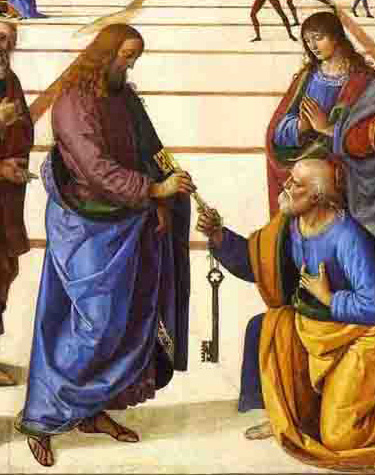
We can know that Catholicism is true because it is a Church instituted by Christ ( Matthew 16:18-19), which is infallibly guided to the correct answer for this and the other essential questions for our salvation. Our certainty is based on our faith in the Love of the Father to want to save us, and not leave us as orphans who do not have a clear unmistakable audible voice of how to get to heaven. It is also based on our faith in the truthfulness and integrity of Jesus Christ to be faithful to His Promises for His Church He built on St. Peter. And it is based on our faith in the power of the Holy Spirit to effect those promises to be true and fulfilled in spite of the sins of the Popes and Bishops, so that the infallible decrees of that Church are protected by God’s grace to be free from error.
We examine a Church by looking at the lives of those who follow her teachings, not by looking at those who willfully violate them.
.
J
JohnR77
Guest
Conclusion of Debate is Necessary to Make a Vital Point… Many of my loved ones are Protestant. Some of them, especially one particularly close relative, find many of Catholicism’s doctrines illogical, and I sometimes find myself getting sucked into debate over those doctrines.
.
Although each case is unique depending on the individual, generally speaking, IMO, we should bring each doctrinal debate to its clear conclusion. If we end in disagreement it should be clearly stated, “You have your reasons for interpreting the Bible as you choose.
(And if he denies something literally stated in the Bible such as “Baptism saves” 1 Peter 3:21, then you should add – “And you claim the Bible doesn’t really mean “…” even though it actually states “…”
“And I have my reasons for placing my faith in the Love of the Father, and in the Truth of the Son, and the Power of the Holy Spirit.
So in conclusion, your final authority rests in yourself, in your own judgement and in your own interpretation of Sacred Scripture whereas my faith rests in God and in His goodness, His Love, Truthfulness, and His Power.
If the debate ends with the other person not responding to your points, or in obvious failure in the other person to defend his errors, then, for his sake we must help him by bringing the debate to its conclusion. It we just leave it hanging without conclusion we miss the opportunity to truly help him. We should clearly state,
“Are you willing to ask Jesus to forgive you for promoting the error …?”
Sometime we can be tempted to be overly nice.
(I mean the word “nice” in its derogatory sense.
Word Origin and History for nice
adjective, late 13c., “foolish, stupid, senseless,” from Old French nice (12c.) “careless, clumsy; weak; poor, needy; simple, stupid, silly, foolish,” from Latin nescius “ignorant, unaware,” literally “not-knowing,” from …. (Source location: Douglas Harper, Historian. dictionary.reference.com/browse/nice.)
Maybe we do not want to embarrass the other person, which is a good ideal, but in this case other concerns are more important. By attacking love, truth, or goodness, a person is attacking God whether he recognizes it or not. And that person, as do we all, needs God’s grace. Doctrinal division is the result of sin. The battle is more than just an intellectual disagreement. We are fighting spiritual warfare.
By getting the other person to clearly focus on the sinful aspect, even if it was unintentional and done in “good” conscience,
we have the opportunity to help him grow in grace and in the virtue of humility by asking God for forgiveness. We can also help them to escape the dangerous heresy that is common today that says that truth or that sin are only relative, and not objective.
defendingthebride.com/mc/truth.html#Absolute
In order that we ourselves are not proceeding on a path of arrogance I suggest beginning with the following stated sincerely, “I am the worst sinner of which I know. I definitely see some of my own guilt. And I could never justifiably attempt to judge someone else’s guilt.” Jeremiah 17:9
John 5:33-34
“You sent emissaries to John, and he testified to the truth.
I (Jesus) do not accept testimony from a human being, but I say this so that you may be saved.”
A lesser thing cannot be the foundation and support of something that is greater. Merely human opinion cannot authenticate what is, or what is not, the Word of God. If Sola Scriptura, Bible Alone, is a true doctrine and since the Bible itself has no inspired canon, or Table of Contents, then the most Protestants can claim is to have a fallible list of infallible books. The bedrock of all his conclusions on how to interpret Sacred Scripture and even what is Scripture, what is the Bible, is based on his own human authority or opinion.
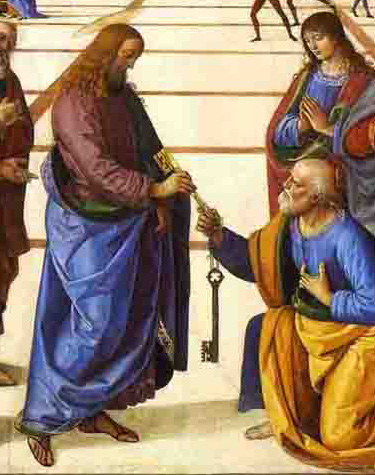
We can know that Catholicism is true because it is a Church instituted by Christ ( ** Matthew 16:18-19**), which is infallibly guided to the correct answer for this and the other essential questions for our salvation. Our certainty is based on the Love of the Father to guide and save us, and in the truthfulness and integrity of Jesus Christ to be faithful to His Promises for His Church He built on St. Peter, and in the power of the Holy Spirit effects those promises to be true and fulfilled in spite of the sins of the Popes and Bishops, so that the infallible decrees of that Church are protected by God’s grace to be true.
At the bottom on this new page below are placed many links that answer your original question. The videos by Patrick Madrid are especially good. Maybe, others on this list can suggest which links are best.
defendingthebride.com/ch/why.html
.
J
JohnR77
Guest
Hi,
I just recalled one of my father’s quotes that he taught me from the Baltimore Catechism. It is so simple, and so clear.
AN ACT OF FAITH
0 my God! I firmly believe that Thou art one God in three divine persons, Father, Son and Holy Ghost; I believe that Thy divine Son became man, and died for our sins, and that He will come to judge the living and the dead. I believe these and all the truths which the Holy Catholic Church teaches, because Thou hast revealed them, Who canst neither deceive nor be deceived.
Baltimore Catechism
I just recalled one of my father’s quotes that he taught me from the Baltimore Catechism. It is so simple, and so clear.
AN ACT OF FAITH
0 my God! I firmly believe that Thou art one God in three divine persons, Father, Son and Holy Ghost; I believe that Thy divine Son became man, and died for our sins, and that He will come to judge the living and the dead. I believe these and all the truths which the Holy Catholic Church teaches, because Thou hast revealed them, Who canst neither deceive nor be deceived.
Baltimore Catechism
- Status
- Not open for further replies.