
Why do we depict Jesus with long hair?

  • Thread starter Thread starter mVitus
  • Start date Start date
Status
Not open for further replies.
M

mVitus

Guest
I was thinking about it one time how back in the days of Christ in Israel, long hair on a man was considered a sign of homosexuality. (If I’m wrong, please correct me.) So if that’s the case, wouldn’t it have been more likely for Jesus to have had short hair? And if that was the case, where did our common depiction of Him with long hair come from?
 
We don’t depict him with “long” hair. The idea of long hair is subjective based on the styles at the time. To a first century Jew long hair would have been closer to waist length, not shoulder length like the typical depictions we see in Catholicism and Eastern iconography.
 
To a first century Jew long hair would have been closer to waist length
Where did you take this from?

The jewish elite wore under roman reign mainly short hair like the roman role models. For the lower class, we don´t have depictions. We do know there were monks and pilgrims who didn´t cut their hair as a sign of bein directed to the godly, but we don´t know if Jesus adopted this habit.

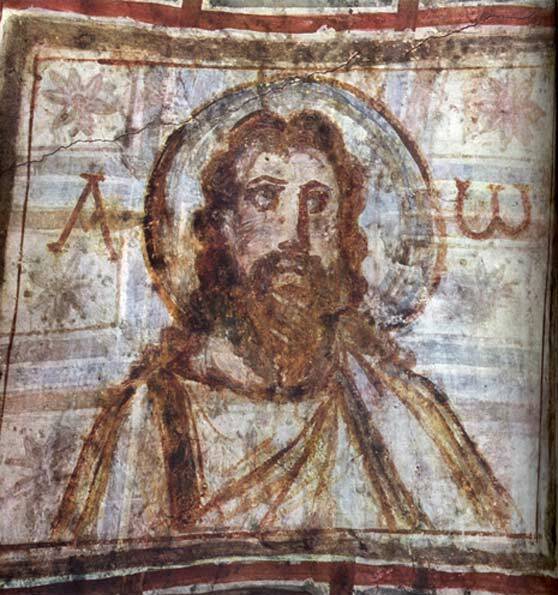
The long haired (or shoulder haired) jesus went popular during the christianization in the migration era. The noblilty in the late antiquity wore often long hair and beards, and as a sign of respect (and for an easier conversion ) Jesus was depicted as a noble man.
 
I believe among the Greeks, such as in Corinth, long hair on a man was a way that homosexual males and male prostitutes advertised themselves. Paul wrote about this in his letter to the Corinthians.

I’ve also heard that in Galilee and Jerusalem, long hair on a man was unusual and was typically a sign of someone under a religious vow where they did not cut their hair for X amount of time, but such vows were temporary and at the end of the time period they would shave their hair off. I suppose it could also be a sign of somebody like John the Baptist living out in the wilderness and ignoring his hair and beard.
 
Fortunate then, that it wasn’t Jesus’ haircut that was performing the ministry 😛
 
Last edited:
I believe among the Greeks, such as in Corinth, long hair on a man was a way that homosexual males and male prostitutes advertised themselves. Paul wrote about this in his letter to the Corinthians.
It´s not sure if Paulus adopted here a present custom of the greeks or an outsider´s view on the old vase paintings. In classical greece, there where depictions of homosexual acts mainly in context of paederastia , and those men involved had mainly hort hair with a beard (the adult part) and short hair with no beard (the young men´s part). Long hair among the greeks was common until the late archaic period (until the 5th century BCE) and later only among the spartans. Paulus is an very interesting source here as another possible reason for his view is that the long haired male prostitude may be a custom developed under roman reign in greece.
 
No problem 🙂 I only corrected it because I do research in costume history and the depiction of Jesus this way is a common teaching topic among historians.
 
The jewish elite wore under roman reign mainly short hair like the roman role models.
Just as FYI

According to my priest (who has a Ph.D. in Theology), he said that many (not all) of the Jewish leaders were also appointed to the Sanhedrin by the Romans.

So, while they were Jews, a number of them were Roman appointees… which would explain why they cut their hair like the Romans.

I found this to be an interesting piece of info.
 
This information is interesting. I was thrown off because the oldest extant images of Jesus show him with shoulder length hair.

So the shoulder length hair depiction was an innovation as early as, perhaps, the 3rd or 4th century? That’s intriguing.

This is why I love Eastern iconography. The images are intentionally distorted not just for symbolism, but also for the fact that there cannot be an accurate depiction of Christ.
 
@mVitus

Maybe because the Shroud of Turin shows him with shoulder length hair (and a beard as well)?
 
Last edited:
Just as FYI

According to my priest (who has a Ph.D. in Theology), he said that many (not all) of the Jewish leaders were also appointed to the Sanhedrin by the Romans.
This is realy interesting, thank you very much! It would be also interesting to check if they had documentated costume habits in that time. It´s noticed on the “research list”🙂
 
This information is interesting. I was thrown off because the oldest extant images of Jesus show him with shoulder length hair.

So the shoulder length hair depiction was an innovation as early as, perhaps, the 3rd or 4th century? That’s intriguing.

This is why I love Eastern iconography. The images are intentionally distorted not just for symbolism, but also for the fact that there cannot be an accurate depiction of Christ.
It may be possible that he was depicted also before the migration era with longer hair - I don´t know for example the monastic depiction traditions in syria (they have some really early ones, don´t know how early, and they may be inspired by the tradition of not cutting the hair as a monastic habit). The well known Jesus with shoulder length her is so interesting for me as his beard and hair is groomed, not just long. We may check out the seven sleeper of Ephesus pilgrim´s place. I remeber it was a common holy place since the 3rd century, but I don´t know if wall paintings of Jesus survived.
I share your love with the eastern iconography tradition. It´s more than giving the people an image, it´s a way to their hearts and more pluralistic than many may think.
 
This book has an interesting discussion of the early imagery of Jesus. According to some of the cited sources in the book, as early as the first century, he was being depicted with the long hair parted in the middle and a beard.

 
the monastic depiction traditions in syria
The illustrations from the Syriac Rabbula Gospels from 6th century Syria depict Jesus with shoulder length hair and are in the style of Syro-Maronite iconography. The Syriac Maronite iconography style is much different that the Byzantine traditions.

Unfortunately we don’t see it in our Maronite churches very much, because of latinizations icons fell out of use for Maronites. But they are making a comeback slowly. It’s still very hard to find Maronite icons to buy for home use.

Truth be told, in most cases I find the Byzantine style more aesthetically pleasing anyway.
 
Status
Not open for further replies.
Back
Top