Why only one "kind" in the Eucharist

  • Thread starter Thread starter defenderoftruth
  • Start date Start date
Status
Not open for further replies.
D

defenderoftruth

Guest
Hello I wanted to ask some Traditionalists why they only have Communion in one kind? (I realize both body and blood are in the host)

Why not use bread and wine not just bread? Just wondering the whys and whens of this subject.

DoT
 
Hello I wanted to ask some Traditionalists why they only have Communion in one kind? (I realize both body and blood are in the host)

Why not use bread and wine not just bread? Just wondering the whys and whens of this subject.

DoT
Sometimes it is good to have distinctions between the ordained clergy and the laymen
 
The Chalice was withheld as a disciplinary measure to impress on heretics the fact that the entire Body, Blood, Soul and Divinity of Christ is contained under each species. This article from the Catholic Encyclopedia should provide all the information you want to know.
 
The Church teaches that the fullness of our Lord’s body, blood, soul and divinity is present in every speck of the consecrated host and drop of the precious blood. over the centuries the church gradually restricted the distribution of the chalice (for fear of spillage, and due to heretics etc.) and this is still in the rules/rubrics of the extraordinary form. the church teaches that when a communicant receives under both kinds it is a fuller sign of communion but it is not necessarily better to do so
God bless
 
Sometimes it is good to have distinctions between the ordained clergy and the laymen
This was not the reason the Cup was withheld from the laity in the Roman Rite.

It stemmed from a heresy where a belief that Communion is not complete unless both kinds are received. To enforce the teaching, the Roman Church only gave the Precious Body to the laity to remind them that in the Precious Body, Christ is whole because Christ can never be divided.

Speaking about distinctions, in the Byzantine Rite the clergy would receive the Precious Body and Precious Blood separately, but the people will receive intincted Hosts.
 
This was not the reason the Cup was withheld from the laity in the Roman Rite.

It stemmed from a heresy where a belief that Communion is not complete unless both kinds are received. To enforce the teaching, the Roman Church only gave the Precious Body to the laity to remind them that in the Precious Body, Christ is whole because Christ can never be divided.

Speaking about distinctions, in the Byzantine Rite the clergy would receive the Precious Body and Precious Blood separately, but the people will receive intincted Hosts.
It may not have been the “reason” but my statement is still true. Those that insist on relieving under both species for some reason think the Mass is all about them.
 
It may not have been the “reason” but my statement is still true. Those that insist on relieving under both species for some reason think the Mass is all about them.
The Cup was only withheld in the Roman Rite. Both Sacred Species of Communion has always been offered everywhere else in the Church (ie the five other Rites). I don’t see how you can come to such conclusion, although I wouldn’t discount that there are some who do think that way. Christ instituted the Eucharist to be both kinds and there is a good reason that every Sacrament carry specific outward signs. I say we keep the way it was intended to be by Christ.
 
Hello I wanted to ask some Traditionalists why they only have Communion in one kind? (I realize both body and blood are in the host)

Why not use bread and wine not just bread? Just wondering the whys and whens of this subject.

DoT
Your question, I believe is based on some erroneous information. Communion for the faithful under one kind is not a “Traditionalist” practice, per se. In many OF Masses, including my own parish, Communion is only offered to the faithful under one species. In many countries outside the US, Communion is only offered under one species, even in very non-Traditional Masses.
 
Your question, I believe is based on some erroneous information. Communion for the faithful under one kind is not a “Traditionalist” practice, per se. In many OF Masses, including my own parish, Communion is only offered to the faithful under one species. In many countries outside the US, Communion is only offered under one species, even in very non-Traditional Masses.
The reason that Communion is offered under one kind in the Tridentine Mass was because the decree to withhold the Cup throughout the Roman Church came at about Trent, although there is evidence that it has been happening centuries prior to Trent. So for the last few hundred years with a single universal Liturgy in the Roman Church, the Cup was never offered. The Cup was allowed back at Vatican II (in or around, I can’t remember). Many EF Masses today follows all the practices to the pre-V2 Mass which includes withholding the Cup. I know some members here have said that the Cup was offered at an EF Mass.
 
The Cup was only withheld in the Roman Rite. Both Sacred Species of Communion has always been offered everywhere else in the Church (ie the five other Rites). I don’t see how you can come to such conclusion, although I wouldn’t discount that there are some who do think that way. Christ instituted the Eucharist to be both kinds and there is a good reason that every Sacrament carry specific outward signs. I say we keep the way it was intended to be by Christ.
Offering under both is a more complete sign. The Church allows for it, but as it is a disciplinary measure the Church may change it if necessarily.
 
It may not have been the “reason” but my statement is still true. Those that insist on relieving under both species for some reason think the Mass is all about them.
But the reception under both species by the laity was permitted in the TLM, it was just not that common, especially in the US.

My parents are from Ireland, both made their First Holy Communion (in the 30’s) there and recieved the Eucharist Intincted in the species of wine.

That form was also offered on feasts of particular importance in relation the Eucharist, such as Holy Thursday, Easter and Corpus Christi.
 
In fact, the Eucharist under both the host and the wine, WAS available to the laity. It was commonly offered, in both forms, during a wedding Mass.

Other than that, the only reason why it was not generally offered was because of the heresy mentioned above.
 
Just to throw my two cents in:
  1. When consecrating all those Chalices for Mass and then distributing them to the laity, there is an exponential increase in the risk of spilling the Precious Blood. (I’ve witnessed this :()
  2. The fullness of Christ; Body, Blood, Soul and Divinity is present in the Sacred Host. Therefore there is no need to receive from the Chalice.
  3. I also agree with StTommyMore. distinctions between clergy and laity need to be reinforced in our age.
 
I also agree with StTommyMore. distinctions between clergy and laity need to be reinforced in our age.
Distinctions need not be in the Sacraments. Jesus did not establish the Sacraments for there to be distinctions, except for Holy Orders which is obviously reserved for those seeking Ordination.
 
My main point is since the Consecrated Host contains the fullness of the Eucharist, why should there be the need for the laity to receive from the Chalice? Reception of the Chalice by the laity only increases the risk of spilling the most Precious Blood of our Lord. If one receives both the Host and the Chalice, they are not receiving anything more than someone who only receives the Consecrated Host.

If you’ll permit me to stand on my soapbox: 😉

I believe that we should return to the practice of only Priests (those with consecrated hands) should be able to touch the consecrated vessels. Return to some resemblance of the sacred.
 
My main point is since the Consecrated Host contains the fullness of the Eucharist, why should there be the need for the laity to receive from the Chalice? Reception of the Chalice by the laity only increases the risk of spilling the most Precious Blood of our Lord. If one receives both the Host and the Chalice, they are not receiving anything more than someone who only receives the Consecrated Host.

If you’ll permit me to stand on my soapbox: 😉
The opposite question is also a good point to ponder, why not?
I believe that we should return to the practice of only Priests (those with consecrated hands) should be able to touch the consecrated vessels. Return to some resemblance of the sacred.
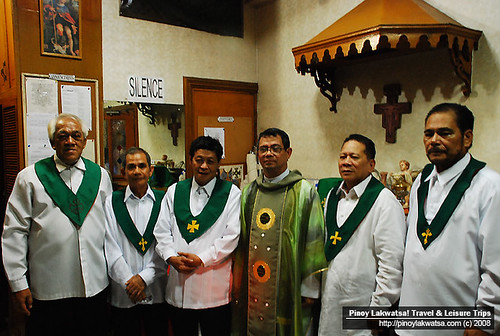
In the Philippines, EMHCs are made to dress formally and wear a simple stole to remind people of their special ministry during the Liturgy. Even though they are not priests, you know that they are not just any other lay person, so it can be done with a semblance of sacredness.


Also in the East its normal for the laity to kiss the chalice after receiving. So all lay touching of the vessels aren’t bad especially if your intention is to show reverence to the Eucharist.
 
Hello I wanted to ask some Traditionalists why they only have Communion in one kind? (I realize both body and blood are in the host)

Why not use bread and wine not just bread? Just wondering the whys and whens of this subject.

DoT
The Church decided to do this because of lack of belief that the consecrated host is the body, blood, soul, and divinity of Our Lord. With the dismal % of Catholics who believe in the Real Presence this should be the rule across the board. Most of the OF Masses around me only give under one form as well.
 
The Church decided to do this because of lack of belief that the consecrated host is the body, blood, soul, and divinity of Our Lord. With the dismal % of Catholics who believe in the Real Presence this should be the rule across the board. Most of the OF Masses around me only give under one form as well.
I don’t know how that can bolster belief in the Real Presence. If you don’t believe that you are receiving the Body of Christ, then it doesn’t matter if you receive under one or both kinds. The reception under the form of bread only was to enforce the teaching of the undivided Christ, that Christ is whole all the time and that he doesn’t only beceome complete after receiving under both kinds. It has nothing to do with Real Presence.
 
The opposite question is also a good point to ponder, why not?
My answer-spilling. To me that is enough of a reason to withhold the Chalice from the laity. However that is just my opinion.

Also, I think its great that Extraordinary Ministers of Holy Communion in the Philippines dress reverently , but that is just one example. I have seen too many EMHC’s dressed in jeans and a hoodie or low cut shirt. Now granted that is just one example as well, but I’m of the opinion that if there’s any risk of spilling, irreverence, etc. Communion under both kinds should be withheld.
 
My answer-spilling. To me that is enough of a reason to withhold the Chalice from the laity. However that is just my opinion.
I don’t think we should be too worriesome about it. The Host can as easily be dropped…
Also, I think its great that Extraordinary Ministers of Holy Communion in the Philippines dress reverently , but that is just one example. I have seen too many EMHC’s dressed in jeans and a hoodie or low cut shirt. Now granted that is just one example as well, but I’m of the opinion that if there’s any risk of spilling, irreverence, etc. Communion under both kinds should be withheld.
I’m glad you agree with that. I think having EMHCs dress appropriately would improve their image and the opinion of them. Yes, even as lay people if we are called to a special ministry, shouldn’t we have some sort of external to relfect the specialness of that ministry? I never had that sense of equality with them because in the Philippines they always have been displayed to be separate from the laity. They alway dress formally (they wear Barong Tagalog which is the formal costume of the culture) and the stole. Plus they always sit in a special place in the church, or usually have the front pew reserved just for them. Also as you can see in the picture, the ministry is kept for men only. Most of them would also double as altar servers and readers. They’re more like minor orders without actually being minor orders.
 
Status
Not open for further replies.
Back
Top