CLIMATE MODELS for the laymen
This paper is a good overview of our climate models and their risk
Executive Summary
There is considerable debate over the fidelity and utility of global climate models
(GCMs). This debate occurs within the community of climate scientists, who disagree about the amount of weight to give to climate models relative to observational analyses. GCM outputs are also used by economists, regulatory agencies and policy makers, so GCMs have received considerable scrutiny from a broader community of scientists, engineers, software experts, and philosophers of science. This report attempts to describe the debate surrounding GCMs to an educated but nontechnical audience.
Key summary points
- GCMs have not been subject to the rigorous verification and validation that is the norm for engineering and regulatory science.
- There are valid concerns about a fundamental lack of predictability in the complex nonlinear climate system.
- There are numerous arguments supporting the conclusion that climate models are not fit for the purpose of identifying with high confidence the proportion of the 20th century warming that was human-caused as opposed to natural.
- There is growing evidence that climate models predict too much warming from increased atmospheric carbon dioxide.
- The climate model simulation results for the 21st century reported by the Intergovernmental Panel on Climate Change (IPCC) do not include key elements of climate variability, and hence are not useful as projections for how the 21st century climate will actually evolve.
Climate models are useful tools for conducting scientific research to understand the climate system. However, the above points support the conclusion that current GCMs are not fit for the purpose of attributing the causes of 20th century warming or for predicting global or regional climate change on timescales of decades to centuries, with any high level of confidence. By extension, GCMs are not fit for the purpose of justifying political policies to fundamentally alter world social, economic and energy systems. It is this application of climate model results that fuels the vociferousness of the debate surrounding climate models.
That’s sort of weird now that the observed data is trending a bit higher than model predictions.
Which brings me to my main complaint about Curry –
the “low margin of error” fallacy.
She has over-emphasized the low margin of errors (maybe even exaggerated these lower) in climate predictions, temps & sensitivity – that’s not quite as bad as flat out saying there’s no warming, as some in the denialist industry do, or that it’s not caused by GHG emissions, claiming it will drop back down to pre-1980 levels no matter what our GHG emissions.
I asked on her blog one time – what if the actual situation turns out to be on the high end of the margin of error? She gave some rude answer.
As a Christian we are called to virtue, which includes prudence. Or, hope for the best, expect the worst. That is we need to err on the side of expecting the high end of the margin of error, or that CC could end up even worse than we expect.
And we need to overcome our psychological blockages that doing something about CC will greatly harm our pocketbooks (who we think we are, the measure by which many us judge ourselves and fear others judge us).
We need to ask, “What would Jesus do?”
Since he didn’t have a car, I guess getting an EV, hypermiling, turning off engine in drive-thrus, wouldn’t have much meaning for someone who walked (or rode a donkey) everywhere he went. Maybe running multiple errands, moving closer to work might. Like doing the carpentry at home. (Eco in “economy” and “ecology” means “home.”)
But we don’t need to retreat back to the lifestyle of the Holy Family. We can do a lot to reduce our GHGs in ways that do not harm us or even our pocketbook-self-image.
Be not afraid, Jesus is with us always.

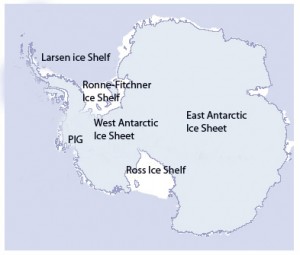

 . There will be enough snowfall to offset any losses through melting and/or calving.