S
shondrea
Guest
Oh, ok. I’m not familiar with the book of Revelations. All I know is End of the World 


The woman of Revelation may be interpreted to refer to Mary or not. The Catholic Church does not teach they are the same, simply.So…I’m confused here, if someone wants to help me out. If Mary had no labor pains, yet the woman of Revelations did, how are they the same?
The woman is the Church, the woman is Mary, the woman can be Israel… In the bible one passage can be validly and correctly interpreted many ways, fulfilled in many ways…The woman of Revelation may be interpreted to refer to Mary or not. The Catholic Church does not teach they are the same, simply.
The Assumption is a forerunner of what will happen to each one of us on the Last Day.Are these in the Bible? If they aren’t Biblical, then are they from sacred tradition?
It would seem, at least in my own reflection that since Christ was like us in all things except sin, that the deliverance from Mary in birth would have been subjected to any other child birth, i.e. pangs of birth.A miraculous child-birth would not necessarily preclude the pangs of childbirth, and nowhere in Scripture or in Sacred Tradition (to my knowledge) is there a consistent belief that the Virgin Mary did not suffer the pangs of childbirth.
[BIBLEDRB]Rev 12:1-6[/BIBLEDRB]
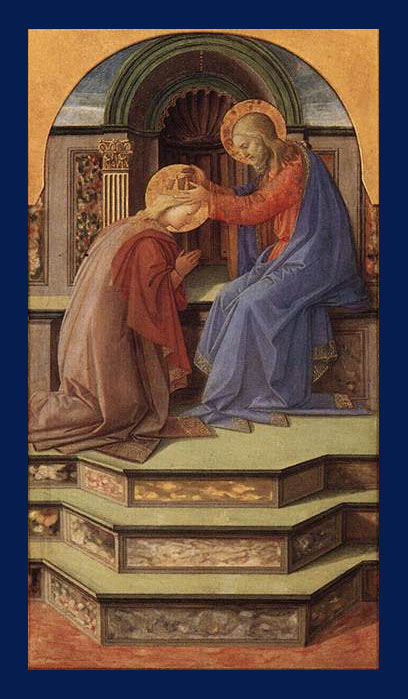
Verse 5 is certainly referring to the Glorious Virgin Mary. And as I stated before, the Catholic Church in her Liturgy always reads Rev. 12 on all of the Marian feasts and High Holy Days. We have many statues and images of the Blessed Virgin Mary shown with a crown of 12 stars with the moon under her feet (as in the miraculous image of Our Lady of Guadalupe.) So it would not be Catholic to say that the Theotokos is not the woman of Rev. 12, on some level. But it has ever been Catholic belief that the Virgin Mary is being referred to in Rev. 12. (notice I use Catholic with a capital C)
Revelation 12:13 -17So…I’m confused here, if someone wants to help me out. If Mary had no labor pains, yet the woman of Revelations did, how are they the same?
Haydock Commentary, Revelations 12:2Since the Theotokos did NOT suffer pangs of childbirth, the woman of Rev. 12 is not her.
However, the Assumption of the Thetokos is a tradition shared by all the pre-reformation Apostolic Churches, including those of the East, even non-Chalcedonian and Assyrian.
I agree that the Blessed Virgin Mary did not suffer birth pangs giving birth to Jesus, but she suffered at the cross helping to give birth to the Church. I think Rev 12 alludes to both events.Since the Theotokos did NOT suffer pangs of childbirth, the woman of Rev. 12 is not her.
Indeed. In the chaplet of Seven Sorrows, the meditations are:I agree that the Blessed Virgin Mary did not suffer birth pangs giving birth to Jesus, but she suffered at the cross helping to give birth to the Church. I think Rev 12 alludes to both events.
Grace and Peace,
Bruce

First, the AssumptionAre these in the Bible? If they aren’t Biblical, then are they from sacred tradition?
Very nice, well documented and succinct.There are two theological arguments that show us the Assumption is at least implicitly contained in the Bible. I’m just going to give you the basics of those two theological arguments, because there are theologians who could explain them much better, like Garrigou-Lagrange (cf. The Mother of the Saviour and Our Interior Life).
First argument.
1 - Mary received fulness of grace (Luke 1,28) and was exceptionally blessed by God (Luke 1,42) ----> revealed truth.
2 - This exceptional blessing negatives the divine curse to bring forth children in pain and to return to dust (Genesis 3,16-19) ----> revealed truth.
3 - Therefore, Mary was preserved from corruption in her body. It wouldn’t return to dust, but rather be resuscitated in an anticipated resurrection and assumed into heaven ----> conclusion capable of being defined.
Second argument.
1 - Jesus Christ’s complete victory over satan included victory over sin (Hebrews 9,26) and death (1Corinthians 15,54-57) ----> revealed truth.
2 - Mary was voluntarily (Luke 1,38) and most intimately associated with Jesus Christ on Calvary (John 19,25) in His complete victory over satan (Genesis 3,15). She participated in His sufferings as Simeon predicted (Luke 2,35).
3 - Therefore, Mary was associated with Him in His victory over death by her anticipated resurrection and her Assumption into heaven ----> conclusion capable of being defined.
