M
markomalley
Guest
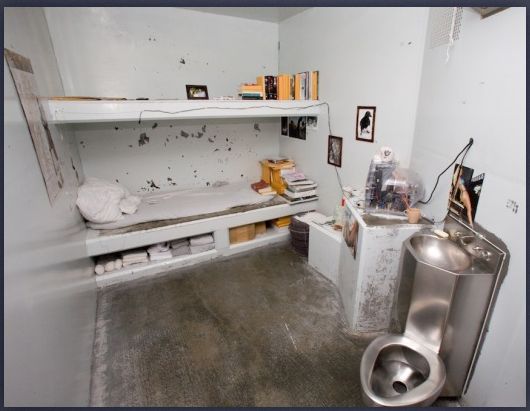
From CWN:Before California prisoners suspended a hunger strike in protest of lengthy solitary confinement, the bishops of California issued a statement noting that “international human rights standards consider more than 15 days in isolation to be torture.”
See the California Catholic Conference statement. Also see this LA Times article.
The CCC states:Capital Punishment
2266 The State’s effort to contain the spread of behaviors injurious to human rights and the fundamental rules of civil coexistence corresponds to the requirement of watching over the common good. Legitimate public authority has the right and duty to inflict penalties commensurate with the gravity of the crime. the primary scope of the penalty is to redress the disorder caused by the offense. When his punishment is voluntarily accepted by the offender, it takes on the value of expiation. Moreover, punishment, in addition to preserving public order and the safety of persons, has a medicinal scope: as far as possible it should contribute to the correction of the offender.67
2267 The traditional teaching of the Church does not exclude, presupposing full ascertainment of the identity and responsibility of the offender, recourse to the death penalty, when this is the only practicable way to defend the lives of human beings effectively against the aggressor.
"If, instead, bloodless means are sufficient to defend against the aggressor and to protect the safety of persons, public authority should limit itself to such means, because they better correspond to the concrete conditions of the common good and are more in conformity to the dignity of the human person.
"Today, in fact, given the means at the State’s disposal to effectively repress crime by rendering inoffensive the one who has committed it, without depriving him definitively of the possibility of redeeming himself, cases of absolute necessity for suppression of the offender ‘today … are very rare, if not practically non-existent.’[John Paul II, Evangelium vitae 56.]
As shown in the CCC, punishment should first be appropriate for redress of the disorder caused by the crime. Then it should be concerned with preserving public order and the safety of persons. Then, if possible, it should contribute to the correction of the offender.
Interestingly, the CCC states that the State may have recourse to the death penalty (para 2267) if this is the only way to defend the lives of human beings effectively against the aggressor.
The California Catholic Conference has come out in opposition to the death penalty in all cases. So they believe that society can be protected without recourse to blood in any case. OK, that’s just fine.
But with their statement here, they are against isolating prisoners who are unable/unwilling to act appropriately in the general population and are confined to the SHU for their protection and the protection of other prisoners and prison staff. They state that rehabilitation cannot happen within the SHU. All well and good. But, according to the CCC, preservation of public order and safety of persons is a higher priority than rehabilitation (which is something to be done if possible).
There are some prisoners who are not going to be willing to sit around a fire, hold hands, and sing kumbaya. There are some who, through their own choice, are purely evil. Not to say that they are beyond redemption, but there are some who have simply rejected redemption. Are they to be kept in general population, where they can add to the danger of prison life…particularly for those prisoners who do want to be rehabilitated?
Your thoughts?
And, please, don’t just say “I stand with the California Bishops” or the like. (Leaving aside Apostolos Suos), they have stated that they oppose keeping a prisoner in SHU more than 15 days. OK, fine. But then what? What, in a practical sense, is to be done to protect the rest of the prison population and the prison staff from these people if you can’t just keep them in SHU?
You have a stabbing…and put a person in SHU for 15 days…then the prisoner goes back into general population?
See the California Catholic Conference statement. Also see this LA Times article.
The CCC states:Capital Punishment
2266 The State’s effort to contain the spread of behaviors injurious to human rights and the fundamental rules of civil coexistence corresponds to the requirement of watching over the common good. Legitimate public authority has the right and duty to inflict penalties commensurate with the gravity of the crime. the primary scope of the penalty is to redress the disorder caused by the offense. When his punishment is voluntarily accepted by the offender, it takes on the value of expiation. Moreover, punishment, in addition to preserving public order and the safety of persons, has a medicinal scope: as far as possible it should contribute to the correction of the offender.67
2267 The traditional teaching of the Church does not exclude, presupposing full ascertainment of the identity and responsibility of the offender, recourse to the death penalty, when this is the only practicable way to defend the lives of human beings effectively against the aggressor.
"If, instead, bloodless means are sufficient to defend against the aggressor and to protect the safety of persons, public authority should limit itself to such means, because they better correspond to the concrete conditions of the common good and are more in conformity to the dignity of the human person.
"Today, in fact, given the means at the State’s disposal to effectively repress crime by rendering inoffensive the one who has committed it, without depriving him definitively of the possibility of redeeming himself, cases of absolute necessity for suppression of the offender ‘today … are very rare, if not practically non-existent.’[John Paul II, Evangelium vitae 56.]
As shown in the CCC, punishment should first be appropriate for redress of the disorder caused by the crime. Then it should be concerned with preserving public order and the safety of persons. Then, if possible, it should contribute to the correction of the offender.
Interestingly, the CCC states that the State may have recourse to the death penalty (para 2267) if this is the only way to defend the lives of human beings effectively against the aggressor.
The California Catholic Conference has come out in opposition to the death penalty in all cases. So they believe that society can be protected without recourse to blood in any case. OK, that’s just fine.
But with their statement here, they are against isolating prisoners who are unable/unwilling to act appropriately in the general population and are confined to the SHU for their protection and the protection of other prisoners and prison staff. They state that rehabilitation cannot happen within the SHU. All well and good. But, according to the CCC, preservation of public order and safety of persons is a higher priority than rehabilitation (which is something to be done if possible).
There are some prisoners who are not going to be willing to sit around a fire, hold hands, and sing kumbaya. There are some who, through their own choice, are purely evil. Not to say that they are beyond redemption, but there are some who have simply rejected redemption. Are they to be kept in general population, where they can add to the danger of prison life…particularly for those prisoners who do want to be rehabilitated?
Your thoughts?
And, please, don’t just say “I stand with the California Bishops” or the like. (Leaving aside Apostolos Suos), they have stated that they oppose keeping a prisoner in SHU more than 15 days. OK, fine. But then what? What, in a practical sense, is to be done to protect the rest of the prison population and the prison staff from these people if you can’t just keep them in SHU?
You have a stabbing…and put a person in SHU for 15 days…then the prisoner goes back into general population?