Can the Latin mass speak to all?

  • Thread starter Thread starter PastorBonus
  • Start date Start date
Status
Not open for further replies.
The church allows the vernacular, yet at the same time says that the faithful should know the parts that pertain to them in latin. Does anyone here disagree with this last part?

If not, then I ask: If your priest this sunday addressed the people with “Dominus vobicsum,” how would the majority respond?

If they would have no idea what to do, then it could be seen that the ‘pastoral response’ of the priests and bishops for that parish have not been in accordance with Vatican II.

My local English OF-only parish has an assistant priest who all but gave up on singing the mass parts for sundays. He said he tried when he first got here, and the whole congregation was silent. This is a problem.
 
I would consider answering if you asked in a civilized manner and if your questions were worth answering. As it stands, neither condition is met.
You can dismiss them if you want, but I advise you to remember that this thread is open for public viewing and all posts are visible. Thus, when you say that you would “consider answering if you asked in a civilized manner,” you make visible your own attempts to obscure the truth, with the alternative being an extreme lack of short-term memory. I will let you decide.

My post 79 directly responded to your question of why Latin was described as “majestic” in an unquestionably civilized manner. You made a response to a post subsequent to mine (in post 85), then in post 90 to a different poster asked the same question that I answered in post 79, with an obvious intent. You have the insufferable audacity to assume that I will not notice this obvious fact, and then you go even further **by claiming that your motive was something that can be verified to have happened only ex post facto by any literate reader of this thread.

You can choose not to respond, but please be more careful in the future so your pretense is less transparent. As much as you attack me, so much is the truth clearly on my side.

By the way, questions “worth answering” is possibly the most pathetic cop-out ever.
 
Yet Christ Himself worshipped in a non-vernacular.
To reduce the issue of Latin in Catholicism to worship is fallacious; it is the official language of the Church and thus the claim that Jesus worshiped in non-vernacular and so Latin must be the language of worship is insufficient to justify its current official position.
 
You can dismiss them if you want, but I advise you to remember that this thread is open for public viewing and all posts are visible. Thus, when you say that you would “consider answering if you asked in a civilized manner,” you make visible your own insincerity and outright lying, with the alternative being an extreme lack of short-term memory. I will let you decide.

My post 79 directly responded to your question of why Latin was described as “majestic” in an unquestionably civilized manner. You made a response to a post subsequent to mine (in post 85), then in post 90 asked the same question that I answered in post 79 to a different poster. You have the insufferable audacity to assume that I will not notice this obvious fact, and then you go even further by claiming that your motive was something that can be verified to have happened only ex post facto by any literate reader of this thread.

You can choose not to respond, but please be more careful in the future so your pretense is less transparent.
Amazingly, you continue to insult me, this time by calling me a liar.

I was unimpressed by your answer to my question, as with much of what you have written which I do not think warrants a reply.
 
Amazingly, you continue to insult me, this time by calling me a liar.

I was unimpressed by your answer to my question, as with much of what you have written which I do not think warrants a reply.
Finally, an acknowledgement. We may now proceed to the demonstration of how you are wrong.

Fact: SV states that Latin is universal, non-vernacular, immutable
Fact: Latin is not the only language that is universal or non-vernacular or immutable
Fact: SV quotes a document stating that Latin is “full of majesty”
Fact: SV does not explicitly state that Latin is the language most full of majesty
Fact: SV explicitly states that the criteria for the adoption of Latin as the official language of the Church are sufficient without including Latin’s majesty
Fact: SV explicitly states that Latin is singularly conducive to perspicuity and gravity due to the possession of several traits of which one is majesty.

One will notice several things:
  1. SV does state explicitly in one instance only that Latin is especially something. That something is not majesty.
  2. In the case of every other descriptor other than majesty it would be historically erroneous to assume that SV meant that Latin was the unique or especial possessor of that descriptor.
  3. SV nowhere even suggests that Latin is more majestic than any other language.
  4. No metric of majesty is provided by SV or you.
It is consequently absurd to claim that SV is implicitly saying that Latin is full of majesty when the only occurrence of that word is in a quotation that does not state that Latin is the most full of majesty.

Please point out the issue with this reasoning.
 
To reduce the issue of Latin in Catholicism to worship is fallacious; it is the official language of the Church and thus the claim that Jesus worshiped in non-vernacular and so Latin must be the language of worship is insufficient to justify its current official position.
And yet making the use of the Latin language alone the issue of if the “Latin Mass” (I assume the title of the thread refers to the EF/Tridentine mass) can speak to all is equally insufficient if not duplicitous by nature.

Diocesan priests in good standing have gone on record and stated that the prayers of the EF more concretely express the necessity of the priesthood, the sacrificial nature of the mass, the necessity of forgiveness, etc. This is not to say that the OF does not express these things at all. Quite the contrary.

The point is, the EF is generally seen as the mass that is more visually identified as ‘Latin Rite’ from the requirements of the latin language, the rubrics and orientation, the language and requirement of specific styles of music, etc. While the OF can have all of these aesthetics, it could be said that a majority of OF masses eschew such externals, making for a mass that may seem at times disconnected from the one that was celebrated during the second vatican council.

In the end the issue the Latin language doesn’t matter whether Jesus worshiped in one language versus another, or exactly which decade in the first millennia that Latin became the language of the western rite. What matters is that Vatican II allows for the vernacular, but stipulates that the laity should know the parts that are proper to them in Latin. If the laity do not, then it’s quite possible that the pastor or bishop should assess the situation and do something about it.
 
Dear Baelor:
You include affirmations that have no bearing upon your argumentation, which consists simply in gratuitously affirming that the document doesn’t suggest that Latin is more majestic than any other language. I disagree, and think that the document affirms implicitly that Latin is more majestic than at least some other languages, which is why the word majestic is mentioned by the author. From a simple disagreement it is impossible to say who is right and who is wrong.
 
For me it’s kind of funny that in this globalized world that we live in that having a universal language of the Church isn’t more desired. People travel more today than ever. Being able to go to any country and have the same Mass in one language is a huge plus.

Someone doesn’t need to be fluent in Latin to understand the Mass. They just need to spend some time to study the prayers and understand the words that are used and the meanings. It’s not overly difficult especially if you’re going to be hearing that Mass every day/week for your whole life. Sure there may be some prayers that you don’t understand, but to me it’s not important to understand 100% of everything. Plus if you know enough prayers you’ll begin to recognize words and be able to more easily understand those prayers that you don’t know.

One thing that I always found about the Latin Mass to be neat was how it used the three languages that were on the Cross. Latin (major part of the Mass), Greek (Kyrie), Hebrew (Amen, Alleluia/Hallelujah, Hosanna).
 
Do you love the Church enough to learn her language?
And when the days of the Pentecost were accomplished, they were all together in one place:
2 And suddenly there came a sound from heaven, as of a mighty wind coming, and it filled the whole house where they were sitting.
3 And there appeared to them parted tongues as it were of fire, and it sat upon every one of them:
4 And they were all filled with the Holy Ghost, and they began to speak with divers tongues, according as the Holy Ghost gave them to speak.
5 Now there were dwelling at Jerusalem, Jews, devout men, out of every nation under heaven.
6 And when this was noised abroad, the multitude came together, and were confounded in mind, because that every man heard them speak in his own tongue.
7 And they were all amazed, and wondered, saying: Behold, are not all these, that speak, Galileans?
8 And how have we heard, every man our own tongue wherein we were born?
9 Parthians, and Medes, and Elamites, and inhabitants of Mesopotamia, Judea, and Cappadocia, Pontus and Asia,
10 Phrygia, and Pamphylia, Egypt, and the parts of Libya about Cyrene, and strangers of Rome,
11 Jews also, and proselytes, Cretes, and Arabians: we have heard them speak in our own tongues the wonderful works of God.
I learned some Latin in school and I liked it, I still have our old bilingual missal and know how to use it. But for me Latin it’s just another language. I find wonderful to hear and understand a reverent mass in Portuguese, English, French, Spanish or Italian. Different people, speaking different languages, united by the same faith and sharing in the same liturgical celebrations. All these languages have the same capacity of “transporting men’s minds beyond the limit of the present moment to the contemplation of the divine and invisible”, as one poster said about Latin. Not to mention that it’s much more appropriate for a priest to use his native language instead of a Latin whose unintelligible pronunciation makes it sound like Chinese (this is a real example).

What I gather from Acts is that the Holy Spirit wanted people to understand their faith and to pray in their own languages. To say that one doesn’t have to understand the mass or that using Latin is the best or the only way to worship God is strange. Where did Jesus or the Holy Spirit say “Avoid and despise your native languages and use only Latin for worship, because this is the only language that God understands and accepts”? Sure, some particular translations can be bad, but it doesn’t mean that all translations are bad because the Latin mass is untranslatable and that all languages are bad except for Latin.
 
Sure, some particular translations can be bad, but it doesn’t mean that all translations are bad because the Latin mass is untranslatable and that all languages are bad except for Latin.
Using that same argument, is it possible to translate Shakespeare into Polish or Chinese and preserve all the beauty of the words and phrases he so carefully chose? Conversion is one thing but sorry, IMO the Latin Mass with its small (but significant) amount of Greek and Hebrew was designed to stay untranslatable (though certainly explainable). Otherwise we would not have retained the Greek and Hebrew in the Latin Mass. Even if you despise Latin, where is the beauty and power of the word “Sabaoth” or “eleison” in the all-vernacular Mass?
 
I learned some Latin in school and I liked it, I still have our old bilingual missal and know how to use it. But for me Latin it’s just another language. I find wonderful to hear and understand a reverent mass in Portuguese, English, French, Spanish or Italian. Different people, speaking different languages, united by the same faith and sharing in the same liturgical celebrations. All these languages have the same capacity of “transporting men’s minds beyond the limit of the present moment to the contemplation of the divine and invisible”, as one poster said about Latin. Not to mention that it’s much more appropriate for a priest to use his native language instead of a Latin whose unintelligible pronunciation makes it sound like Chinese (this is a real example).

What I gather from Acts is that the Holy Spirit wanted people to understand their faith and to pray in their own languages. To say that one doesn’t have to understand the mass or that using Latin is the best or the only way to worship God is strange. Where did Jesus or the Holy Spirit say “Avoid and despise your native languages and use only Latin for worship, because this is the only language that God understands and accepts”? Sure, some particular translations can be bad, but it doesn’t mean that all translations are bad because the Latin mass is untranslatable and that all languages are bad except for Latin.
I recall attending Latin Catholic Masses as a young kid just prior to Vat2 and I had no clue what the priest was saying. Never learned a peep of Latin. I do remember how to count to 19 in Spanish. But I have no desire to learn a language like Latin at this point in my life. Anyway thank you for this post and for the verses and what can be gathered from Acts as to what the Holy Spirit wanted. And that Jesus never said to use Latin and not native tougues. It was helpful to me in regards to what the Holy Spirit and Jesus said or did not say. Peace.
 
Why did John XXIII say that Latin is “majestic” in Veterum Sapientia? Couldn’t he have written that Latin is no more majestic than any other language?
Do you want to read some of Latin’s majesty?

I could give you a link to some poetry. Nudge, nudge, wink, wink, say no more squire.

I can say legitimately say my motorbike (Triumph) is fantastic without putting down Harleys (even though it’s fun).

Of course there are magnificent (as I have said) writings, hymns, chants, prayers etc in Latin.

But it’s not Shakespeare is it!😛
 
But not Latin.
Doesn’t matter. The Vatican stated that the faithful should know the parts that pertain to them in Latin. Ergo, if they do not know them and do not want to/refuse to learn, then they are not following the directives of the council.
 
I disagree, and think that the document affirms implicitly that Latin is more majestic than at least some other languages, which is why the word majestic is mentioned by the author. From a simple disagreement it is impossible to say who is right and who is wrong.
That is not the case. The document simply does not state that Latin is more majestic than other languages, nor does it even define majestic. Nor does it claim that Latin’s majesty is of substantial concern in its retention as the language of the Church; quite the opposite. Furthermore, the reference to majesty was in fact a quotation.

You claimed the following:
The Church uses Latin because of its majestic qualities,
While the document does quote a another saying that Latin is majestic, it does not claim that the Church uses Latin for this reason. That is simply not a tenable inference.
 
I recall attending Latin Catholic Masses as a young kid just prior to Vat2 and I had no clue what the priest was saying. Never learned a peep of Latin. I do remember how to count to 19 in Spanish. But I have no desire to learn a language like Latin at this point in my life. Anyway thank you for this post and for the verses and what can be gathered from Acts as to what the Holy Spirit wanted. And that Jesus never said to use Latin and not native tougues. It was helpful to me in regards to what the Holy Spirit and Jesus said or did not say. Peace.
The Holy Spirit also said, via the Council of Trent Session XXII Canon 9:
If anyone says that the rite of the Roman Church, according to which a part of the canon and the words of consecration are pronounced in a low tone, is to be condemned; or** that the mass ought to be celebrated in the vernacular tongue only**;[28] or that water ought not to be mixed with the wine that is to be offered in the chalice because it is contrary to the institution of Christ,[29] let him be anathema.

So it is partly correct to say vernacular can be included, but the Church has previously condemned, under pain of anathema, the idea of vernacular only.

Note: Anathematization has been abolished, so while it might not be true to say that one is automatically excommunicated for wanting the vernacular, what I gave above from the Council of Trent, along with what Sacrosanctum Concilium is quoted as saying from above, should make clear what the mens ecclesiae (mind of the Church) is on the topic.
 
Using that same argument, is it possible to translate Shakespeare into Polish or Chinese and preserve all the beauty of the words and phrases he so carefully chose? Conversion is one thing but sorry, IMO the Latin Mass with its small (but significant) amount of Greek and Hebrew was designed to stay untranslatable (though certainly explainable). Otherwise we would not have retained the Greek and Hebrew in the Latin Mass. Even if you despise Latin, where is the beauty and power of the word “Sabaoth” or “eleison” in the all-vernacular Mass?
Poetry is notoriously hard to translate, not in the least because of its fixed forms. But Shakespeare is an universal writer because his writings have universal themes and messages that appeal to people from various cultures and because he can be read (or represented, if it’s about his plays) in so many translations. If the British decided to forbid any translation of Shakespeare, other cultures have been deprived not only of the content of his writings, but of great literature in those respective languages as well. Translations help any language develop and grow; beautiful translations enrich any literature. Think about the first translations of the Bible in any modern language. Does the Church forbid the translation of the Bible or reading the Bible in modern languages? Aren’t the readings said in French, German or Spanish at the public masses with an international congregation in St Peter’s Square or in the basilica?

And the text of the mass is not exactly pure poetry. “Ite, missa est”. “Dominus vobiscum. Et cum spiritu tuo. Sursum corda. Habemus ad Dominum. Gratias agamus Domino Deo nostro. Dignum et iustum est.” Where is the untranslatable poetry here? And the words at the Consecration are from the Bible, which is translatable - not to mention that Jesus didn’t say those words in Latin.

As for Sabaoth and eleison, do you know Hebrew and Greek etymology and grammar or do you like how these words sound? Are you sure that it’s Sabaoth and not Tzevaot? “The Lord of Sabaoth” or “Kyrie eleison” have very powerful and beautiful translations in various languages. Gospodi pomilui; Domnul ostirilor ceresti; Senor de las huestes; Seigneur, prends pitié. Nothing is lost in these translations. All languages are beautiful and expressive and fit for worshipping God.
 
My answer is:

Theoretically : Yes.

Pragmatically : No.

The reason different liturgies, generally further east exist, is because the Latin Mass in latin did not speak to all, in terms of the bishops who had the authority to allow whatever language was necessary geographically/culturally. It seems to be conclusive that in Rome itself greek was used almost exclusively in the first 300 years and latin appearing first in Proconsular Africa (present day Algeria) in the late 100’s/early 200’s.

Language is as important as we make it. If necessary, anyone can become accustomed to the latin language no matter what part of the world they are forum.
The real question is this : is latin ment to be used everywhere on earth, at the expense of all other languages?

My answer is “no”. Latin came from a certain region of Europe and is connected most profoundly and distinctly with the societies immediately surrounding Italy.

Within other continents which have no direct historical or cultural connection to Europe it seems to quite inappropriate to enforce latin as the liturgical language.
If the jesuits had succeeded in allowing the chinese language in the 17th century this point would be quite well put. I am a supporter of the older form of the Roman rite Mass, but not necessarily in Latin only. (Though I do enjoy latin.)


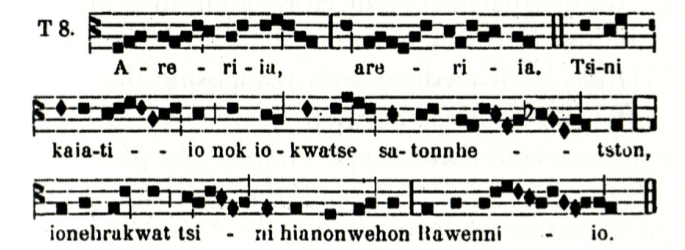
chabanelpsalms.org/introductory_material/indian_missions.pdf

courtesy of Claudio R. Salvucci’s book “The Roman Rite in the Algonquian & Iroquoian Missions

Many of those books were printed, because there was an indult for Native Americans to have certain parts of the Mass in their vernacular.****

It will be most ideal when the Catholic Anglican use Ordinariate of St. Peter allows the full one year lectionary pure tridentine mass in english to be used exactly as it was in anglo-catholic parishes. (currently they are required to mix novus ordo elements into it.) For some people that will be good enough. I know not all like that, but that is the way to fish for people from your average parish and have them gain respect for something if the language is otherwise viewed as a barrier.

humanities.mcmaster.ca/~renwick/sarum-chant-annex.htm
on here you will find: Ibadat Penutup, Sarum Compline in Indonesian, prepared by Emil Salim.
 
Liberals pick and choose what they like from Vatican II. Most choose to overlook “the use of the Latin language is to be preserved” and bluntly assert that Vatican II did away with Latin. They have done the same thing with the Mass. The Council advocated cautious reform of the Mass, stating: “there must be no innovations unless the good of the Church genuinely and certainly requires them; and care must be taken that any new forms adopted should in some way grow organically from forms already existing” (SC 23). But what happened after the Council was something else entirely: “In the place of liturgy as the fruit of development came fabricated liturgy. We abandoned the organic, living process of growth and development over centuries, and replaced it - as in a manufacturing process - with a fabrication, a banal on-the-spot product.” (Cardinal Joseph Ratzinger).
Thank you.
 
Status
Not open for further replies.
Back
Top