Can we establish our own church/parish?

  • Thread starter Thread starter ConstantineTG
  • Start date Start date
Status
Not open for further replies.
That would depend on the rite/church. In the Byzantine/Ruthenian Church in the USA, it is formally permissible for a non-ordained person to distribute Holy Communion if there is a genuine need based on documented instruction from the Church.
That is true, but pastoral need must be demostrated and it is not commonly done. It is doubtful this would be allowed for a mission parish. The Typika service, if necessary, is led by a deacon who, in some cases, is a “borrowed” deacon given bi-ritual faculties.
 
That is true, but pastoral need must be demostrated and it is not commonly done. It is doubtful this would be allowed for a mission parish. The Typika service, if necessary, is led by a deacon who, in some cases, is a “borrowed” deacon given bi-ritual faculties.
I mentioned pastoral need. It’s very clear-cut this this rite/church.

It’s wrong for a parish to attend a Typica service on a Sunday if there is Catholic sacrificial liturgy nearby. God’s grace flows primarily from the sacrifice not from consuming His Body, Blood, Soul and Divinity.

I’m not sure why a parish would borrow a deacon to conduct a Typica service? Why not borrow a priest for a sacrificial liturgy?
 
It’s wrong for a parish to attend a Typica service on a Sunday if there is Catholic sacrificial liturgy nearby. God’s grace flows primarily from the sacrifice not from consuming His Body, Blood, Soul and Divinity.
Respectfully, that’s a little more of a Western view. While it is certainly not ideal, mission parishes are sustained for as short a period as possible via use of a Typika service. It is usually done once or twice a month, in a Catholic church, until a dedicated church building can be found. The mission parishioners would attend the Latin (or other) “host” parish Mass to fulfill obligation when the Typika is not offered.
I’m not sure why a parish would borrow a deacon to conduct a Typica service? Why not borrow a priest for a sacrificial liturgy?
Same reason on both counts - availability, and willingness / ability of the local Latin bishop to help sustain the mission.

My brother currently attends a small mission parish in Tennessee. Not many Byzantines there, but enough to justify the need and then some. A Latin Rite deacon of Slovak descent and originally from Ohio where Byzantines are in greater number actually petitioned both bishops to get the blessing and bi-ritual faculties to support the mission, after meeting many of these “displaced” Byzantines in his assigned parish. He also found a local RC church community with a old church building on the property, which was offered for use. Without this gracious support of the Latin clergy and laity, the mission would not exist. It was only after the mission was up and running that a retired priest (originally from “Byzantine” Pittsburgh) agreed to serve the community, together with the deacon.

Just an example …
 
That is far.

Why do you suggest the Slovaks?
The community is small, it has already gone through what looks like a demographic collapse.

Considering this, it seems to me that the bishop would be agreeable to sincere efforts to evangelize, and he has responsibility for all of Canada.

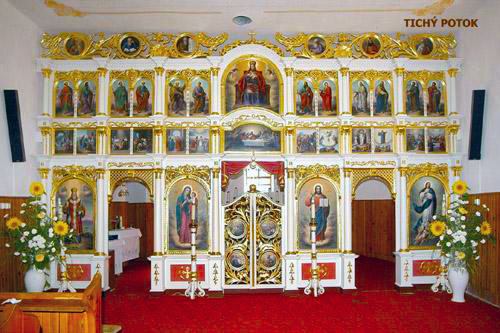
It should be noted that they appear to be very Latinized in those places where they are still established (it appears none of the parishes have an iconostasis in Canada, although they very definitely have them in Slovakia). However this has more to do with the nature of those communities than any policy of the church. I feel confident that a new mission or parish will be able to be as authentic in praxis as the community desires, especially if it is a successful model. It could be a renaissance for the church.

According the the Annuario Pontificio the eparchy was established in 1980.

In 1991 the eparchy had approximately 30,000 members (a rounded number which suggests they were guessing) 21 parishes and 17 priests.

In 2000 the eparchy had approximately 20,000 members, 8 parishes and 9 priests.

In 2010 the eparchy had approximately 2,400 members, 6 parishes and 6 priests.

Granted, this community does not have a lot of resources at it’s disposal, but it is ripe for a big change.

Do I see another St Elias in the making?

http://www.worldgreatestsites.com/p...ovak-part-of-the-carpathian-mountain-area.jpg

 
The community is small, it has already gone through what looks like a demographic collapse.

Considering this, it seems to me that the bishop would be agreeable to sincere efforts to evangelize, and he has responsibility for all of Canada.

It should be noted that they appear to be very Latinized in those places where they are still established (it appears none of the parishes have an iconostasis in Canada, although they very definitely have them in Slovakia). However this has more to do with the nature of those communities than any policy of the church. I feel confident that a new mission or parish will be able to be as authentic in praxis as the community desires, especially if it is a successful model. It could be a renaissance for the church.

According the the Annuario Pontificio the eparchy was established in 1980.

In 1991 the eparchy had approximately 30,000 members (a rounded number which suggests they were guessing) 21 parishes and 17 priests.

In 2000 the eparchy had approximately 20,000 members, 8 parishes and 9 priests.

In 2010 the eparchy had approximately 2,400 members, 6 parishes and 6 priests.

Granted, this community does not have a lot of resources at it’s disposal, but it is ripe for a big change.

Do I see another St Elias in the making?

http://www.worldgreatestsites.com/p...ovak-part-of-the-carpathian-mountain-area.jpg

http://www.tccweb.org/Site/images/tichypotakIcon.jpg

I feel this is betraying my own hierarchy. If I’m going to burn bridges anyway, I’d rather jump the “communion” line. There is a Slovak community in my area but they are Roman Catholics (there is a RC ethnic parish for them).

The more I think about this thread, the more I feel it is unlikely anything will happen. But who knows, I will pursue it as much as I can but there is only so much I can do. Remember, St. Elias was started by the clergy (Fr. Roman if I am not mistaken). I don’t have his knowledge and wisdom to do something similar.
 
It’s wrong for a parish to attend a Typica service on a Sunday if there is Catholic sacrificial liturgy nearby. God’s grace flows primarily from the sacrifice not from consuming His Body, Blood, Soul and Divinity.
Not true when the bishop has blessed a deacon to celebrate the Typika in the absence of a priest in order to keep the parish worshipping together and receiving the Mysteries. I have received such a blessing and I take offense that I should simply tell my people to go somewhere else to receive the Mysteries when a priest cannot attend (in the Midwest several of our parishes are very far apart).

By this statement the particular law of the UGCC that allows Vespers or Matins to also satisfy the “obligation” in addition to the Divine Liturgy would also be “wrong” since it is not a “sacrificial liturgy”. What about aliturgical days? What about the intimate relationship of Vespers and Matins within the Eucharistic cycle of Sundays and feast days?
Just an example …
If you are speaking of Knoxville an even better example is St. Thomas, the UGCC mission which started from scratch and now has a full-time married parish priest with a full schedule of services. Relying on bi-ritualists is very much less than ideal and in the end has some serious growth potential and future planning issues.
 
I feel this is betraying my own hierarchy. If I’m going to burn bridges anyway, I’d rather jump the “communion” line. There is a Slovak community in my area but they are Roman Catholics (there is a RC ethnic parish for them).
I am only trying to help.

Anyway, I don’t think you should worry about hurting your bishop’s feelings. I am sure he would understand…

Priests and even bishops are sometimes transferred as needed. They know all about it.

If I, as an Orthodox, felt I needed to go from the Antiochians or the Greeks to the Serbs I would do it (my ethnic background is many things but none of these BTW) . In this area where I live, we have a deacon in the OCA who is a son of a priest in the Antiochian church (they are a Syrian-Arab family). The OCA also has a bishop who left the Antiochian church, on good terms I should add.

I am not suggesting you hunt up Slovaks for your prayer group, just your run of the street Canadian Neighbors. You can do everything in vernacular.
The more I think about this thread, the more I feel it is unlikely anything will happen. But who knows, I will pursue it as much as I can but there is only so much I can do. Remember, St. Elias was started by the clergy (Fr. Roman if I am not mistaken). I don’t have his knowledge and wisdom to do something similar.
Fair enough.

I wouldn’t expect you to anything alone, and whatever happens, planting a new church community is hard work. There would have to be a core of families committed before a priest could be found.

It was just a thought, maybe a crazy idea. We all want just the best for you.
 
I am only trying to help.
Yes, I know. You’re good intentions are not going unnoticed 😉
Anyway, I don’t think you should worry about hurting your bishop’s feelings. I am sure he would understand…
Maybe. But I would definitely talk to him first, whatever my decision is. It is not everyday the average Christian gets to talk to their bishop, much less have a personal relationship with him.
Priests and even bishops are sometimes transferred as needed. They know all about it.

If I, as an Orthodox, felt I needed to go from the Antiochians or the Greeks to the Serbs I would do it (my ethnic background is many things but none of these BTW) . In this area where I live, we have a deacon in the OCA who is a son of a priest in the Antiochian church (they are a Syrian-Arab family). The OCA also has a bishop who left the Antiochian church, on good terms I should add.
But as you know the transfer of jurisdiction is less fluid in the Catholic Communion. Though I have freely attended as a Ukrainian Catholic and have been treated by my clergy as one of their own, I am still canonically Latin and if anyone wants to flex their canonical and ecclesiastical muscle on me, they can force me to comply to something.
I am not suggesting you hunt up Slovaks for your prayer group, just your run of the street Canadian Neighbors. You can do everything in vernacular.
One thing that worries me is the interest. It is not like I haven’t tried inviting people to our Ukrainian parish. I haven’t been successful. I’ve tried so many times, it is disheartening. Sometimes I feel optimistic that things would work out, but sometimes the track record smacks me in the face as the reality of the situation.
Fair enough.

I wouldn’t expect you to anything alone, and whatever happens, planting a new church community is hard work. There would have to be a core of families committed before a priest could be found.

It was just a thought, maybe a crazy idea. We all want just the best for you.
Sometimes I’d like to think I can do it, be a good leader. But I look at my family and I must admit that I can’t even lead them to the correct path. One thing that attracts me with the OCA is the priest they have here in our area. Sometimes I think of myself as a disciple in the first century. You don’t just go around following people, but when someone who exhudes holiness walks by, you just get up and follow.
 
But as you know the transfer of jurisdiction is less fluid in the Catholic Communion.
To be honest, I generally tend to think of a transfer as a pretty small hill – but I guess that because I tend to compare it with the mountain of converting from Orthodoxy to Catholicism, or vice versa.
 
The community is small, it has already gone through what looks like a demographic collapse.

Considering this, it seems to me that the bishop would be agreeable to sincere efforts to evangelize, and he has responsibility for all of Canada.

It should be noted that they appear to be very Latinized in those places where they are still established (it appears none of the parishes have an iconostasis in Canada, although they very definitely have them in Slovakia). However this has more to do with the nature of those communities than any policy of the church. I feel confident that a new mission or parish will be able to be as authentic in praxis as the community desires, especially if it is a successful model. It could be a renaissance for the church.

According the the Annuario Pontificio the eparchy was established in 1980.

In 1991 the eparchy had approximately 30,000 members (a rounded number which suggests they were guessing) 21 parishes and 17 priests.

In 2000 the eparchy had approximately 20,000 members, 8 parishes and 9 priests.

In 2010 the eparchy had approximately 2,400 members, 6 parishes and 6 priests.

Granted, this community does not have a lot of resources at it’s disposal, but it is ripe for a big change.

Do I see another St Elias in the making?
Do you mean St Elias the Prophet Byzantine Catholic Church in Brooklyn NY, supressed in 2005?

There was another update of statistics posted.

Eparchy of Sts. Cyril and Methodius, Toronto, Canada

1990: 30000
2000: 20000
2005: 5000
2010: 2500
2012: 2000 1 bishop, 4 priests, 5 parishes

cnewa.org/source-images/Roberson-eastcath-statistics/eastcatholic-stat12.pdf
 
To be honest, I generally tend to think of a transfer as a pretty small hill – but I guess that because I tend to compare it with the mountain of converting from Orthodoxy to Catholicism, or vice versa.
[BIBLEDRB]Matthew 17:18-19[/BIBLEDRB]
 
I believe he was referring to the very vibrant St. Elias UGCC, Brampton, ONT, Canada.
Yes, that is what I meant.

https://encrypted-tbn0.google.com/i...3FiJyYRFK27QKQPUdF08li2CGDvsPCneaRq4pC-2zJf9Q

I was not focusing on the troubles of the little church, but a hope for better things to come.

I don’t know myself, but I think the bishop would be happy to see some outside interest and would encourage it.

(Please Note: This uploaded content is no longer available.)

"They took us where they worshiped their God, and we did not know whether we were in heaven or upon earth, for there is not upon earth such sight or beauty. This much we do know, that there, God lives among men, and we can never forget that beauty…"
 
I believe he was referring to the very vibrant St. Elias UGCC, Brampton, ONT, Canada.
Hmmm. He mentioned Slovakia and 1980 eparchy. Since the Eparchy of Saints Cyril and Methodius of Toronto was established in 1980 that looks right, but not the parish I mentioned. I see he posted that it was Brampton.
 
That not a position taken by the Church.
Are you sure about that?

It’s certainly the position taken by the Latin Rite of the Church. The primary reason we attend Mass is to be present at the sacrifice – not to receive communion and not to pray.
 
Not true when **the bishop has blessed a deacon to celebrate the Typika in the absence of a priest in order to keep the parish worshipping together **and receiving the Mysteries. I have received such a blessing and I take offense that I should simply tell my people to go somewhere else to receive the Mysteries when a priest cannot attend (in the Midwest several of our parishes are very far apart).

By this statement the particular law of the UGCC that allows Vespers or Matins to also satisfy the “obligation” in addition to the Divine Liturgy would also be “wrong” since it is not a “sacrificial liturgy”. What about aliturgical days? What about the intimate relationship of Vespers and Matins within the Eucharistic cycle of Sundays and feast days?

If you are speaking of Knoxville an even better example is St. Thomas, the UGCC mission which started from scratch and now has a full-time married parish priest with a full schedule of services. Relying on bi-ritualists is very much less than ideal and in the end has some serious growth potential and future planning issues.
What “blessing” are you talking about? :confused: It simply makes no sense to attend a communion service if a Catholic sacrificial liturgy is readily available. Attending a sacrificial liturgy would not preclude a group of people from otherwise worshiping together.
 
It’s wrong for a parish to attend a Typica service on a Sunday if there is Catholic sacrificial liturgy nearby.
That not a position taken by the Church.
Are you sure about that?

It’s certainly the position taken by the Latin Rite of the Church.
The Latin Church does not take that position. What it does do is to set a rule for its members to attend mass. Please stop misrepresenting.
 
Status
Not open for further replies.
Back
Top