Church Authority and the Amazon Controversy

Status
Not open for further replies.
Someone tell me: isn’t it true that a church has to be re-consecrated if it’s used for idol worship? Doesn’t it automatically become profane?

It is a good thing no church has been used for idol worship!
 
You can’t be serious! The only Catholic in Jerusalem who somehow doesn’t know about Roman persecution of the early church! Goodness me.

The persecution of the early Church was more of a Jewish/political persecution. Not the pagans trying to force Christians to participate in pagan festivals.
 
The persecution of the early Church was more of a Jewish/political persecution. Not the pagans trying to force Christians to participate in pagan festivals
You are wrong. Here is a example of early Christian martyrs persecuted because of their refusal to participate in pagan practice:

—From the linked article below:

These are saints for our times!

Ss. Justa and Rufina were sisters born to a poor Christian family in Seville, Spain in the 3rd century. They helped support their family and many of the city’s poor by making pottery.

Remember that this was before Constantine, so Christians were still a persecuted minority and paganism reigned. Which is why it wasn’t particularly strange that they were asked to make pottery for a local pagan festival.

What should they do? The festival was important for their town. But as Christians, they believed the pagan festivals were gravely immoral and they wanted nothing to do with them.

So they refused to make pottery for the festival. (Can you think of any similarities to situations today?)

Their pagan neighbors were furious. A crowd stormed their business and smashed all of their pottery in retaliation. Filled with zeal, Justa and Rufina smashed a local image of the pagan goddess Venus.

The sisters were quickly arrested by the local government and imprisoned. When they refused to renounce Christ, they were tortured and deprived of food and drink.

Justa died from the abuse in prison. The local prefect was hoping that the death of her sister would break Rufina’s resolve, but she stayed true. So they threw her to the lions in an amphitheater, but the lions wouldn’t attack her. Finally, the prefect had Rufina beheaded and her body burned.

The sisters are patrons of Seville to this day.

 
Last edited:
The sisters weren’t being forced to worship themselves though. The point I was making is that pagans have never been ‘missionary’. The post I was responding to originally seemed to be implying that that is what we should be fearing about the cultural figures in question today. . . .

The New Testament makes abundantly clear that the idolatry tempting Christians is idolatry of the flesh ie. putting our earthly desires before the commandments of God through Christ.

All of us have sinned by idolatry in that way and by self examination, we mature in the virtues and acquire the armour of God.

The hysteria of some Catholics surrounding the cultural images displayed in a chapel, exposes a lack of Catholic faith in my opinion. If we genuinely are impelled by idolatry in Church we would be throwing ourselves out of the place.
 
Last edited by a moderator:
Am I supposed to take away that it’s okay to stick statues of Athena and Aphrodite in churches if you don’t intend to worship the demons they represent?
Sorry I read your question only now. The short answer is NO. It is NOT ok to put those statues in the church even if you don’t intend to worship them. However, what I was saying in my post (Post #297 above) was that if the Pope or the Vatican had previously explained what the pregnant-woman statue represented, then the excuse – that it was placed there “without idolatrous intentions” – might have been more credible. However, a credible excuse does NOT mean acceptable.

Our churches are places of worship, and only those works of art must be placed there that remind us of heavenly things. If the statue is the Pachamama, as the Pope said, then it would remind us of the earth, not of heaven. Also, not any statue or painting can be placed in the church, no matter how expertly crafted. We generally display only statues and paintings of Christ, the Blessed Mother, and our saints in the church. By canon law:

Can. 1187 : It is permitted to reverence through public veneration only those servants of God whom the authority of the Church has recorded in the list of the saints or the blessed. (1983 Code of Canon Law)

The Pachamama is obviously not listed as a saint of the Catholic Church. Therefore, the display of the Pachamama in the church violates this provision of the canon law.
 
The persecution of the early Church was more of a Jewish/political persecution. Not the pagans trying to force Christians to participate in pagan festivals.
In all charity, as someone else said you are very wrong.

How do you explain the death of non-Jewish Christians at the hands of the Roman pagans?

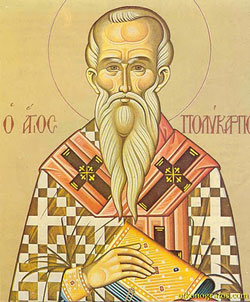
What about St. Polycarp from Smyrna, a Greek city? He didn’t die over Jewish political reasons but because he refused to renounce his faith for Roman paganism.

One day, during a bloody martyrdom when Christians were attacked by wild animals in the arena, the crowd became so mad that they demanded more blood by crying, “Down with the atheists; let Polycarp be found.” (They (early Roman pagans, mine) considered Christians “atheists” because they didn’t believe in their pantheon of gods.)

The fire was lit as Polycarp said Amen and then the eyewitnesses who reported said they saw a miracle. The fire burst up in an arch around Polycarp, the flames surrounding him like sails, and instead of being burned he seemed to glow like bread baking, or gold being melted in a furnace. When the captors saw he wasn’t being burned, they stabbed him. The blood that flowed put the fire out.


Roman Martyrology:

 
Last edited:
The sisters weren’t being forced to worship themselves though.
Yes, the sisters were forced to participate. By refusing to make pottery for the pagan festival: “A crowd stormed their business and smashed all of their pottery in retaliation.” Their lives were never the same after that, and they eventually suffered martyrdom for their refusal.

Paganism and pagan idols are incompatible with Catholicism. Catholics must be on guard against it. The very first Commandment is against it—and throughout Scriptures. Early Christians suffered persecution by it and fought fearlessly against it. St. Athanasius, and early fathers and saints Church warned us about it. So it’s a good thing to stay away from paganism and pagan idols.
 
Last edited:
In a more in depth study of Polycarps death, we know that the Jewish authorities were involved as well, not wanting his body handed over to the Christians. Hence he was publicly incinerated. As with so many of the early martyrs, the underlying motives for execution was political.
 
The sisters weren’t being forced to worship. And neither is there that motivation behind the Amazon tree planting ceremony at the Synod.
 
The sisters only suffered death by refusing to make pottery for a pagan festival. I was responding to your original post:

“The persecution of the early Church was more of a Jewish/political persecution. Not the pagans trying to force Christians to participate in pagan festivals.”
 
Last edited:
Likewise… And you are not the type of person to admit when you are wrong. Are you?
 
Last edited:
Sorry. I knew I should have edited the post to avoid sounding like I thought you were supporting this nonsense. I was never under that impression and I should have made that clear.
 
The hysteria of some Catholics surrounding the cultural images displayed in a chapel, exposes a lack of Catholic faith in my opinion.
On the contrary, the hysteria of some Catholics surrounding the display of cultural images exposes a lot of good sense and reverence for the sacred. Prominent display of cultural images (Pachamama statues, LBTQ banners, etc.) are actually prohibited by Canon Law. See my post above (Post #373).
If we genuinely are impelled by idolatry in Church we would be throwing ourselves out of the place.
Throw ourselves out of the church? Why? Because we have bodies that can be objects of “idolatry of the flesh”? Well, dear EmeraldLady, if we go to church naked, then yes, we should be thrown out of the church. Maybe even thrown into the Tiber river. You are never an object of idolatry of the flesh when you are modestly and properly dressed in church.
 
40.png
Emeraldlady:
The hysteria of some Catholics surrounding the cultural images displayed in a chapel, exposes a lack of Catholic faith in my opinion.
On the contrary, the hysteria of some Catholics surrounding the display of cultural images exposes a lot of good sense and reverence for the sacred. Prominent display of cultural images (Pachamama statues, LBTQ banners, etc.) are actually prohibited by Canon Law. See my post above (Post #373).
If we genuinely are impelled by idolatry in Church we would be throwing ourselves out of the place.
Throw ourselves out of the church? Why? Because we have bodies that can be objects of “idolatry of the flesh”? Well, dear EmeraldLady, if we go to church naked, then yes, we should be thrown out of the church. Maybe even thrown into the Tiber river. You are never an object of idolatry of the flesh when you are modestly and properly dressed in church.
Is this the reasoning that Catholics feel that if their sin is hidden under their clothes they can receive Holy Communion regardless?
 
Is this the reasoning that Catholics feel that if their sin is hidden under their clothes they can receive Holy Communion regardless?
Nope, that is not how good Catholics feel. However, our bodies are not the sins. Lust of the flesh is the sin, and that normally occurs when the flesh is exposed or naked. That is why we must always go to church modestly dressed.

Anyway, if you have an unforgiven serious sin in your heart, you should not receive Holy Communion out of respect for the Eucharist.
 
In a more in depth study of Polycarps death, we know that the Jewish authorities were involved as well,
Yes, but not for a political reason but a religious reason also.
As with so many of the early martyrs, the underlying motives for execution was political.
Another saint from the book Victory of the Marytyrs:

ST. JULITTA was a noble lady of the city of Iconium, in
Lycaonia. During the reign of the Emperors Dioclesian
and Maximian, a most cruel tyrant called Domitian
was governor of the province. While the persecution
was raging most violently
, St. Julitta took her infant
son Cyr,’ only three years old, and accompanied by two
female servants, fled for safety to Seleucia, in Isauria;
where, however, she found Alexander, the Proconsul of
Cilicia, who exercised a no less barbarous cruelty than
Domitian against those Christians who refused to SACRIFICE TO THE gods…


In all charity, we will have to agree to disagree here because reading the history of Christian martyrdom the reason for the persecution did not involve politics but you can choose to keep denying Christian persecution. That is your choice.
The New Testament makes abundantly clear that the idolatry tempting Christians is idolatry of the flesh ie. putting our earthly desires before the commandments of God through Christ.

All of us have sinned by idolatry in that way and by self examination, we mature in the virtues and acquire the armour of God.
As others and your own quote from Father Hardon have said, this is only one form of idolatry. People can still fall into the trap of worshiping false gods.
 
Last edited:
Status
Not open for further replies.
Back
Top