G
GKMotley
Guest
Until both the Supreme Committee and the full cabinet had agreed to the surrender, Hirohito had no power, beyond suasion, to compel surrender. Even at the rigged gozen kaigan, where Hirohito was directly asked his preference (unheard of) his direction could have been denied, the government brought down, and no new governing power established,had the Army or Navy declined to fill their ministerial positions. It was the ultimate legitimate power Anami wielded.
Not only was he needed for the restructuring of Japan, he was needed to ensure a full compliance with the surrender, given the military’s instability. as evidenced by the attempted coup, and securing the Emperor in “protective” custody, safe from “evil advisors”. .
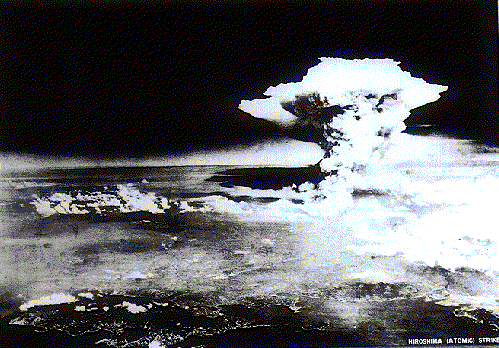
The impact of the Soviets, after less than a day in the field, sandwiched between the two bombs, was by far the lesser of the two factors. History is rarely severely reductionist; it wasn’t in this case. Both factors were involved, bombs first. Yonai, the Navy Minister, called them both Tenyu; gifts from the gods, to allow an escape from the war.
The unconditional condition was not really given up. The kokutai that was the aim of the Japanese to continue, as Herbert Bix noted, was not the constitutional monarchy which Japan got; not the continuation of the state conducted on theocratic premises of state Shinto.
Not only was he needed for the restructuring of Japan, he was needed to ensure a full compliance with the surrender, given the military’s instability. as evidenced by the attempted coup, and securing the Emperor in “protective” custody, safe from “evil advisors”. .
The impact of the Soviets, after less than a day in the field, sandwiched between the two bombs, was by far the lesser of the two factors. History is rarely severely reductionist; it wasn’t in this case. Both factors were involved, bombs first. Yonai, the Navy Minister, called them both Tenyu; gifts from the gods, to allow an escape from the war.
The unconditional condition was not really given up. The kokutai that was the aim of the Japanese to continue, as Herbert Bix noted, was not the constitutional monarchy which Japan got; not the continuation of the state conducted on theocratic premises of state Shinto.
Last edited: