Could I be called to be a nun?

  • Thread starter Thread starter Holly3278
  • Start date Start date
Status
Not open for further replies.
When religious orders make their rules and are restricting those with mental illnesses, they probably mean someone with a “deep” mental illness. I believe there is a lot of overdiagnosis of mental conditions today among the psychological field. A lot of people with “mental” disorders today would be considered perfectly normal 20, 30 years ago–the world just viewed them as having personality or behavioral issues.
 
\When religious orders make their rules and are restricting those with mental illnesses, they probably mean someone with a “deep” mental illness.
I can only speak for Australia here and I have searched Australia wide, but no Order of recent years will consider me because of my history. Even though I have not been ill for at very least five years and probably more, and my doctor is very willing to support my application. She will speak with them in person, via phone or write to them…but things have never gone that far. I know priests and nuns who would also support me reference wise.

But things may be different in other countries.
I believe there is a lot of overdiagnosis of mental conditions today among the psychological field. A lot of people with “mental” disorders today would be considered perfectly normal 20, 30 years ago–the world just viewed them as having personality or behavioral issues.
Very true, I have had many differing diagnoses in my time including that it was impossible looking at my overall symptoms that I suffered a mental illness per se at all. The other one of interest was that I am a marked eccentric which is mistaken as symtomatic of a mental illness.
I settle on saying I suffer Bipolar rather than confuse issues.

The moment a person blinks almost, there is a psychiatric name for ‘the condition’. This may be helpful for psychiatrists who can group people under a name who have similar or same symptoms…but it can be a derogatory name attached to a person, and follows them perhaps for life, as one strives to live happily and with contribution in the general community and also in The Church community.

Barb:)
 
Hi Holly and all interested in this thread…I started a thread on saints who were not religious or priests and replies are starting to come in, along with a book on unmarried saints that can be purchased:

forums.catholic-questions.org/showthread.php?t=242081

http://saints.sqpn.com/saintd01.jpg
Mentioned is St. Dymphna, who is the patron saint of those who suffer mental stress/illnesses…and many favours have been received from her, prayers answered. She was neither a religious sister, nor nun, a simple lay woman.

You can read about her HERE

NATIONAL SHRINE OF ST. DYMPHNA

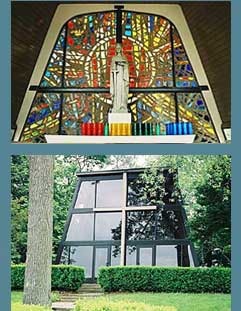
National Shrine of St. Dymphna (pronounced Dimf-nah) is located on the grounds of the Heartland Behavioral Healthcare (formerly Massillon State Hospital) and was the first Church in America dedicated in her honor.
The National Shrine of St. Dymphna is located 55 miles south of Cleveland and 120 miles north of Columbus just off Route 21. There are many hotels and motels in Canton and Massillon where you may stay overnight. Restaurants are located both in Canton and Massillon.

Location map and other details HERE
 
Hi Holly and all interested in this thread…I started a thread on saints who were not religious or priests and replies are starting to come in, along with a book on unmarried saints that can be purchased:

forums.catholic-questions.org/showthread.php?t=242081

http://saints.sqpn.com/saintd01.jpg
Mentioned is St. Dymphna, who is the patron saint of those who suffer mental stress/illnesses…and many favours have been received from her, prayers answered. She was neither a religious sister, nor nun, a simple lay woman.

You can read about her HERE

NATIONAL SHRINE OF ST. DYMPHNA
http://natlshrinestdymphna.org/images/index_07.jpg
National Shrine of St. Dymphna (pronounced Dimf-nah) is located on the grounds of the Heartland Behavioral Healthcare (formerly Massillon State Hospital) and was the first Church in America dedicated in her honor.
The National Shrine of St. Dymphna is located 55 miles south of Cleveland and 120 miles north of Columbus just off Route 21. There are many hotels and motels in Canton and Massillon where you may stay overnight. Restaurants are located both in Canton and Massillon.

Location map and other details HERE
Wow thanks Barbara. I didn’t know that St. Dymphna was a lay woman! 😃
 
Wow thanks Barbara. I didn’t know that St. Dymphna was a lay woman! 😃
👍
Deo Gratius

Good to hear from you, Holly:thumbsup: …I knew she was a lay woman, but forgot… and too just how important she is to many sufferers and how efficacious and I pray to her myself…a problem of this problem I insist on calling “my memory”:o
Keep your eye on that thread that I started and more information may come up for you re saints who were lay people. The book mentioned on that thread says it has hundreds of lay saints and also their stories.

Blessings and regards…barb:)
 
👍
Deo Gratius

Good to hear from you, Holly:thumbsup: …I knew she was a lay woman, but forgot… and too just how important she is to many sufferers and how efficacious and I pray to her myself…a problem of this problem I insist on calling “my memory”:o
Keep your eye on that thread that I started and more information may come up for you re saints who were lay people. The book mentioned on that thread says it has hundreds of lay saints and also their stories.

Blessings and regards…barb:)
Yeah I would be interested in ordering that book if I had the money to do so. 🙂
 
Well, I contacted one convent/monastery and I asked them if they accept people with a history of mental illness if that person no longer suffers from mental illness and they said no. Needless to say, I am quite discouraged by that and fear that this is the response that I will get from all convents/monasteries. I am kind of depressed now. 😦
 
Perhaps my vocation is for the single life or for marriage. I’d like to possibly get married some day if I could find a man who is a devout Catholic. I really don’t want to live the single life as that sounds very unfulfilling to me.
 
Perhaps my vocation is for the single life or for marriage. I’d like to possibly get married some day if I could find a man who is a devout Catholic. I really don’t want to live the single life as that sounds very unfulfilling to me.
Hi Holly…Life and God’s Will and we also unfold in the days. It is stunning (I am now 63yrs) to look back on life and see how I have changed over the years. When I was first separated from my then husband and children, I grieved dreadfully and for a few years all I wanted was my husband and children back and to be a wife and mother again…then one day I looked back and now happily living alone and realized that without knowing it all those things had changed…my ex hubby and his new wife had become my good friends…and my sons, now adults, were close to me again and now my best friends. Our God of The Surprise and Surpises!
If the single life does not appeal at this point, then no need to consider it. If marriage has appeal, then stay with that, keeping it on the list of “Potential Vocations” if there is one. I had one for many years…it is called “discernment” and this is a process not necessarily connected to any sort of religious vocation…it is a passage of discerning God’s Will on any matter whatsoever if God’s Will is not as yet clear to one.
Well, I contacted one convent/monastery and I asked them if they accept people with a history of mental illness if that person no longer suffers from mental illness and they said no. Needless to say, I am quite discouraged by that and fear that this is the response that I will get from all convents/monasteries. I am kind of depressed now. 😦
I know what you mean. I really don’t know why some replies I have had have had to be so curt and quite dismissive and a real attack on the self esteem and self confidence, though I do not think at all this is intended deliberately and hope not. I have reasoned to myself that sometimes I too am curt and rude - and sometimes quite delibertely and inexcusable and sometimes quite unintentionally, and asking pardon for such myself at times, I need to be willing to pardon others. We share a common humanity and are prone to mistake, failure, error and by our nature. “Forgive us our trespasses, as we forgive those who trespass against us”.

I think probably as we grow as persons and this includes of course spiritually (no such thing as a person without spirituality) the opinions of others do not affect as so much as they did at one point, and perhaps even not at all.

Keep as many doors and options open as you can without being as yet totally discouraged re religious life, unless that is where you feel you are…and one day through one of those dark doorways (metaphorically speaking) a light will be shining and a beckoning awareness of Presence calling.

Keep working, praying and discerning, Holly! … we are all labouring in exactly the same way and will until death hopefully…Remember too the words of St. Albert “common sense is the guide of all the virtues”…Blessings and my regards…Barb:)
 
I also have major depression, anxiety disorder and borderline personality disorder. For a long time I felt I had a vocation to be a nun. I contacted many orders and was told that my mental illness is a barrier. In other words, no, I was not called to be a nun. Perhaps I saw it as a way to withdraw from the world. Besides, there isn’t any such thing as being “cured” of this stuff. Unless it’s a miraculous healing.
 
I also have major depression, anxiety disorder and borderline personality disorder. For a long time I felt I had a vocation to be a nun. I contacted many orders and was told that my mental illness is a barrier. In other words, no, I was not called to be a nun. Perhaps I saw it as a way to withdraw from the world. Besides, there isn’t any such thing as being “cured” of this stuff. Unless it’s a miraculous healing.
Yeah I honestly don’t believe I will be cured of my mental illnesses either so I am essentially ruling out the religious life as a potential vocation of mine. I figure my vocation is either to the single life or to marriage.
 
Ok, I’ve posted a response here before. I don’t know what happened to it. So, I’ll try again.

Being mentally ill would be a great obstacle. I am also mentally ill. My diagnosis is the same as yours. With the addition of OCD. I haven’t found a convent willing to let be enter. Also, you may feel ok being off of your meds, but it isn’t a good idea to be off them for any length of time. Unless your doctor has taken you off them.
 
Ok, I’ve posted a response here before. I don’t know what happened to it. So, I’ll try again.

Being mentally ill would be a great obstacle. I am also mentally ill. My diagnosis is the same as yours. With the addition of OCD. I haven’t found a convent willing to let be enter. Also, you may feel ok being off of your meds, but it isn’t a good idea to be off them for any length of time. Unless your doctor has taken you off them.
Good and sound advice! I suffer Bipolar Disorder and though I can moan and groan at times about psychiatric hospitals, medication and psychiatry…I sure know where to run without the slightest hesitation at the slightest hint of problems or trouble and I am better off for them too and feel quite secure in times of great insecurity and confusion. God bless em!🙂

I really can understand religious life being reluctant to consider an applicant who suffers mental illness or who has a history of same…I just wish they would not be so curt and dismissive at times and unnecessary, which can trigger negative feelings … a nonentity and unwanted…and unworthy…moan! groan! moan and groan!😃 …God bless em too!🙂
When Dr. Margaret Tobin was murdered - not by MI sufferer - here (head of psychiatry in Public Mental Health), her brother, I think it was, gave her euology in our Catholic Cathedral and stated that those who suffer mental illness are “the most marginalized, abandoned and rejected group in our community”.
In my own thirty year history I have only seen two nuns that I know of on a psychiatric ward and when they found out that it was the psychiatric ward, they near on panicked. I took them over to the General Hospital and I was smiling, near on laughing I must admit.

Barb:)
 
Hi everyone. I have felt called to be a nun for some time. However, I have also been diagnosed with major depression, anxiety disorder, and borderline personality disorder (primarily a mood disorder). I have been off of my medication for over two months and I feel fine. I only got seriously depressed twice in the past month. I honestly feel like God is healing me of my mental illnesses. Is it possible that I could be called to a religious vocation? :confused:
Hey Holly,
Code:
                How did you get off your medicine, in fact which medication for depression where you on. Because I suffer from Major depression too even anxiety disorder. I also suffer from my lack of balance when I walk up and down the stairs. Sometimes I feel embarrassed at times because my feet are well my big toe on both feet point out ward like if I had fins. Yea odd. My mom had it but she got surgery to fix it. She wanted me to get surgery as well. I said I aint going to fix my feet just to look like everyone else. She goes why your feet are abnormal. I said I like my feet. God made me different. My dad agreed with me and he said yea why is she going to change her appearence for? I am on zoloft right now, I was on many other antidepressants before zoloft. I almost died from abilify. :crying: :yup:
I even suffer from seizures. I cannot look at strobbing lights or fast light shows on television even when I see a police car I have to close my eyes just to avoid a seizure I cannot even look at the lights that clubs have either. I do however; honestly feel like God is healing me of my mental illnesses. Is it possible that I could be called to a religious vocation?

I for one feel called to the cistercians for some odd reason. I like other orders but I feel called to this one why? Founded in 1098 by St. Robert, Abbot of Molesme, in a deserted and uninhabited part of the Diocese of Châlons-sur Saône, today the Diocese of Dijon (Côte-d’Or, France), from which city it is four leagues distant. A small stream of water which overflowed its banks formed there a marsh covered with rushes and coarse grass called in the language of the country cistels, whence the name Cistell or Cîteaux (Latin Cistercium). Here, in a place unknown to men and hitherto inhabited only by wild beasts, St. Robert and his companions, to the number of twenty-one, placed the foundations of the Order of Cîteaux, and commenced the literal observance of the Rule of St. Benedict. St. Robert built the first monastery of the Cistercian Order, which he named Novum Monasterium (new monastery), to distinguish it from the monastery of Molesme from which he and his brethren had come.

The domain in which Cîteaux was situated belonged to Raynald, Viscount of Beaune, who, with his wife Hodierna, gave it voluntarily to God and the Virgin Mary. The name of Cîteaux, which this place formerly bore, soon supplanted that of Novum Monasterium, by which it is called in the “Exordium Cisterciensis Ordinis”. The Duke of Burgundy, Eudes I, touched by the holy life of the monks of Cîteaux, encouraged the work and took upon himself the obligation of defraying all the expenses. The new monastery was inaugurated on the feast of St. Benedict, 21 March, 1098. St Robert was elected Abbot of Cîteaux, but, recalled to Molesme a year afterwards, he was succeeded by St. Alberic, who gave the monks the white habit and placed the monastery immediately under the protection of the Holy See.

Under St. Alberic’s successor, St. Stephen Harding, the number of subjects was increased by the arrival of St. Bernard and his thirty companions, all young noblemen of Burgundy, and the order commenced to send out colonies. La Ferté (Fermitas), in the Diocese of Châlons (today of Autun), Pontigny (Pontiniacum) in the Diocese of Auxere, Clairvaux (Claravallis), in the Diocese of Langres (today of Troyes), and Morimond (Morimundus), in the same Diocese of Langres, were the first four daughters of Cîteaux, which, in their turn, gave birth to many monasteries.

The abbots of these houses were called the first four Fathers of the order, and the “Charter of Charity”, work of St. Stephen, conferred upon them the right of visiting the Abbey of Cîteaux.

:newidea:
Hey did you know: Popes and kings bestowed many honours and privileges upon Cîteaux. This being the mother-abbey of the Cistercian Order, the abbot was recognized as head and superior general of the whole order. The office was elective, the incumbent to be chosen only from among the religious of the order, and only by the religious of the house of Cîteaux. Today the abbot is elected by the general chapter, the religious of Cîteaux not participating. The election was formerly cumulative, that is, to the abbot general belonged, de jure, full administration in spiritual and temporal matters, without waiting for the confirmation of the Holy See. Today this confirmation is required before the abbot general can exercise his powers. The abbot of Cîteaux was also ipso facto prime counsellor (primus consiliarius natus) in the Parliament of Burgundy. He had the right to be called to the assembly of States General of the kingdom and to that of the states of the Province of Burgundy.

In the councils he sat immediately after the bishops and had the same honours and prerogatives. He was regarded as the first of the abbots, “the abbot of the abbots”. As head and superior general, he had the right, as he has today, to visit, either in person or by his delegate, all the monasteries of the order, and during the visit to exercise all jurisdictional powers.

Cîteaux has been a nursery of saints and illustrious personages. From St. Robert to Blessed Guy III, twenty-three abbots are venerated in the order as saints and blessed. Lambert (1155-61), Gilbert (1163-67), Alexander (1168-75), and Arnaud I (1201-12) are recognized for the eminent services rendered to the popes and to the kings. Six abbots of Cîteaux were honoured with the Roman purple. Henri (1304-16) and Jean IV de Martigny (1405-28) were illustrious for their knowledge in the ecumenical councils. Guy d’Autun (1460-62), Hymbert Martin de Losne (1462-76), Jean IV de Cirey (1476-1501) were the courageous defenders of the order against the practice of Commendam. Others signalized themselves by their zeal for the restoration of discipline and by their reformatory tendencies: Edme I de la Croix (1585-1604), Nicholas II Boucherat (1604-25), Claude Vaussin (1643-70), John XII Petit (1670-92), Nicholas Larcher (1692-1712).

But its past glory and the regularity which still existed at the end of the eighteenth century could not save Cîteaux. It is remarkable, however, that with the exception of one lay brother, none of the religious of Cîteaux accepted the pension of the State.

However I feel too called to become a nun did you ever have been spoken too by an angel or by a holy figure like Mary the mother of God or Jesus?:bounce: :bounce: :bounce:

:blessyou: If you ever have a feeling that God is talking to you. Read the scriptures, study the lives of saints, and different orders, also pray pray and pray even go to cofession. Get a spiritual director too. Go 2 Church more often.God is with you at this very moment calling you to himself. Holly God only knows. All of us are called to use our unqui gifts and talents that was given by the Lord, Go to IsGodcallingyou.org and take the test you may be right and called to become a nun. I have been discerning for 14 years straight.

I am 22 years old and was called by God at the age of 8. Take the time to meditate and rethink your steps and ask God to lead you and show you the way. I know he did for me and he will do the same for you Hun May God richly bless you and poor his spirit upon you…
 
I’ll be honest. I am pretty discouraged at this point. I realize that most orders will turn me away because of my past history of mental illness. I don’t even know if I should pursue the religious life because I have mental illness. It really sucks. I want to be like one of the saints. But it seems that all of the saints were involved in a religious order. Were there any lay people who were canonized as saints? I want to live a saintly life is what I mean. I do not dare presume that one day I will be canonized as I know that is highly improbable. Besides, I am far too much of a sinner to presume that I would one day be canonized. I do, however, hope to make it to Heaven one day.

I also feel called to spread the Gospel that Catholicism teaches to those who are lost. I don’t really know how to go about doing this though. I have wanted to be a missionary for a long time but again, I am not even sure if a lay person can be a missionary or not.

God has put this burden on my heart for Protestants and other people who do not have the fullness of the Truth to share with them the fullness of the Truth. I don’t really know how to go about doing that though. I try to pass out Catholic tracts from time to time and to teach people the Catholic faith to the best of my ability when I can but it seems like I am always failing. This really discourages me.

What can I do? Any further advice that you all have to offer me? :confused: 🤷
You sound just like me Holly lol… Lay Catholics can be missionaries, Lay people also play important roles in the structures of the church.🙂 How? Well, the Catholic church is a living organism. The word lay derives from the Anglo-French lai (from Late Latin laicus, from the Greek λαϊκός, laikos, of the people, from λαός, laos, the people at large).

The term laity is here understood to mean all the faithful except those in holy orders and those in the state of religious life specially approved by the Church. These faithful are by baptism made one body with Christ and are constituted among the People of God; they are in their own way made sharers in the priestly, prophetical, and kingly functions of Christ; and they carry out for their own part the mission of the whole Christian people in the Church and in the world.

The Second Vatican Council taught that the laity’s specific character is secularity, i.e. as Christians who live the life of Christ in the world, their role is to sanctify the created world by directing it to become more Christian in its structures and systems: “It belongs to the laity to seek the kingdom of God by engaging in the affairs of the world and directing them according to God’s will,” stated the Council in “Lumen Gentium.” The laity are full members of the Church, who fully share in Church’s purpose of sanctification, of "inner union of men with God,"acting with freedom and personal responsibility and not as mere agents of the hierarchy. Due to their baptism, they are members of God’s family, the Church, and they grow in intimate union with God, “in” and “by means” of the world.

It is not a matter of departing from the world as the monks and the nuns do that they sanctify themselves; it is precisely through the material world sanctified by the coming of the God made flesh, i.e. made material, that they reach God. Doctors, mothers of a family, farmers, bank tellers, drivers, by doing their jobs in the world with a Christian spirit are already extending the Kingdom of God. According to the repeated statements of Popes and lay Catholic leaders, the laity should say “we are the Church,” in the same way that the saints said that “Christ lives in me.”

You dont have to be a nun to be holy. There were many saints that were lay people too. Like St. Felicity, and St. Helen and so on. The first saints were martyrs, people who had given up their lives for the Faith. I AM NOT SAYING YOU SHOULD BE A MARTYR. I am just simply point out that you can live the single or married life, in a saintly fashion too. I also suggest you to look at this website as well: Fisheaters.com.

First Commandment: Thou shalt not take to thyself any graven thing, nor the likeness of any thing in heaven above, nor in the earth beneath, nor in the waters under the earth: thou shalt not adore them nor serve them.

Second Commandment: Thou shalt not take the name of the Lord thy God in vain.

Third Commandment: Remember thou keep holy the Sabbath Day.

Fourth Commandment: Honor thy father and thy mother.

Fifth Commandment: Thou shalt not kill.

Sixth Commandment: Thou shalt not commit adultery.

Seventh Commandment: Thou shalt not steal.

Eight Commandment: Thou shalt not bear false witness against thy neighbor.

Ninth Commandment: Thou shalt not covet thy neighbor’s wife.

Tenth Commandment: Thou shalt not covet thy neighbor’s goods.

Each one of the ten commandments, whether it be expressed by way of command to perform some good, or a prohibition to commit some evil, contains both a command and a prohibition.

Q. Why do you say the first table contains only three commandments?
A. Because, though some people divine the first commandment into two, and by this means make four in the first table; yet in reality it is only one and the same; for when God says, “thou shalt have no other gods but me,” he plainly forbids to worship any other being whatsoever as God, but himself alone; and when afterwards he says, “Thou shalt not make to thyself any graven thing. &c. Thou shalt not adore them, nor serve them: for I am the Lord thy God,” he only explains in particular what he had before declared in general terms, and forbids the worship of idols as gods.

Q. But what need was there for this particular explanation?
A. Because as the worship of idols was prevailing every where, and the people of Israel were steeped in this sin, God thought it proper, by the above explanation, to caution them in particular against this detestable breach of it.

Q. How then do you make out all the ten commandments if all be joined in one?
A. Whose who divide the first command into two, are obliged to join the two last into one; for “Thou shalt not covet thy neighbour’s wife,” and “Thou shalt not covet they neighbour’s goods,” which they join in one, are manifestly two distinct commands.

Q. How can this be shown?
A. Because they forbid the internal acts of two different and distinct sins; the one a sin of lust, the other a sin of injustice; and, as the external acts of these sins are forbidden by two distinct commands, “Thou shalt not commit adultery,” and “Thou shalt not steal,” because they are two distinct sins so the inwards acts, or desire of these vices being equally two distinct sins, equally require to be forbidden by two distinct commands.

Q. Are we strictly obliged to obey the law of God as found in the ten commandments and the gospel?
A. Yes; First, God, who is a lawgiver, is our sovereign Lord and Master, who created us out of nothing, and gave us all we are and all we have, who has the most absolute dominion over us, and can do with us whatever he pleases; consequently, we are wholly at his disposal, and, therefore, are strictly obliged to do whatever he requires of us.

Second, We have seen above, that he has made our obedience to his law one essential condition of our salvation; and, consequently, if we refuse this obedience, we shall be punished with eternal misery.

Third, Because the scripture assures us, that “the Lord Jesus shall be revealed from heaven, with the angels of his power, in a flame of fire, yielding vengeance to them who know nt God, and who obey not the gospel of our Lord Jesus Christ; who shall suffer eternal punishment in destruction,” 2 Thess. i. 7.

Q. re we obliged to obey the whole law in order to be saved?
A. We are; for the holy scripture says, “Whosoever shall keep the whole law, but offend in one point, is become guilty of all,” James ii. 10; that is, he becomes a transgressor of the law in such a manner, the observing of all the other points will not avail him to salvation.

Q. Are we able, by the strength of nature alone, to keep the commandments of God?
A. By our own natural strength alone, without the help of God’s grace, we are not able to keep the commandments, nor, indeed, so much as to think a good thought towards our salvation. Thus the scriptures declare, “that we are not sufficient to think any thing of ourselves, as of ourselves, but our sufficiency is from God,” 2 Cor. iii. 5. “And no man can say, the Lord Jesus, but by the Holy Ghost,” 1 Cor. xii. 3.; that is, no man can say it, so as to be conducive to his salvation. And our Savior himself, to show our total inability of doing any good of ourselves, and without his divine assistance, says, “Without me you can do nothing,” John xv. 5.; and he confirms the same truth by the similitude of a vine, and its branches, saying, “As the branch cannot bear fruit of itself, unless it abide in the vine, so neither can you, unless you abide in me,” verse. 4.

Q. Are we able to keep the commandments by the help of God’s grace?
A. Yes, we are; and God, who requires us to keep his commands, is never wanting on his part to give us sufficient grace for that purpose. The truth of this is shown.

First, The scriptures are full of the warmest exhortations to all to keep the commandments, which certainly would be unbecoming the divine wisdom, if it was impossible to keep them with the help of God’s grace, or if that grace was ever refused us.

Second, God every where obliges man to keep his commandments, under pain of eternal punishment.

Now, it is totally inconsistent with his justice, and makes God a cruel tyrant, to say he would punish us for breaking his commandments, if it was impossible for us to keep them.

Third, We read of several in the scripture who actually did keep them perfectly, and are highly praised on that account, such as Abraham and job, and particularly the parents of St. John the Baptist, of whom the scripture says, that “they were both just before God, walking in ALL THE COMMANDMENTS and justification of the Lord, without blame,” Luke. i. 6.

Fourth, God himself declares, in the very first command, that he shows mercy to thousands of those that love him and keep his commandments," Exod. xx. 6.

Fifth, St. Paul assures us, that God is never wanting on his part to give us all necessary assistance to keep them, saying, “God is faithful, who will not suffer you to be tempted above what you are able to bear, but will make also, with the temptation, issue,” (that is, a way to escape)" that you may be able to bear it." 1 Cor. x. 13.

[SIGN]They who preach the gospel should live by the gospel[/SIGN]

I also suggest you to got to Catholicdoors.com/teaching:thumbsup: 👍 Good luck…
 
Sorry about the second post. I got impatient when I didn’t see the first one come up. And I have a tendency to get paranoid. I thought someone had deleted it.😊
 
Status
Not open for further replies.
Back
Top