
"Dictatorship of relativism"--what's the opposite of that? A "dictatorship of objectivism"?

  • Thread starter Thread starter Bartolome_Casas
  • Start date Start date
Status
Not open for further replies.
B

Bartolome_Casas

Guest
Cardinal Ratzinger (later Pope) coined the term “dictatorships of relativism” to describe the state of affairs in most nations.
crisismagazine.com/2013/will-the-next-pope-oppose-the-dictatorship-of-relativism-as-fiercely-as-benedict

My QUESTION is this: What is the opposite or alternative to the “dictatorship of relativism”?

I am always hearing this phrase used by people on Catholic radio. They all say we must oppose and fight the “dictatorship of relativism.”

But I never hear them explain what state of affairs we will have put in place once the “dictatorship of relativism” is overthrown or replaced or beaten back into the shadows and crevices and dens of iniquity.

So, what is the alternative? Is it one of these:

(1) Return to Catholic Monarchy, such as existed in Europe until a few hundred years ago?

(2) Establishment of one-party government (such as existed in Franco’s Spain from about 1936 to 1975), with the Catholic Church in an alliance with the party-in-power, and with total persecution of those who oppose this party and/or the Church?

Franco’s Spain did have legislation that conformed to the objective moral teachings of the Catholic Church. But Franco’s government also carried out so much illegal murder, assassination, torture, disappearing, etc., that I don’t ever hear Catholics (not even Opus Dei people) defend Franco or call for a return to Francoism in Spain or anywhere else.
See:
en.wikipedia.org/wiki/Francoist_Spain
en.wikipedia.org/wiki/Francisco_Franco

When people try to denigrate Saint Josemaria Escriva, the founder of Opus Dei, they often try to say he was a supporter of Franco. And the Opus Dei people always respond the same way: Saint Josemaria Escriva was never a supporter of Franco! They say Opus Dei never supported Franco, and never supports or opposes any secular government.

Yet, Monarchy or One-Party Pro-Catholic Dictatorship are the only two alternatives I can see to the “dictatorship of relativism.”

In the U.S.A., the Supreme Court has ruled over and over again that every law MUST HAVE A SECULAR purpose.
See:
en.wikipedia.org/wiki/Establishment_Clause
law2.umkc.edu/faculty/projects/ftrials/conlaw/edwards.html
law.northwestern.edu/faculty/fulltime/koppelman/secularPurpose.pdf

So, to enact laws that conform to the objective morality that the Catholic Church teaches, we’d have to amend the Constitution to allow that. We’d probably have to name the Catholic Church by name, and have the new amendment say something like: “All laws must conform to the objective moral teachings of the Roman Catholic Church.”

Some Catholics seem to speak as though objective morality can be legislated by saying that objective morality is not religious, but is part of “Natural Law.” The only problem, and I think it is a HUGE problem, is that the only people who see Natural Law as being natural and non-religious are religious people, particularly Catholics and some Christians in the Reformation tradition. So, saying that condoms should be made illegal because Natural Law forbids them really doesn’t overcome or satisfy the “secular purpose” test for legislation that the U.S. Supreme insists on.

So, it seems to me that if we are going to have a democracy with freedom of religion and no established (state) religion, then “relativism” and “secularism” cannot be overthrown the way the government of the USSR or the way the Nazi State was overthrown. All laws in the U.S. must have a SECULAR purpose. I’ve never heard even political conservatives say that they want to change that.

Abortion-rights laws can be replaced by anti-abortion laws, but only on the secular basis that abortion KILLS a living and functioning human being, as any person (atheists and Buddhists, etc.) can see.

But what possible secular purpose could there be for banning sale and use of condoms, or for banning homosexual sex, or banning sports games, gambling, and liquor sales on Sundays, or for banning the teaching of Darwin in high schools, or banning public expression of blasphemy?

Again, what sort of government or society would be the opposite of the “dictatorship of relativism.” Does the logic of that phrase ultimately lead to the abolition of democracy?
 
Postscript: It seems to me that the Catholic Church could ban and punish all expressions of relativism and dissent among its clergy and lay people, but, as far as outsiders goes. All dissent is relativism. Dissent flourishes in today’s Catholic Church. Catholic Answers Live came into existence mainly to battle dissent inside the Church. The Church could crack down on all public expressions of dissent from the Church’s teaching on capital punishment, abortion, the minimum wage, women’s ordination, married priests, or condom use. In that sense, it could make clear that no one can remain in good standing in the Catholic Church while simultaneously publicly expressing dissenting views regarding the moral teachings of the Catholic Church. Yet, the Church has not done even that. The Canadian Bishop’s document saying Catholics can make the choice to use condoms have never been condemned or withdrawn by Catholic authorities. Thousands (millions?) of Catholics regularly publicly express dissenting views on abortion, minimum wage, the death penalty, gay sex, condom use, etc., and nothing every happens to them. They go to mass, get married, get divorced, remarry, and nothing ever happens to them. But all that could be ended as regards members inside the Church. The relativism within the Church could be ended, by returning to the pastoral approach and governing style that the Church always had prior to the Renewal of the Vatican II Council. But what can the Church do about relativism (dissent) outside the Church? Nothing, as far as I can see, except convert pagans and heretics to Catholics, in which case they’d be inside the Catholic Church and then subject to the government of the Catholic Church. But is there really a reasonable hope that every pagan and heretic in the USA and Europe will convert to the Catholic Faith? I don’t think so.
 
The foundation of democracy, and what often leads to its own demise, is that it relies entirely on the beliefs of those citizens eligible to vote. Assuming we can know some kind of absolute truth, it would matter little in a democracy unless all voters believed it to be true. Democracy is not founded on “truth”, but on beliefs.

If a society suddenly accepted a single set of absolute, objective moral laws, democracy would likely fade away or even be voted out of existence by the society. There would be no need for it if all citizens agreed on a common goal. The purpose of the society would then be to devote all resources towards acheiving that goal, which would not require democracy.

If a set of moral laws is accepted in their entirety, democracy would likely be severly weakened or dead. It may exist on a smaller scale to deal with issues such as economics or local governance, but even then the choices made available to the voters would likely have to fit in line with the accepted set of moral laws.
 
The foundation of democracy, and what often leads to its own demise, is that it relies entirely on the beliefs of those citizens eligible to vote. Assuming we can know some kind of absolute truth, it would matter little in a democracy unless all voters believed it to be true. Democracy is not founded on “truth”, but on beliefs.

If a society suddenly accepted a single set of absolute, objective moral laws, democracy would likely fade away or even be voted out of existence by the society. There would be no need for it if all citizens agreed on a common goal. The purpose of the society would then be to devote all resources towards acheiving that goal, which would not require democracy.

If a set of moral laws is accepted in their entirety, democracy would likely be severly weakened or dead. It may exist on a smaller scale to deal with issues such as economics or local governance, but even then the choices made available to the voters would likely have to fit in line with the accepted set of moral laws.
The above comment reminds me that Plato set up his ideal Republic to be ruled by a class of non-democratically selected “philosopher kings.” I had a professor who said that Plato’s Republic was one of the main models for the government of the U.S.S.R.
 
The dictatorship of relativism refers to the belief that there is no objective moral truth. This condition can exist in any form of government from communism to facism to democracy. Similarly objective truth and well functioning democracy can funtion together in harmony( Jaques Maritain wrote some excellent political philosophy on the concept of rightly ordered Christian democracy which upheld objective truth and the value of the human person in relation to the common good). Objectivism and respect for natural law are neither explictly religous nor automatically tied up with the absolutist ideas of Catholic monarchical government.
 
The dictatorship of relativism refers to the belief that there is no objective moral truth. This condition can exist in any form of government from communism to facism to democracy. Similarly objective truth and well functioning democracy can funtion together in harmony( Jaques Maritain wrote some excellent political philosophy on the concept of rightly ordered Christian democracy which upheld objective truth and the value of the human person in relation to the common good). Objectivism and respect for natural law are neither explictly religous nor automatically tied up with the absolutist ideas of Catholic monarchical government.
I don’t know about Jaques Maritain. I think he’s been deceased for a long time now.

All I can see is that in a democracy there will always be TWO or more parties, and these various parties will always have CONFLICTING ideas about right and wrong, and will always be in NEVER-ENDING campaigns to push the other Party or Parties out of power.

Thus, it seems that in a Democracy (or democratic republic, if you will), relativism can never be overcome in the general society or in the secular government.

That leads to the question, then, what are we talking about when we talk about fighting and overcoming the “dictatorship of relativism”? What’s the end-state we are supposed to be working for?

All I can see is that that all Catholics can do is end dissent (relativism) among Catholic clergy, Catholic professors, and Catholic lay people. Outside the Church, we can do nothing, as far as I can see.

Maybe it is irrelevant, but I noticed in his first homily, Pope Francis made no mention of the “dictatorship of relativism.”
 
The opposite of the dictatorship of relativism is the freedom of truth. The “dictatorship” in the expression is a metaphor and not reference to political systems.
 
The opposite of the dictatorship of relativism is the freedom of truth. The “dictatorship” in the expression is a metaphor and not reference to political systems.
Our Friend above used the phrase “freedom of truth.” But how can there be truth except that it come from an AUTHORITY with whom no human can argue or dispute? In fact, the Catholic Church is NOT a democracy. Yes, the Cardinals do vote for each new pope. And yes, during ecumenical councils each bishop does get one vote on each proposal and the democratic concept of majority rule does apply in that context. But in the Church the great mass of Catholics–the lay people along with the priests, monks and nuns–have no vote whatsoever.

Thus it seems that the opposite of “dictatorship of relativism” is and must be the “dictatorship of truth.” God is a dictator, is He not? At the end of time, and the “end of days,” does not God reject all the “rebels” (those refusing to be servant subjects to the Rule of God)?

It seems that in the Christian Faith, freedom has a sort of ironic meaning. Freedom comes from obedience to God. To the world, that doesn’t look like freedom at all. The Christian obeys the Church’s teachings on pornography, on the minimum wage, on abortion, on the death penalty. The Christian has no free choice on these matters. His only desire is to serve God and obey God. He feels free through such obedience, and he remains free of sin, and perhaps over time even gets more and more free of the the desire to sin. But he is obeying a dictatorship, in reality, the dictatorship of the Church’s Magisterium, and the dictatorship of God.

Truth limits freedom, in reality. Truth limits choices profoundly. I can’t see any way around that.

Thus, when Catholics fight and condemn the “dictatorship of relativism,” they must be imagining the end of Western-style democracy and the establishment of some sort of authoritarian government.

This seems strange since at the same time the Church is battling for “religious liberty.” Doesn’t religious liberty apply to everyone, including even atheists? The Church says so. Then isn’t relativism necessary to give non-Catholic room, space and freedom to promote and fight for whatever they believe in, even if they are profoundly committed to relativism?
 
Usually the differences aren’t about right and wrong, but about the best way to approach problems in the society.
–What about issues like these:

-Whether the gov’t should engage in ANY redistribution of wealth
-Whether the gov’t should organize and mandate health insurance coverage
-Whether the gov’t can mandate that insurance companies provide coverage for contraceptives
-Whether abortion is allowed
-Whether gays shouild be allowed to be married under state and federal law
-Whether pornography should be allowed
-Whether “preventative wars” are allowable when their is no immediate threat
-Whether capital punishment should be used widely, or just in rare cases, or not at all
-Whether gun ownership rights can be restricted a little, a lot, or not at all
-Whether the government should bail out big banks who’ve destroyed themselves by reckless investments
-Whether the government should intervene in the economy with laws such as the minimum wage laws
 
It seems to me that the U.S. Supreme Court will have no choice but to declare and rule that there is a Constitutional right for gays to be married under state and federal law.

Why?

Because n the U.S.A., the Supreme Court has ruled over and over again that every law MUST HAVE A SECULAR purpose.
See:
en.wikipedia.org/wiki/Establishment_Clause
law2.umkc.edu/faculty/project…w/edwards.html
law.northwestern.edu/facu…larPurpose.pdf

The religious teaching that gays sex and gay relationships are immoral cannot be considered by federal or state courts.

I can’t think of any secular purpose for denying government recognition of gay marriage relationship. Fear of another Sodom and Gomorrah is not a secular purpose.

I hear Catholics fighting state-recognized gay marriage on the basis that this is all part of the “dictatorship of relativism.” But, on the contrary, advocated of gay marriage are not arguing relativism. They are arguing that is is objectively morally required to treat all law abiding citizens equally. They call their movement "marriage equality.’ They are saying they are objectively on they side of Civil Rights and Justice. It seems that they right. This is not a matter of Objective Morality vs. Relativism. Rather, it is a difference of opinion about what is the correct Objective Morality on this issue.
 
The thing is that a dictator must rule by fear, but Christ leads us by love. Relativism is tyrannical because it maintains power through fear and bullying, not through logic or truth-telling.

So the opposite of the dictatorship of relativism is the reign of Christ the King.
 
The thing is that a dictator must rule by fear, but Christ leads us by love. Relativism is tyrannical because it maintains power through fear and bullying, not through logic or truth-telling.

So the opposite of the dictatorship of relativism is the reign of Christ the King.
In response to what our Friend above contributed, I think: Must not a king reward his faithful subjects and punish his rebellious subjects? Must not a king be a dictator, in essence? If he is all-indulgent, then in what way is such a king a king at all?

Freedom and democracy and relativism (also known as dissent, or even heresy) and secularism seem to all go hand in hand.

And it seems that the only way in Heaven or Earth to stop relativism/dissent/heresy is to outlaw it by force of law imposed by an authority that is not subject to influence by democratic influences.

Thus, it seems that the necessary conclusion is that if we Catholics are to fight and oppose the “dictatorship of relativism,” we must work to establish something akin to the Franco government in Spain (1937-1975).
 
Freedom and democracy and relativism (also known as dissent, or even heresy) and secularism seem to all go hand in hand.
QUOTE]

It is not really relativism and secularism which go hand in hand with freedom and democracy. Rather, “freedom” (individual liberties) and democracy go hand in hand with Western Liberalism. Western Liberalism however was founded not on relativist ideas, but on ideas which were held to be objective truths. For example, the US constitution and the French rights of man claimed that the “truths” and rights they laid out were self-evident, inherently part of man’s nature, and not up to dispute. These are not relativist ideas; they certainly are claiming an objective knowledge of virtue.
 
In response to what our Friend above contributed, I think: Must not a king reward his faithful subjects and punish his rebellious subjects? Must not a king be a dictator, in essence? If he is all-indulgent, then in what way is such a king a king at all?

Freedom and democracy and relativism (also known as dissent, or even heresy) and secularism seem to all go hand in hand.

And it seems that the only way in Heaven or Earth to stop relativism/dissent/heresy is to outlaw it by force of law imposed by an authority that is not subject to influence by democratic influences.

Thus, it seems that the necessary conclusion is that if we Catholics are to fight and oppose the “dictatorship of relativism,” we must work to establish something akin to the Franco government in Spain (1937-1975).
Well… yes, and no.

On the one hand, the Church has always prohibited forced conversions. That would violate our free will.

On the other, St Augustine was against it when the government outlawed Donatism, but the he received a letter from a former Donatist who explained he had been thoughtlessly following his friends and the law had brought him to his senses.

Another problem is that the Vatican has no enforcement power. Used to be that the Catholic state would help the Church out in this way, bit this is no longer the case. The Vatican could tell a hishop he was deposed, bit what could the Vatican do if the bishop simply refused to leave?

So, like so much else with the Faith, the main thing we can do is to pray and put our trust in God.

ETA: And let God’s love shine through us so others will be attracted to Him.
 
The dictatorship of relativism refers to the belief that there is no objective moral truth. This condition can exist in any form of government from communism to facism to democracy. Similarly objective truth and well functioning democracy can funtion together in harmony( Jaques Maritain wrote some excellent political philosophy on the concept of rightly ordered Christian democracy which upheld objective truth and the value of the human person in relation to the common good). Objectivism and respect for natural law are neither explictly religous nor automatically tied up with the absolutist ideas of Catholic monarchical government.
Excellent explanation, Theophorus!!!
 
Jesus has told us that He is “the Way, the Truth, and the Life.” He who is God and Man is the Word and the Bread of Life.

Jesus, who reigns over His Kingdom, is the opposite of the “dictator of relativism.”

If we are faithful, we believe there is but one Way to heaven – one moral code, and not a code that varies according to what is convenient for or preferred by each individual. That is why moral law is absolute and objective, and not subjective or “relative” according to what we wish for Truth to be. It is not reasonable to believe that “what is true for you cannot be true for me” when it comes to God’s law.

Under the guise of imposing “choice” within society, crusaders for the “dictatorship of relativism” have a false understanding about human freedom and want to banish what is true (according to God’s will) in society, because it **“does not recognize anything as definitive and whose ultimate goal consists solely of one’s own ego and desires.” ** (see excerpt below – from homily by Cardinal Joseph Ratzinger, Dean of the College of Cardinals, 4/18/05, during Mass “Pro Eligendo Romano Pontifice” at the beginning of the Conclave prior to his election as Pope):
How many winds of doctrine have we known in recent decades, how many ideological currents, how many ways of thinking. The small boat of the thought of many Christians has often been tossed about by these waves - flung from one extreme to another: from Marxism to liberalism, even to libertinism; from collectivism to radical individualism; from atheism to a vague religious mysticism; from agnosticism to syncretism and so forth. Every day new sects spring up, and what St Paul says about human deception and the trickery that strives to entice people into error (cf. Eph 4: 14) comes true.
Today, having a clear faith based on the Creed of the Church is often labeled as fundamentalism. Whereas relativism, that is, letting oneself be “tossed here and there, carried about by every wind of doctrine”, seems the only attitude that can cope with modern times. We are building a dictatorship of relativism that does not recognize anything as definitive and whose ultimate goal consists solely of one’s own ego and desires
.
We, however, have a different goal: the Son of God, the true man. He is the measure of true humanism. An “adult” faith is not a faith that follows the trends of fashion and the latest novelty; a mature adult faith is deeply rooted in friendship with Christ. It is this friendship that opens us up to all that is good and gives us a criterion by which to distinguish the true from the false, and deceipt from truth.

vatican.va/gpII/documents/homily-pro-eligendo-pontifice_20050418_en.html
 
Bartolome Casas;10509139:
Freedom and democracy and relativism (also known as dissent, or even heresy) and secularism seem to all go hand in hand
.
QUOTE]

It is not really relativism and secularism which go hand in hand with freedom and democracy. Rather, “freedom” (individual liberties) and democracy go hand in hand with Western Liberalism. Western Liberalism however was founded not on relativist ideas, but on ideas which were held to be objective truths. For example, the US constitution and the French rights of man claimed that the “truths” and rights they laid out were self-evident, inherently part of man’s nature, and not up to dispute. These are not relativist ideas; they certainly are claiming an objective knowledge of virtue.

After reading our friend’s comments above about the U.S. and French revolutions, it dawned on me that the the First and Second Amendments to the U.S. Constitution ARE “the dictatorship of relativism,” or, rather, are the constitutional establishment that relativism is the official ideology of the U.S.A. How so? Because the First Amendment puts ALL religions (including atheisms) and ALL opinions on the same plane, at the same level. All are granted Religious Liberty, including the liberty to be irreligious. Thus, we have in the USA the Playboy Mansion and Las Vegas and legal prostitution in Nevada.

The Second Amendment works hand-in-hand with the First Amendment since it allows enemies and opponents of the government to maintain the means to overthrow the government. The Second Amendment protects relativism by preventing the government from being the only part of society that has military arms. That prevents the government from imposing a belief system on the people.

Thus, it seems that the USA has been since its beginning a much more radical, much more anti-Catholic, government than we generally realize. The U.S. Founding Fathers really did create a huge BREAK with the past of Europe. Burke was wrong in calling the French Revolution radical but the American Revolution a “conservative revolution.” His view is popular among Evangelicals and others, but he is just wrong. In fact, the Church traditionally condemned American democracy, up until the 1960s when it changed its position.

In sum, I believe the USA form of government should be called a “constitutional democracy of relativism,” rather than a “dictatorship of relativism,” since the USA really is not a dictatorship. Perhaps the Big Money people constitute a sort of oligarchy, but that’s another story.

Shall Catholics attempt to overthrow the First and Second Amendments, and establish something like Franco’s Spain (1937-1975), in which the Church works hand-in-hand with a One-Party Dictatorship? Well, if so, would someone send me a memo on that so I can get up to speed.

Otherwise, it seems that we Catholics have no choice but to live in the secular state known as the USA, and work to win citizens of that secular state one-by-one into citizenship in the Kingdom of God (also known as the Catholic Church). When (God willing) we get a big majority of Americans into a relationship of loving fidelity with God and God’s Church, then everything will take care of itself. Right? Catholic efforts to impose Catholic morality on people outside the Church can’t lead to anything. Right?

(P.S. I think conservative Americans should study the Spanish Civil War and Franco’s rule in Spain, since, I think the “conservative” movement in the USA is unintentionally taking up to a redo, in the USA, of the Spanish Civil War and one-party dictatorship like Franco’s. We all know about the right wing movement in Germany in the 1930s and 1940s, thanks to Hollywood. But many of us know little to nothing about the Spanish Civil War and Franco’s Spain which lasted from 1937 to 1975. Yes, yes, the Nazis were a million times more evil than Franco’s government. Yet, Franco’s tyranny was evil enough. The movie “Pan’s Labyrinth” is not an exaggeration of the savagery of the Franco regime. That movie fails only in that it fails to show the similar savagery over on the side of the left wing government army that tried to prevent the Franco rebellion from taking over the nation. And it is fact that the Catholic Church in Spain was a hand-in-hand ally with the Franco regime.)
 
The posts of friends in this thread have been helpful to me. I have come to see that I am a “dissenter,” of sorts.

I see that the policy of the Catholic Church now is to:
(1) neglect internal Church discipline (as seen in pro-abortion rights and pro-death penalty Catholic politicians receiving Holy Communion in public and as seen in their abandonment of efforts to convince Catholics to stop using condoms and birth control pills).,
(2) to refrain from converting Protestants, Muslims, and Jews to the Catholic Faith (as seen in the New Evangelization, which targets only lapsed Catholics),
(3) but to embark on endless campaigns to change the laws of the secular state to conform to Catholic moral teachings. (as seen in the bishop’s election-year campaign keep condoms and birth control pills away from Catholics by convincing Catholics that the president was persecuting Catholics with the HHS Mandate, so that Catholics would vote the president out of office and so the new president would repeal the HHS Mandate)

I don’t agree with all that. I agree with the policy of Jesus and the Apostles who did not try to change the leaders or the laws of the State, but instead trying to bring individual souls, one-by-one, to the saving waters of Baptism and to the saving body and blood of Jesus Christ in the Eucharist.

The Church’s reliance on the force of the State is nothing new. Roman Emperors after Constantine used the Sword of the State to suppress heretics. How were the Mexican people made Catholic? By the sword, mainly. I’ve read that the general policy of Catholic missionaries in many European nations was for missionaries to convert the pagan king, and the then pagan king enforced the Catholic faith on his whole nation. I’m against all that, based on the authority of the Scriptures and the pre-Constantine tradition.

So, I guess I really am out-of-step with the bishops and the popes. I guess I’ll just retreat to my prayer closet and let the bishops and their Cristero culture warrior knights work to take over the government. I don’t know what else to do.

Since I am apparently a dissenter, I’ll stop posting my views on this web site. I really don’t belong here. This is site is for culture warriors who are trying to take over State. Goodbye and good luck! Vaya con Dios, mis amigos! I won’t be saddling up and riding in the New Cristeros War with you, but I wish you well. When you take over the government, I hope you will go gently with “heretics” like me.
 
The posts of friends in this thread have been helpful to me. I have come to see that I am a “dissenter,” of sorts.

I see that the policy of the Catholic Church now is to:
(1) neglect internal Church discipline (as seen in pro-abortion rights and pro-death penalty Catholic politicians receiving Holy Communion in public and as seen in their abandonment of efforts to convince Catholics to stop using condoms and birth control pills).,
(2) to refrain from converting Protestants, Muslims, and Jews to the Catholic Faith (as seen in the New Evangelization, which targets only lapsed Catholics),
(3) but to embark on endless campaigns to change the laws of the secular state to conform to Catholic moral teachings. (as seen in the bishop’s election-year campaign keep condoms and birth control pills away from Catholics by convincing Catholics that the president was persecuting Catholics with the HHS Mandate, so that Catholics would vote the president out of office and so the new president would repeal the HHS Mandate)

I don’t agree with all that. I agree with the policy of Jesus and the Apostles who did not try to change the leaders or the laws of the State, but instead trying to bring individual souls, one-by-one, to the saving waters of Baptism and to the saving body and blood of Jesus Christ in the Eucharist.

The Church’s reliance on the force of the State is nothing new. Roman Emperors after Constantine used the Sword of the State to suppress heretics. How were the Mexican people made Catholic? By the sword, mainly. I’ve read that the general policy of Catholic missionaries in many European nations was for missionaries to convert the pagan king, and the then pagan king enforced the Catholic faith on his whole nation. I’m against all that, based on the authority of the Scriptures and the pre-Constantine tradition.

So, I guess I really am out-of-step with the bishops and the popes. I guess I’ll just retreat to my prayer closet and let the bishops and their Cristero culture warrior knights work to take over the government. I don’t know what else to do.

Since I am apparently a dissenter, I’ll stop posting my views on this web site. I really don’t belong here. This is site is for culture warriors who are trying to take over State. Goodbye and good luck! Vaya con Dios, mis amigos! I won’t be saddling up and riding in the New Cristeros War with you, but I wish you well. When you take over the government, I hope you will go gently with “heretics” like me.
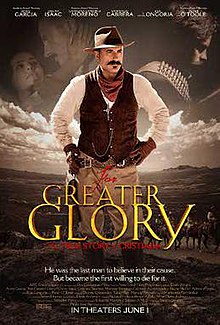
http://upload.wikimedia.org/wikiped...poster.jpg/220px-For_Greater_Glory_poster.jpg
That is probably the best summation of what is going on in Cathlolicism today that I’ve ever seen. By your definition, I’m a heretic too. Hope we don’t end up being burned at the stake after the culture warriors take over!
 
Status
Not open for further replies.
Back
Top