L
LoveGod102
Guest
My humanities book says that very early Christians used only plain crosses, not crucifixes. Is this true? If so when did this change?

In Herculaneum (one of the towns that were buried when Mount Vesuvius erupted in AD 79, another being Pompeii) there was this room in a house containing [.jpg"]what looks like a cross marking engraved on one of its walls]("http://www.ermaktravel.com/Europe/Italy/herculaneum/New folder (2)/00087b0s[1). Nail markings could be seen in and around this ‘cross’. Under the stucco surface a piece of furniture was found resembling a small cabinet, with a flat top surface and containing two rough clay lamps, a dice box and a die. Leaning against this cabinet was a small wooden stool. The measurements of the horizontal arms of this ‘cross’ are slightly unequal, and the top piece is not quite aligned to the base, which suggests that it was not an accurately made liturgical object of some kind. The nail marks however suggest that the ‘cross’ was originally made of wood and that it had been removed before the eruption of AD 79. These marks may also indicate that a moveable panel had once covered this marking. Now the thing is, it has been debated whether this was really a Christian cross at all: some have suggested that it may simply been, among other things, a miscellaneous wall marking.My humanities book says that very early Christians used only plain crosses, not crucifixes. Is this true? If so when did this change?
_I_193_2.jpg/20px-Christliche_Symbolik_(Menzel)_I_193_2.jpg)
Thanks for the info and explanation. Quite helpful and very interesting.(Continued)
The thing is, the favorite art media of the early Christians were mostly two-dimensional: mosaics, paintings, book illustrations. Relief carving was okay, but three-dimensional sculpture in the round reminded them too much of the statues of emperors and Greco-Roman gods, which is why Christian artists mostly tended to avoid them. (In fact, the only examples of early Christian sculpture in the round we have before the 4th century are the Cleveland marbles [=field_artist%3Alate%20Roman%2C%20Asia%20Minor%2C%20early%20Christian%2C%203rd%20century"]from 3rd-century](http://www.clevelandart.org/art/collection/search?f[0) Asia Minor.) This is also the reason why the East mainly only has icons, with some Eastern Christians even having a negative perception of statuary; Western Christians only began to revive sculpture during the Carolingian and Ottonian periods (8th-10th centuries).
So much of the depictions of the crucifixion from between the 5th to the 8th century are either carvings or panel paintings or frescoes or book illustrations. Christians already used crosses, but crucifixes as we commonly understand it (crosses with a three-dimensional figure of Christ on it) only became popular at around the same time (Western) Christians have finally chosen to embrace sculpture.
 You could write a Catholic history book, if this explanation is any indication.
I very detailed explanation, thank you.We indeed only have a handful of portrayals of the crucified Christ predating the 5th century. The earliest of these, the so-called Alexamenos graffito (ca. 3rd century), is actually a crude sketch by a non-Christian who is mocking a certain Christian named Alexamenos.
I’m not sure of any ancient depictions of Christ clean-shaven, but I can tell you that the earliest known depiction of Christ Pantocrator from the 6th century in St Catherine’s Monastery show Him bearded. The widespread awareness of the Shroud of Turin can only be traced to the 14th century.I very detailed explanation, thank you.
I read somewhere that the early depictions of Jesus had him clean-shaven. Any truth in this?
Apparently, he only became bearded after the Turin Shroud emerged.
That’s true. Most of the early depictions of Jesus do portray Him as a clean-shaven young man, almost like a Greco-Roman philosopher: dressed in a tunic and a pallium. It’s not really surprising: the artists (who are themselves part of Greco-Roman society) were simply depicting Jesus in terms of their own social context, as a quasi-heroic philosopher figure. Besides, depicting Jesus as a smooth-faced young philosopher also has another implication: proper dress, close-cropped hair and a shaven face are signs of good breeding in Greco-Roman society. Sometimes in fact these youthful representations could include some rather ‘feminine’ characteristics: sloping shoulders, wipe hips, long, curling hair and small protruding breasts.I very detailed explanation, thank you.
I read somewhere that the early depictions of Jesus had him clean-shaven. Any truth in this?

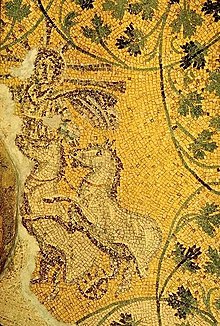
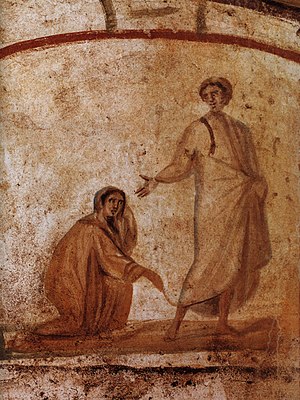
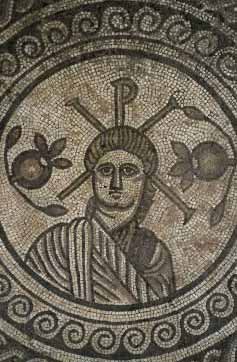
https://sphotos-a-atl.xx.fbcdn.net/hphotos-ash4/999753_566572693407109_293399399_n.jpgI’m not sure of any ancient depictions of Christ clean-shaven, but I can tell you that the earliest known depiction of Christ Pantocrator from the 6th century in St Catherine’s Monastery show Him bearded. The widespread awareness of the Shroud of Turin can only be traced to the 14th century.
It is perhaps pertinent to remember that shaving was strictly forbidden in Jewish law, and Jesus was obedient to the word and spirit of the law. A clean-shaven Jesus is pretty much unthinkable.
Well, I’ll be! I have nothing to add.
