
Does the Eucharist stop remaining bread?

Status
Not open for further replies.
Which Apocrypha books did Jesus refer to?
Matt. 6:19-20 – Jesus’ statement about laying up for yourselves treasure in heaven follows Sirach 29:11 – lay up your treasure.
Matt… 7:12 – Jesus’ golden rule “do unto others” is the converse of Tobit 4:15 – what you hate, do not do to others.
Matt. 7:16,20 – Jesus’ statement “you will know them by their fruits” follows Sirach 27:6 – the fruit discloses the cultivation.
Matt. 9:36 – the people were “like sheep without a shepherd” is same as Judith 11:19 – sheep without a shepherd.
Matt. 11:25 – Jesus’ description “Lord of heaven and earth” is the same as Tobit 7:18 – Lord of heaven and earth.
Matt. 12:42 – Jesus refers to the wisdom of Solomon which was recorded and made part of the deuterocanonical books.
Matt. 16:18 – Jesus’ reference to the “power of death” and “gates of Hades” references Wisdom 16:13.
Matt. 22:25; Mark 12:20; Luke 20:29 – Gospel writers refer to the canonicity of Tobit 3:8 and 7:11 regarding the seven brothers.
Matt. 24:15 – the “desolating sacrilege” Jesus refers to is also taken from 1 Macc. 1:54 and 2 Macc. 8:17.
Matt. 24:16 – let those “flee to the mountains” is taken from 1 Macc. 2:28.
Matt. 27:43 – if He is God’s Son, let God deliver him from His adversaries follows Wisdom 2:18.

Mark 4:5,16-17 – Jesus’ description of seeds falling on rocky ground and having no root follows Sirach 40:15.
Mark 9:48 – description of hell where their worm does not die and the fire is not quenched references Judith 16:17.

Luke 1:42 – Elizabeth’s declaration of Mary’s blessedness above all women follows Uzziah’s declaration in Judith 13:18.
Luke 1:52 – Mary’s magnificat addressing the mighty falling from their thrones and replaced by lowly follows Sirach 10:14.
Luke 2:29 – Simeon’s declaration that he is ready to die after seeing the Child Jesus follows Tobit 11:9.
Luke 13:29 – the Lord’s description of men coming from east and west to rejoice in God follows Baruch 4:37.
Luke 21:24 – Jesus’ usage of “fall by the edge of the sword” follows Sirach 28:18.
Luke 24:4 and Acts 1:10 – Luke’s description of the two men in dazzling apparel reminds us of 2 Macc. 3:26.

John 1:3 – all things were made through Him, the Word, follows Wisdom 9:1.
John 3:13 – who has ascended into heaven but He who descended from heaven references Baruch 3:29.
John 4:48; Acts 5:12; 15:12; 2 Cor. 12:12 – Jesus’, Luke’s and Paul’s usage of “signs and wonders” follows Wisdom 8:8.
John 5:18 – Jesus claiming that God is His Father follows Wisdom 2:16.
John 6:35-59 – Jesus’ Eucharistic discourse is foreshadowed in Sirach 24:21.
John 10:22 – the identification of the feast of the dedication is taken from 1 Macc. 4:59.
John 10:36 – Jesus accepts the inspiration of Maccabees as He analogizes the Hanukkah consecration to His own consecration to the Father in 1 Macc. 4:36.
John 15:6 – branches that don’t bear fruit and are cut down follows Wis. 4:5 where branches are broken off.

There is alot more here:

 
Last edited:
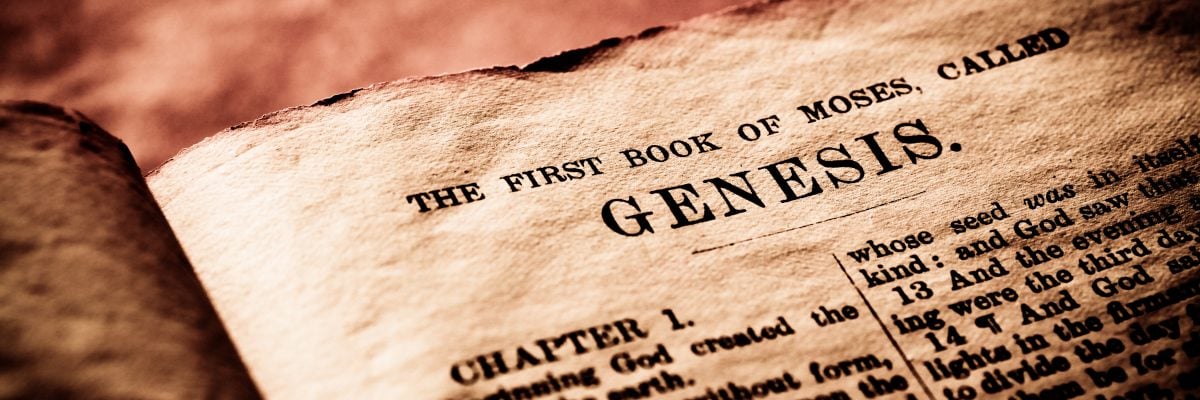
Look up your history, the catholic church added the Apocrypha in response to the reformation they were not “removed” God decided what was to be in scripture
How were the books added in response to the reformation if they had been decided upon over 1100 years earlier and used since the 4th century? Look up the Councils of Hippo and Carthage.


Look up your history. Luther even sought to remove Hebrews, James, Jude, and Revelations, but his followers did not agree with this. He also moved the Deutrocanonical books to a separate section called the Apocrypha.
How is it that Catholics claim when Jesus said church in the Bible…it means them???
Because for the first 1500 years of Christianity (aside from East/West Schism) there was only one Church, and it is the only one that can trace it’s founding directly to Christ and the Apostles. We see it being called Catholic as early as the year 107, by St. Ignatius of Antioch, who was a disciple of the Apostle John:
See that you all follow the bishop, even as Jesus Christ does the Father, and the presbytery as you would the apostles; and reverence the deacons, as being the institution of God. Let no man do anything connected with the Church without the bishop. Let that be deemed a proper Eucharist, which is administered either by the bishop, or by one to whom he has entrusted it. Wherever the bishop shall appear, there let the multitude of the people also be; even as wherever Jesus Christ is, there is the Catholic Church. —Letter to the Smyrnaeans, Ch 8
But inasmuch as love suffers me not to be silent in regard to you, I have therefore taken upon me first to exhort you that you would all run together in accordance with the will of God. For even Jesus Christ, our inseparable life, is the manifested will of the Father; as also bishops, settled everywhere to the utmost bounds of the earth, are so by the will of Jesus Christ… Let us be careful, then, not to set ourselves in opposition to the bishop, in order that we may be subject to God. —Letter to the Ephesians, Ch 3,5
Ignatius, also called Theophorus, to the Church that has found mercy in the greatness of the Most High Father and in Jesus Christ, his only son; to the Church beloved and enlightened after the love of Jesus Christ, our God, by the will of him that has willed everything which is; to the Church wich also holds the presidency in the place of the country of the Romans, worthy of God, worthy of honor, worthy of blessing, worthy of praise, worthy of success, worthy of sanctification, and because you hold the presidency of love, named after Christ and named after the Father; here therefore do I salute in the name of Jesus Christ, the Son of the Father. —Letter to the Romans, Intro
If someone that close to an original Apostle could not get it right, then how on earth can we think that we, 2000 years later, can?
 
Last edited:
What does Ignatius, who again was a disciple of John himself, say about the Eucharist?
Take note of those who hold heterodox opinions on the grace of Jesus Christ which has come to us, and see how contrary their opinions are to the mind of God… They abstain from the Eucharist and from prayer, because they do not confess that the Eucharist is the Flesh of our Savior Jesus Christ, Flesh which suffered for our sins and which the Father, in his goodness, raised up again. They who deny the gift of God are perishing in their disputes. —Letter to the Smyrnaeans, Ch 6
Let that be deemed a proper Eucharist, which is administered either by the bishop, or by one to whom he has entrusted it.Letter to the Smyrnaeans, Ch 8
Why would just a “symbolic” offering of bread and wine be limited to being administered by an ordained bishop or priest unless it was truly something more; something different?

Why and what special training or permission is needed (and on who’s authority?) if all it is is reading a couple lines of scripture and passing out some “symbolic” bread and wine to remember Jesus?

If John couldn’t properly convey and hand on the proper teaching to one of his own disciples, than how can we believe anything that we have 2000 years later?
 
Last edited:
@bootsy
Bishop Barron on Protestantism and Authority

 
Last edited:
Well, the word “catholic” is basically a transliteration of καθολικο which translates to “universal” so it wasn’t necessarily referring to the RCC but rather the Universal Church.

Love from Orthodoxy. ❤️❤️

But in regard to the Eucharist that is right. Not to mention there was ALREADY a symbol of His Body: the Passover lamb. If the lamb was already the symbol of His Body and He only meant the Eucharist only symbolically, he would have picked up the lamb and said “This is my body.”
 
YES & no:grinning:

The RCC Teaches that both the CONSECRATED bread and the wine [and every particle of each] ACTUALLY BECOME THE BODY, BLOOD, SOUL & DIVINITY OF JESUS CHRIST IN PERSON.

What REMAINS is what theologians term: 'The ACCIDENTS" which do retain their “natural” characteristics; BUT IN REALITY ARE JESUS CHRIST IN PERSON.

This miracle is ONLY at Catholic and Orthodox Churches

God Bless you,
Patrick
 
Yes. I think the main difference is the description.

Ie. The Orthodox Church does not use terminology such as “Transubstantiation” or “Consubstantiation” to describe what happens. Basically in the Orthodox Church “is means is” and we don’t really go beyond that with trying to explain exactly how/when “This bread He makes into His Holy Body” 🙂
 
Lutherans believe in consubstatiation, not transubstantiation … meaning, they believe that the eucharist starts as bread and wine, then the spirit of Jesus enters the bread and wine and then it becomes bread and Jesus and wine and Jesus.

Lutheran beliefs in the Eucharist is NOT the same as the Catholic understanding. If I remember correctly, the only Eucharist we can partake in that is valid (other than regular catholic) is Eastern Orthodox and PPX and only in emergency or limiting situations.
 
I should do some more studying into all the different schisms (and/or not in full communion) of the catholic church.

When I encounter the Orthodox debates, my mind can’t get behind the oversimplification of Jesus making Peter the man to lead the church. Imagine, it’s the last day Christ is on earth, he’s about to assume into heaven, and he says “Peter, you are the one to lead my church”. I can imagine, the other 11 (10) apostles thinking to themselves, “oh man! Why Peter? it should have been me!”

There can be only one leader of the church and, as many humans would have it, more than one want to be leader. Thus, if I disagree with my leader, I’ll break off and make my own community and I’ll be the leader! Orthodox churches, the Greek, Russian, and Eastern … each have their own pope who has “been appointed by Christ” … if there was only one pope appointed by Christ, why do we have half a dozen popes?
 
Peter was the oldest of the 12. It would make logical sense that he was appointed to care for the rest. The Orthodox Church does not believe Christ saying those things to him implies supremacy or infallibility, however. I actually started another thread on this matter a couple of days ago though. 🙂
40.png
Papal Infallibility? Apologetics
Thank you for the further clarification God Bless you, Partick
 
But all the disciples were appointed by Christ to lead. For example, the congregation in Egypt was led by St. Mark the Evangelist. This is now the Coptic Orthodox Church. It is not that there are multiple popes, but rather multiple Patriarchs. 🙂
 
Basically in the Orthodox Church “is means is” and we don’t really go beyond that with trying to explain exactly how/when
I greatly admire the simple, to the point, beautiful, and deeply spiritual approach that the East (both Catholic and Orthodox) takes towards matters of faith.

In the West, we can sometimes become so overly obsessed with explaining and analyzing every little detail, that the faith can become more like research paper or scientific publication than a pathway to a relationship with our heavenly Father. 🤔

It can be helpful to take a lesson from our Eastern brethren every now and then and to just trust in and marvel at the mysteries of our faith and to simply take Jesus at his word. 🙂

“Take, eat; this is my body.”

Lord Jesus Christ, Son of God, have mercy on me, a sinner.
 
Last edited:
I’m confused Father. I thought people were saying it’s not bread since the time of Jesus.
 
I’m confused Father. I thought people were saying it’s not bread since the time of Jesus.
You are right. We have been saying that from the very beginning. The bread ceases to exist and becomes the Body of Christ.

The specific vocabulary that we use is what has been changing over the centuries.

The most obvious example is that people in the 5th century did not use the terms “accidents” and “substance” the way St Thomas Aquinas would later use them, nevertheless they certainly believed that the bread ceased to be bread and became the Body of Christ.
 
This is something I also really like about the Orthodox Tradition. 🙂 I also do have a lot of appreciation for Roman Catholic tradition, and kind of miss my elementary/middle school Catholic School days. 🙂
 
Last edited:
The main issue from ancient times was affirming that Jesus was really and truly present in the Eucharistic bread.
That was established early on with remarkable consensus and consistency of language.

However the question as to the status of the bread in this affirmation is an entirely different issue.

It was an issue hardly averted to until close to the Middle Ages when it was argued in earnest and well clarified by around C10-C11, at least on the Roman side.

Before that the universal terminology needed to even discuss such a subtle side issue was not available. Hence we have some authoritative parties coming out with statements using Latin words that, if used six centuries later, would have been considered rampant heresy.

But as I say many different authorities held opposing views on this side issue so there was actually no consensus until it became a more burning issue around C10 and C11 where it began to be directly addressed and an agreed terminology was available to discuss it without confusion.

But that history is besides the point I made above.
My small point is that language is once again interfering with an understanding of this mystery for english speakers today.

Today we unconsciously define reality and “present” by functionality and sensible perceptions. If that is the case then it is perfectly acceptable in modern colloquial english to say that the bread is still present after consecration when Jesus becomes bodily present in the bread and wine.

That is exactly what is meant in Latin to say that the species of the bread and wine remain.

Lay contributers here regularly state that the Church teaches that the substance of the bread is gone and only the accidents/appearances remain. Actually I do not believe the Church has ever formally accepted that Aristotelian explanation. It only commits to saying the “species” of the bread and wine remain. A significantly different Latin expression altogether.
Our schismatic Orthodox brothers and sisters believe in the real presence as strongly as we do. But they refuse to explain the mystery and the status of the bread and wine

If it is legitimate to speak of holy bread or consecrated bread then that suggests such colloquial substantive use of the noun bread is already acceptable in some way.

I believe the Orthodox Church has an understanding of the bread being part of Jesus in the same way his flesh was divine when on earth while still being flesh.
The in-carnus-ation (incarnation) did not mean Jesus only appeared as human. He was truly human and his body was real.

Likewise they seem to understand the Eucharist in the same way as in-panis-ation ((name removed by moderator)anation). It is divinised, Christ-enised yet still remains bread in the same way Jesus’s flesh is real flesh not appearances of flesh.
There seems to be something worthy in Orthodox Impanation spirituality.

While Protestant consubstantiation has been condemned…I am not at all sure Impanation is the same thing.
 
Last edited:
Status
Not open for further replies.
Back
Top