Eastern Catholic and Orthodoxy

  • Thread starter Thread starter jbm0117
  • Start date Start date
Status
Not open for further replies.
Grace and Peace,

You appear to projecting the ‘sin’ of Latinization onto Eastern Orthodoxy. Personally, I find that very hard to shallow coming from one who is in communion with Rome. It is true that the Orthodox believe in a ‘right-belief’ as well as Orthopraxi… ‘right-practice’ but please try not to project the ‘sins’ of the Western Church on ‘us’.

Peace and God Bless.
Shlom lokh,

I don’t see him projecting any “sin” at all. He brings up a very good point, as does brother Ghosty. The Byzantine Orthodox are just as guilty of suppressing other Churches and liturgies. I myself cannot see the Byzantine Orthodox as being the true Catholic Church. They are not universal at all, as brother Rony pointed out.

Alloho minokhoun,
Andrew
 
Shocked by what, exactly? That there were anti-Popes that were claiming to hold the primacy of Peter’s seat? No one denies that there were anti-Popes. The problem would be if the rightful heir of the Seat of Peter were forever occupied by the wrong persons. That didn’t happen. The Councils that you mentioned, corrected and removed the counterfeits and settled the disputes…The unity of the Church was not destroyed.
Great Western Schism, 40 years (that’s a lifetime in those days), less than a century later the Reformaton starts. Yes, the unity of the Western Church was not destroyed.
You seek to throw up dust to obscure the problems with the Orthodox patriarchs seeking ‘primacy’ over another…and each denying the other’s authority to speak for the Orthodox Church as a whole.
No one speaks for the Orthodox Church as a whole. Never has, never will. It’s CONCILIAR, remember?

All the jurdisctions, and I’ve been in almost all, the same order on the diptychs.
Therefore, it is not a whole in any real way, but remains divided into separated Churches and ethnic dividing lines.
Yes, so you keep saying, but in over 20 years I haven’t seen.

We are still the Communion. Can you and your Protestant siblings say the same? How did we do it over the last thousand years?
The Orthodox Church has had a number of its own ‘synods’ or “Pan-Orthodox councils” which have been declared ‘false’ by other Orthodox patriarchs/churches (Council of New York, Council of Athens, . Some Orthodox declare them legitimate, and other Orthodox declare false (because they didn’t like the outcome). But because there is no one to settle the dispute–no one who stands as the heir of Peter,
Pope of Alexandria, Patriarch of Antioch.
there is no one to declare, with final authority, the ‘decisions’ of those councils, as binding on the Church, as a whole entity. That’s not exactly unifying, is it?
In fact, the Council of Mansonville (2001 A.D.), convened and presided over by Metropolitan Vitaly, and attended by 3 bishops, declared it had no eucharistic communion with the Moscow and Belgrade Patriarchates; repudiates the 1994 communion with the Cyprianites; confirms the 1983 anathema against ecumenism; and condemns the Laurites (those who accept the false council of 2000 and are paving their way towards union with the ecumenists).
It took me a moment (actually, a bit longer) to figure out what in the world you are talking about, which says a lot: I am on top of a lot going on in the Orthodox World, finger on the pulse, but if you didn’t mention Vitaly (btw, his “church” has no bishop now, and around 50parishes worldwide: the only legitimate bishop sought, and was received back into the ROCA and PoM. The only splintered groups are even smaller and do not intercommune), I’d have no idea what you were talking about. I’m willing to bet that 90% of Orthodox would have given you a blank stare. Which makes me wonder how you know about it (or did you cut and paste and not read? see below), and why.

Fact is ROCA is again a full member of the PoM, their bishops in the diptychs of the One, Holy, Catholic and Apostolic Church. Vitaly’s only real bishop is in Moscow’s diptychs (not only the largest Orthodox Church, but in Vatican speak, the 2nd largest “sui juris” Church in all Christedom, second only to the Latin Church under the Vatican) and Belgrade, headed by a living saint, is doing fine.

Fact is these little groups don’t cause much of a stir, and mostly have either never broke communion, don’t concebrate with Orthodox but will commune any Orthodox who comes, or simply returned to their canonical Church.

Wow, Three whole bishops, huh? 60 bishops walked out of Vatican I, but that didn’t shake your faith in infallibility, did it? Archbishop Antonio María Claret y Clará (confessor to the Spanish royal court/founder of the Claretians) strongly condemned the “blasphemies and heresies uttered on the floor of this Council.” A strong defenders on the issue of papal infallibility and supremacy, he was the only member of the council to be canonized as saint. That’s not exactly unifying, is it? and I’ve not even mentioned the “Old Catholics.” And are you as keen as to what Lefebvre’s group is up to? SSPX? SSJK?

What were you saying about throwing up dust to obscure problems again?

Cyprianites, etc. not even in communion with each other, let alone the Universal Church. As Vitaly and company would condemn you as a “unitate heretic,” whom the “ecumenists” want to cozy up with, I don’t know what store you set by his words: care to elaborate? Why should we care?

I think Orthodox wiki sums it up nicely:

There was once a list posted of over 30 True Orthodox Greek Churches. This is in fact an unrealistic number. The number comes from an Old Internet listing of Bishops and Synods, some of whom had no following, and had one, if any Bishop. A demented compilation designed to confuse as well as convert, this infamous list indicated even temporary unions as existing jurisdictions. As well, even the Moscow Patriarchate was involved in the formation of one of these Bishops (Joachim Souris), and so the author is limiting the discussion to True Orthodox Churches with actual memberships and hierarchies-- in other words, actual Churches.
orthodoxwiki.org/Old_Calendarists
 
Mickey,

Unlike the Holy Catholic Church, Holy Eastern Orthodoxy has no room for the Apostolic Churches that utilize the Assyro-Chaldean, Antiochene, Alexandrian, Armenian, and Latin traditions. Holy Eastern Orthodoxy utilizes the Constantinopolitan (Greek, Byzantine) tradition (theology, liturgy, spirituality, disciplines) that spread out of Constantinople. If Catholics were to “return to the fold”, that would be tatamount to asking all Catholics who are not of the Constantinopolitan tradition to adopt this particular tradition, the tradition utilized by the Eastern Orthodox.

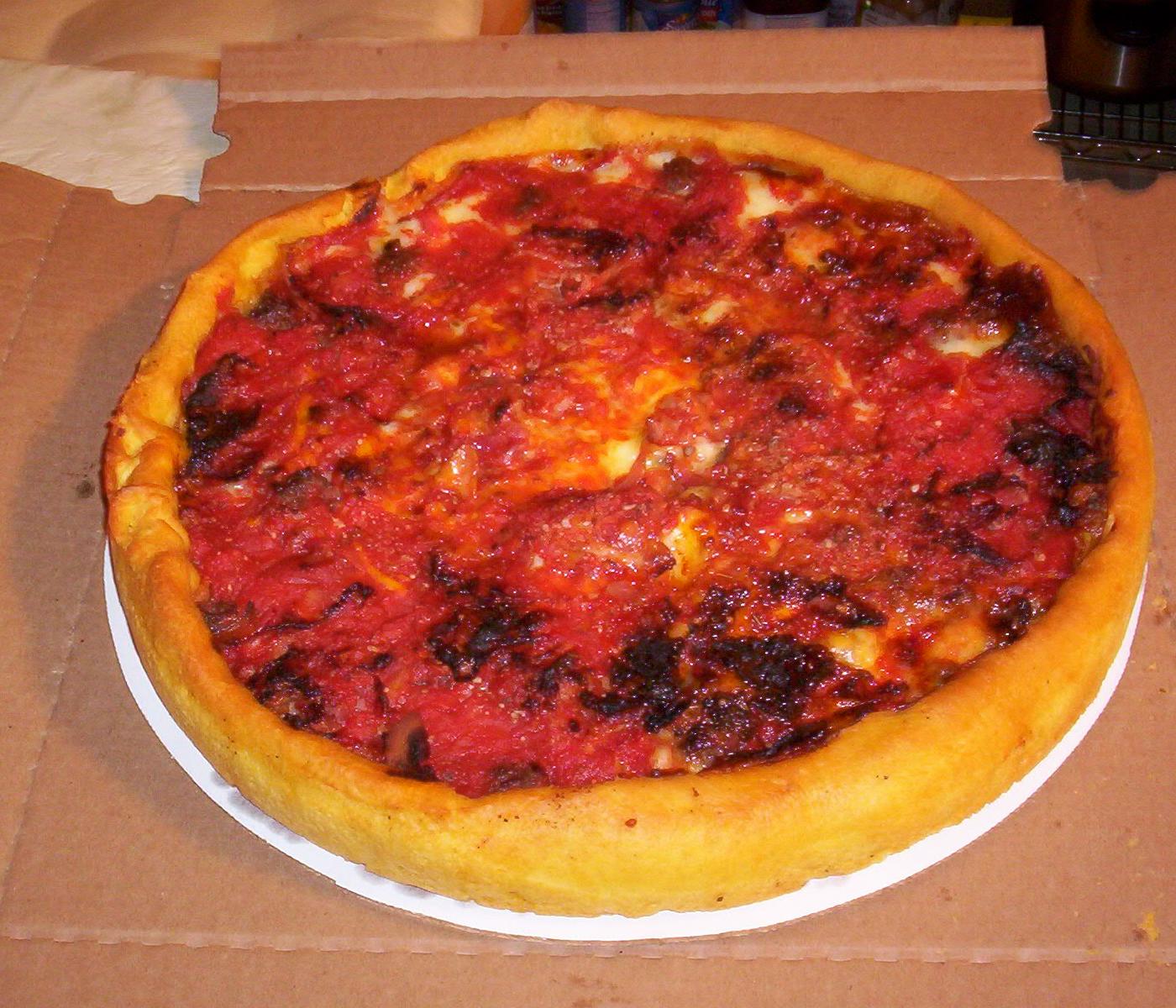
If I may use an anology, you are asking for the whole pizza to reduce itself to a slice. You see, an Assyro-Chaldean can be Catholic because Catholicism is universal, not limited to any one particular tradition, but an Assyro-Chaldean can not be Eastern Orthodox without loosing his Assyro-Chaldean tradition, since Eastern Orthodoxy is equated with Constantinopolitan Greek Christianity, and we Assyro-Chaldeans are not and never were of that tradition.
With all due respect, the fact that those churches which submitted to the Vatican retain there customs has a lot to do with their isolation, distance from Rome and recent providence. If you compare, for instance, the Maronites, Ruthenians, etc. In Slovakia, Moravia, Hungary, Finland, southern Italy, etc. the Eastern Orthodox were suppressed outright, as what happened the Celtic churches.

Yes, the Greeks of Constantinople have been just as good, when given a chance.
When Catholics pray for full communion of all Apostolic Christians with the Catholic Church, they mean full unity between counterpart Churches (Churches of the same tradition), and full communion between all Apostolic Churches (of various traditions), including the necessary full communion with the Church that presides in love, the Church of Rome, whose bishop holds the Primacy.
Ah, but the anathema equates ecumenism with the negative aspects by calling ecumenism a heresy. I disagree with this caricature of ecumenism. Ecumenism can turn heretical and false, but in itself, it is neutral. When properly used, in the original sense of “ecumenical”, it is meant to fulfill the prayer of Jesus.
I don’t disagree here. It is not about false ecumenism, but about true ecumenism, oneness not only on the True Faith, but oneness on the Holy Mysteries, and oneness on the Hierarchy (which includes the necessary full communion with the Bishop of Rome).
This oneness is not uniformity, it is oneness on the essentials, not the non-essentials (one in essence, many in forms). It is not acceptable to uniform all Christians into adopting the tradition of the Eastern Orthodox (Greek, Constantinopolitan, Byzantine). It is not acceptable to “reduce the pizza into a slice”.
With all due respect, I think I brought this up once, about your church’s use of yaldat mshikha (Christotokos) instead of yaldat alaha (Theotokos). You said that was your church’s tradition. True, but what was the context of that tradition. The rejection of Theotokos being adopted by the church in Persia, which was the dogma for over a thousand years, until the Latin missionaries arrived at the time of schism in the “Church of the East.” That’s not a neutral tradtion. Same with the dispensation from saying “filioque.”

With the Western Rite Orthodox, they are allowed their rites, except those that refelct what had seperated them, eg. references to the “merits of the saints” are modified, as they do not reflect Orthodox theology.

Btw the one slice pizza thing is relatively recent. Antioch 12th cent., Alexandria 13th.
I apologize. I do consider ROCOR to be on the fringe of Eastern Orthodoxy, a group of anti-ecumenical triumphalists. They most likely consider me to be a graceless heretic, but I do consider them to be Christians, and I’m sorry for my uncharitable remark towards them.
God bless,
ROCOR is now been reunited to he PoM. Those who refused have basically fallen apart.
 
Wow, seriously… way to be offensive in the extreme. I’m blessed to live very close to this beautiful monastery which is well appreciated by the community. The funeral of Metropolitan Laurus was all over the local media. Hardly a fringe group…
Nicholas82 or anyone else who likes to answer,

Has the Jordanville Monastery repudiated their anti-ecumenical stance?

I consider them a fringe group within EO so long as they continue to uphold their anti-ecumenical views. According to this EO site:

The Russian Synod in Exile, now centered in America with its main monastery in Jordanville, New York, continues outside canonical relations with the other Orthodox churches. The group’s anti-ecumenical and anti-communist views are propagated under the guise of uncompromising orthodoxy.​

I do know that ROCOR has signed an Act of Canonical Communion with the MP in 2007. Does ROCOR now take the same anti-ecumenical views as it did previously?

God bless,

Rony
 
On the contrary–we got the whole pie!
Don’t kid yourself Mickey, take your slice and be content with what you little you have. Here you go, open your mouth:

http://photos7.flickr.com/7474290_d478a66bf1_m.jpg

Yum! Yum! New York style! 😃 Especially prepared by the fine monks at Jordanville 😉
Oooh. Resorting to ad hominem. That’s impressive.
Do you deny being an anti-ecumenical triumphalist? Be carefull how you answer, lest the fine monks at Jordanville decide to cut you off from their rationing of that delicious EO slice that you so crave! :doh2:
Oooh! More ad hominem. Double impressive.
I like to impress, I hope you liked it 🙂

Oh, I forgot. Here you go, wipe yourself:

(Please Note: This uploaded content is no longer available.)

I love messing with anti-ecumenical triumphalists 😃

God bless,

Rony
 
Grace and Peace,
You appear to projecting the ‘sin’ of Latinization onto Eastern Orthodoxy. Personally, I find that very hard to shallow coming from one who is in communion with Rome. It is true that the Orthodox believe in a ‘right-belief’ as well as Orthopraxi… ‘right-practice’ but please try not to project the ‘sins’ of the Western Church on ‘us’.
Peace and God Bless.
chrisb,

If you look at the universal ecclesial/canonical communion of the regional Catholic Churches, you will see that it is a communion based on a unity in essentials, and a diversity in forms. Full communion requires the respect of both oneness and pluriformity. Both the general and the particular, the One and the Three (as in the Trinity).

Eastern Orthodoxy, from my Catholic viewpoint, has equated the the essence with the form. If you look at your canonical communion in this link:

bible.ca/orthodox-autocephalous-hierarchy-organization.gif

You will see that none of these Churches are non-Byzantine in form/tradition (In other words, all of them are Byzantine in form). Even the EO Churches in Antioch and Alexandria are not of the Antiochene and Alexandrian forms/traditions. When I say form or tradition or rite, I’m not talking of merely a liturgical celebration, I’m referring to the whole tradition: The theology, liturgy, spirituality, and disciplines.

You see, an Assyrian-Chaldean Chrisitian can not fit in any of the Churches above, because the one form employed by the communion is foreign to the form that was established in Mesopotamia and further east.

In the Catholic communion, however, there need not be an adoption of a particular form in order for every Church to belong in the communion. The “one” is on the essence, not on the form. In the past, there was, in fact, the problem of Latinization in the communion, where the Latin form had dominated the other forms, some forms became more strongly Latinized than others. This was an issue of those times, where the temptation was often to equate unity with uniformity, but in our times in the Catholic Church, there is a deep recognition that unity need not be equated with uniformity. Various documents have been issued to call upon the various Eastern Catholic Churches to maintain, and restore what was lost, the fullness of their traditions/forms.

Unfortuantely, Eastern Orthodoxy continues in this mindset of Unity equals Uniformity (especially among the hardliners). Until the EO can be comfortable enough with the concept of a pluriformity within a canonical communion, the EO communion will remain unapealing to the rest of the Apostolic Churches.

If you look at Oriental Orthodoxy, they understand this concept much better, because they already live it out in their communion. They possess three major forms/traditions/expressions: The Antiochene, Alexandrian, and Armenian traditions. But they still lack the full universality found in the Catholic Church, which represents all the major traditions.

God bless,

Rony
 
Don’t kid yourself Mickey, take your slice and be content with what you little you have. Here you go, open your mouth:

Yum! Yum! New York style! 😃 Especially prepared by the fine monks at Jordanville 😉

Do you deny being an anti-ecumenical triumphalist? Be carefull how you answer, lest the fine monks at Jordanville decide to cut you off from their rationing of that delicious EO slice that you so crave! :doh2:

I like to impress, I hope you liked it 🙂

Oh, I forgot. Here you go, wipe yourself:
]

I love messing with anti-ecumenical triumphalists 😃

God bless,

Rony
Wow… you’re a really pleasant person… do you talk to people like that in real life? I doubt you would have the guts… :rolleyes: :mad:
 
Wow… you’re a really pleasant person… do you talk to people like that in real life? I doubt you would have the guts… :rolleyes: :mad:
Oh poor Nicholas got his feelings hurt :crying:

What’s the matter Nicholas, what’s with the sour face, can’t take a little sarcastic joking among brothers!?

When someone jokes or uses sarcasm with me, that’s how I respond, whether online or in real life. When someone is serious, I will likewise be serious with them. If you read my responses on this forum, you will see my seriousness in some posts, and jokes in others.

I don’t mean to offend though, I think Mickey’s skin is thick enough, and I’m perceiving sarcasm in some of his posts, that’s why I’m responding to him in this way.

Lighten up, have a slice of pizza or something 😉 Unless you’re really the sensitive type, in which case, take care bro, no hard feelings, and may God’s blessings be upon you 👍

Rony
 
Oh poor Nicholas got his feelings hurt :crying:

What’s the matter Nicholas, what’s with the sour face, can’t take a little sarcastic joking among brothers!?

When someone jokes or uses sarcasm with me, that’s how I respond, whether online or in real life. When someone is serious, I will likewise be serious with them. If you read my responses on this forum, you will see my seriousness in some posts, and jokes in others.

I don’t mean to offend though, I think Mickey’s skin is thick enough, and I’m perceiving sarcasm in some of his posts, that’s why I’m responding to him in this way.

Lighten up, have a slice of pizza or something 😉 Unless you’re really the sensitive type, in which case, take care bro, no hard feelings, and may God’s blessings be upon you 👍

Rony
Everything in charity Rony not sarcasm. 🤷
 
chrisb,

If you look at the universal ecclesial/canonical communion of the regional Catholic Churches, you will see that it is a communion based on a unity in essentials, and a diversity in forms. Full communion requires the respect of both oneness and pluriformity. Both the general and the particular, the One and the Three (as in the Trinity).

Eastern Orthodoxy, from my Catholic viewpoint, has equated the the essence with the form. If you look at your canonical communion in this link:

bible.ca/orthodox-autocephalous-hierarchy-organization.gif

You will see that none of these Churches are non-Byzantine in form/tradition (In other words, all of them are Byzantine in form). Even the EO Churches in Antioch and Alexandria are not of the Antiochene and Alexandrian forms/traditions. When I say form or tradition or rite, I’m not talking of merely a liturgical celebration, I’m referring to the whole tradition: The theology, liturgy, spirituality, and disciplines.

You see, an Assyrian-Chaldean Chrisitian can not fit in any of the Churches above, because the one form employed by the communion is foreign to the form that was established in Mesopotamia and further east.

In the Catholic communion, however, there need not be an adoption of a particular form in order for every Church to belong in the communion. The “one” is on the essence, not on the form. In the past, there was, in fact, the problem of Latinization in the communion, where the Latin form had dominated the other forms, some forms became more strongly Latinized than others. This was an issue of those times, where the temptation was often to equate unity with uniformity, but in our times in the Catholic Church, there is a deep recognition that unity need not be equated with uniformity. Various documents have been issued to call upon the various Eastern Catholic Churches to maintain, and restore what was lost, the fullness of their traditions/forms.

Unfortuantely, Eastern Orthodoxy continues in this mindset of Unity equals Uniformity (especially among the hardliners). Until the EO can be comfortable enough with the concept of a pluriformity within a canonical communion, the EO communion will remain unapealing to the rest of the Apostolic Churches.

If you look at Oriental Orthodoxy, they understand this concept much better, because they already live it out in their communion. They possess three major forms/traditions/expressions: The Antiochene, Alexandrian, and Armenian traditions. But they still lack the full universality found in the Catholic Church, which represents all the major traditions.
Grace and Peace,

This looks to me to be a subjective/objective divorce. You seem to suggest that there is no objective expression of the faith. This doesn’t surprise me coming from a culture like the West which is largely pluralistic in outlook. In modern Western thinking it seems to me that ‘all’ expressions of faith are ultimately ‘subjective’ and those have not ‘objective’ expression.

I must ask, where does this end? Can we replace Christian terms and understandings with that of Hinduism and still be faithful to the deposit of the Apostles? Can we change the names of the persons (i.e. hypostasis) of the All-Holy Trinty?

I fear in your ‘universalism’ that you divorce any ‘objective’ meaning to the forms of the faith. In the East, there is a ‘real’ relationship between orthodoxy and orthopraxy. We can’t simply change the Traditional ‘form’ from it’s ‘function’ without a temporary exercise of economia and then such is ‘never’ the rule but only the exception. In the West, these erosion of the relationship between the form and it’s essence undermines the consensual continuity of the Faith of the Fathers.

I’m sorry but I’m not willing to water-down the traditions of the Faith so that I can claim ‘most-egalitarian’ in this discussion.
 
Everything in charity Rony not sarcasm.
That’s true chris, everything in charity, but sarcasm every now and then doesn’t really hurt does it? 🙂

I’m actually enjoying Mickey’s counter jabs at me, but if its actually hurting him, then I’ll stop it.

God bless,

Rony
 
Grace and Peace,

You appear to projecting the ‘sin’ of Latinization onto Eastern Orthodoxy. Personally, I find that very hard to shallow coming from one who is in communion with Rome. It is true that the Orthodox believe in a ‘right-belief’ as well as Orthopraxi… ‘right-practice’ but please try not to project the ‘sins’ of the Western Church on ‘us’.

Peace and God Bless.
No, I’m afraid it’s true. Byzantinization, a word I don’t usually use, has been a problem.
 
Actually, the Eastern Orthodox Communion has a strong history of such subordination and elimination of non-Byzantine traditions, and variations of the Byzantine tradition itself. The Antiochian tradition was eliminated, the “Western Orthodox” are a strange hybrid that is quite Byzantinized by design, and the Armenians in the jurisdiction of the Byzantine Empire found themselves terribly persecuted many times in history for their different tradition.

Ronyodish has every reason to have concern about the respect of his tradition, IMO, especially seeing as the “Western Orthodox” phenomena is a current problem, while Latin, by Conciliar decree, in the Catholic Church

Peace and God bless!
By the way, how is the WRO “Byzantinizaed by design?”
 
Don’t kid yourself Mickey, take your slice and be content with what you little you have. Here you go, open your mouth:

http://photos7.flickr.com/7474290_d478a66bf1_m.jpg

Yum! Yum! New York style! 😃 Especially prepared by the fine monks at Jordanville 😉
Oh, please. The Orthodox get there pizza from Chicago, the fullness you know!


Do you deny being an anti-ecumenical triumphalist? Be carefull how you answer, lest the fine monks at Jordanville decide to cut you off from their rationing of that delicious EO slice that you so crave! :doh2:
I like to impress, I hope you liked it 🙂
We’re all fasting. What you all doing?:confused:
 
chrisb,

If you look at the universal ecclesial/canonical communion of the regional Catholic Churches, you will see that it is a communion based on a unity in essentials, and a diversity in forms. Full communion requires the respect of both oneness and pluriformity. Both the general and the particular, the One and the Three (as in the Trinity).

Eastern Orthodoxy, from my Catholic viewpoint, has equated the the essence with the form. If you look at your canonical communion in this link:

bible.ca/orthodox-autocephalous-hierarchy-organization.gif

You will see that none of these Churches are non-Byzantine in form/tradition (In other words, all of them are Byzantine in form). Even the EO Churches in Antioch and Alexandria are not of the Antiochene and Alexandrian forms/traditions. When I say form or tradition or rite, I’m not talking of merely a liturgical celebration, I’m referring to the whole tradition: The theology, liturgy, spirituality, and disciplines.

You see, an Assyrian-Chaldean Chrisitian can not fit in any of the Churches above, because the one form employed by the communion is foreign to the form that was established in Mesopotamia and further east.

In the Catholic communion, however, there need not be an adoption of a particular form in order for every Church to belong in the communion. The “one” is on the essence, not on the form. In the past, there was, in fact, the problem of Latinization in the communion, where the Latin form had dominated the other forms, some forms became more strongly Latinized than others. This was an issue of those times, where the temptation was often to equate unity with uniformity, but in our times in the Catholic Church, there is a deep recognition that unity need not be equated with uniformity. Various documents have been issued to call upon the various Eastern Catholic Churches to maintain, and restore what was lost, the fullness of their traditions/forms.

Unfortuantely, Eastern Orthodoxy continues in this mindset of Unity equals Uniformity (especially among the hardliners). Until the EO can be comfortable enough with the concept of a pluriformity within a canonical communion, the EO communion will remain unapealing to the rest of the Apostolic Churches.

If you look at Oriental Orthodoxy, they understand this concept much better, because they already live it out in their communion. They possess three major forms/traditions/expressions: The Antiochene, Alexandrian, and Armenian traditions. But they still lack the full universality found in the Catholic Church, which represents all the major traditions.

God bless,

Rony
There were those who did: there was a group of Assyrians who united to the Russian Orthodox Church, had bishop(s), etc. The Turks killed them off and scattered them though.
 
Wow… you’re a really pleasant person… do you talk to people like that in real life? I doubt you would have the guts… :rolleyes: :mad:
Actually, despites differences I have found Ronyodish a very pleasant person.

I like Mickey too, though.
 
By the way, how is the WRO “Byzantinizaed by design?”
I mean that when it was set up, it was designed as a “Byzantized” Western Liturgy. I don’t recall which changes were made (another discussion lost to the inter-ether with the forum change), but I know that certain changes were made to the Anglican Liturgy to be more like the Byzantine tradition, one example being the use of leavened bread.

Peace and God bless!
 
Isa Almisry has made a response to my post, and I will be responding to him soon after I address this post by chrisb.
This looks to me to be a subjective/objective divorce. You seem to suggest that there is no objective expression of the faith. This doesn’t surprise me coming from a culture like the West which is largely pluralistic in outlook. In modern Western thinking it seems to me that ‘all’ expressions of faith are ultimately ‘subjective’ and those have not ‘objective’ expression.
chrisb,

No, it’s not that there is no objective expression of the faith, it is that there are multiple objective expressions (not just one, the Byzantine expression) of the faith. Oriental Orthodoxy, a non-Western communion, bears witness to this, having inherited three major objective expressions of the faith. No one says in Oriental Orthodoxy, that the expression of the Armenians is subjective, and that of the Alexandrians or Antiochenes is more objective, rather, all three are honored and allowed to exist in the same communion.

I can’t expect you to fully understand this because you live in a uniformed communion. I don’t mean this as an insult at all, I’m simply saying that Eastern Orthodoxy only has one major expression: Byzantine (or Constantinopolitan or Greek), and you don’t have within your communion another parallel equal expression (in its fullness), which you can see being lived out by your members.

The Protestant and individualistic/agnostic phenomenon in the West has erroded the ancient Latin expression (as well as the Faith itself) that was received from the Latins, thereby subjectivizing what was the objective expression of the Latins. This is different from the concept of multiple expressions that were planted among the Apostolic Churches.
I must ask, where does this end? Can we replace Christian terms and understandings with that of Hinduism and still be faithful to the deposit of the Apostles? Can we change the names of the persons (i.e. hypostasis) of the All-Holy Trinty?
No, it is not a question of tinkering with Christian terms/understandings by replacing them with the terms/understandings of other religions, or changing the names of the Trinity (Father, Son, Holy Spirit). It is about respecting the expressions that were planted among the Apostolic Churches, namely the 6 major traditions: Latin, Constantinopolitan, Alexandrian, Antiochene, Armenian, and Assyro-Chaldean. These expressions flourished over time due to the culture and people in which the One Apostolic Faith was planted.
I fear in your ‘universalism’ that you divorce any ‘objective’ meaning to the forms of the faith. In the East, there is a ‘real’ relationship between orthodoxy and orthopraxy. We can’t simply change the Traditional ‘form’ from it’s ‘function’ without a temporary exercise of economia and then such is ‘never’ the rule but only the exception. In the West, these erosion of the relationship between the form and it’s essence undermines the consensual continuity of the Faith of the Fathers.
No need to fear, just understand where I’m coming from. In the East/Orient, there is not just one real relationship between orthodoxy and orthopraxy. There are multiple real relationships between orthodoxy and orthopraxy. The real relationship of orthodoxy and orthopraxy of the Chaldeans (for example) is unlike the real relationship of orthodoxy and orthopraxy of the Byzantines. We just don’t theologize in the same way, or celebrate our liturgy, or pray, or canonically discipline our people in the same way. Having said this, I don’t mean that our Chaldean expressions contradict your Byzantine expressions, they are merely different, but not contradictory.

Ah, but you see, there is more than one traditional form. The traditional Byzantine form is not the traditional Chaldean form, and so forth. So, you guys can conduct your temporary exercise of economia whenever it is necessary for you to do so, we on the other hand have our own traditional form that we received from our Church of the East fathers, with which we can conduct our own “temporary exercise of economia” whenever we need to.

With regards the West, the Latins have also received their own traditional form, and do likewise have the authority to conduct a “temporary excercise of ecomonia” whenever they feel the need to do so. It is their perogative on how and when such an “excercise” can be done.

So, with regards the forms, the expressions, there are multiple traditional ones, none more exalted or greater than the others, different but complementary. On the essence, though, there is “one Lord, one faith, one baptism” (Eph. 4:5), which was “once for all delivered to the saints” (Jude 1:3). Catholic unity demands oneness on the essence.
I’m sorry but I’m not willing to water-down the traditions of the Faith so that I can claim ‘most-egalitarian’ in this discussion.
No need to be sorry, I too am not willing to water-down the expressions and traditions of the Faith that were planted long ago among our Assyro-Chaldean people, that is why, I can never be Eastern Orthodox, becuase that is exactly what the EO, by their very uniformed structure, can and will do to us. In the Catholic Communion, we are allowed to maitain our own traditional Assyro-Chaldean expressions, and that’s where we prefer to be.

God bless,

Rony

 
Status
Not open for further replies.
Back
Top