Eastern Rite Seminaries

  • Thread starter Thread starter Wildkit
  • Start date Start date
Status
Not open for further replies.
W

Wildkit

Guest
While the number of Eastern Catholics is smaller than Roman Catholics, can someone help me with the education and discipline one goes through before becoming a priest in the smaller rites? For that matter, the Eastern Orthodox rites as well?

I am most curious about rites that have but less than 1% (100,000) in the Church?

Blessings 👍
 
I’m sure its much the same, theology, philosophy, daily mass, manual labor perhaps. We recently opened a seminary in the Chaldean Church in San Diego:

marabba.org/

kaldu.org/2_st_peter_diocese/churches/MarAbba_Seminary.htm
Hmmm, no daily mass. It would be the Eucharistic Liturgy of the rite the Church uses that the seminary is attached to.

Like Sts Cyril & Methodius Byzantine Catholic Seminary in Pittsburgh. This is used (and run) by the Ruthenians and the Melkites are also using it now.
 
Hmmm, no daily mass. It would be the Eucharistic Liturgy of the rite the Church uses that the seminary is attached to.

Like Sts Cyril & Methodius Byzantine Catholic Seminary in Pittsburgh. This is used (and run) by the Ruthenians and the Melkites are also using it now.
I actually don’t know, whatever they do in the mornings includes the Liturgy of the Eucharist, but it might be an abriged version of the Qurbana. I’d have to check.
 
While the number of Eastern Catholics is smaller than Roman Catholics, can someone help me with the education and discipline one goes through before becoming a priest in the smaller rites? For that matter, the Eastern Orthodox rites as well?

I am most curious about rites that have but less than 1% (100,000) in the Church?

Blessings 👍
this is a more detailed look at the seminary:
marabba.org/handbook.htm
 
The principal Orthodox seminaries in the USA are Hellenic College-Holy Cross Greek Orthodox School of Theology, St. Vladimir’s Seminary in New York, and St. Tikhon’s Seminary in Pennsylvania.
 
I actually don’t know, whatever they do in the mornings includes the Liturgy of the Eucharist, but it might be an abriged version of the Qurbana. I’d have to check.
Let me apologize. This is one of those pet peeves of mine that really get to me.

That is everyone tending to call the Eucharistic Sacrifice the Mass rather than using the proper name of the rite they are talking about.
 
Let me apologize. This is one of those pet peeves of mine that really get to me.

That is everyone tending to call the Eucharistic Sacrifice the Mass rather than using the proper name of the rite they are talking about.
It’s a pet peeve of mine too, but in a slightly different way.

Yes, there are proper terms, and we certainly can and often do use them here on this forum, but the fact of the matter is that, when speaking in English, Maronites, Syriacs (including the OC), and Chaldeans (not sure about the ACoE), all tend to use the word “Mass” although some (particularly among some Maronites in the US in an absurd attempt to appear more “Eastern”) opt to use the Byzantine term “Divine Liturgy” instead.

This issue has come up before in this same forum, and I continue to hold the position that, if I’m going to use an English word, it might as well be “Mass” rather than a Byzantine import.

Very few of the above listed will, when speaking in English, say “I’m going to qourbono” or “I’m going to quddas” or “I’m going to qourobo” or “I’m going to raza or “I’m going to qourbana”.” If we start translating each name we end up with a soup that no one is going to digest very well: the Maronites would have “offering” (or “hallowing”), the Syriacs a “drawing near” and the Chaldeans a “mystery” or an “offering” and the listener needs a program to keep them all straight. (I’ve no idea what the Alexandrene or Armenian customs are, whether in English or otherwise.) Simpler to just say “I’m going to Mass” and everyone will understand.
 
By the rubrics in the CCEO (Canon Law for the Eastern Catholic Churches), where practical:

Major Seminaries are supposed to be a 4 year collegiate program including theology, church history, homiletics, canon law, logic, daily prayer regime, and being taught the specifics of the Rite and Church in which they serve. Ideally it is also a residential program, and includes participation in local parish activities as befits their station. Where liturgical languages are used, they should also be taught.

There is a decided preference for it being a master’s degree.

Alternative equivalent programs of formation may be used, especially for married men destined for the parochial clergy.

Deacons must have 3 years of seminary, or equivalent training. Distance education in the Ruthenian Metropolia of Pittsburgh is 6 years for the deaconate.

Minor orders are not required to have attended seminary, but are required to have adequate formation and instruction, and may also have specialized education apart from the major seminaries.

Currently, the Ruthenian Metropolia of Pittsburgh has a Metropolitan Cantor Institute, and permits ordaining cantors, but I do not believe such ordination is provided for MCI students, but in theory, it can provide the needed formation should the Eparchs and/or Metropolitan decide to ordain Cantors.

Note that Eparchs/Bishops must have 5 years as a priest, and a Doctoral degree in Theology or Canon Law, or equivalent experience. (Almost all have such degrees, and much longer priestly careers.)

 
**The Armenian word seems to be Baradak.

There’s a good translation of the Armenian Baradak on line.
**

Note that Eparchs/Bishops must have 5 years as a priest, and a Doctoral degree in Theology or Canon Law, or equivalent experience. (Almost all have such degrees, and much longer priestly careers.)

**That would have disqualified St. Thomas Becket, wouldn’t it?

Or, for that matter, St. Ambrose.**
 
The Ukrainian Catholics have a seminary in Washington D.C., just down the street from Catholic University.

I don’t know what exactly goes into the education, but it seems that not as much philosophy is required as compared with Latin programs of study.

I believe that the Orthodox seminaries generally have 3-year programs, at least for those seminarians who already have a bachelors degree.
 
By the rubrics in the CCEO (Canon Law for the Eastern Catholic Churches), where practical:

Major Seminaries are supposed to be a 4 year collegiate program including theology, church history, homiletics, canon law, logic, daily prayer regime, and being taught the specifics of the Rite and Church in which they serve. Ideally it is also a residential program, and includes participation in local parish activities as befits their station. Where liturgical languages are used, they should also be taught.

There is a decided preference for it being a master’s degree.

Alternative equivalent programs of formation may be used, especially for married men destined for the parochial clergy.

Deacons must have 3 years of seminary, or equivalent training. Distance education in the Ruthenian Metropolia of Pittsburgh is 6 years for the deaconate.

Minor orders are not required to have attended seminary, but are required to have adequate formation and instruction, and may also have specialized education apart from the major seminaries.

Currently, the Ruthenian Metropolia of Pittsburgh has a Metropolitan Cantor Institute, and permits ordaining cantors, but I do not believe such ordination is provided for MCI students, but in theory, it can provide the needed formation should the Eparchs and/or Metropolitan decide to ordain Cantors.

Note that Eparchs/Bishops must have 5 years as a priest, and a Doctoral degree in Theology or Canon Law, or equivalent experience. (Almost all have such degrees, and much longer priestly careers.)
Bishops must have a Doctoral degree in Theology or Canon Law??? I didn’t know that.
 
Bishops must have a Doctoral degree in Theology or Canon Law??? I didn’t know that.
Or equivalent experience. But, yes, the norm is a DDiv or JCD, some with a DTh or PhD (in Theology). Often from Rome.
 
The Ukrainian Catholics have a seminary in Washington D.C., just down the street from Catholic University.

I don’t know what exactly goes into the education, but it seems that not as much philosophy is required as compared with Latin programs of study.

I believe that the Orthodox seminaries generally have 3-year programs, at least for those seminarians who already have a bachelors degree.
St Josaphat’s Ukrianian Catholic Seminary is really just a place where the seminarians live. They attend classes at Catholic University and sometimes (when the class is full at Catholic U) Washington Theological Union.

They do have classes in the house but those are not for credit (if I am not mistaken).

I live (until July 24th) at the Carmelite student house (Whitefriars Hall) in DC and know a couple of guys at St Josaphats and one of them was in my History of the Church, Ancient to Reformation, at WTU. Actually if you go to the website you will see a picture of Subdeacon Paul’s ordination to the subdiaconate, he was the one in my class.

Here is the link to the website: St Josaphat’s Ukrianian Catholic Seminary
 
ORTHODOX SEMINARY/SPIRITUAL ACADEMY

Orthodox seminary at spiritual academy requires 5 years of educaiton in 39 disciplines including theology, biblical studies, church history, voice/chanting, filology including required Latin, ancient Greek and modern non-Ukrainian, Russian language. Most such academies also have courses in Ikon painting. All graduates required to research a thesis and defence of such.

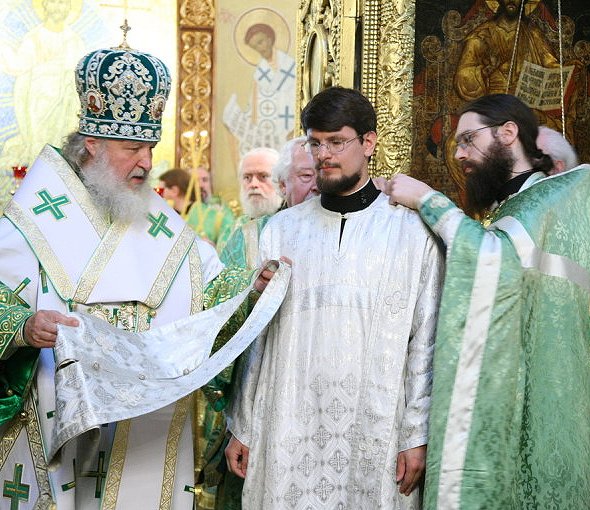
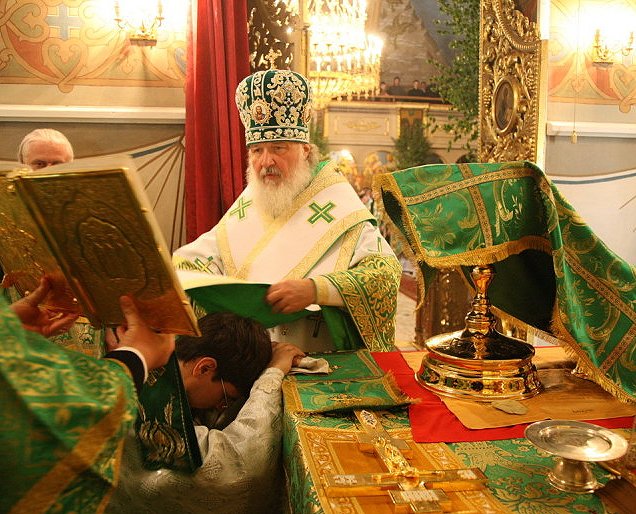
Recently at Feast of Holy Spirit, Patriarch Kirill ordained priest at Moskow Spiritual Academy/Seminary at St Sergij/Holy Trinity Lavra:


St Josaphat’s Ukrianian Catholic Seminary is really just a place where the seminarians live. They attend classes at Catholic University and sometimes (when the class is full at Catholic U) Washington Theological Union.

They do have classes in the house but those are not for credit (if I am not mistaken).

I live (until July 24th) at the Carmelite student house (Whitefriars Hall) in DC and know a couple of guys at St Josaphats and one of them was in my History of the Church, Ancient to Reformation, at WTU. Actually if you go to the website you will see a picture of Subdeacon Paul’s ordination to the subdiaconate, he was the one in my class.

Here is the link to the website: St Josaphat’s Ukrianian Catholic Seminary
I stayed overnight at St. Josaphat’s one evening before the March for Life, and I didn’t see any classrooms (though many dorm rooms), so I’m not surprised that they take classes at Catholic University.

I would imagine that the seminarians either use the chapel inside the seminary or the shrine church next door for liturgical practice.
 
Or equivalent experience. But, yes, the norm is a DDiv or JCD, some with a DTh or PhD (in Theology). Often from Rome.
What if the PhD in Theology is from, say, Westminster Theological Seminary (e.g. the would-be bishop’s a convert). Still count? Or, does the degree have to come from a Catholic institution? 🙂
 
ORTHODOX SEMINARY/SPIRITUAL ACADEMY

Orthodox seminary at spiritual academy requires 5 years of educaiton in 39 disciplines including theology, biblical studies, church history, voice/chanting, filology including required Latin, ancient Greek and modern non-Ukrainian, Russian language. Most such academies also have courses in Ikon painting. All graduates required to research a thesis and defence of such.

Recently at Feast of Holy Spirit, Patriarch Kirill ordained priest at Moskow Spiritual Academy/Seminary at St Sergij/Holy Trinity Lavra:
The required Latin is interesting.
 
I stayed overnight at St. Josaphat’s one evening before the March for Life, and I didn’t see any classrooms (though many dorm rooms), so I’m not surprised that they take classes at Catholic University.

I would imagine that the seminarians either use the chapel inside the seminary or the shrine church next door for liturgical practice.
If I’m not mistaken, instruction in the particulars (liturgy, law, history, language, etc) is done on premises. That is also true for the Maronite Seminary in DC.

Also, I’ve been told that a few Ukrainian seminarians have studied at St Joseph’s in Yonkers. Whether that is a regular thing or not, I don’t know.
 
What if the PhD in Theology is from, say, Westminster Theological Seminary (e.g. the would-be bishop’s a convert). Still count? Or, does the degree have to come from a Catholic institution? 🙂
Actually, I believe it should be STD, not PhD.
 
Status
Not open for further replies.
Back
Top