Europe must rediscover 'its own identity, its own unity', says Pope Francis

  • Thread starter Thread starter Vouthon
  • Start date Start date
Status
Not open for further replies.
About what? Whether the EU can legislate regarding abortion and homosexual marriage? We already know homosexual marriages have to be accepted by all member states, because I found authority fo rthat. Nobody has yet proved it cannot legislate regarding abortion. And just saying it and calling me a liar is not proof.
But I take it this sudden fixation on gay marriage is because your abortion claims and your notions of how the Norway model works have been blown out of the water
 
And US states have to recognize marriages contracted in other states even when, say, there isn’t alignment on laws surrounding age of consent for marriage.

You’ve been wrong on every point, RR. You have betrayed a deep ignorance of EU lawmaking and competence, of the history of the EU, indeed of the history of Europe, and heck even of the Church’s longstanding history as an advocate of a unified Europe.
 
You are an adult and are not compelled to respond to me or to anyone else. All you have to do is make a decision.
 
And you can make a decision to be honorable and admit you were wrong
 
And US states have to recognize marriages contracted in other states even when, say, there isn’t alignment on laws surrounding age of consent for marriage.

You’ve been wrong on every point, RR. You have betrayed a deep ignorance of EU lawmaking and competence, of the history of the EU, indeed of the history of Europe, and heck even of the Church’s longstanding history as an advocate of a unified Europe.
U.S. states are not the subject here. The subject is whether the EU can legislate concerning homosexual marriage and/or abortion. We were told that it could not legislate concerning homosexual marriage, only to find that the EU has done so. I have repeatedly called for proof that the EU cannot legislate concerning abortion and nobody has yet demonstrated that.
And you can make a decision to be honorable and admit you were wrong
It’s not honorable to falsely admit to such a thing. Where is your proof that the EU cannot legislate or rule on abortion? Where? Just saying I’m wrong proves nothing.
 
Perhaps @Kaninchen is right and I must learn to resist the bait.
You’re the lawyer, ‘vexatious litigants’ can be profitable but a masochistic experience for professionals on both sides of the case, I expect.

Ridgerunner has been doing this sort of thing for years, he’s very good at it - if incredibly long-winded at times, it’s also entirely irrelevant.
 
The evidence has repeatedly been provided. What conclusion should I draw from you constantly making claims that have been demonstrated to be false?
 
Last edited:
I cannot even attribute it to ignorance at this point given my ridiculous, mantra-like restatement of the facts.
I have to disagree with this thought.
It presupposes respondents read posts and learn from them. Evidence for that is sadly lacking.
 
@Ridgerunner

My decision is to (against my better judgement) try one last time to get you to admit that the EU has no legislative competence in the area of abortion and family law more widely.

Firstly, the present EU Commissioner for Věra Jourová for Justice and Gender Equality:

Věra Jourová, Member of the Commission. – Respect for women’s rights and gender equality is part of European integration. However, as you know, the EU has no competences on abortion policy and cannot interfere in Member States’ policies in this area.
That’s the clear statement of its executive (government) which alone has legislative initiative (right to propose laws).

Now, its Court the “ECJ” just this month:

The Press Officer of the European Court of Justice has stated that this Court cannot in any way grant the right to abortion or oblige member states to introduce abortion, if European institutions do not pass an abortion law as a European Union law. To date, abortion falls within the competence of European Union member countries.

European Law does not recognise abortion as a right, and to date the European Commission, the European Council and the European Parliament have refused to grant abortion as a right in member states. The European Court of Justice cannot declare abortion as a fundamental right
Now, here is an example from a protocol attached to the Accession Treaty of Malta with the EU in 2003 that explicitly stated the following in regards to abortion in Malta (which is banned entirely):

https://eur-lex.europa.eu/legal-content/EN/TXT/?uri=CELEX:12003T/PRO/07
Protocol No 7

on abortion in Malta

THE HIGH CONTRACTING PARTIES,

HAVE AGREED UPON THE FOLLOWING PROVISION:

Nothing in the Treaty on European Union, or in the Treaties establishing the European Communities, or in the Treaties or Acts modifying or supplementing those Treaties, shall affect the application in the territory of Malta of national legislation relating to abortion.
And finally:

Europe

According to European treaties, the right to an abortion does not lie within EU’s competences, and remains an issue regulated by the member states. Therefore, EU institutions, such as the European Commission and the European Parliament, cannot authorize the legalization, or the restriction, of abortion.

Among 28 EU countries, Malta is the only one that does not grant a woman the right to abortion, even when her life is at risk. However, it observes the principle of a so-called “double effect”: a treatment that may lead to miscarriage is permitted if it is required to save a pregnant woman’s life.
I will debate this with you no more because denial of evidenced facts is not an opinion but an evasion. It’s misdirecting the thread.

The evidence, in this post and my last, is amply sufficient.
 
Last edited:
Well I think there are two parts to American scepticism of the EU. On the one hand, it is a useful bogeyman for a certain kind of American Conservative, hence the outrageous claims about how the EU is some evil taskmaster, some sort of statism-gone-mad. The other part of it, at least for a certain group of Bannon-esque nationalists, is that a supranational government like the EU defies their worldview entirely. The idea that nations would pool their sovereignty for a greater goal of economic and social gain defies the idea of the nation state as some sort of perfect entity; that sovereignty is a means and end unto itself.

Part of it, I think, comes from the fact that the New World, by and large, was shielded from the series of European crises beginning in the 17th century and only really ending in the mid-20th century. Sure, the Americas were at times battlefields in these titanic struggles between the Old World powers; a French and Indian Wars here, a Napoleonic invasion of Mexico there, but by and large the Americas defined themselves by rebellion against the Old World powers. When American nations entered the major conflagrations, in particular the two World Wars, it was as allies who were under no significant threat to themselves. There’s a profound lack of understanding on two continents where, even in the 21st century, one can easily walk out one’s door and within a day or two of travel, literally disappear into the woods, and countries that are densely populated, bound together by longstanding rivalries, conflicts, alliances and interdependency, and where culture zones can be found within a few hours walk of each other.
 
Last edited:
I think a lot of people in the US, and indeed in the Americas in general, just don’t understand what Europe has been through, what the centuries long competition and conflict between France and Germany meant in blood and coin. Sure, American soldiers bravely stormed the beaches of Normandy, and bless them for it, but it was as an ally with the resources and the relative safety that it could dedicate almost all its military and economic might to battling the Axis Powers, whereas the Old World allies had to think defensively just as much as they did offensively.

It was Churchill who was the first significant proponent of a unified Europe. He was the fundamental Old World Man, but with the New World vision, and he could gaze at the series of escalating conflicts that had ravaged the Continent beginning with the Thirty Years War, and had forced Britain to intervene constantly to maintain balances of power. For him the answer was obvious. A united Europe, bound together by inextricable economic, political and social links, would be an entity where it would be impossible for Germany and France to go to war, where a European identity would be forged, not to replace the identity of the constituent states, but as a compliment to it. He looked at the United Kingdom, at the United States and at Canada, where sovereign states had built upon the English constitutional framework to build great nations where a man could proudly call himself a Texan or a Scotsman or an Albertan. and yet just as quickly proudly declare himself an American, a Briton or a Canadian.

The European Union is in many ways a very English idea; a meeting of nations, a parliament for the peoples, regular courts and meaningful jurisprudence, all tied by two thousand years of cultural mingling and the rule of law.
 
And to remember why this whole sorry sideshow began, @Ridgerunner claimed the following earlier in the thread:
If you want few or no barriers to your trade, you have to accept whatever people the EU wants you to take in, as well as laws relating to abortion, homosexual marriage and that sort of thing, it appears.
 
Last edited:
The European Union is in many ways a very English idea; a meeting of nations, a parliament for the peoples, regular courts and meaningful jurisprudence, all tied by two thousand years of cultural mingling and the rule of law.
Great point.
"…By this way two hostile kingdoms flourishing in the same island, of which neither can subdue the other, would be united under one king, for the king of both would be called king of Britain… They would flourish by justice; no one would dare use force against another. Their homes and families would be more permanent… I venture to answer for the English king that he would allow them [the Scots] their liberties as the king of Castile allows the people of Aragon."

- John Mair, Scottish philosopher ‘History of Greater Britain’, published in 1521
The above was the earliest call for the establishment of a full political-economic union between Scotland and England, grounded in a shared monarchy and supranational identity. And yes, the initiative for a ‘United Kingdom’ of Great Britain was originally Scottish in origin and, indeed, the first monarch of all of Britain was the Scottish King James Stuart, son of Mary Queen of Scots, in 1603.

One of the greatest ironies of the Brexit drama is that the UK is like the EU in miniature - and this has frequently been noted by historians:

https://www.jstor.org/stable/41428540?seq=1#page_scan_tab_contents

https://www.coggs.polis.cam.ac.uk/news/simms-mendoza-article
" Now the union with Scotland is safe, for now, Her Majesty’s government will be turning its attention to that other imperilled union, Europe…

We already have two highly successful examples of union in history. In 1707 the English and Scots brought hundreds of years of military, diplomatic and economic rivalry to an end by joining forces, boosting their joint power. The resulting Act of Union in which Scotland received generous representation at Westminster allowed it to retain its legal and education system.

Great Britain was born, and with it a fiscal-military state that has punched above its weight since. When the representatives of the 13 colonies came together in Philadelphia in 1787 to agree a constitution they established a presidency empowered to conduct foreign policy and conclude treaties that were subject to ratification by the two houses of Congress.

If we turn to the project of European integration, we find that it bears many similarities. The political unity that the eurozone needs therefore requires a single collective act of will. It needs to follow the path set out more than 200 years ago by the UK and America by establishing a full parliamentary, military and fiscal union
."

- Professor Brendan Simms, Cambridge University, 2014
And just like Britain in the EU (going from ‘sick man of Europe’ in 1973 to the fifth largest economy in 2016), Scotland went from being a generally poor and isolated country in the 15th century to becoming the “ Athens of the North ” in the 18th century, an intellectual powerhouse far outstripping its small population in significance.
 
And one of the most egregious of possibilities that Brexit represents is the severing of the England and Scotland, one of the most successful political unions in history.
 
You could provide what was asked for. You haven’t yet. Show me that the EU parliament CANNOT legislate regarding abortion, and that it can’t just change whatever rules it has at present in order to do so.

Nobody has done that yet.

And the EU proponents here ought to finally admit that the EU has, indeed, determined the law on homosexual marriage by requiring that all states recognize their validity if contracted anywhere in the EU where marriage laws allow for it.

There might be plenty of wonderful things to say about the EU but saying it has irrevocably banned legislating on abortion and homosexual marriage is not one of them.

 
And like the others, this is not responsive. I would have thought EU proponents would be able to speak about their own laws without dodging the subject. EU requires that member states have to accept the validity of homosexual marriages. Why deny that it has the power to do what it clearly did?
 
Last edited:
There might be plenty of wonderful things to say about the EU but saying it has irrevocably banned legislating on abortion and homosexual marriage is not one of them.
Your allegation was that the EU made it such that to have “few” or “no” barriers, “you have to accept laws relating to abortion, homosexual marriage”.

No member state has to change its law relating to abortion or gay marriage.

Recognising “equivalence” of benefits and residence for civil partners or gay people married in states where this is allowed, does not mean that gay marriage is actually legal in that state i.e. you still couldn’t get married there or be recognised as such. Here’s the actual state of play:

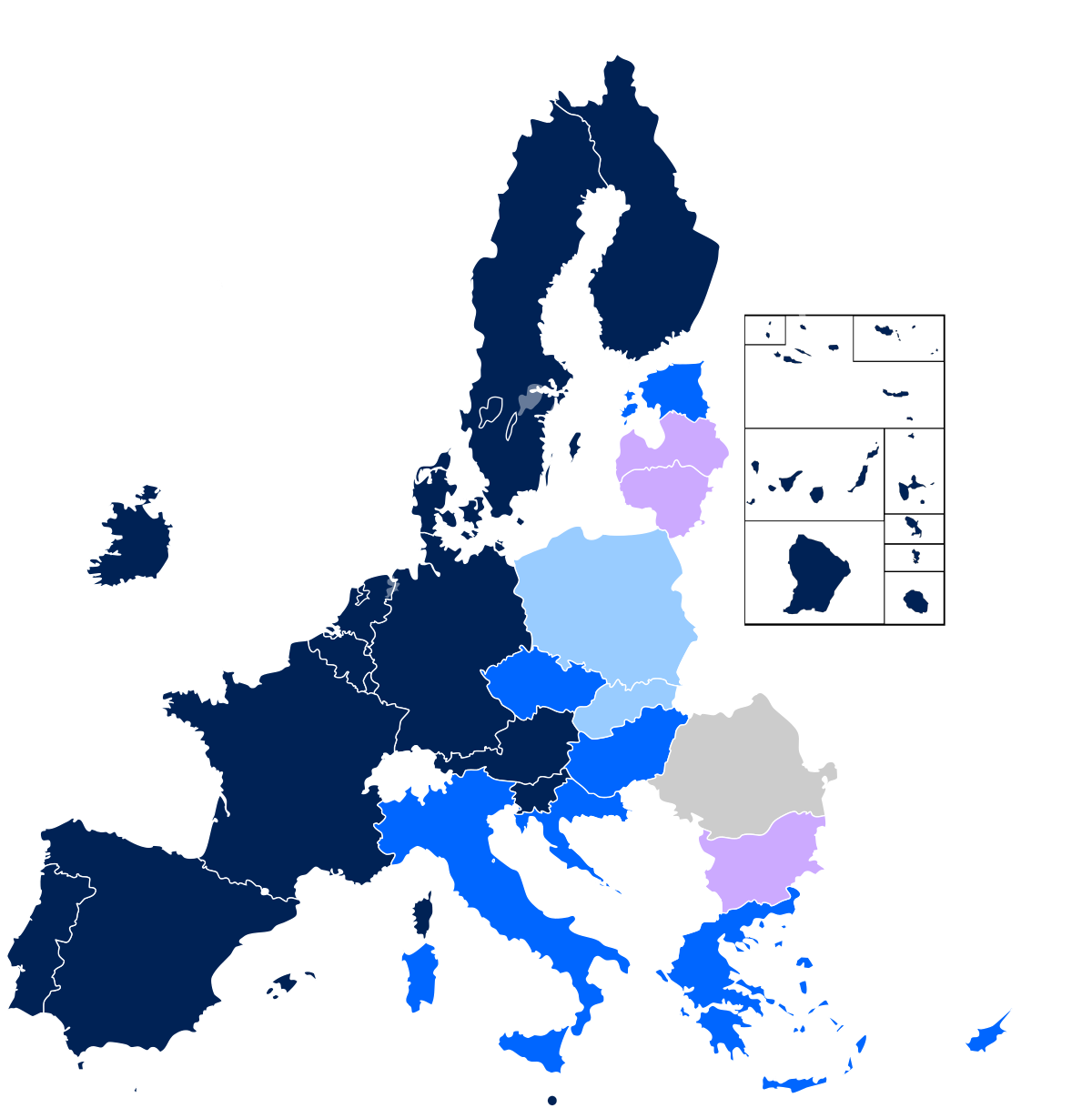
Emma, a Belgian national, married Carine, a French national, in Belgium. When Emma had to move to Italy for work, Carine followed her - but they were not regarded as married by the authorities, since same-sex marriage is not recognised in Italy.

However, because registered partnerships between same-sex couples are allowed in Italy, Emma and Carine can be granted the same rights as couples with registered partnerships under Italian law.
And here:


According to European Court of Justice case law based on the Employment Equality Framework Directive, employees in a civil partnership with a same-sex partner must be granted the same benefits as those granted to their colleagues upon their marriage, where marriage is not possible for same-sex couples. The Court established this principle in 2008 in the case of Tadao Maruko v. Versorgungsanstalt der deutschen Bühnen with regards to a German registered life partnership. In December 2013, the Court confirmed this in the case of Frédéric Hay v. Crédit agricole mutuel (C-267/12) with regards to a French civil solidarity pact, which is significantly inferior to marriage than a German registered life partnership.[19][20]

Also, according to the European Court of Justice in the case of Coman and Others , by judgement of 5 June 2018, a “spouse” (or partner or any other family member) in the Free Movement Directive (2004/38/EC) includes a (foreign) same-sex spouse; member states are required to confer the right of residence on the (foreign) same-sex spouse of a citizen of the European Union.[[21]]


And as for abortion, your claim was entirely groundless
 
Last edited:
No member state has to change its law relating to abortion or gay marriage.
What a joke this is! No, the EU parliament cannot (yet, anyway) compel, e.g., Poland to allow homosexual marriages to be performed according to Polish law. But it can and does compel Poland to honor homosexual marriage contracted elsewhere.

The “non-requirement” is a total sham. The EU requires that homosexual marriage be deemed legal in every member state. And if a state wants the trade preferences afforded by the EU, it has to accept homosexual marriage.

Now, do you want to demonstrate how the EU CAN’T EVER legalize abortion in every state? Nobody else has done so, though being repeatedly asked to do it. Maybe you can.
 
Status
Not open for further replies.
Back
Top
