Favorite Medieval Pope

  • Thread starter Thread starter William_II
  • Start date Start date
Status
Not open for further replies.
What’s Pope Celestine V’s claim to fame?
He was the last gasp of sanity for the Franciscans before everything went south in a handbasket and the Church started roasting Franciscans on the open spit in 1318.

And you have to admire anyone who has the guts to resign the Papacy because it had become a morass of politics and he didn’t find it conducive to a holy life. It was not an easy decision and he paid dearly for it. When he tried to go back to living the life of a hermit, his successor, Boniface8, had him tracked down and imprisoned because he might be a threat to Boniface’s political power. He died in prison not long after.

He was canonized in 1313, less than 20yrs after his death.
salaam.
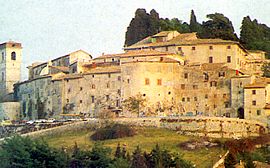
He was a simple Benedictine monk who lived in caves in the Apennine mountains. He attracted a following of simple holy men. At some point in his advanced age a Pope died. The college of cardinals was highly politicized at this period of history, and it was divided into factions associated with the leading families of Italy. The interregnum lasted two or more years, as the contestant parties vying for the Papacy were just about evenly matched, it was becoming an embarrassment to the church and people were openly questioning the process.

So the Cardinals needed a compromise candidate, one that was not beholding to any of the cliques controlling the college of Cardinals. He would ideally be old enough not to hold the See too long and prevent the true contenders from getting their own chance.

Peter of Morrone was a simple man who only wanted his simple cell and a life of prayer, he attracted the attention of the college of Cardinals because he was sending them letters demanding action on the matter of electing a Pope! He himself began to look like a suitable candidate acceptable to each faction: somewhat rustic and simple, advanced in age, unconnected with any powerful families and highly regarded as a holy man all over central Italy. And so they elected him! Peter was notified of his election but he actually refused, wanting nothing whatever to do with it. A delegation of Cardinals had to go into the mountains to entreat with him. He at first refused to see them but the Cardinals persisted, he finally relented and took the name Celestine.

He refused to sit in Rome, he considered it a dangerous place he wanted nothing to do with. So he ruled the church from (I think) Naples, and Benedetto Cardinal Caetani became his advisor. Caetani was able to influence some of the decisions of this holy old man, perhaps manipulating the selection of new Cardinals, it is not at all clear.

After a time the Pope wearied of it all and resigned, some say he resigned at the urging or suggestion of Caetani. After the election of the next Pope, this same Caetani (a man Peter Morrone had come to know well while he was Pope), former Pope Celestine fled for his life. He moved and dodged through the mountains, no place in Italy was safe, and at his advanced age he seemed to be able to outrun his pursuers with the help of loyal peasants and monks. He boarded a small ship bound for the Greek coast of the East Roman (Byzantine) empire. A storm drove the craft back and he was arrested, chained, and taken to Rome.

Why they felt a need to arrest and chain this simple monk remains a mystery. He was locked into a small cell in the castle of Fumone.


Someone keeping this saintly man in the prison on behalf of Pope Boniface VIII hammered a nail into his skull.

He was, if anything, too holy.
 
http://img32.imageshack.us/img32/6921/popestcelestinevremains.jpg

When Pope Benedict visited L’Aquila on April 20, he visited the Basilica of Santa Maria di Collemaggio, the ancient basilica that was severly damaged in the earthquake and where the remains of Pope St. Celestine V have lain for centuries. The glass case containing the remains was unscathed amidst the rubble. Pope Benedict left the pallium which he wore for the first three years of his papacy and with which he was installed as pope on the case as a gift for the people of L’Aquila.
 
I came in this topic and thought instantly “Urban II!” but I figured I would be the only one. I guess not 🙂
 
Definitely Boniface VIII.

I studied this a fair bit at uni and I don’t believe the horror stories surrounding Celestine V’s imprisonment and death.

Other than that: a flawed man, but a great one. The high point of the medieval papcy (possibly along with Innoncent III).
 
Pope (Saint) Gregory VII (Hildebrand).
👍

Pope Gregory VII, definitely. I couldn’t agree with you more.

If there should be a movie made about a pope it should be about Hildebrand. I think his life story is one of the most exciting stories in history. Where is Mel Gibson when you need him.
 
Definitely Boniface VIII.

I studied this a fair bit at uni and I don’t believe the horror stories surrounding Celestine V’s imprisonment and death.
You don’t believe that he had Celestine arrested?
 
Julius II, … This warrior-priest built St. Peter’s Basilica. He was no saint but he certainly made the Church the most influential force in culture, politics and economics in Europe in the early 1500’s Technically, not a medieval pope but a pope of the renaissance.
 
You don’t believe that he had Celestine arrested?
Yes, I wouldn’t dispute that he did ask Celestine to stay under house arrest, although the degree to which this was voluntary, at least in the beginning, is questionable (What I would dispute is that he subjected him to any violence).

Even if it were established that Celestine didn’t consent to the ‘arrest’, I would still think it was a politically sensible move (if not a particularly piously motivated one). Given the opposition to Boniface and the general political manoeuvrings of the time, it was expedient to keep Celestine, a prime candidate for being a pawn in some faction’s power struggle, where other people couldn’t get to him.

In so far as it is possible to judge someone else’s interior disposition, Boniface doesn’t appear to have been an outstandingly holy man (of course, I could be wrong), but he was certainly a great asset to the Church. Possibly the polar opposite of Celestine - so I can see why you might not be a fan 🙂
 
👍

Pope Gregory VII, definitely. I couldn’t agree with you more.

If there should be a movie made about a pope it should be about Hildebrand. I think his life story is one of the most exciting stories in history. Where is Mel Gibson when you need him.
A movie about Gregory would be awesome.
Then there is Pope Leo I in the middle 5th century. He’s known for having met Attila the Hun outside Rome in 452, persuading him to turn back from his invasion of Western Europe. THAT movie I would go see. Just the drama alone of speculating on whatever the Pope and Attila discussed would be a challenge.
But they’re too busy making movies about robots beating the tar out of each other.
 
Pope Innocent III
But why Pope Innocent III died at an early age at only 55. Is his death natural or —?
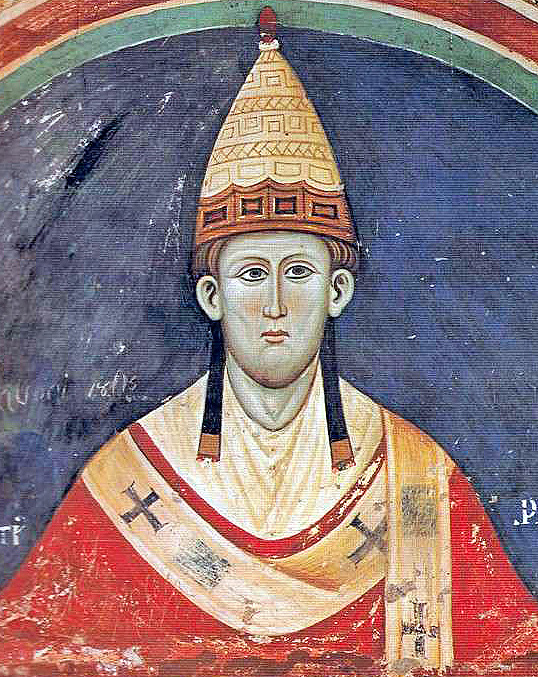
 
Pope Innocent III
But why Pope Innocent III died at an early age at only 55. Is his death natural or —?
Late 12th century, for those days it was probably above average.

Anyway, we could all go at any time, keep the wick properly trimmed and the oil topped off…

 
Two actually, and this is going to sound strange. Antipope John XXIII (Baldassarre Cossa) and Pope Martin V. John got the Council of Constance started and Martin V finished it.

Cossa had the support of almost all the Catholic world. Two “popes” Gregory XII (Rome) and John XXIII (Pisa) resigned and Benedict XIII (Avignon) was removed. Thanks to John and Martin the Great Western Schism was ended.

John
 
Hello all! I just joined CAF recently. My only other post seems to have failed. Let’s try again. My favorite Medieval Pope (actually Renaissance) is the Borgia, Callistus III (1455-1458) because he declared illicit and overturned one of the worst miscarriages of justice of all time - the heresy conviction of Joan of Arc! Thanks for asking that question.
 
Julius II, … This warrior-priest built St. Peter’s Basilica. He was no saint but he certainly made the Church the most influential force in culture, politics and economics in Europe in the early 1500’s Technically, not a medieval pope but a pope of the renaissance.
But he also destroyed the old Basilica, destroying many papal tombs. He isnt called the Terrible Pope for nothing. Some historians believe he was the catalyst for the protestant revolt.

My entries are Pius V and Paul III.
 
But he also destroyed the old Basilica, destroying many papal tombs. He isnt called the Terrible Pope for nothing. Some historians believe he was the catalyst for the protestant revolt.

My entries are Pius V and Paul III.
Point well taken, but the old Basilica was delapidated. At the time, costs of the renovation
would have been as costly, if not more than building a new one. Julius II’s architect, Bramante was responsible for the destruction of valuable antiquities in his rush to construct. Julius has also gotten a bad rap on the “Indulgences” issue. The monies donated to the Church were used to finance the construction of the Basilica. The Reformation was coming anyway. The abuses of many of the medieval popes assured that.
 
Status
Not open for further replies.
Back
Top
