Gregorian chant classes

  • Thread starter Thread starter triumphguy
  • Start date Start date
Status
Not open for further replies.
T

triumphguy

Guest
I’m a good singer, and have led music ministry for years until I had young kids.

I’m thinking of asking my Parish Priest if I could put on some Gregorian Chant classes.

I love Gregorian Chant, but have only sung a little, and have never taught it.

However, I feel I could do a good job with the right tools.

I also think parishioners would sign up.

So, er… what are the right tools?:confused:

I cant go the priest without a proper plan of action.
 
A room in which to hold the class. Make sure it’s not double-booked. If it costs to rent, then you will have to ask a fee from your students (or pay for it yourself).

A syllabus so that your students will know what to expect from week to week. Try to make sure that they do plenty of singing, not just listening to others sing. I would suggest four weeks for an Intro class, and if everyone is enjoying themselves and learning a lot, then perhaps add more classes.

Copies of the music. Make sure it’s all legal.

It might be helpful to have videos or at least audios of the chants, but not too much of this. No one learns to sing by listening to others who are good at it. You learn to sing by singing, and I assume that you learn to chant by chanting.

A handout explaining the history of Gregorian chant. Again, make sure the handout is legal. Videos would be nice, too, for those who hate to read and hate listening to lectures.

A handout about neumes and how to sing them. If you are not using neumes, forget this, because neumes will discourage people. Make sure this handout is legal, too.

I would suggest two sessions of the class–one for those who read music, and one for those who do not read music. I would be lost without music, and I don’t learn well by ear. I know plenty of others who would be lost if you handed them a sheet of music, because they DO learn well by ear.

An accompanist, organ or piano, to help hammer out the melody. Even someone who sings well should have someone to help them stay on pitch. If you were to start singing a chant and ask everyone to sing after you, and then you started the same chant, but went flat or sharp on the starting pitch and ended up in a different key, people like me would be confused. You might luck out and find some kind soul like me who will do the accompanying work for free, but you might get what you pay for, too.

Good luck to you and I hope it all goes well and that you have a nice class of enthusiastic chanters and chanteresses!
 
Copies of the music. Make sure it’s all legal.
Most of it will be under public domain. 😉

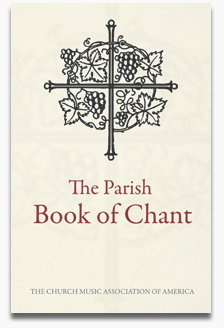
You can download the Parish Book Of Chant for free (it’s under Creative Commons), but you can also purchase a hard copy.

In the back of that book is neume primer. It’ll get you started.

Among its features:
Code:
* It contains a complete order of Mass for both the Ordinary form of the Roman Rite and the Extraordinary form, in side-by-side Latin and English. The Ordos include the sung responses of the people and celebrant. In this respect, it serves as an ideal resource for parishes that use both forms or simply hope to emphasize the relationship between them.

* It contains a large Kyriale, which is a collection of chants that make up the “ordinary” of the Mass: Kyrie, Gloria, Credo, Sanctus, and Agnus Dei. These are the main sung parts of the Mass that are used throughout the year and the parts that all people are invited to learn and sing. This includes the four full Credos in addition to many Mass settings that have been beloved for the dominant part of Catholic history all over the world.

* It collects 71 Latin chants, with English translations, that are for occasional use in Mass in various seasons of the year, such as hymns for Advent, Christmas, Lent, Easter, Pentecost, as well as Marian hymns and chants for funerals and other occasions. These are hymns that constitute the most serviceable of the repertory, have inspired composers for 10 centuries, and have been in the minds and hearts of Catholics for generation after generation.

* All music is set on four-line staffs with newly typeset neumes that make the music crystal-clear for singing. The music also includes the traditional Solesmes markings to assist in rhythmic understanding and interpretation.

* It includes a 7-page tutorial on singing chant that is invaluable for the beginner and can also teach the more advanced singer. It teaches understanding of signs, melodies, style, rhythms, and modes, all in a very brief section at the back of the book.

* Additional features include the order of service for Benediction, Gospel canticles, litanies, and Alleluias for both forms.


I used it to get our parish’s schola started.

Also, start reading posts at The Chant Café.

I pray that you don’t experience a negative reaction in your parish, but be prepared – for it is a common experience. Our schola was greeted with hostility, though the parishoners were excited about. Still, we’ve never been invited to serve in our parish, but we have chanted in other parishes.
 
I would start with some simple chants from the mass. For example the Sanctus, Kyrie or the Responses (et cum spiritu tuo, Deo gratias). Hopefully they have at least hear the simple responses at some time. I would then give a brief overview of Gregorian chant and how it is different from polyphonic music (think chant as sung speech for lack of a better term).

When you actually get to the point of singing I would suggest starting with some solfege exercises to train the student’s ear (simple skip scales * can be a big help). We used well known songs to demonstrate different intervals and then replaced them with the solfege note names. This can be helpful for both students that can and can’t read music since they already have an idea of what the intervals sound like. I’d also start with simple chant tones from the mass and do them with do-re-mi to enforce the intervals.

If you will be using the classic 4 line neumes notation, solfege can be especially useful. The main reason I say this is that most chant is written with an eye to relative pitch so being able to hear in your mind a major fourth helps when reading the nuemes.

Finally, if you are going to use chant written in Latin then you might need to introduce basic Latin pronunciation. Words like* c**æli can trip people up if they don’t know how to pronounce them.
 
I can see I’ve got some learning to do. I was in a competitive classical choir but this seems somewhat different.

Is the singing/breathing different?
 
Vibrato is not used.
Right, and not as much “colour” in the singing.

I would imagine the tempo is fairly regular between all chants and that it neither speeds up or slows down. Like praying the office verbally.

No cresecendos, no pianissimo etc.
 
Splagchnizomai is raising an excellent point–it might be a good idea to do just a little training in basic singing during your class. That way, even if people don’t actually leave your class knowing how to chant, at least they will know how to sing!

Many people never learned how to sing. Many people can’t hear a pitch because they haven’t learned how to listen to and match pitches.

IMO, this is one reason why chant is so difficult for the typical American. Now I know that a lot of people on CAF claim that chant is easy, and I’m sure it is–for them. Someone who is enthusiastic about learning chant can probably already sing correctly, or is at least willing to learn.

But so many people don’t know how to sing at all, and when they do sing, it actually hurts them and leaves them breathless and sore because they aren’t singing correctly.

Have you ever heard those people singing an octave lower than the music? Both ladies and men do this, and it’s kind of a “cheater way” to sing without doing the work of singing in the proper register. (Or for some people who have damage to their vocal chords due to smoking, COPD, etc., it’s the only way they can sing.) I don’t know much about chant, but it seems to me that people who are used to singing in the lower registers are not going to have an easy time learning any kind of chant. It sounds kind of unpleasant.

I would be interested in knowing how chant works for people who sing in the lower registers. Isn’t chant, especially Gregorian chant, supposed to be sung in a pure head voice with as little overtones or vibrato as possible? So what does a person do who can only sing in their lower registers?

Anyway, it would be good to do a little training in singing in your class.
 
Right, and not as much “colour” in the singing.

I would imagine the tempo is fairly regular between all chants and that it neither speeds up or slows down. Like praying the office verbally.

No cresecendos, no pianissimo etc.
I don’t think it’s so simplistic. There’s a lot of information in the neumes, and tradition plays a part in how to perform them. I’ve been around some folks who are really trained in this music and it was inspiring – and very humbling.

Still, it’s approachable to anyone who wants to learn. A little easier for singers than non-singers. I’m not classically trained, though I’m a professional musician, but I’ve found that the music can be sung (and interpreted) simply – and that as you progress, you learn how deep this music is.

Just a note, English chant is starting to show up on the radar. The Anglicans have a nice tradition with it, and some Catholics are working on it, such Fr Columba Keely at St Meinrad.

Oh, and there’s English Simple Propers. Latin is going to be a hard-sell in many parishes. English chant would at least be a step in the right direction imo.
 
Good point. Start with the English and work towards the Latin.

This is exciting!
 
I would be interested in knowing how chant works for people who sing in the lower registers. Isn’t chant, especially Gregorian chant, supposed to be sung in a pure head voice with as little overtones or vibrato as possible? So what does a person do who can only sing in their lower registers?
Well, usually you set do so that it suits everyone’s ranges. Chant isn’t in the key of C or Gb – it’s in the key of the schola, so to speak. Even so, if you can’t suit everyone’s range, you just make lemonade out of lemons and let folks sing where they can.

I think there’s an idea floating around that only very experienced singers can sing this music. Tradition just doesn’t seem to bear this out. Abbey John didn’t audition Brother Bob to see if he could chant properly, you know what I mean? While there are some tricky chants, many are approachable for most singers.

In my experience, singing Latin has proven more difficult than singing Gregorian chant. I taught an English chant to our schola and was amazed at how quickly everyone picked it up. They told me that it was easier for them to sing without having to worry about (mis)pronouncing the Latin. 😃
 
Good point. Start with the English and work towards the Latin.

This is exciting!
Check your parish hymnal and see if there are already some chants – they will usually be set in stemless noteheads, though some will be set in standard notation with time & key signatures (which can help some singers as they transition to neumes). Some may even be in Latin.
 
In my experience, singing Latin has proven more difficult than singing Gregorian chant.
Not mine. English actually is more difficult to pronounce when syllables are stretched over notes. The -t, -d, -b, etc. endings are especially harder to stretch. I’ve heard Credo III in the English and it is awful. Italian is much easier with the vowel endings, Latin and Spanish (and many of the Slovac languages) coming right after in ease and softness. Latin doesn’t have many silent letters so pronunciation in the singing shouldn’t be a problem. There is a reason why Gregorian chant and not any other chant was chosen by the Church as a whole. Latin is the unifier, not English.
 
I think there’s an idea floating around that only very experienced singers can sing this music. Tradition just doesn’t seem to bear this out. Abbey John didn’t audition Brother Bob to see if he could chant properly, you know what I mean? While there are some tricky chants, many are approachable for most singers.
That really depends on the community. I think you’ll find that a community with a strong liturgical and musical tradition (for example Solesmes) will place a lot of emphasis on ability to chant, or at least ability to learn to chant.
In my experience, singing Latin has proven more difficult than singing Gregorian chant. I taught an English chant to our schola and was amazed at how quickly everyone picked it up. They told me that it was easier for them to sing without having to worry about (mis)pronouncing the Latin. 😃
I find the opposite, chanting in the vernacular is harder. Maybe I’m just more used to the Latin because that’s how I first learned to chant, but I find Latin easy to read and pronounce, and in fact the modality is made to fit the Latin accentuation but doesn’t work so well in most vernaculars. It probably helps that my mother tongue is French.

Otherwise I don’t find chant especially difficult, I started with very little musical experience. Some of the more melismatic chants do require practice, and indeed the neumes carry a lot of information. I’ve chanted with monks of two different abbeys of the same congregation and their sound is very different. It’s like the voice of two different people.
 
Most of it will be under public domain. 😉

You can download the Parish Book Of Chant for free (it’s under Creative Commons), but you can also purchase a hard copy.

In the back of that book is neume primer. It’ll get you started.
I just started singing the Ordinary with the schola a couple of weeks ago, so I’m learning to chant.:o

We use this same book.
 
Status
Not open for further replies.
Back
Top