Images of christ: does accuracy matter?

  • Thread starter Thread starter whitecrayon
  • Start date Start date
Status
Not open for further replies.
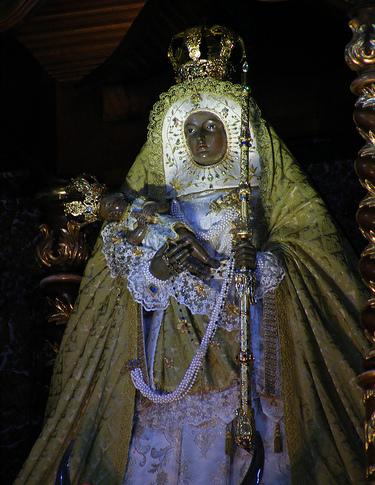
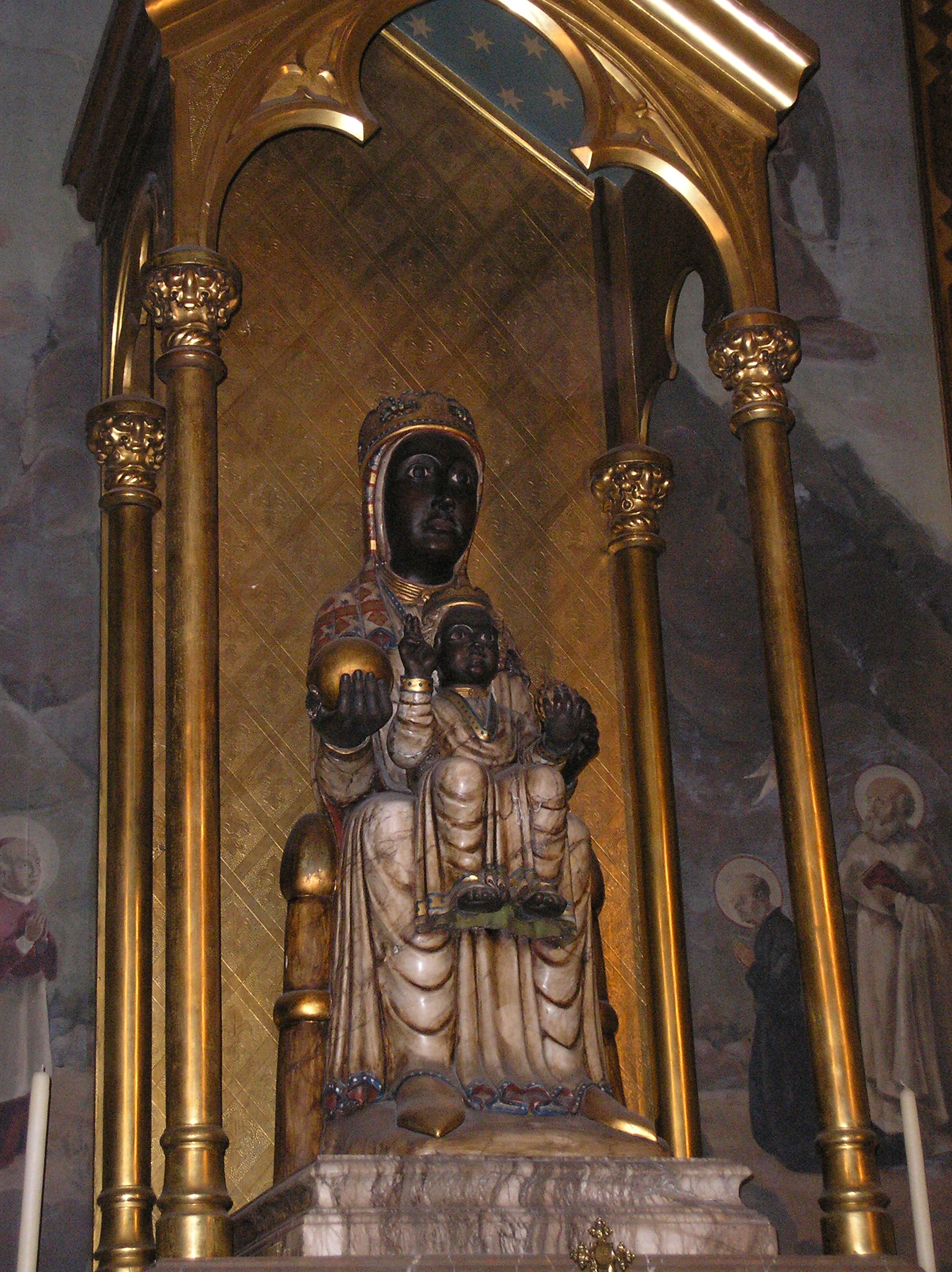
No, accuracy doesn’t really matter (regarding the physical look). When Christ looks like us, then we can better relate to Him. It’s simply human nature. This is also why, for example, the Blessed Virgin looks different at Guadalupe and Knock. She has appeared to us so as we can relate to her better. And so Christ’s image should likewise be conformed so as to allow us to relate to Him.

However images of Christ should not be altered to suit political agendas.
 
Art is not meant to be real life. It expresses our emotions about real life and helps us to interpret the events in real life in the context of our faith, our upbringing, and our culture. It’s art–it mimics real life, but it isn’t real life.

E.g., the 1812 Overture is not the War of 1812 and it’s not even the music that was played during the War of 1812. It expresses various feelings about the War of 1812 and all wars.

E.g., the Nutcracker ballet is not a re-telling of real events. It tells, through dance, a fairy tale that expresses many feelings and emotions that people experience in childhood, especially during the Christmas holidays.

E.g., The Mona Lisa is not a real woman, it is a portrait of a real woman (supposedly), and it helps us to not only see how she looked, but her personality, heart, hopes, etc.

IMO, the many different portrayals of Jesus that we see in art, both visual and performing arts (movies, plays, operas, cantatas, symphonies, hymns, etc.) are not meant to be an exact and accurate portrayal of Our Lord.

Think about it–how could anyone ever capture the depth, the mystery, the beauty of Jesus Christ, the Lord of the Universe, on canvas, in a play, in a song, or in a dance?! We can only try, in our flawed human way, to portray Our Lord.

These portrayals are meant to interpret an aspect or two of Jesus–perhaps His power, or His love, or His agony. When we put all of these portrayals together in our minds, we arrive at a more complete “picture” of Jesus and we can know Him better and love Him more.

But only when we make it to heaven will we know Him fully.

BTW, I really question the possibility that Jesus had blue eyes. He was a Semite–do they have blue eyes unless they are albino? Also, I’m not really sure that Jesus was particularly handsome, since the Bible says that He had no stately form or majesty that we should look upon Him, nor appearance that we should be attracted to Him. (Isaiah 53: 2).
 
I don’t think Jesus looks like the fair-skinned, blue-eyed, blond/sandy-haired man we see in paintings. But it doesn’t offend me that He was been rendered as such. As someone else stated, people depicted Jesus in a way that related to then. When I’m praying to or thinking about Jesus, I’m not thinking about the color of His skin or the texture of His hair. :o


FYI, the Shroud of Turin has 100’s of “Points of Agreement” with many of the Early Icons, and even with some of the 6th and 7th Century Byzantine Coins. The Shroud does not provide skin or eye color. We can assume the Icon of Christ Pantokrator (Christ the Savior) at St. Catherine’s Monastery, Sinai, Egypt is the most accurate depiction of our Lord). The Icon has over 1,000 “Points of Agreement” with the Shroud of Turin - A court of Law will usually accept a photograph for “Positive ID” if it has 100+ “Points of Agreement” with a given person’s face, neck & upper torso/shoulders.
Go to full Resolution in the first one from Wikipedia:
en.wikipedia.org/wiki/File:Spas_vsederzhitel_sinay.jpg
katapi.org.uk/Art/Icon-ChristPantocrator.html
prayerfoundation.org/christ_pantocrator_sinai_icon.htm
shroudofturin4journalists.com/pantocrator.htm

Your Brother & Servant in Christ, Michael
I don’t get your point. The Icon dates to some 500 years after the death of Jesus. Nobody around had ever seen him. Could the shroud not be based on the Icon rather than vice-versa?

I suspect that visionaries see Jesus as they imagined him. Just as those who see the Blessed Mother either see her as depicted in images or with their own ethnic look if they are not Caucasians.
 
I suspect that visionaries see Jesus as they imagined him. Just as those who see the Blessed Mother either see her as depicted in images or with their own ethnic look if they are not Caucasians.
I believe it is Our Lord and Lady who decide that, not the visionary. That’s not official Church teaching of course. There is none. Just my personal opinion. I don’t think visionaries dictate the content of their visions (if they are genuine).
 
Art is not meant to be real life.
Art in general is not to copy real life, paintings have been the exception in the past.

Before the invention of camera, portraits and paintings were done precisely to have a realistic image of what a person looked like. Same for busts. Note that these portraits and paintings were drawn in a way for the subjects to “look their best”, but always giving a realistic image of the person.

Think of portraits of kings, queens, busts of great composers, Napoleon, etc…

It is obvious that since the invention of the camera it is not necessary to have a portrait done by an artist for posterity.

And so painters had to explore even more ways their art. Some came up with impressionist art, etc…

👍
 
I don’t get your point. The Icon dates to some 500 years after the death of Jesus. Nobody around had ever seen him. Could the shroud not be based on the Icon rather than vice-versa?

I suspect that visionaries see Jesus as they imagined him. Just as those who see the Blessed Mother either see her as depicted in images or with their own ethnic look if they are not Caucasians.
No, the Shroud is not based on the icon, it’s the other way around.

First of all, the Shroud has properties that were not known to mankind in 500 a.d.: when photographed (1st photography of the Shroud was in 1898), the negative image of the Shroud is perfect, and even more realistic. A painter could of not done that. Second, the experts have not found a trace of paint on the Shroud. Not a trace.
Thirdly, why the artist creating the icon would of deliberatly painted assymetrical features of the face, like the right eye that is damaged? The fact is that the artist reproduced the features he saw on the Shroud.

Truth and love,
🙂
 
What difference does it make. It was made by Leonardo whether as a hoax or just simply to make something. It was made using technology available to him. I have watched a documentary showing how it was done. The camera obscura was known to him and all other materials needed were also avialable to him.
The Church has not and will never declare the Shroud to be genuine.
Science has so far failed to proved its older than the Middles Ages.

Frankly I fail to understand why some people get so hung up on the Shroud. If it being genuine is so important to them their faith must be pretty weak.
I don’t need relics, apparitions etc.
If Leonardo had a camera, it was well hidden… this is a load of baloney!
👍
 
Art in general is not to copy real life, paintings have been the exception in the past.

Before the invention of camera, portraits and paintings were done precisely to have a realistic image of what a person looked like. Same for busts. Note that these portraits and paintings were drawn in a way for the subjects to “look their best”, but always giving a realistic image of the person.

Think of portraits of kings, queens, busts of great composers, Napoleon, etc…

It is obvious that since the invention of the camera it is not necessary to have a portrait done by an artist for posterity.

And so painters had to explore even more ways their art. Some came up with impressionist art, etc…

👍
It’s not true that before the invention of the camera, portraits and paintings were done precisely to look like the person.

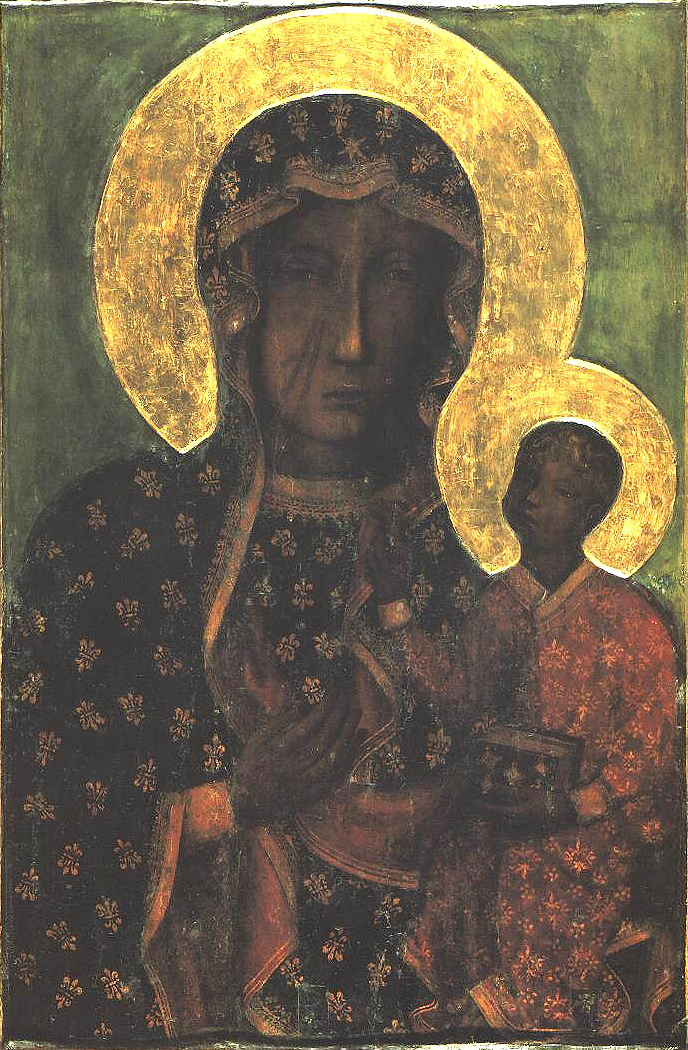
The ancient icons are one example. These “portraits” certainly did not look like real people at all. The hands and fingers were elongated. The figure of the infant Jesus looks like a little old man in many of the icons. The virgin has wall-eyes in many of the icons.

Yes, I do realize that all of this is purposeful and symbolic in the icons My point is, icons did not look like real people. If that’s what Jesus and The Blessed Mother looked like–yikes!

I have several art history books, and many of the earliest artists did portraits of Jesus, Mary, and other saints that looked very surreal and bizarre, nothing like real life. I just leafed through one of these books, and found a painting by Piero delia Francesca of Mater Misericordiae (Mother of Mercy). If Mary looks like that–yikes! She’s about 20feet tall, with no hair, and pale as a ghost!

And how about El Greco, who did plenty of religious paintings. I hope that the saints didn’t look his paintings–eek!
 
It’s not true that before the invention of the camera, portraits and paintings were done precisely to look like the person.

The ancient icons are one example. These “portraits” certainly did not look like real people at all. The hands and fingers were elongated. The figure of the infant Jesus looks like a little old man in many of the icons. The virgin has wall-eyes in many of the icons.

Yes, I do realize that all of this is purposeful and symbolic in the icons My point is, icons did not look like real people. If that’s what Jesus and The Blessed Mother looked like–yikes!

I have several art history books, and many of the earliest artists did portraits of Jesus, Mary, and other saints that looked very surreal and bizarre, nothing like real life. I just leafed through one of these books, and found a painting by Piero delia Francesca of Mater Misericordiae (Mother of Mercy). If Mary looks like that–yikes! She’s about 20feet tall, with no hair, and pale as a ghost!

And how about El Greco, who did plenty of religious paintings. I hope that the saints didn’t look his paintings–eek!
Need to clarify: I agree with you in general, that drawings do not depict realistic features.
However, some paintings are meant to be realistic, and even more before the invention of the camera.

instead of writting: “Art in general is not to copy real life, paintings have been the exception in the past.”,

I meant: “Although art in general is not to copy real life, some form of paintings have been the exception in the past.”

🙂 God bless,
 
. . . mccrone had determined scientifically that the shroud was a fake. has anyone heard about any of this?

whitecrayon
Walter McCrone belonged to the late 1970s STURP (**S**hroud of **TU**rin **R**esearch **P**roject) Team. He claimed to have detected pigment on the cloth, and concluded forthwith that the image is a painting. Until his dying day, nothing would budge him, including the contrary conclusions of his fellow team members, and the results of more recent studies. His stuffs still online and elsewhere, declaring the image a fake.
A lot of Shroud opponents make use of McCrone`s conclusion.
 
dear fiasco: yeah, that’s what i have always believed about the shroud - that it was faked by some monks or something in france for monetary gain many centuries ago. i guess the matter is more complex than i realized, however, given all of the information and claims posted in this thread. thanks for the info about mccrone. did you google it?

jonathan
 
Need to clarify: I agree with you in general, that drawings do not depict realistic features.
However, some paintings are meant to be realistic, and even more before the invention of the camera.

instead of writting: “Art in general is not to copy real life, paintings have been the exception in the past.”,

I meant: “Although art in general is not to copy real life, some form of paintings have been the exception in the past.”

🙂 God bless,
Yes, I agree with your last sentence.
 
Flyingg:

Romans crucified their victims by nailing them through their wrists - Here’s an opinion from a Medical Doctor (Jesus Suffering and Crucifixion from a Medical Point of View). If you’ve ever experienced any form of neuralgia, you’ll understand our Lord’s Mercy in allowing Stigmatists to have the Stigmata on the Palms of their Hands rather than on their wrists by the Medial Nerve of the Carpal Tunnel - Insults to that nerve can be compared to crucifixion itself. I’ve had Spinal Headaches (after a Craniatomy in Nov., 1994), which are also extremely painful.
Another Link on this -
shroudofturin4journalists.com/pathology.htm

The oldest known Icon is Christ the Savior (Pantokrator) a 6th Century encaustic icon at St. Catherine’s Monastery, Mount Sinai
en.wikipedia.org/wiki/File:Spas_vsederzhitel_sinay.jpg
shroudofturin4journalists.com/pantocrator.htm
Forensic Examiners have stated there are over 1,000 points of “concurrence” between this particular Christ Pantokrator and the Shroud of Turin - 100 has been normally sufficient for Facial Recognition in courtrooms from CCTV during the past decade…

You might want to look at the latest on the Carbon Dating - I’m appalled scientists wuld deliberately choose their “samples” from a section of the shroud they knew had been repaired, and would, therefore, not provide an accurate result:
The Story behind the Shroud of Turin and the Carbon Dating Debacle
shroud2000.com/CarbonDatingNews.html
The Shroud of Turin: Facts & Fiction
factsplusfacts.com/

The Pastor in my former parish was a member of Shroud of Turin Research Research Project, and is one of the leading authorities on the Shroud of Turin living in this area. The Catholic Church has not declared that one must believe in the Shroud of Turin - Holy Mother Church actually does that with very few things. OTOH, Holy Mother Church has done nothing to discourage the belief that this is the burial shroud of our Lord God and Savior Jesus Christ. Holy Mother Church has not said the Shroud of Turin isn’t the burial cloth of our Lord Jesus - On the contrary, it has called it a good and pious devotion. Remember, this is evidence of our Lord’s Resurrection, and of our own as well - See 1 Cor 15:12-58. Recall the scene in John 20:1-9. Ask yourself what they saw in verse 8 that caused them to believe, and then recall the Divine injunction against making any images of anything in the sky above, on the earth or the sea below…

Your Brother & Servant in Christ, Michael

Thank you Ang, you explained it very well but I don’t know how much Stigmata to be true, the wrists and hands issue are still confusing. Everytime I ask a person from whatever religion is on a subject that I am skeptical about or doesn’t make any sense or doesn’t fit with science, they always give good answers for their beliefs? But the question is, is every good answer true? Thank you again.
 
My favourite is the Holy Face of Manoppello, which matches the Shroud of Turin.
 
My favourite is the Holy Face of Manoppello, which matches the Shroud of Turin.
About six months ago I read the book “The Face of God” by Paul Badde. Fascinating! Some of you may be interested in seeing these websites about the Holy Face of Manopello. I notice something on this blog about youtube on the image of Manopello

holyfaceofmanoppello.blogspot.com/

And here it shows the imprint on the veil of Manopello and how it lines up with the image on the Shroud:

sudariumchristi.com/de/tuch/index.htm
 
While art has an imaginative aspect, I think it is important to be careful with that in depictions of Christ. If we say how he is depicted is unimportant or we can show him any way we want, it begins to come close to a watering down of Incarnation theology.
 
dear bluegoat

yes, especially in regards to the growing number of blacks who depict jesus and the apostles, etc as black-skinned. i have walked inside a few black churches where they had such images hung on the walls, and it was weird! there is no way jesus and mary and the apostles, etc were black!

has anyone heard about this growing movement among some blacks?

whitecrayon
 
Christ is painted in many different ways and it’s not important.

If you go to the far East, he looks Chinese. If you go to Africa, he looks black. If you go into the Sistine Chapel he looks Greek and so forth.

The truth is that he was a semite. Semites have dark wavy hair, dark eyes, olive complexion and often have pronounced noses.

It has always been a mystery to me why Jesus’ physical appearance is not a concern to clergy, religious and theologians, but it seems to be a concern for everyone else. Do we live in two different worlds? I hope not.

The important thing is that he was truly human and had very human features. He had a genetic code, like every other human being and yet we don’t know how this was possible, since he did not have a human father. He took his physical looks from that genetic map. 🤷

Accuracy is not important. Veneration is important.

Fraternally,

Br. JR, OSF 🙂
 
This seems to have a potential to be an interesting thread. I don’t have anything to add (yet), but would like to see the progress.
 
Status
Not open for further replies.
Back
Top