In what Order were the Gospels were written?

  • Thread starter Thread starter FishyPete
  • Start date Start date
Status
Not open for further replies.
To further prove that your assumption is incorrect can you possibly imagine the laughable state of a human king with a rag tag bunch of fishermen being an army? lol. too much.

They expected a divine Messiah to deliver them and to restore the kingdom, not a man.

Laughable. sorry.
So can you please provide the evidence from first-century Jewish sources (or for that matter any Second Temple or rabbinic Jewish sources) showing that there was an expectation of a divine Messiah? I don’t know of any.

I do think that we should be careful assuming that the later rabbinic accounts of the Messiah were the only ones current in Jesus’ own day. But you’re saying that it’s “laughable” to say that people weren’t expecting a divine Messiah when in fact there is no evidence that they were.

Edwin
 
By the by, but you need a DIVINE Messiah to restore the Kingdoms of Israel.
Why?
A pile of “human Messiahs”, neigh, an army of human Messiahs couldn’t make one dent in history.
That doesn’t make sense. Lots of purely human beings have made big dents in history. And you’re saying that a human being sent by God couldn’t do so?
Matthew speaks to us of Our Lord rising from the dead. Matthew knew Jesus was divine.
If the resurrection is seen as God raising Jesus from the dead, then it says something about the power of God and how important Jesus is to God’s purposes, but it doesn’t necessarily say that Jesus is divine.

I don’t agree with the claim that the synoptics saw Jesus as purely human, by the way. I just think that you’re dismissing it too quickly. I think there are good reasons to believe that all three of them saw Jesus as divine in some sense, even apart from the Tradition of the Church, which provides the primary context in which Christians should interpret all of Scripture.

Edwin
 
i just realized we a speaking of two different groups. my argument is that the literal writers of the Gospel knew who Jesus was as we know who Jesus was. There can be no argument on that.
Sorry–should have read the whole thread before responding.

However, I still can’t quite agree. First of all, I don’t know what you mean by arguing about what the writers of the Gospels were “expecting.” By the time they wrote the Gospels, Jesus had already come, obviously:p. They had begun, based largely on the Resurrection but also on Jesus’ words and deeds when on earth (such as the forgiveness of sin), to think of Jesus in divine terms. But it still wasn’t fully fleshed out (unless you go with the view that they knew more than they were telling). So I don’t think it’s quite true that “they knew who Jesus was as we know who Jesus was.”

If you mean “there is no argument that the Church teaches that they all believed in Jesus’ divinity,” then I think that’s true, though the Church does not, as far as I know, require us to believe that they all held to exactly what we now believe about Jesus in fully developed form.

However, from a purely historical point of view there certainly is an argument about all of this. An argument in which I think the “conservative” view that “high Christology” is present very early has a lot going for it. But not something that simply can be taken for granted.

Edwin
 
Sorry–should have read the whole thread before responding.

However, I still can’t quite agree. First of all, I don’t know what you mean by arguing about what the writers of the Gospels were “expecting.” By the time they wrote the Gospels, Jesus had already come, obviously:p. They had begun, based largely on the Resurrection but also on Jesus’ words and deeds when on earth (such as the forgiveness of sin), to think of Jesus in divine terms. But it still wasn’t fully fleshed out (unless you go with the view that they knew more than they were telling). So I don’t think it’s quite true that “they knew who Jesus was as we know who Jesus was.”

If you mean “there is no argument that the Church teaches that they all believed in Jesus’ divinity,” then I think that’s true, though the Church does not, as far as I know, require us to believe that they all held to exactly what we now believe about Jesus in fully developed form.

However, from a purely historical point of view there certainly is an argument about all of this. An argument in which I think the “conservative” view that “high Christology” is present very early has a lot going for it. But not something that simply can be taken for granted.

Edwin
i agree. though I am a simple man and put things in all to simple terms I agree.
 
But the Messiah to the synoptics was human, and not necessarily divine…What they viewed as the Messiah was not so much the savior of the world, as the one who would come and forcefully restore the Kingdoms of Israel and Judea…a warrior rather than a God.
I am not sure if I understand. When you say the synoptics you mean the Gospels of Matthew Luke and Mark? Are you saying that these Gospel writers saw Jesus as human but not as God?
Why did even the Apostles run for the hills after the crucifixion, and even Peter deny Christ 3 times? Because they still had doubts of his divinity, thinking all was lost with the death of the man, Jesus.
How do you conclude that they had doubt about His Divinity?
 
Neofight;12116367:
I’m not sure. in my mind there is no priority, and such priority serves no real purpose…the Church as spoken that all the gospels have equal standing…on a personal level, I see no striking difference in the presentation of Low Christology of the synoptic gospels, and am myself more a fan of the High Christology of the fourth gospel.

But, that’s just my opinion, so take it for what its worth!
What do you mean low and high?
Paul and John present a early High Christology, Matthew, Mark, and Luke a later Low Christology.
Matthew, Mark, and Luke play down the role of Jesus.
 
Paul and John present a early High Christology, Matthew, Mark, and Luke a later Low Christology.
Matthew, Mark, and Luke play down the role of Jesus.
I don’t want to be rude but this is 100 per cent wrong.
 
I am not sure if I understand. When you say the synoptics you mean the Gospels of Matthew Luke and Mark? Are you saying that these Gospel writers saw Jesus as human but not as God?

How do you conclude that they had doubt about His Divinity?
Thank you for pointing out what I was confused about as well. The gospel writers knew Jesus was God. Period.

Some people have confused the gospel writers themselves with the Jews of the time. Nonsense in every sense of the word.
 
[Dubitum] I: Wether, if all is observed that according to preceding rulings must be wholly observed, especially concerning the authenticity and integrity of the three Gospels of Matthew, Mark and Luke, concerning the substantial identity of the Greek-language Gospel of Matthew with its primitive original, and similarly concerning the order in which the same were written, it is permitted for exegetes, in order to explain the insurmountable similarities or dissimilarities between so many various and contrasting sentences of the authors, to dispute freely about the hypotheses of tradition, whether written or oral, or, additionally, to speak of one Gospel’s dependence on a preceding one or multiple preceding ones?

R. Affirmative.

vatican.va/roman_curia/congregations/cfaith/pcb_documents/rc_con_cfaith_doc_19120626_questione-sinottica_lt.html
 
Well the above post cleared a lot up regarding the freedom with which responsible exegetes may study the arrangement and authorship of the Synoptic Gospels. Hopefully that helps the OP.

Guys,

How did you possibly get on to the topic that Stts. Matthew, Mark, and Luke doubted Christ’s divine nature? That’s incredibly dangerous territory.
 
Well the above post cleared a lot up regarding the freedom with which responsible exegetes may study the arrangement and authorship of the Synoptic Gospels. Hopefully that helps the OP.

Guys,

How did you possibly get on to the topic that Stts. Matthew, Mark, and Luke doubted Christ’s divine nature? That’s incredibly dangerous territory.
Tell me about it. I asked a specific question. Anyway, it’s been answered satisfactorily.
 
The scholarship states that by looking at the Gospels how they are written, it would appear that Mark was written first (because it is much shorter -

.
That “scholarship” is flawed for many reasons. If one was writing fiction, then I suppose one would begin with a shorter account and then build on it. BUT, we are not talking about a fictional work - making it up as we go - ARE WE ?

Markan Priority seemed to start out as a simple easy to imagine theory. The existence of Q was proposed to explain how it happened. But now many problems that do not have easy or good answers come up.
The whole question of how to we explain the disappearance of Q ?
And why no one in the early church claims to have seen it ?
Why no one had heard of it ?
Why no one ever refers to it ?

Imagine the supposed importance of this document. It, supposedly, was used to write the Gospels. Now, re-read the questions above. Markan Priority gets more and more convoluted as people try to explain this and the many other problems it presents.

How the Gospels were written in accordance with the Fathers of the Church.

The simplest and the one most consistent with the historical evidence and the one least contrived is that Matthew, the Apostle, was the first to write his Gospel. After this, Luke who with knowledge of Matthew’s Gospel wrote his. Then the Apostle Peter while preaching in Rome used both of those Gospels going back and forth between them to give his oral teaching over several days. Mark, the secretary of Peter, wrote down what Peter said. Once Peter went through Luke’s Gospel in this way he gave his verification that it also was an authentic Gospel. So, Mark’s Gospel is the second in the sequence of New Testament Books because Luke’s was not verified by the Apostle(s) until after Peter in a sense preached his.

Is Mark Shorter ?
If we look at Mark, the individual accounts are often actually longer. Count the Words.
It has the specific details that only any eye-witness would know.
This fits perfectly with historical explanation above.
See
defendingthebride.com/ss/mark/fathers.html

We are spoiled with books and the internet.
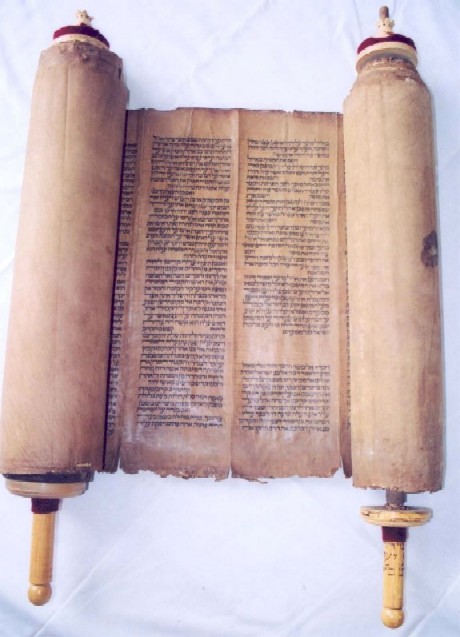
We forget that a scroll is a physical object with inherent physical properties.
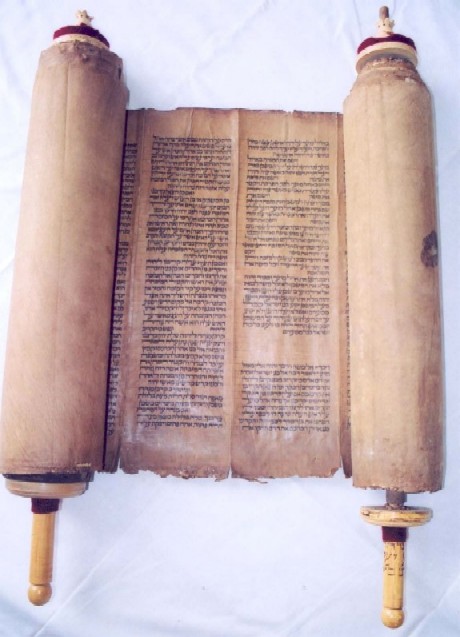


A scroll’s length was influenced by the laws of physics.
It was long enough to contain a large work in a single scroll.
Matthew’s and Luke’s Gospel each fit on one scroll.
A scroll should not be much longer because the weight would be too heavy. And you don’t want to spend two hours of rolling and rewinding just to get to a certain passage.

Why would Mark waste a good portion of a standard scroll ?

Because, it was originally not designed as a written work.
It was short enough, and long enough, to fit into a one day preaching seminar by Peter as explained above, with time out for prayer, breaks, and lunch.

Why does Mark’s Gospel end abruptly as some contend ?

Try living in that environment at that time. Try starting out on your several mile journey home, WALKING the whole way, with the threat of robbers, and worse, if you start your journey when it was dark out. A good chance you would never get home, at least not until daylight broke. Many people have a hard time walking around inside their own home when the lights go out. Sorry, no flashlights back then. If you were wealthy you might have had a torch, but that would have been like a flashing neon light to the robbers, “Rob Me. I am wealthy”

If Mark was first, why do Matthew and Luke leave out the specific details that Mark includes ?

All these questions have simple easy to imagine answers with the historical scenario above. Markan Priority just gets more convoluted.

Mark’s “poor grammer” was presented as one “PROOF” his was first.
Each person is going to have a different style regardless of which order his account falls in line with the rest, but the real reason is that Peter’s preaching, Mark’s Gospel, was not designed originally as a written work, so it is not going to be polished like a written work would be.

So, these “PROOFs” for Markan Priority fall apart if you just look at them.
Code:
     **[How  the  Gospels  Were  Written](http://www.defendingthebride.com/ss/mat)           ****- By Dennis Barton – Free Pamplet**
     **         [How  the          Synoptic  Problem  Was  Solved ](http://www.defendingthebride.com/ss/mark/) - By          Dennis Barton – Free Pamplet**
defendingthebride.com/ss/mat/
.

 
That “scholarship” is flawed for many reasons. If one was writing fiction, then I suppose one would begin with a shorter account and then build on it. BUT, we are not talking about a fictional work - making it up as we go - ARE WE ?
Straw man. You yourself point out later that the specific accounts are more detailed, as one would expect from an eyewitness account or something close to it.
Markan Priority seemed to start out as a simple easy to imagine theory. The existence of Q was proposed to explain how it happened. But now many problems that do not have easy or good answers come up.
These problems have always been there.
The whole question of how to we explain the disappearance of Q ?
And why no one in the early church claims to have seen it ?
Why no one had heard of it ?
Why no one ever refers to it ?
As several people have pointed out, it’s possible that Q is the original Gospel of Matthew written in Aramaic, to which the Fathers do refer.

Also, it’s possible that Q wasn’t a written document at all but a body of oral tradition.

And lots of things disappear. Arguments from silence (especially since there isn’t silence–it’s just that we don’t know for sure that the patristic references refer to what we call “Q”) are weak. It may be that once Q was incorporated into Matthew/Luke, there was no need for it and so no one bothered talking about it again. If the only independent transmission of it was in garbled form as what we call the “Gospel of Thomas,” then that would explain why the orthodox Fathers wouldn’t have talked about it. By their time, all the orthodox Gospels were narratives, not just sayings collections.

So I think you’re exaggerating the problems greatly.
Markan Priority gets more and more convoluted as people try to explain this and the many other problems it presents.
Any theory on Synoptic origins becomes convoluted. The serious modern scholarly versions of Matthaean priority are convoluted too.
The simplest and the one most consistent with the historical evidence and the one least contrived is that Matthew, the Apostle, was the first to write his Gospel. After this, Luke who with knowledge of Matthew’s Gospel wrote his. Then the Apostle Peter while preaching in Rome used both of those Gospels going back and forth between them to give his oral teaching over several days.
Why would Peter, an eye-witness, use these Gospels instead of giving his own account? This is the basic problem with the patristic accounts. There are really two accounts of Mark which conflict with each other: one that it was based on Matthew and/or Luke (I don’t actually recall the Fathers saying that it post-dated Luke–I think that’s your elaboration of their account) and the other that it was based on Peter’s preaching. You’re trying to have it both ways. I don’t think that’s probable. The view that Mark was Peter’s amanuensis (which I find very plausible) actually fits Marcan priority much better than Matthaean.
Mark, the secretary of Peter, wrote down what Peter said. Once Peter went through Luke’s Gospel in this way he gave his verification that it also was an authentic Gospel. So, Mark’s Gospel is the second in the sequence of New Testament Books because Luke’s was not verified by the Apostle(s) until after Peter in a sense preached his.
And you think this isn’t convoluted?:rolleyes:
Is Mark Shorter ?
If we look at Mark, the individual accounts are often actually longer. Count the Words.
It has the specific details that only any eye-witness would know.
This fits perfectly with historical explanation above.
It fits Marcan priority better:D
We forget that a scroll is a physical object with inherent physical properties.
The NT books weren’t written on scrolls. They were written on codices. In fact, this is arguably how the codex came to supplant the scroll as the standard format for a book. See Harry Gamble, Books and Readers in the Early Church.

Edwin
 
As several people have pointed out, it’s possible that Q is the original Gospel of Matthew written in Aramaic, to which the Fathers do refer.

Also, it’s possible that Q wasn’t a written document at all but a body of oral tradition.

And lots of things disappear. Arguments from silence (especially since there isn’t silence–it’s just that we don’t know for sure that the patristic references refer to what we call “Q”) are weak. It may be that once Q was incorporated into Matthew/Luke, there was no need for it and so no one bothered talking about it again.
The take-away point is that Markan priority and hypothetical Q are not one and the same theory. There are very respectable scholars who hold that Mark was written first *and *that there was no Q. I’d say that I lean in that direction, though my mind isn’t made up.
 
The take-away point is that Markan priority and hypothetical Q are not one and the same theory. There are very respectable scholars who hold that Mark was written first *and *that there was no Q. I’d say that I lean in that direction, though my mind isn’t made up.
Indeed.

Edwin
 
The take-away point is that Markan priority and hypothetical Q are not one and the same theory. There are very respectable scholars who hold that Mark was written first *and *that there was no Q. I’d say that I lean in that direction, though my mind isn’t made up.
The take away point is that there has not been an official order given by our Mother Church. And that’s ok.

I’ve digested hours and hours worth of analysis both in favor of Mark and Mathew in terms of writing first and here’s my conclusion (at least what I lean towards).

**1. Mathew was written first in Aramaic - call it “Q” if you want to, or don’t - I don’t subscribe to the Q theory of “sayings”. The gospels were first-hand witness accounts. Using the term “sayings” cheapens it. OR Mathew’s account was first in the oral tradition and written down in Aramaic over a few years here and there - again “Q” if you will (I hate that term, its so generic and sanitary and disrespectful if you ask me).
  1. Mark was written first in Greek. Mathew Second. Then Luke. Maybe. They were all written so close to one another, who really knows.
  2. Saying that Mark is “primitive” spits in the face of the many forms and nuances of literature (styles/purpose/authors ability). Mark is clearly using Peter as a source, drawing from his sermons and then perhaps using Mathew (or Mathew’s “Q” - oral/written or otherwise) to fill in where mark saw fit (re-write, pick and chose etc). Its bullet point stuff elaborated on. And it was written for a different audience.**
At the end of the day, saying that the supposed internal evidence points to Mark writing first, and ignoring ALL the external evidence is just silly.

How anyone can say beyond a reasonable doubt that Mark wrote first is nonsense.

And if you read about the “Primitive” Mark argument, throw it out of your head. I’ll give you an imaginary example why:
**
I wrote a book when I was younger.
It was in English.
It was based on one of Stephen King’s books.
My book was shorter because I wanted to get to the good parts without any of the details i felt were unnecessary.
And I used my limited command of the English language to write it (i was (still am) an idiot.
I wrote my book a good number of years after Shephen’s book. **

So in 2000 years if they found both books would they say, hey FishyPete wrote first because its more primitive and has less detail (in some places)? Stephen King owes this FishyPete a lot.

My example is silly but I trust you see what I mean?
 
The take-away point is that Markan priority and hypothetical Q are not one and the same theory. There are very respectable scholars who hold that Mark was written first *and *that there was no Q. I’d say that I lean in that direction, though my mind isn’t made up.
Then I can say with confidence:

The take away point is also that Matthean priority and hypothetical Q are not one in the same either are they? I don’t mean to sound cheeky, but there are very respectable scholars who hold that Matthew was written first and that there was no Q.

I’d say I’d lean in that direction. Again not to be cheeky. 🙂

I guess at the end of the day they are all inspired by our Lord and are meant to be taken as a whole. No matter the order. We can all agree on that.
 
Then I can say with confidence:

The take away point is also that Matthean priority and hypothetical Q are not one in the same either are they? I don’t mean to sound cheeky, but there are very respectable scholars who hold that Matthew was written first and that there was no Q.

I’d say I’d lean in that direction. Again not to be cheeky. 🙂

I guess at the end of the day they are all inspired by our Lord and are meant to be taken as a whole. No matter the order.** We can all agree on that./B**
 
The take away point is that there has not been an official order given by our Mother Church. And that’s ok.

I’ve digested hours and hours worth of analysis both in favor of Mark and Mathew in terms of writing first and here’s my conclusion (at least what I lean towards).

**1. Mathew was written first in Aramaic - call it “Q” if you want to, or don’t - I don’t subscribe to the Q theory of “sayings”. The gospels were first-hand witness accounts. Using the term “sayings” cheapens it. OR Mathew’s account was first in the oral tradition and written down in Aramaic over a few years here and there - again “Q” if you will (I hate that term, its so generic and sanitary and disrespectful if you ask me).
  1. Mark was written first in Greek. Mathew Second. Then Luke. Maybe. They were all written so close to one another, who really knows.
  2. Saying that Mark is “primitive” spits in the face of the many forms and nuances of literature (styles/purpose/authors ability). Mark is clearly using Peter as a source, drawing from his sermons and then perhaps using Mathew (or Mathew’s “Q” - oral/written or otherwise) to fill in where mark saw fit (re-write, pick and chose etc). Its bullet point stuff elaborated on. And it was written for a different audience.**
At the end of the day, saying that the supposed internal evidence points to Mark writing first, and ignoring ALL the external evidence is just silly.

How anyone can say beyond a reasonable doubt that Mark wrote first is nonsense.

And if you read about the “Primitive” Mark argument, throw it out of your head. I’ll give you an imaginary example why:
**
I wrote a book when I was younger.
It was in English.
It was based on one of Stephen King’s books.
My book was shorter because I wanted to get to the good parts without any of the details i felt were unnecessary.
And I used my limited command of the English language to write it (i was (still am) an idiot.
I wrote my book a good number of years after Shephen’s book. **

So in 2000 years if they found both books would they say, hey FishyPete wrote first because its more primitive and has less detail (in some places)? Stephen King owes this FishyPete a lot.

My example is silly but I trust you see what I mean?
The example is silly, because “primitive Mark” is a straw man. I don’t think that most scholars today would use that language. Yet most of them (contra Keating) do still hold to Markan priority.

And here’s the real problem with your analogy, and with Matthaean priority: if Mark is a “primitive” summary of Matthew, then why have it in the canon? But if Mark was written first, and is closer to an eye-witness account, then it makes sense why we have both. Matthew fleshes out many things and includes teachings of Jesus not found in Mark. But Mark is the closest we get to a direct eyewitness account of Jesus’ life.

Edwin
 
The example is silly, because “primitive Mark” is a straw man. I don’t think that most scholars today would use that language. Yet most of them (contra Keating) do still hold to Markan priority.

And here’s the real problem with your analogy, and with Matthaean priority: if Mark is a “primitive” summary of Matthew, then why have it in the canon? But if Mark was written first, and is closer to an eye-witness account, then it makes sense why we have both. Matthew fleshes out many things and includes teachings of Jesus not found in Mark. But Mark is the closest we get to a direct eyewitness account of Jesus’ life.

Edwin
You make the mistake of assuming that Mathew is not an eyewitness account.
 
Status
Not open for further replies.
Back
Top