
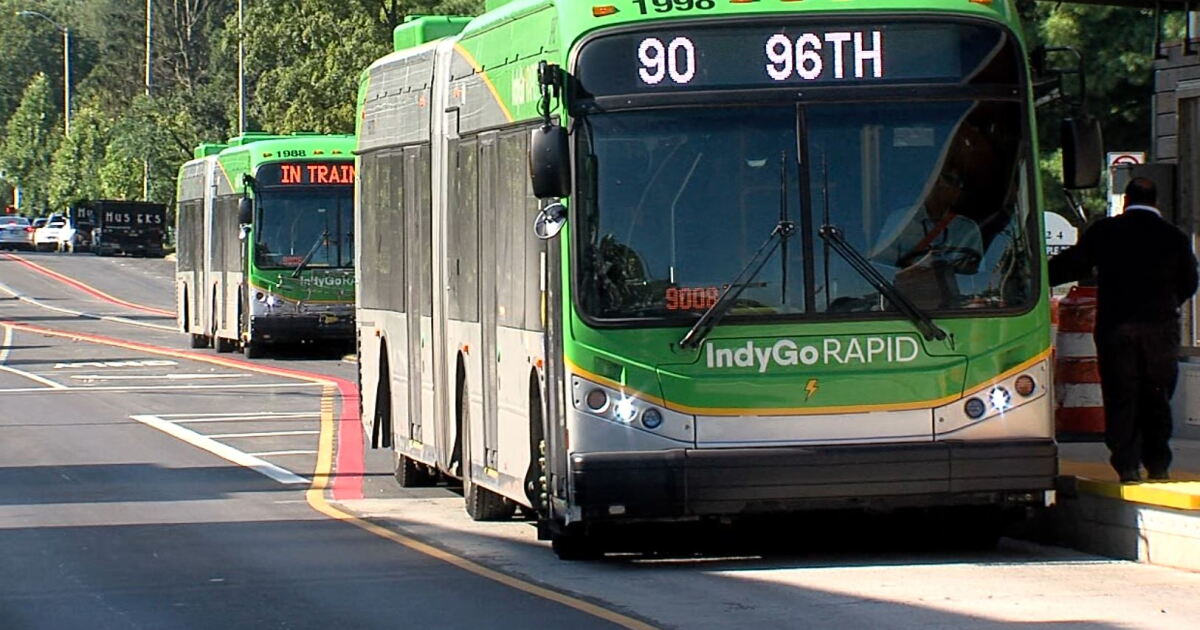
IndyGo electric buses can't handle the cold

  • Thread starter Thread starter Guinness
  • Start date Start date
Status
Not open for further replies.
Anyone who has even a rudimentary knowledge of how batteries work could have told them cold weather would be an issue.
Indeed. This has happened before. Chemical reactions tend to be slower (or not occur at all) in lower temperatures. Chemical batteries and low temperatures tend not to mix well together.

This kind of reminds me when a city changed to LED traffic lights and during winter ice formed over the lights thick enough to make them nolonger effective; the previous incandescent of course didnt have that problem. Now LED traffic lights are available with automatic heating elements.
 
Now LED traffic lights are available with automatic heating elements.
Which reduces their energy efficiency, making the case for using them weaker. This problem would be exacerbated with buses because the only way to power the heating elements would be with the batteries, causing battery power to be diverted from the buses main purpose, transportation.
 
Anyone who has even a rudimentary knowledge of how batteries work could have told them cold weather would be an issue.
A rudimentary knowledge of how batteries work would tell you two things.
The decrease in cell potential can be made mitigated working with batteries for which the entropy of reaction is small. Similarly a battery type can be selected to minimize undesirable kinetic effects.
Chemical reactions tend to be slower
The degree to which the reactions rates are decreased depends on a variety of instrinsic and design factors. Good design can minimize undesirable effects.
 
Last edited:
A rudimentary knowledge of how batteries work would tell you two things.
The decrease in cell potential can be made mitigated working with batteries for which the entropy of reaction is small. Similarly a battery type can be selected to minimize undesirable kinetic effects.
Really, that seem more than a rudimentary knowledge, which is apparently also beyond the skill set of IndyGo.
 
Exactly. This seems ot be an engineering problem, not a problem intrinsic to batteries. In fact the same fundamental thermodynamic, kinetics, and efficiency arguments apply, broadly speaking, to combustion.
 
Exactly. This seems ot be an engineering problem, not a problem intrinsic to batteries.
I’d argue it was a “lack of engineering” problem. An engineer would have picked up on this…
 
Which reduces their energy efficiency
Only sometimes. When it’s not both precipitating with freezing temperatures involved the heaters are not needed.

General electric makes what is known as the GTX heated shell light. The light is designed to detect these conditions and act accordingly. According to general electric even when the heating element is on the rate of electricity consumption is lower than the incandescent bulbs they replace.

https://products.currentbyge.com/transportation-lighting/led-traffic-signals/gtx-heated-shell

(Please Note: This uploaded content is no longer available.)

Features​

  • Heating elements are designed independent of signal activity
  • Sensors detect the temperature and humidity to control heating elements
  • All the built-in capabilities of the GTx
  • Meets rigorous certification and testing standards

Benefits​

  • One of a kind smart traffic light
  • Excellent color uniformity
  • New or retrofit use

Specifications​

  • Colors available: red, yellow, green
  • Tinted
 
Yep, that’s a problem with EVs. I’m experiencing that now with my plug in hybrid. The cooler temps have me traveling about 2 to 3 miles less distance compared to warmer summer temps. Kind of interesting how batteries seem to obtain some of their energy from the surrounding environment. At least that is a theory I’ve read about why batteries don’t work as well in cooler temps.

Hope the Indy ebus additional charging stations works out.
 
Status
Not open for further replies.
Back
Top