Is Love really the greatest? (1 Corinthians 13:13)

  • Thread starter Thread starter spockrates
  • Start date Start date
Status
Not open for further replies.

You see, Love is great, but she has two deficits: First, she is blind…she is mute.​

No way – ever try to fool someone who really loves you? Doesn’t happen. And they will tell you exactly why also.

Romantic love is foolish and blind and suffers from an inability to express. You’ve got it all mixed up – watching too many sitcoms maybe?

dj
OK, DJ, let’s take your first objection: You say that the virtue of Love is not mute, and perhaps you are right. That remains to be seen. It seems to me, then, that if she is not mute, she speaks. And if she speaks, she does not do so by giving us feelings, but with clear and cogent words.

I’d like to know how you know this truth. Please tell me, DJ if Love has ever spoken to you, and exactly what words she used. Then please explain how you know, without a doubt, that it was Love, but not Wisdom, who was doing the talking.


We know Wisdom speaks in a
sweet whisper, but does Love?
 
"The LORD brought me [Wisdom] forth as the first of his works,
before his deeds of old;

I was appointed from eternity,
from the beginning, before the world began.

When there were no oceans, I was given birth,
when there were no springs abounding with water;

before the mountains were settled in place,
before the hills, I was given birth,

before he made the earth or its fields
or any of the dust of the world.

I was there when he set the heavens in place,
when he marked out the horizon on the face of the deep,

when he established the clouds above
and fixed securely the fountains of the deep,

when he gave the sea its boundary
so the waters would not overstep his command,
and when he marked out the foundations of the earth.

Then I [Wisdom] was the craftsman at his side.
I was filled with delight day after day,
rejoicing always in his presence,

rejoicing in his whole world
and delighting in mankind."

(Proverbs 8:22-31)
You quote this Spocrates to sort of comparing Wisdom and Love,I do not pretent to be on your intelligent level of arguementation,so I make this observation.The Wisdom that you quoted from the above comes from the old dispensation.The Holy Spirit is hidden from the Jewish race,His Chosen People as was Jesus,the Second Person of The Trinity.Though God The Father is preparing them throught what He did and said through His Prophets. At The The Baptism of Christ ,the followers of St.John the Baptist learnt that Jesus is Gods’ beloved Son and The Messiah: who is to show how much God so loved the world.From this greatest Love,The Holy Spirit the fruit of this LOVE appeared.So The God of Wisdom as described in Proverbs gives witness that Love is really the greatest!! Thank you for your postings and beautiful pictures ,in the end you have no choice but to agee with St.Paul which you do anyway.It reminds me of an old truism :a fool will ask more questions than a wise man will dare to answer.!! (this is not a shot at you,just a good saying)
Yes, I do agree with Saint Paul, for he wrote that Love is greater than Faith and Hope:

And now these three remain: faith, hope and love. But the greatest of these is love.

(1 Corinthians 13:13)

But what he does not say in this verse is that Love is greater than *all *of the virtues. That being said, I think you might have more wisdom than you think, for your reply shows you might be onto something. Are you saying that the Love of which Saint Paul writes in the famous Love Chapter was not the same Love of whom King Solomon was familiar? In other words, are you thinking that the love of the Old Testament is not the Love of the New?
 
If we are talking about the personification I would not choose either. Wisdom (Logos) is uncreated and existed from all eternity with Love (The Father). I don’t know exactly what Solomon is saying. Whatever he is saying, his words point to Wisdom (Logos) being above all creation and bringing all creation into existence.

In the beginning was the Word, and the Word was with God, and the Word was God. He was in the beginning with God. All things came to be through him, and without him nothing came to be. What came to be through him was life, and this life was the light of the human race; (John 1:1-4)
Ryan:

Are you saying, then, that the wise king’s words were not wise after all? I mean, we agree he quoted Wisdom as saying,

“The LORD brought me forth as the first of his works …”

(Proverbs 8:22)

So do you think his words about Wisdom were untrue (and thus, unwise)?

Or do you, on the other hand, think his words were true and wise? And if you think he spoke the truth, but you also think that *first *does *not *mean first in chronology, and that *first *does *not *mean first in importance, then *what *in Wisdom’s name could first possibly mean?

🤷
 
Possibly a dictionary will help us?

first
 
–noun
10. the person or thing that is first in time, order, rank, etc.
11. the beginning.
12. the first part; first member of a series.
13. Music.
a. the voice or instrument that takes the highest or chief part in its class, esp. in an orchestra or chorus.
b. a leader of a part or group of performers.
14. Automotive. low gear; first gear: She shifted into first and drove off.
15. the winning position or rank in a race or other competition.
16. Baseball. first base.
17. Usually, firsts. Commerce.
a. a product or goods of the first or highest quality.
b. goods produced according to specifications, without visible flaws.
18. British University.
a. first-class honors. Compare class (def. 18).
b. a person who has won such honors.​

dictionary.reference.com/browse/first?jss=1
 
Don’t forget to include Faith and Hope with Love, because they are the theological virtues. They are the root and foundation of the moral virtues.

Compair this to

and we can conclude that the gifts of the Holy Spirit sustain the moral life while the theological virtues animate the moral life.

What do you make of animate and sustain?

That kind of gets back to your earlier question of Chronology and importance.
I think Wisdom tells me it sounds wise to me! I’m picturing Love as animate, indeed! For she is the one who moves us to act in love. Wisdom, on the other hand, cannot move anyone to act in love, for she offers no feelings to move us. When it comes to loving, Wisdom is crippled, I think.

But she is not the only one handicapped: Love, it appears to me, is blind. She knows that we must love, but does not always know the best way to love (for example, the granddaughter, mentioned earlier, who helps her grandmother commit suicide because she loves her grandmother deeply). Love is blind, because she feels but does not reason.

So I picture Wisdom in a wheelchair, for she knows how to love, but is helpless to move herself to love. And I imagine Love pushing the wheelchair, but she sees not where. For she desires and is capable of moving herself (and the one in the wheelchair) to love, but she cannot see how to go about it safely, or wisely. And Wisdom says, “Go forward, wait, turn right, turn left. Now, now love!” And Love obeys wisdom, and moves them both toward the goal of loving. Without each other they are likely to fail to love as God desires, for Wisdom cannot possibly feel love like God, and Love cannot possibly see how to love like God. But together (like the God the Father of Love, and Logos the Son together) genuine love (a love which is beautiful, compassionate, and wise) is truly fulfilled.

Does this appear true, or in some way move you, Ryan?
 
And if that does not appear true or move you, perhaps this will?

Love moves the granddaughter to go see her grandmother in the hospital, for she loves grandmother, deeply. Grandmother asks the granddaughter if she will do something for her. Love, moved with compassion, gives the granddaughter a desire to give her grandmother whatever she desires. Grandmother then asks her granddaughter to help her end her suffering and end her life, for she longs to die. Love still desires to do anything for grandmother; anything!

But Wisdom softly speaks, "No, little one, you mustn’t. For ‘love always protects,’ and you must protect your grandmother from such a mortal sin. Love her enough to say, ‘No, grandma. I cannot, because I love you. And God loves you, too.’ "
 
40.png
montecarlense:
I have doubts about the “free Will”…I really don’t think such thing exists…
You are correct, please proceed to kill yourself. Everyone else here should follow suit.

http://www.halloweenonlinemagazine.com/sfx/skeleton10-3.jpg

On the other hand, you could accept overwhelming evidence that quantum uncertainty states that the future is not set in stone, and can be affected by your observations.(ie quantum mechanics says what you do changes the future in somewhat controllable fashion). You can’t prove anything about gods, I say one must be ignorant to be anything but agnostic. But sound science says, with 99.9% certainty, now that we’re here, we determine our own fate. If you are sound of mind enough to take my advice you’ll see that you don’t have to stop believing in God, you can just start believing in things that are demonstrably true (ie science).

For any that are not so sound of mind, I suggest the following.

Just like your god fearing ancestors did to this guy:
You should try it out for yourselves.

 
What I was saying elaborating on St. Augustine “love and do what you will”, helped by yourself and the Pope is:

“be in communion with His will.”

What we can say is IMHO that the granddaughter, in acting as she did, was not in communion with His will ( according to what we can know about His will through Revelation )
Yes, we can! For I would say the same as you. But the question for which I’m seeking an answer to is this: What virtue reveals to us whether an act is in communion with God’s will? I’m hoping we will say together, “Wisdom!” For this is what Saint James says:

Consider it pure joy, my brothers, whenever you face trials of many kinds, because you know that the testing of your faith develops perseverance. Perseverance must finish its work so that you may be mature and complete, not lacking anything. If any of you lacks wisdom, he should ask God, who gives generously to all without finding fault, and it will be given to him. But when he asks, he must believe and not doubt, because he who doubts is like a wave of the sea, blown and tossed by the wind. That man should not think he will receive anything from the Lord; 8he is a double-minded man, unstable in all he does.

(James 1:2-7)

That is, he is saying that when one is facing a trial, and has an ethical dilemma, and does not know what action to take, one should ask God for Wisdom to know how to go. But if one acts on the desire to love alone, without giving any thought to one’s actions, one might be deceived into thinking such careless actions are aligned with the will of God. The reality, however, might be that such a one is deceived, and the act committed is sinful, and perpendicular to His will. The upshot is that Love alone is not enough to keep us in communion with God’s will. If one is to please God, Wisdom (like Faith) is also essential.

Would you say the same, P7?
 
While dancing around the relationship Wisdom-Love I am fascinated by considering Jesus as Wisdom Incarnate. ( could I say Incarnate out of Love ?).

And by this passage from John H. Newman on Her Mother, which you can find on EWTN library
SEDES SAPIENTIAE—SEAT OF WISDOM

Mary has this title in her Litany, because the Son of God, who is also called in Scripture the Word and Wisdom of God, once dwelt in her, and then, after His birth of her, was carried in her arms and seated in her lap in His first years. Thus, being as it were, the human throne of Him who reigns in heaven, she is called the “Seat of Wisdom.” …… Moses had the privilege only now and then, from time to time; but Mary for thirty continuous years saw and heard Him, being all through that time face to face with Him, and being able to ask Him any question which she wished explained, and knowing that the answers she received were from the Eternal God, who neither deceives nor can be deceived.
Fascinating! Wisdom (i.e., the Logos or Word) incarnate was speechless as at the beginning! For how can a baby speak? But God is love, and the infant Jesus was God. So Mary must have noticed something different about Him. His expressions of love (perhaps by not crying when He was hungry, or needed to be changed, or otherwise in need?) must have spoke silently to her. The God-babe, at least in the beginning, likely expressed who He really was through selfless acts of love? But perhaps even this might have been Wisdom in His divine mind. For lacking the brain function to speak, the words instructing Him to act in love might have been present in His soul nonetheless.

I’m not saying this is how it was. Just wondering.

For wonder is the feeling of a philosopher, and philosophy begins with wonder.

(Theaetetus)
You consistently and persuasively underline that Wisdom tells us whether we have Love.
Not a minor point.

OTOH we have that:

Everyone who loves is born of God and knows God. Whoever does not love does not know God. As simple as that.

Can I know God if I do not have Wisdom ?
I’d answer, “No, at least not well!”

👍
So tonight our dialogue is leading into this seeming aporia.

How do we know whether we love ? By His Wisdom.
Ho do we know that we got His Wisdom ? If we love.
🤷

Your considerations on the excerpt I posted from Deus Caritas est lead into the very same issue.

How can Love and Wisdom measure, test each other ?

In Christ
P7
Or rather, how do they help one another? Please see my answers to Ryan:

forums.catholic-questions.org/showpost.php?p=6170237&postcount=345

forums.catholic-questions.org/showpost.php?p=6170237&postcount=346

🙂
 
It sounds to me, P7 and Ryan, that we are actually on the same page. And although we are playing different bars of music from that page, together we are making a sweet melody! For it sounds to me that we, all three, agree that God is both Love and Wisdom, and so should we try to be. And we are in perfect harmony, I think, in saying both Wisdom and Love are essential if we are to love others and God according to His wise will.

Am I correct in saying we’re each playing different bars of the same song? If I am, then we’re off to a great and agreeable beginning! And, by improvisation, I hope we can end as well.

Instead, speaking the truth in love, we will in all things grow up into him who is the Head, that is, Christ.

(Ephesians 4:5)

http://www.jazzsupply.nl/Pictures/jazztrio.jpg

The joyous sounds of Wisdom played skillfully with Love!
 
Ryan:

Are you saying, then, that the wise king’s words were not wise after all? I mean, we agree he quoted Wisdom as saying,

“The LORD brought me forth as the first of his works …”

(Proverbs 8:22)

So do you think his words about Wisdom were untrue (and thus, unwise)?

Or do you, on the other hand, think his words were true and wise? And if you think he spoke the truth, but you also think that *first *does *not *mean first in chronology, and that *first *does *not *mean first in importance, then *what *in Wisdom’s name could first possibly mean?

🤷
I don’t know if Solomon is saying Wisdom comes before creation or is the first work in creation. He could not have understood the Logos as we do. His words are wise, but don’t have full understanding.

Both must be true as we understand the Logos. Creation doesn’t compair to the Logos. What I was disagreeing with was what you said in the parenthesis. I don’t think we can really compair God to God from what Solomon said because his words only pre-figure the Logos.
Wisdom is first in chronology (in which case we have to wonder whether God’s creation was motivated by love, for motivation comes before action),
Wisdom is first in importance in God Himself (in which case Wisdom is found to be greater than Love in God Himself and we would be forced to ask ourselves why she is not greater than Love in we ourselves).
But if we have to compair God to God, God (the Father) is Love and Logos is Wisdom. Love was motivated to created all things through Wisdom.

The second is only true if the Son is greater than the Father.
 
I think Wisdom tells me it sounds wise to me! I’m picturing Love as animate, indeed! For she is the one who moves us to act in love. Wisdom, on the other hand, cannot move anyone to act in love, for she offers no feelings to move us. When it comes to loving, Wisdom is crippled, I think.

But she is not the only one handicapped: Love, it appears to me, is blind. She knows that we must love, but does not always know the best way to love (for example, the granddaughter, mentioned earlier, who helps her grandmother commit suicide because she loves her grandmother deeply). Love is blind, because she feels but does not reason.

So I picture Wisdom in a wheelchair, for she knows how to love, but is helpless to move herself to love. And I imagine Love pushing the wheelchair, but she sees not where. For she desires and is capable of moving herself (and the one in the wheelchair) to love, but she cannot see how to go about it safely, or wisely. And Wisdom says, “Go forward, wait, turn right, turn left. Now, now love!” And Love obeys wisdom, and moves them both toward the goal of loving. Without each other they are likely to fail to love as God desires, for Wisdom cannot possibly feel love like God, and Love cannot possibly see how to love like God. But together (like the God the Father of Love, and Logos the Son together) genuine love (a love which is beautiful, compassionate, and wise) is truly fulfilled.

Does this appear true, or in some way move you, Ryan?
Does CCC1813 indirectly say that love informs and gives life to wisdom?

Does CCC 1830 indirectly say that wisdom sustains the moral life (which has love as it’s foundation)?

I don’t think either of them are as handicapped as you paint them to be. I think they must work together or they don’t exist (or they are something else entirely). Maybe we are saying the same thing.
 
It sounds to me, P7 and Ryan, that we are actually on the same page. And although we are playing different bars of music from that page, together we are making a sweet melody! For it sounds to me that we, all three, agree that God is both Love and Wisdom, and so should we try to be. And we are in perfect harmony, I think, in saying both Wisdom and Love are essential if we are to love others and God according to His wise will.

Am I correct in saying we’re each playing different bars of the same song? If I am, then we’re off to a great and agreeable beginning! And, by improvisation, I hope we can end as well.
We probably are!
 
“But what he does not say in this verse is that Love is greater than all of the virtues. That being said, I think you might have more wisdom than you think, for your reply shows you might be onto something. Are you saying that the Love of which Saint Paul writes in the famous Love Chapter was not the same Love of whom King Solomon was familiar? In other words, are you thinking that the love of the Old Testament is not the Love of the New?” QUOTE by SPOCKRATES

I have noticed Spockrates that in some of your arguements I noticed that you refer to Wisdom(of King Solomon) and then you refer to love which St.Paul was refering to.I can requote passages but just assume I am correct in this fact or re-read your postings(do not look too long at the pictures of the beautiful ladies as you mind will wander!!)

As far as I am aware God is All Knowing,All Wise and All Loving–these are attributes of God.Which is the greatest-- The Wise God or The Loving God??? A passage in The Divine Office from memory goes something like this " the loving wisdom of our God-when all was sin and shame—"

So Spockrates you are confusing the issue when you refer to Wisdom and the greatest love that St.Paul was talking about!St.Paul is refering to acts of love or the virtue of love-Solomon to Wisdom and without him being aware of it The Holy Spirit.This Holy Spirit whom is LOVE, inspired both passages that you use–so since He is called Truth(remember Jesus said the Holy Spirit will teach you everything) ,well you better believe what He inspired St.Paul to write that love is the greatest!! Notice that in your Thread you used Love in the capital sense,did St.Paul use Love(the God of love) or a small love.If you have used Love in your question and then referred to St.Pauls’love then you have set up a “stawman”!!

In short,to answer your question, Yes I do believe that Love and the virtue of love are too different concepts ,one stems from the other though.Sorry must go–full dirty dishes in the sink,rubbish gathering and lawns to be mowed.I friends wife I know used to say about her husband who liked to have a cup of tea after Mass with a good priest "you know Ray solves all the problems in the church—and then he comes home and has Sunday lunch!!!
 
And now these three remain: faith, hope and love. But the greatest of these is love.

(1 Corinthians 13:13)
Hi! I’ve been wondering something: Saint Paul tells you and I that love is the greatest, but is he right? You see, I’m not so sure he is. I’m hoping someone can explain why love is greater and what it is greater than. Any thoughts?

🙂
Because God IS Love. Not simply that He loves, but that He IS love.

God is not faith, but rather the object of our faith.

God is not hope, but rather the object of our hope.

But God IS love.

The more we love, the more we become like God. The process of theosis or deification is the process of growing in love. The object of the first two virtues is the last.
 
William of Saint-Thierry writes from Mirror of Charity this–and I quote parts of it—
“—Hasten then to be a sharer in the Holy Spirit.----and if,when he comes,he finds you humble and still and respecting the words of God,he will rest upon you;and he will reveal to you what God the Father withdraws from the wise and prudent of this world;and those things will begin to draw upon you which Wisdom could say to the disciples when on this earth,but which they were unable to bear,until the Spirit of truth came who was to teach them all truth.-----For in the darkness and ignorance of this life,he is the light which enlightens the lowly of spirit;he is the love which draws us;he is the sweetening presence;he is man’s approach to God;he the love of the loving;he is devotion;he is piety–”
Taken from The Divine Office-The office of readings from The Common of Doctors of the Church"
Socrates I must say that yours is a good thread,one day I will read all the postings again-Love is the greatest for sure!!
 
I don’t know if Solomon is saying Wisdom comes before creation or is the first work in creation. He could not have understood the Logos as we do. His words are wise, but don’t have full understanding.
Well, Ryan, I have not doubt that the words of King David’s son were wise, for (as mentioned before) God Himself gave His own Wisdom to Solomon:

5 At Gibeon the LORD appeared to Solomon during the night in a dream, and God said, “Ask for whatever you want me to give you.”

6 Solomon answered, "You have shown great kindness to your servant, my father David, because he was faithful to you and righteous and upright in heart. You have continued this great kindness to him and have given him a son to sit on his throne this very day.

7 “Now, O LORD my God, you have made your servant king in place of my father David. But I am only a little child and do not know how to carry out my duties. 8 Your servant is here among the people you have chosen, a great people, too numerous to count or number. 9 So give your servant a discerning heart to govern your people and to distinguish between right and wrong. For who is able to govern this great people of yours?”

10 The Lord was pleased that Solomon had asked for this. 11 So God said to him, "Since you have asked for this and not for long life or wealth for yourself, nor have asked for the death of your enemies but for discernment in administering justice, 12 I will do what you have asked. I will give you a wise and discerning heart, so that there will never have been anyone like you, nor will there ever be.

(1 Kings 3)

So we see, Ryan, that King Solomon asked for Wisdom and God gave her to him. I mean, I don’t think it would be wise for me to dismiss God’s own words so easily. When He says, “I will give you [Solomon] a wise and discerning heart, so that there will never have been anyone like you, nor will there ever be,” I should respect and trust God enough to take Him at His word. Up to that time there had been no mere human who was as discerning (or wise) as Solomon, and there will never be any mere human more discerning than him.

But perhaps you are correct, Ryan. Maybe when we harvest Solomon’s words to the wise from the book of Proverbs, we have to separate the wheat of truth from the weeds of falsity. But how? If some of Solomon’s words are wise, and some are lies, you and I are not qualified to determine which are which. For God says you and I will never be wiser than Solomon! No Pope, nor any early Church Father will be able to make a determination as to what words of Solomon are factual and what words of the wisest king are false, for God says no mere human will ever be wiser than Solomon was. The only two who might be wiser are Jesus Christ, for He was God in the flesh, and His Mother Mary, for her Wisdom is likely not hindered by sin.
Both must be true as we understand the Logos. Creation doesn’t compair to the Logos. What I was disagreeing with was what you said in the parenthesis. I don’t think we can really compair God to God from what Solomon said because his words only pre-figure the Logos.

But if we have to compair God to God, God (the Father) is Love and Logos is Wisdom. Love was motivated to created all things through Wisdom.

The second is only true if the Son is greater than the Father.
I agree, to a degree. You and I are left with two possibilities:


  1. *]Solomon was speaking of the Son of God when he wrote that Wisdom is the first of God’s works
    *]Solomon was not speaking of the Son of God when he wrote that Wisdom was the first of God’s works

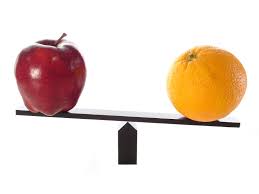
    I think you have made a strong case that when you and Solomon use the word Wisdom, you are speaking of apples, and the wisest king is speaking of oranges. For Solomon was describing of the virtue of Wisdom, rather than the Son of God. This must be the case, because (as you wisely said) the Son of God was neither the first being God the Father created, nor the person of the Trinity who is the first in position and authority.

    We must conclude, then, that when the Son of God gives us the gift of Wisdom, He is giving us the *virtue *that makes us wise *instead *of Himself. What other conclusion can we draw from our inference other than this truth?


    Solomon was speaking of apples,
    but we are speaking of oranges?
 
… But if we have to compair God to God, God (the Father) is Love and Logos is Wisdom. Love was motivated to created all things through Wisdom. …
“I always endeavor to be accurate.”

–Spock

I think that it is wise to be careful when trying to define the persons of God. Our limited understanding makes it too easy to limit them, and so misunderstand them. It’s also wise to be careful to not misunderstand one another.

🙂

In the interest of understanding, when you say, “God the Father is Love,” I do not believe you are saying that the Son of God is *not *Love. For Saint Paul tells us this:

Christ loved us and gave himself up for us as a fragrant offering and sacrifice to God.

(Ephesians 5:2)

And when you say, “Logos is Wisdom,” I have faith you are *not *saying that the Father is not Wisdom. For Jesus Himself said:

So Jesus said, “When you have lifted up the Son of Man, then you will know that I am the one I claim to be and that I do nothing on my own but speak just what the Father has taught me. The one who sent me is with me; he has not left me alone, for I always do what pleases him.”

(John 8:28-29)

For if God the Father were not wise, it would be His Son who would tell Him what to do!

I also trust that you are not saying the Son is more wise than the Father, and that the Father is more loving than the Son. Since each of them are God, and God must, by definition, be perfectly and completely loving and flawlessly and fully wise.

I’m sure, then, that you must agree that when Saint John wrote this,

God is love.

(1 John 4:8, 16))

he was saying that both the Son and the Father are perfect and complete in love. And when Saint John wrote this,

In the beginning was the Word, and the Word was with God, and the Word was God. He was with God in the beginning.

(John 1:1-2)

he was saying that both the Son and the Father are flawless and fully wise. For the Word (AKA Logos, or Wisdom) was God the Father, and was the Son who was with God the Father.

Rather, the Apostle was saying that the one God (in all three persons) is loving and the only God (in all three persons) is wise. Am I understanding you correctly, my friend?

(Please Note: This uploaded content is no longer available.)

God the Son and God the Father are equally and infinitely loving and wise.


 
Does CCC1813 indirectly say that love informs and gives life to wisdom?

Does CCC 1830 indirectly say that wisdom sustains the moral life (which has love as it’s foundation)?

I don’t think either of them are as handicapped as you paint them to be. I think they must work together or they don’t exist (or they are something else entirely). Maybe we are saying the same thing.
CCC 1812 The human virtues are rooted in the theological virtues, which adapt man’s faculties for participation in the divine nature: for the theological virtues relate directly to God. They dispose Christians to live in a relationship with the Holy Trinity. They have the One and Triune God for their origin, motive, and object.

CCC 1813 The theological virtues are the foundation of Christian moral activity; they animate it and give it its special character. They inform and give life to all the moral virtues. They are infused by God into the souls of the faithful to make them capable of acting as his children and of meriting eternal life. They are the pledge of the presence and action of the Holy Spirit in the faculties of the human being. There are three theological virtues: faith, hope, and charity.

Does Love give life to Wisdom? I’d say, “Yes, indeed!” if by life you mean to move to accomplish a loving act. So I think the picture of Love pushing Wisdom’s wheelchair appears to agree with the Catechism of the Catholic Church.

Does Love inform Wisdom? I’d say, “Yes, certainly!” if by inform you are speaking of communicating a strong desire of compassion that motivates one to want to accomplish a loving act. That is, Love communicates through emotion, giving us a desire to do God’s will. But she does not communicate through logic, or reason, as Wisdom does, when we ask questions and answer them in words silently within our minds.

Now, you might emotions do not inform. But if that is the case, then do you think that the feeling of guilt does not inform us of the possibility that we have done something morally wrong? My thought is that if guilt speaks without a word, then Love speaks even louder, even though she does not make a sound.

What is your thought? And if your thought differs from mine, is it Love speaking to you, or is it Wisdom? If Love is speaking words of wisdom to you, and Wisdom is silent, then when does Wisdom speak, if at all?

🤷
 
We probably are!
Yes, I think we are getting closer to arriving at the same truth! We might not, in the end, have an answer to every question, but we will know more than we did when we started. In any case, we have nothing to lose that’s worth keeping, for Socrates said:

We will certainly lose something. By discovering what we are looking for now, we will lose our ignorance about it!

(Philebus 34)

😃
 
Status
Not open for further replies.
Back
Top