
J
JB_Brother_4446
Guest
So Jesus did not cover His Head when praying?Here’s a quote from Martin Goodman’s Rome and Jerusalem: The Clash of Ancient Civilizations:
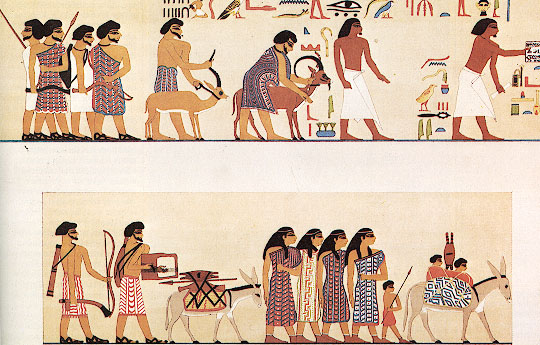
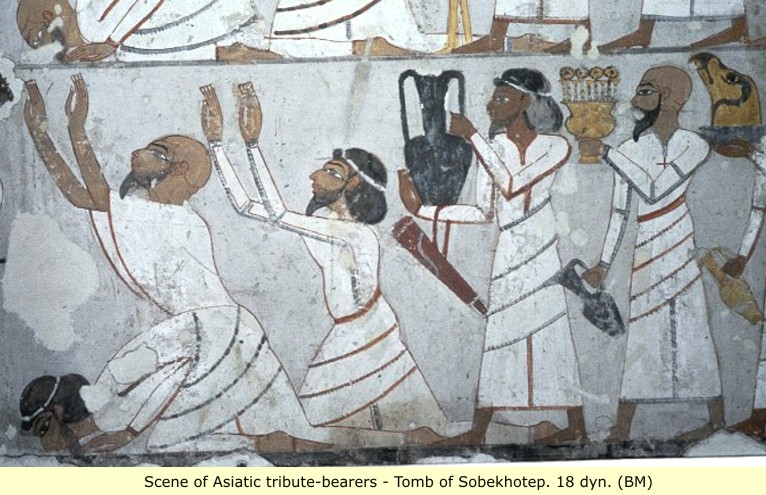
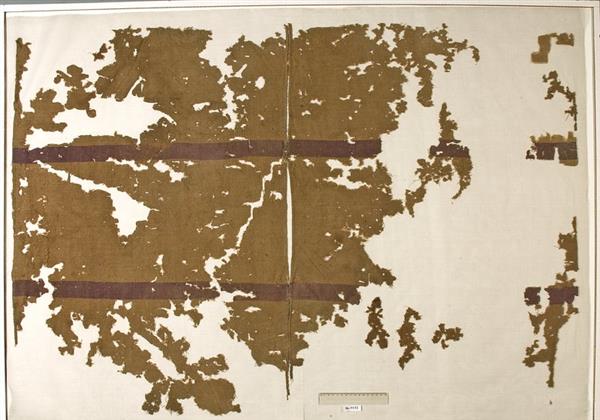
According to the Babylonian Talmud, it was a religious duty for all Jews, men as well as women, to wear special clothes on the Sabbath: “your Sabbath garments should not be like your weekday garments…” In general, however, expenditure on personal appearance was assumed by Jews to be a characteristic of women rather than men. Jewish clothing, apart from the uniforms of the priests and Levites, seems to have been the same as that of others in the eastern Mediterranean. It would be wrong to imagine the Jewish tallit as an identity marker similar to the distinctively Roman toga; tallit in Hebrew means simply “cloak” and the use of such a garment as a dedicated prayer shawl did not begin until after late antiquity. The biblical prohibition on wearing garments manufactured from wool and linen, stated simply as a general law in Deuteronomy, was explained by Josephus as a way to preserve the unique status of the priesthood: such raiment “is reserved for priests alone.” That priests did indeed wear clothes made from such materials is confirmed in the Mishnah. When the Pharisees chose to “make broad their phylacteries and enlarge the borders of their garments,” they did this in order “to be seen of men;” but such ostentation must have been unusual for it to be alleged that it attracted Jesus’ criticism, and it is probably significant that no gentile pagan source betrays any knowledge of this distinctive Jewish custom. The Jewish figures in the frescoes from the synagogue at Dura-Europus have fringes on the corners of some of their cloaks, but if this reflected standard male Jewish practice, the fringes must have generally been discreet. Jewish men did not specially cover their heads. The dress of Jewish women also seems to have been much the same as that of gentile contemporaries; the Christian Tertullian remarked in Carthage at the end of the second century CE that Jewish women could be recognized as Jews by the fact that they wore veils in public, but it seems likely that such veils, common in the eastern Mediterranean, marked them out less as specifically Jewish than as simply oriental in the Roman West, where women were generally unveiled. According to the Mishnah it was regarded as immodest and shaming for a woman to wear her hair loose. The Mishnah refers to types of jewellery that a woman should not carry on a Sabbath: “She may not go out…with forehead-band or head-bangles if they are not sewn, or with a hairnet…or a necklace or nose-rings…”
Too much pride by males in their long hair was dangerously immoral, as the story of Absalom showed: he gloried in his hair, so he was hanged by it. A few hairstyles were specially forbidden by the rabbis in the Tosefta on the grounds that they looked too gentile and therefore smacked of idolatry or magic: “What are the matters which constitute ‘the ways of the Amorites?’ He who trims the front of his hair, and he who makes his locks grow long, and he who makes a baldness in front for a particular star…” But these restrictions are the exception that prove the rule, that Jews generally looked like non-Jews. Romans often noted that foreign peoples looked different from themselves, but (apart from male circumcision) they never noticed this of the Jews. One passing remark by a Roman author does, however, suggest that some Romans thought Jews had a distinctive smell: the historian Ammianus Marcellinus recorded in the fourth century CE a comment of the philosopher Marcus Aurelius in the second century CE about the Jews as malodorous. This was not a standard form of abuse of other people in the Roman world. It may even have some basis in a real difference. If modesty requires more clothing, in a hot climate old sweaty clothes may become smelly. If everyone smells equally, no one notices, and the issue of body odour (except of tanners) fails to surface in the Jewish texts.
Steve can correct me here, but I think what he meant was the mantle or cloak, aka the tallit. He did kind of pick the wrong word though: yes, the toga was a Roman citizen-only piece of clothing. The pallium (yes, that pallium) or himation is a closer analogue to the Jewish tallit.


.png)
 I should certainly hope not!
 ) Seriously,
