"Joseph Smith, Brigham Young, And Extraterrestrial Quakers!"

  • Thread starter Thread starter Answersplease
  • Start date Start date
Status
Not open for further replies.
so can the Proclamation on the Family become canonized even though it doesn’t have “thus saith the Lord” in it?
TheosisM,
I think it is safe to say that the Proclamation on the Family is close to “canonized” inasmuch as it was a written statement, signed by the First Presidency, with the endorsement of the entire council of the Twelve Apostles, and they all agreed to the language used and the concepts taught, and use it quite often in their teaching along with the scriptures also.

I hope you are doing well, TheosisM. I enjoy reading your posts.👍
 
so can the Proclamation on the Family become canonized even though it doesn’t have “thus saith the Lord” in it?
It would have more of an impact if it were placed in lds scriptures. Then, it could be studied with the other scriptures. What it is now is an important statement on the family in these modern times. It could be placed along with the statement about polygamy in 1890 as a statement or a proclamation.
 
(colors blue and red and bolding emphasis and underlining and formatting added to the original text)
…inhabitants of the sun
.


Do you think there is any life there? No question of it; it was not made in vain.

It was made to give light to those who dwell upon it,…

(Journal of Discourses 13:271)
It should be pointed out that the preceding statement was in the context of a sermon and that Brigham Young considered his sermons to be scripture:
“I have never yet preached a sermon and sent it out to the children of men, that they may not call Scripture.”
“Let me have the privilege of correcting a sermon and it is as good Scripture as they deserve” (Ibid, p. 95).
 
(colors blue and red and bolding emphasis and underlining and formatting added to the original text)
…inhabitants of the sun
.


Do you think there is any life there? No question of it; it was not made in vain.

It was made to give light to those who dwell upon it,…

(Journal of Discourses 13:271)
First, Young claims that he needs to ‘correct a sermon.’ That is, to go over it, make certain that there were no errors, and that it was indeed inspired.
It should be pointed out that the preceding statement was in the context of a sermon and that Brigham Young considered his sermons to be scripture
“I have never yet preached a sermon and sent it out to the children of men, that they may not call Scripture.”(Ibid, p. 95)

The above in quotation marks, is one complete sentence and one complete thought - all sermons he preached can be called scripture.
“Let me have the privilege of correcting a sermon and it is as good Scripture as they deserve” (Ibid, p. 95).
The above is another complete sentence with another complete thought - ANY sermon he corrects is good scripture. Unless you can PROVE that he was specifically talking about proofreading his own sermons, then one can infer from the sentence that he was talking about correcting ANYONE’S sermon.

It is ridiculous to assume that he did not consider his sermons to be scripture unless he proofread it for errors, because:

1.) It is safe to assume that he did proofread it since it would be only proper to proofread one’s own work.

2.) If he in fact did not proofread his own work, then he either did not care enough to proofread it OR he thought he was divinely guided.

Moroni 10:5 says that they may know the truth of all things.
Moroni 10:5
And by the power of the Holy Ghost ye may know the truth of all things.
 
One will deny and lie to you and themselves over and over again if they do not wish to see the truth and they will be annoyed of those who proclaim the truth since it is a unwanted light for them. Isnt it funny to watch the crazy responses used to avoid the truth. Its sad but at the same time so crazy you have to laugh in disbelief. Let us pray that these lost souls who cling to the false prophet will one day let go of there chains of deceit and lies and embrace Christ with the rest of us. You have to realize those who do not see the lies of JS and BY are not blind but choose not to open there eyes!
 
40.png
Answersplease:
Well, if that is your reasoning then I will accept it, since Dune is correct answer for the spice.

:extrahappy:

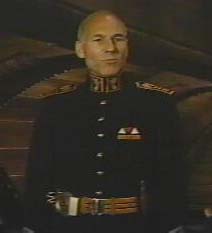
Maybe we should have a picture of Patrick Stewart since he was Gurney Halleck


and Captain Picard

http://www.scifi.co.uk/news/Star_Trek_Stewart_Picard-thumb-450x300-30392.jpg
 
Well, you know, this has all been heard before over and over again about moonmen. Here is the mormon reponse from their apologetic site. Of answersplease, who cuts and pasts from antimormon sites would not dream to check if such sources that he cuts from have any biasness to them. But anyway here is the mormon response to answersplease wornout antimormon postings:

en.fairmormon.org/Joseph_Smith/Moon_inhabited

Criticism
Critics claim that Joseph Smith taught that the moon was inhabited, and that this is proof he was a false prophet.

See also: Source(s) of the criticism

Response
The source for this claim is not Joseph Smith himself; the first mention comes in 1881 in Oliver B. Huntington’s journal, who claimed that he had the information from Philo Dibble. So, we have a late, third-hand account of something Joseph is supposed to have said.[1]
 
Here is another response about the sun being inhibited:

en.fairmormon.org/Brigham_Young/Moon_and_sun_are_inhabited

Main article: Joseph_Smith_and_moonmen
Brigham Young made the following statement in 1869:[1]

t has been observed here this morning that we are called fanatics. Bless me! That is nothing. Who has not been called a fanatic who has discovered anything new in philosophy or science? We have all read of Galileo the astronomer who, contrary to the system of astronomy that had been received for ages before his day, taught that the sun, and not the earth, was the centre of our planetary system? For this the learned astronomer was called “fanatic,” and subjected to persecution and imprisonment of the most rigorous character. So it has been with others who have discovered and explained new truths in science and philosophy which have been in opposition to long-established theories; and the opposition they have encountered has endured until the truth of their discoveries has been demonstrated by time…
I will tell you who the real fanatics are: they are they who adopt false principles and ideas as facts, and try to establish a superstructure upon, a false foundation. They are the fanatics; and however ardent and zealous they may be, they may reason or argue on false premises till doomsday, and the result will be false. If our religion is of this character we want to know it; we would like to find a philosopher who can prove it to us.
The context for Brigham’s remarks, then, are that new ideas and truths are often mocked or rejected by those who cling to older ideas. And, were he to have such an idea, he would want to know.

He then says:

We are called ignorant; so we are: but what of it? Are not all ignorant? I rather think so. Who can tell us of the inhabitants of this little planet that shines of an evening, called the moon? When we view its face we may see what is termed “the man in the moon,” and what some philosophers declare are the shadows of mountains. But these sayings are very vague, and amount to nothing; and when you inquire about the inhabitants of that sphere you find that the most learned are as ignorant in regard to them as the most ignorant of their fellows.
Brigham goes on to speak about inhabitants of the moon. In context, his point is clearly that no one;—even experts—knows very much about the universe. There are many things (such as whether the moon is inhabited) about which no one of his day could speak clearly.

It then becomes very clear that Brigham is expressing his personal views, not laying down divine truth from on high

There is more on the mormon website for enquiring minds. 🙂
 
Criticism
Critics claim that Joseph Smith taught that the moon was inhabited, and that this is proof he was a false prophet.

See also: Source(s) of the criticism

Response
The source for this claim is not Joseph Smith himself; the first mention comes in 1881 in Oliver B. Huntington’s journal, who claimed that he had the information from Philo Dibble. So, we have a late, third-hand account of something Joseph is supposed to have said.[1]
mrm.org/moon-men

to outright reject Dibble’s and Huntington’s claim, one must join Mormon apologists in questioning their integrity as well as the judgment of the Mormon editors of the Young Woman’s Journal for including Huntington’s account in this Church-published magazine.

…a disagreement between modern Mormon apologists and the testimony of Dibble, a revered early Mormon who was a close associate of Joseph Smith.

the idea of moon men was commonly held among Mormon leaders, many of whom had intimate acquaintance with Smith. It even showed up in patriarchal blessings, which are supposed to include "an inspired and prophetic statement of the life possibilities and mission of the recipient"6
6 Information and Suggestions for Patriarchs [1970], 3–4. Quoted by Richard D. Allred in “The Lord Blesses His Children through Patriarchal Blessings,” Ensign, Nov 1997, 27
 
Brigham goes on to speak about inhabitants of the moon. In context, his point is clearly that no one;—even experts—knows very much about the universe. There are many things (such as whether the moon is inhabited) about which no one of his day could speak clearly.

It then becomes very clear that Brigham is expressing his personal views, not laying down divine truth from on high
The following quotes speak for themselves.
(bolding emphasis added to highlight the original texts)


inhabitants of the sun. Do you think it is inhabited? I rather think it is. Do you think there is any life there? No question of it; it was not made in vain. It was made to give light to those who dwell upon it, and to other planets; and so will this earth when it is celestialized" (Journal of Discourses 13:271). Here Young was acting as a prophet in giving this sermon, since he just said right before this statement in a previous sermon that every sermon he gives should be called scripture (13:95).
It should be pointed out that the preceding statement was in the context of a sermon and that Brigham Young considered his sermons to be scripture:

"I have never yet preached a sermon and sent it out to the children of men, that they may not call Scripture. Let me have the privilege of correcting a sermon and it is as good Scripture as they deserve" (Ibid, p. 95).
 
Maybe Brigham Young and the other Mormon leaders who thought that the moon was inhabited didn’t understand Moroni 10:5, because if they did, then maybe they wouldn’t have thought that the moon was inhabited and Brigham Young wouldn’t have thought that there was “no question” about there being life on the sun.
Moroni 10:5
And by the power of the Holy Ghost ye may know the truth of all things.
 
Here is another response about the sun being inhibited:

en.fairmormon.org/Brigham_Young/Moon_and_sun_are_inhabited

Main article: Joseph_Smith_and_moonmen
Brigham Young made the following statement in 1869:[1]

t has been observed here this morning that we are called fanatics. Bless me! That is nothing. Who has not been called a fanatic who has discovered anything new in philosophy or science? We have all read of Galileo the astronomer who, contrary to the system of astronomy that had been received for ages before his day, taught that the sun, and not the earth, was the centre of our planetary system? For this the learned astronomer was called “fanatic,” and subjected to persecution and imprisonment of the most rigorous character. So it has been with others who have discovered and explained new truths in science and philosophy which have been in opposition to long-established theories; and the opposition they have encountered has endured until the truth of their discoveries has been demonstrated by time…
I will tell you who the real fanatics are: they are they who adopt false principles and ideas as facts, and try to establish a superstructure upon, a false foundation. They are the fanatics; and however ardent and zealous they may be, they may reason or argue on false premises till doomsday, and the result will be false. If our religion is of this character we want to know it; we would like to find a philosopher who can prove it to us.
The context for Brigham’s remarks, then, are that new ideas and truths are often mocked or rejected by those who cling to older ideas. And, were he to have such an idea, he would want to know.

He then says:

We are called ignorant; so we are: but what of it? Are not all ignorant? I rather think so. Who can tell us of the inhabitants of this little planet that shines of an evening, called the moon? When we view its face we may see what is termed “the man in the moon,” and what some philosophers declare are the shadows of mountains. But these sayings are very vague, and amount to nothing; and when you inquire about the inhabitants of that sphere you find that the most learned are as ignorant in regard to them as the most ignorant of their fellows.
Brigham goes on to speak about inhabitants of the moon. In context, his point is clearly that no one;—even experts—knows very much about the universe. There are many things (such as whether the moon is inhabited) about which no one of his day could speak clearly.

It then becomes very clear that Brigham is expressing his personal views, not laying down divine truth from on high

There is more on the mormon website for enquiring minds. 🙂

This only explains that dishonest poeple will make more lies to cover others after they have been exposed. Simple as that!
 
This only explains that dishonest poeple will make more lies to cover others after they have been exposed. Simple as that!
I thought that the rebuttals handle it all rather well. Now your post is an interesting one. But I don’t think that you want to go there after the meeting of the Irish catholic leadership with Pope Benedict. You see, no one can act holier than thou. But pasting from antimormon sites is not the way to go. The rebuttals make that quite clear. All faiths have done and claimed things that may not be that intelligent but human beings are certainly not perfect.
 
so can the Proclamation on the Family become canonized even though it doesn’t have “thus saith the Lord” in it?
Well, yeah…

After all, putting 'thus saith the Lord" at the beginning of every sentence would certainly be more boring than ‘…and it came to pass…’ wouldn’t it?

Or to put it another way: While all canonized scriptures can be said to be the word of God (“Thus saith the Lord”) Not every utterance including “Thus saith the Lord” actually was said by the Lord.
 
Status
Not open for further replies.
Back
Top