First of all, I am Catholic. I have planned several liturgies at both the parochial and the diocesan level. I have also planned the funeral Masses for my mom, my paternal grandmother and my former pastor.
What I think you need to realize is that just because a song is included in a Catholic hymnal, that doesn’t necessarily mean that it’s got a stamp of approval. OCP, the purveyor of the Glory and Praise Hymnal (where “Be not Afraid” and other SLJ songs are found), has laid a few eggs, especially in its contemporary songbooks by including Protestant Praise and Worship songs (the stuff that Time/Life sells on informercials that is not at all appropriate for the Holy Sacrifice of the Mass).
We also don’t pick hymns simply because they “feel good.” The Church does have her standards. Unfortunately, “Be Not Afraid” and the rest of the stuff from the 1970s (written mostly by the St. Louis Jesuits) sounds like something from the Carpenters or Bobby Goldberg (the one who sang “Honey” about a man’s deceaesd wife). It’s that syruppy sappy stuff that really has no substance. That’s why I made the observation that even Meat Loaf’s song sounded better than what came out of that era.
Now, if you were to read what Pope Benedict wrote in Sacramentum Caritatis, to this point. He writes:
- In the ars celebrandi, liturgical song has a pre-eminent place. (126) Saint Augustine rightly says in a famous sermon that “the new man sings a new song. Singing is an expression of joy and, if we consider the matter, an expression of love” (127). The People of God assembled for the liturgy sings the praises of God. In the course of her two-thousand-year history, the Church has created, and still creates, music and songs which represent a rich patrimony of faith and love. This heritage must not be lost. ***Certainly as far as the liturgy is concerned, we cannot say that one song is as good as another. Generic improvisation or the introduction of musical genres which fail to respect the meaning of the liturgy should be avoided. ***As an element of the liturgy, song should be well integrated into the overall celebration (128). Consequently everything – texts, music, execution – ought to correspond to the meaning of the mystery being celebrated, the structure of the rite and the liturgical seasons (129). Finally, while respecting various styles and different and highly praiseworthy traditions, I desire, in accordance with the request advanced by the Synod Fathers, that Gregorian chant be suitably esteemed and employed (130) as the chant proper to the Roman liturgy (131).
This line is very important and certainly fits a lot of the 1970s era music that OCP continues to push to the parishes. The only reason why the SLJ are still around is because OCP is still around.
There is more to putting a funeral together than just slapping some hymns and leaving it at that. You need to take the liturgical season into account and the readings, as well as the person’s station in life. Certainly, my grandma’s funeral differed from my former pastor’s. And, both of these will differ sharply from a funeral for a bishop or the Pope.
The OP was asking a perfectly legitimate question. We gave him suggestions for which he was grateful. He is trying to understand the Catholic understanding of funeral liturgies. He’s making an honest effort. He should not be disparaged for his attempts.
Something that you also need to realize is that the funeral Mass is not just about the living. It’s not geared towards “lifting us up”. It concerns offering God the Sacrifice of His Son’s Body and Blood for the expiation and repose of the soul of the deceased. There is a degree of solemnity and sobriety to the funeral Mass. This is not a celebration of the life of the deceased, as many Protestant look at their funeral services. Yes, the grieving relatives find comfort, but, the prayers of the Mass are directed for the suffrage of the deceased.
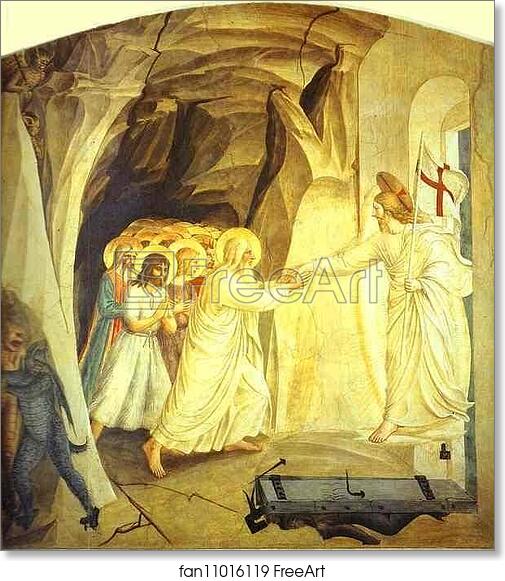
Now, “Jesus Christ is Ris’n Today” is perfectly appropriate for a funeral Mass. Jesus, through His Passion, Death and Resurrection, opened the gates of heaven for us. In fact, I am having this image printed in my cards because I like Fra Angelico’s interpretation. He painted Jesus busting down the door to limbo and he’s freeing Sts. Joseph, John the Baptist, Joachim and Ann, and Elizabeth and the prophets, from limbo. At the bottom, the demons are scurrying.
Christ in Limbo
www.freeart.com
Now, of course, you can’t use this hymn during the Lenten season because of its penitential nature. When planning a funeral during Lent, things change. The music takes on a more somber note. You don’t have the Alleluia as the Gospel Acclamation and things are much more serious.

 I will admit that I do, on occasion - but never in church.
  Glad to be of service! I searched for a hymn for years myself and remember the eureka moment when I finally fell over it.