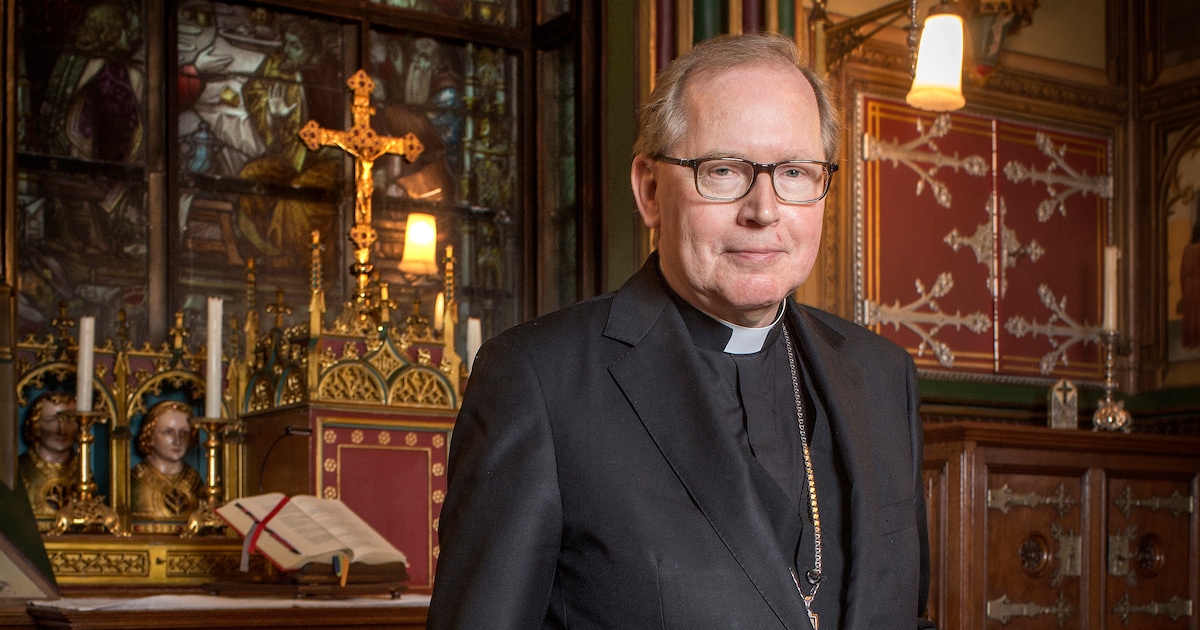
Pope Francis: if you are in a state of mortal sin, you cannot receive Communion

  • Thread starter Thread starter Imdaman
  • Start date Start date
Status
Not open for further replies.
40.png
BlackFriar:
Do you accept that the doctrine received from God was simple and clear from the time of Moses up until the Church changed it in medieval times?
Namely, ANY interest on a loan to fellow believers was immoral.
Yes it is accepted and no the church did not change it in medevil times. Please show where the church changed it’s veiw on Usury?
God commanded absolutely no interest was to be charged on a loan to fellow believers…
Clearly that is no longer the case.
 
40.png
KMG:
Pope Francis has zero authority to allow Communion for adulterers; he cannot change perennial Church teaching.
For clarification, is it your view that in AL he has attempted to do so?
Whether or not that was intended, it clearly appears to have had that result.
 
Last edited:
No, I mustn’t. The Magisterium of one Pope must be in continuity with the other.
You seem to misunderstand the point I made.
I observed you must find continuity and have done so not by saying Pope Francis is in error (the hard option) but by “interpreting” him in what I regard as an objectively unsustainable way.
Its a “soft” option for reconciling Pope Francis.

Me, it doesn’t matter if their documents are irreconcilable because I am open to many options:
  • one or both are mistaken re doctrine or are being read inaccurately.
  • both are discussing a disciplinary matter where wise Popes in different ages may well come to different solutions.
 
regarding your conduct here in this thread, KMG. You aren’t engaging in a reasoned two way discussion and you’re not presenting your case very well.
“Thou shalt not commit adultery.”

“Thou shalt not covet thy neighbor’s wife.”

I don’t think that’s all that hard to understand. KMG obviously understands it.

Pope Clement VII understood it.
 
What perhaps is not so facile is whether alleged concrete cases (ie irregular cohabitations)
(a) are personal mortal sins;
(b) even adultery.
 
Last edited:
What perhaps is not so facile is whether alleged concrete cases (ie irregular cohabitations)

(a) are personal mortal sins;

(b) even adultery.
As far as the minister of communion is concerned, cases of “irregular cohabitations” which are publicly known, call for him to refuse to give communion publicly.
 
Last edited:
40.png
BlackFriar:
What perhaps is not so facile is whether alleged concrete cases (ie irregular cohabitations)

(a) are personal mortal sins;

(b) even adultery.
As far as the minister of communion is concerned, cases of “irregular cohabitations” which are publicly known, call for him to refuse to give communion publicly.
While I generally agree Ender even here there are exceptions:
The Canon in question does not actually state the above. It states "[those] who obstinately persist in manifest grave sin" (Canon 915) are not to be admitted.

Now quite a lot of unpacking, and quite a few prudential judgements need to be made before we can arrive at “all irregular cohabitators must be denied Communion where this is publicly known.”

Given that AL allows for a discernment process which may see some cohabitors access both Confession and Communion beyond previous allowances and without any change to Canon Law.

That strongly suggests the Canon allows for significant prudential judgement over what constitutes “obstinate”, “manifest” and “grave sin” on the part of pastors.

From previous discussion it is well known that you play fast and loose with Magisterial vocab and tend to make it mean whatever will support your extreme views. I have no doubt you will try the same here.

Yet “grave sin” is not wholly equivalent to “mortal sin” nor is “public” quite the same as “manifest”, nor is “obstinately persist” the same as “being unable to commit to abstaining though one would want to if one could (or if it actually was the best thing to do).”

For example, if the public scandal is so great (even when no mortal sin is in play) why hasn’t something been done about the way that newly annulled couples are incorporated back into the Communion line? That is, suddenly we have publicly known irregulars receiving Communion. Given that most such couples who tend to be treated as lepers don’t feel the need to advise parish moral busybodies when they are kosha, and given that there is no such thing as Annulment Banns, I would say that is at least as scandalous as any non-kosha irregular receiving Communion. Yet nobody bats an eyelid re this contradictory situation.

So prudential judgements are clearly in play here already re this canon. Long may the prudence continue even unto the new practises provided by AL and obviously possible without needing to reform canon 915.
 
Last edited:
or example, if the public scandal is so great (even when no mortal sin is in play) why hasn’t something been done about the way that newly annulled couples are incorporated back into the Communion line? That is, suddenly we have publicly known irregulars receiving Communion.
Because annulments there are so common that it is thought that it is and was like this everywhere. Because resources,technology,being able to read and write,having access to everything needed, and the habit of annultments,or being used to them,makes people think that things work in envelopes and UPS everywhere else.
It doesn t. And even if the percentage in US is by far the highest in anulments,one would think that prudence might indicate that somewhere there was something out of balance and proprtion,and wonder why ,perhaps.
But no…there is no world outside the borders.
And sorry,but if people have to go to Communion in private with everything all right for God and the Church not to “scandalize” Heaven knows who,then it is our eyes and our heart that have have to refocus not people needing to hide.
And this is mine,out of my own head and heart btw. So throw tomatoes at me not at the Church nor the Pope,please.
Thanks Black Friar for all your patience.
 
Last edited:
Cardinal Wim Eijk, December 23, 2016 – “You cannot change doctrine with footnotes or a loose statement in an airplane interview. I would like [Amoris Laetitia] to be clarified. […] Prolonged lack of clarity may result in undesirable practices …”
 
, “Nowhere has Francis ever said anything that is contrary to the teachings of the Church.”
Cardinal Eijk

“Franciscus heeft nog nooit ergens iets gezegd dat tegen de leer van de kerk ingaat. Dat geldt ook voor de kwestie die de beide bisschoppensynodes over huwelijk en gezin overheerste.


“Francis never said anything anywhere that goes against the teachings of the church. This also applies to the issue that dominated the two bishops synods about marriage and family.”

Cardinal Eijk

January 26,2018
 
Last edited:
The Canon in question does not actually state the above. It states “[those] who obstinately persist in manifest grave sin” (Canon 915) are not to be admitted.
So far so good.
Given that AL allows for a discernment process which may see some cohabitors access both Confession and Communion beyond previous allowances and without any change to Canon Law.
“Discernment” does not allow a minister to ignore the obligations of Canon 915, or to interpret in a way such that it means something other than what it obviously says. Nor does AL change this, both because it cannot, and because it claims not to have changed doctrine.
That strongly suggests the Canon allows for significant prudential judgement over what constitutes “obstinate”, “manifest” and “grave sin” on the part of pastors.
This is the Humpty Dumpty defense: “When I use a word it means just what I choose it to mean.”
For example, if the public scandal is so great (even when no mortal sin is in play) why hasn’t something been done about the way that newly annulled couples are incorporated back into the Communion line? That is, suddenly we have publicly known irregulars receiving Communion.
That pastors in the past have failed in their duties is hardly an argument that others are free to ignore theirs, but I fail to see the issue. If a couple has had their marriage annulled then I would hardly expect them to receive together and act as if they were still married.
So prudential judgements are clearly in play here already re this canon. Long may the prudence continue even unto the new practises provided by AL and obviously possible without needing to reform canon 915.
Again, an argument that words are so malleable we can ignore what they meant in the past and simply have them mean whatever is convenient for us today. “New practices” apparently meaning just that.
 
A doubtful law is no law.

In one sense, it is good that the pope has refused to answer the dubia cardinals have posed to him.
 
Clearly the bishops are unwilling to enforce 915. As far as “my” interpretation is concerned, the words of the canon are readily understandable. To assert that they mean what they say is not a real stretch.

The phrase “and others who obstinately persist in manifest grave sin” is clear and must be understood in a manner that does not distort its sense so as to render the norm inapplicable. (Pontifical Council for Legislative Texts)
 
If you would like to discuss the contents of this letter I would be open to doing so. In my reading of it there are a number of comments that seem questionable.
 
For example, if the public scandal is so great (even when no mortal sin is in play) why hasn’t something been done about the way that newly annulled couples are incorporated back into the Communion line? That is, suddenly we have publicly known irregulars receiving Communion.
Ender if you do not have the skills needed to understand what your interlocutor is actually saying then what hope have you of truly understanding what Canon 915 is saying? Time and again on CAF I observe you miss the meaning of texts because you try and read them in and of themselves isolated from context.

The annulled marriage I refer to above is clearly the previous one of so called “adulterous irregulars” - now allowing them to receive communion after having their long term irregularly now regularised. Why should they not receive together? The issue is they still scandalise because such couples often consider the process a private matter.
This is the Humpty Dumpty defense: “When I use a word it means just what I choose it to mean.”
Correct, technical legal words, especially translated from Latin and the province of an highly trained elite, often do not mean their face value that you, an untrained layman with a set position to defend, want it to mean.

Is an aircraft blackbox actually black? In fact it is bright orange.
The humpty dumpty defence is in fact proven true everyday but perhaps not for lay persons who try to play the Rocket Scientist or Nuclear Physicist or Theologian without training.

 
Last edited:
That’s an interesting fallible and minor document from the legislative Pontifical Council concerned.
I agree interpretation hinges on the meaning of “public unworthiness”.

That appears to be a prudential question. At one time irregulars were considered so unworthy they were excommunicated. Since VatII their status has done an about face and JPII welcomed them back as beloved members of the Church, some of whom could receive privately. Clearly our appreciation of public unworthiness has changed.

Now there is a call to recognise that it is somewhat contradictory to say that those faithful irregulars who are known to be doing their best to regularise their situation (but will not succeed for a variety of reasons) should be considered fully in communion with the Church yet still be permanently denied access to Communion and Confession. How can these discerned irregulars still be considered publicly unworthy.

Pope FI has found a way to resolve that contradiction. The discernment process is a means for discovering these faithful irregulars and recognising they are in fact publicly worthy.
 
Last edited:
If one bishop says A and another one says not-A should we suspend our own faculties because we’re not bishops? Is church teaching really so inscrutable that even the common meaning of words is too much for us to comprehend? Either a compelling argument can be made in defense of a position or it can’t, and bishops have no more claim to rational thought than the next person. I grant them special knowledge; I do not grant them special intellect.
 
That’s an interesting fallible and minor document from the legislative Pontifical Council concerned.
“Minor” and “fallible” meaning you are prepared to consider it interesting but are prepared to dismiss whatever it says that contradicts your assertions?
I agree interpretation hinges on the meaning of “public unworthiness”.
The relevant canon does not use ambiguous terms like this one…
That appears to be a prudential question.
Yes, it is, which is not to say that the criteria are so amorphous as to be applicable only when one wants to apply them.
Now there is a call to recognise that it is somewhat contradictory to say that those faithful irregulars who are known to be doing their best to regularise their situation (but will not succeed for a variety of reasons) should be considered fully in communion with the Church yet still be permanently denied access to Communion and Confession. How can these discerned irregulars still be considered publicly unworthy.
Are you suggesting that someone who privately “discerns” that his first marriage was invalid should therefore be given communion publicly? Wouldn’t it seem odd to treat a couple who personally claim their acts are not sinful better than a couple who is in fact not acting sinfully? If a remarried couple living as brother and sister may not receive publicly, what is the argument that another remarried couple should receive publicly based on their private feelings on the matter? Either both are scandalous or neither is.
Pope FI has found a way to resolve that contradiction. The discernment process is a means for discovering these faithful irregulars and recognising they are in fact publicly worthy.
You are suggesting the criteria of Canon 915 are resolved by allowing the couple to decide for themselves whether they are committing any sin at all, let alone a grave one. I can think of many applications for such an approach; in fact if all that is required to eliminate sin is the personal belief that ones actions are not sinful we shall have eliminated the need for confession altogether.
 
You’re right, it isn’t a democracy, and there is no more reason for me to accept a consensus in this matter than there was to have accepted the consensus on Arianism. Doesn’t it strike you as astonishing that the church has reached such a point that we are being asked to choose between two diametrically opposed positions, and to believe today what we disbelieved yesterday?

Church teaching is eternal. It is not a consensus.
 
Ender if you do not have the skills needed to understand what your interlocutor is actually saying then what hope have you of truly understanding what Canon 915 is saying? Time and again on CAF I observe you miss the meaning of texts because you try and read them in and of themselves isolated from context.
If you were less sententious you might be more understandable.
Correct, technical legal words, especially translated from Latin and the province of an highly trained elite, often do not mean their face value that you, an untrained layman with a set position to defend, want it to mean.
Apparently “the phrase 'and others who obstinately persist in manifest grave sin’ is clear….” doesn’t mean what it says either. There are many complicated terms I don’t understand, but these are not among them. Which ones are giving you trouble?
 
Status
Not open for further replies.
Back
Top